
In the rapidly evolving landscape of information technology, metaphors often help us grasp complex architectural shifts. For decades, the goal of enterprise software was to build “continents”—massive, monolithic platforms that housed every conceivable function under one roof. However, as the demand for agility, specialization, and scalability has increased, the industry has shifted toward a new structural paradigm.
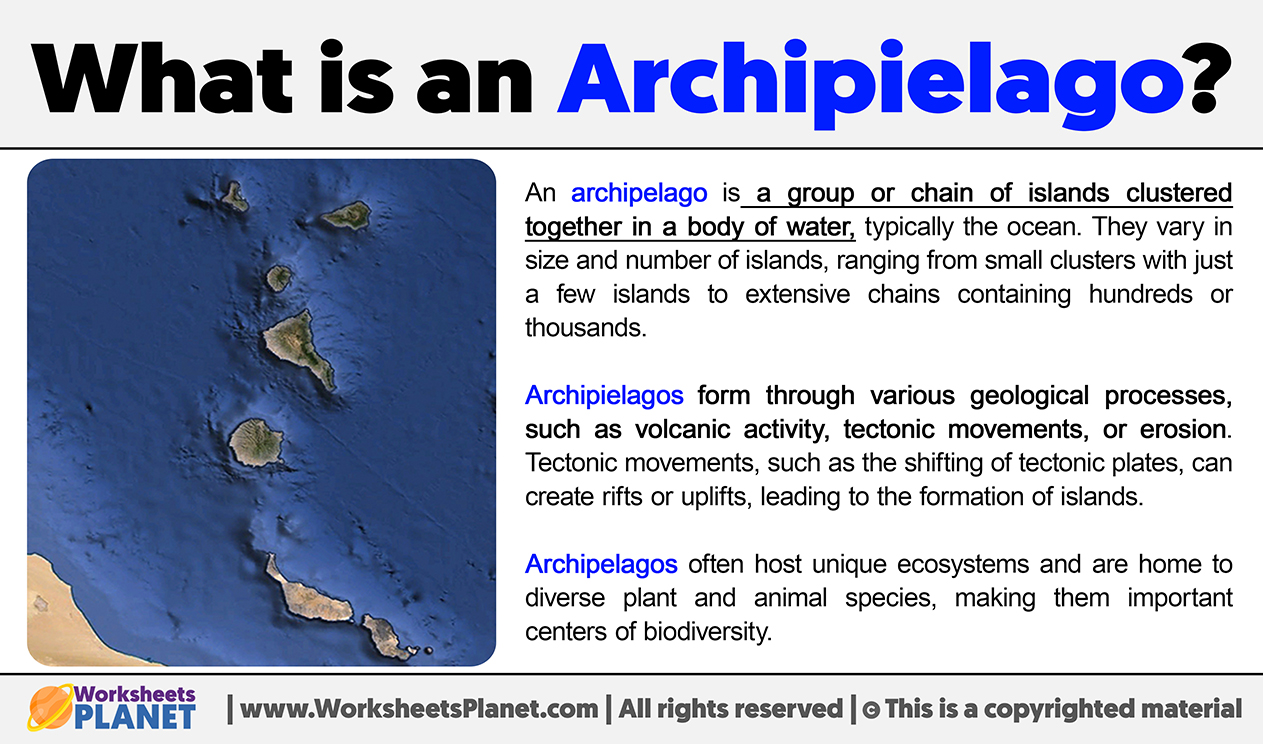
When we ask, “what is a tech archipelago definition,” we are exploring the transition from centralized systems to a collection of specialized, interconnected digital entities. Just as a physical archipelago is a chain of islands clustered in a sea, a tech archipelago is a strategic ecosystem of independent software, platforms, and microservices that work together to form a unified digital experience.

Understanding the Digital Archipelago Definition
In a traditional sense, an archipelago is defined by its geography. In the world of technology, however, the “archipelago” is defined by its architecture. It represents a departure from the “all-in-one” suite in favor of a “best-of-breed” approach.
From Geographical Chains to Digital Connectivity
A physical archipelago consists of islands that are separate yet part of the same geological formation. In tech, these “islands” are specialized SaaS tools, cloud environments, or microservices. For example, a modern e-commerce company doesn’t build one giant piece of software. Instead, it maintains a “tech archipelago” where one island handles payments (Stripe), another handles customer relations (Salesforce), another manages logistics (ShipStation), and yet another hosts the frontend (AWS or Vercel).
The “water” between these islands is the data flow, facilitated by APIs (Application Programming Interfaces). The definition of a tech archipelago, therefore, is a distributed system where modularity is prioritized over centralization, allowing each component to thrive independently while remaining part of a cohesive whole.
The Core Components of a Software Archipelago
To truly understand this definition, one must look at the three pillars that support a digital archipelago:
- Modularity: Each component (or island) must be able to function on its own. If one service goes down, the rest of the ecosystem should remain resilient.
- Interoperability: The islands must speak the same language. This is achieved through standardized protocols (REST, GraphQL, gRPC) that ensure data can travel seamlessly between disparate systems.
- Governance: Just as an archipelago might fall under a single national jurisdiction, a tech archipelago requires centralized governance to ensure security, compliance, and strategic alignment across all distributed tools.
Why Modern Enterprise Architecture is Moving Toward the Archipelago Model
The move toward an archipelago model isn’t just a trend; it is a response to the limitations of legacy systems. As businesses grow, the “continental” monolith becomes too heavy to move and too fragile to change.
The Death of the Monolith
In the early 2000s, businesses relied on massive ERP (Enterprise Resource Planning) systems. These were the “continents” of the tech world. While they provided everything in one place, they were notoriously difficult to update. A change in the accounting module could inadvertently break the inventory module.
The archipelago model solves this by decoupling services. By defining a tech archipelago as a set of discrete services, developers can update the “Payment Island” without ever touching the “User Profile Island.” This leads to faster deployment cycles and a significantly lower risk of system-wide failures.
Microservices and Modular Flexibility
At the heart of the tech archipelago definition is the rise of microservices. Instead of building a single application, developers build a suite of small services, each running its own process and communicating with lightweight mechanisms. This modularity allows companies to swap out “islands” as better technology becomes available. If a new AI-driven analytics tool emerges that is superior to the current one, a company can integrate the new island into their archipelago without rebuilding their entire digital landmass.

Navigating the Challenges of a Distributed Tech Landscape
While the archipelago model offers unparalleled flexibility, it is not without its navigational hazards. Managing a series of disconnected islands requires more oversight than managing a single continent.
Data Silos: The Uncharted Islands of Information
The greatest risk in an archipelago definition is the creation of data silos. When departments use different specialized tools, information can become trapped. The marketing team’s data might live on one island, while the sales team’s data lives on another, with no bridge between them.
To prevent this, organizations must implement a “Data Fabric” or “Data Mesh” strategy. This ensures that even though the tools are separate, the underlying data is accessible and unified. Without this connectivity, the archipelago becomes a series of isolated retreats rather than a functioning ecosystem.
Connectivity and API Bridges
In a tech archipelago, the API is the most critical infrastructure. If the APIs are poorly designed or documented, the islands cannot communicate. Latency also becomes a factor; because data must travel over a network between these islands, the “distance” (network speed and reliability) matters. High-performing tech archipelagos prioritize low-latency connections and robust API gateways to ensure that the user experience feels as seamless as if they were using a single, unified platform.
The Role of AI and Automation in Managing Digital Archipelagos
As the number of “islands” in a corporate tech stack grows—often exceeding 100+ different SaaS applications for large enterprises—human management becomes impossible. This is where Artificial Intelligence (AI) and automation become the essential navigators.
Orchestration: The Navigator of the Modern Tech Stack
Orchestration tools act as the captains of the archipelago. Tools like Kubernetes for containerized apps or Zapier and Workato for SaaS integration automate the flow of work between islands. AI takes this a step further by predicting when a specific “island” is under high load and automatically scaling resources to meet demand. In this context, the definition of a tech archipelago evolves from a static map to a dynamic, self-healing ecosystem.
Security in a Decentralized Environment
In a monolith, you only have to secure the perimeter of the continent. In an archipelago, every island has its own coastline. This increases the “attack surface.” Modern tech archipelagos employ “Zero Trust” security models. This means that even if a user is on the “Internal Communications Island,” they are not automatically trusted to access the “Financial Records Island.” Identity and Access Management (IAM) becomes the passport control of the digital archipelago, ensuring that only authorized entities move between different segments of the tech stack.
Building Your Own Strategic Tech Archipelago
For CTOs and digital strategists, building a tech archipelago is about intentionality. It is not about accumulating random tools; it is about curated integration.
Selecting the Right “Islands” (Tools and Platforms)
When selecting components for your archipelago, the primary criteria should be “integration-first.” A powerful tool that cannot export data or connect via API is a “desert island”—it offers no value to the larger ecosystem. The archipelago definition emphasizes that the value of the whole is greater than the sum of its parts. Therefore, every new tool added to the stack must demonstrate how it strengthens the connectivity of the entire chain.
Future-Proofing Your Digital Infrastructure
The beauty of the archipelago model is its inherent future-proofing. Technology moves too fast for any single platform to stay at the cutting edge of every category. By adopting an archipelago architecture, a business ensures it is never “vendor-locked.” If a specific island becomes obsolete, it can be decommissioned and replaced with a modern alternative without disrupting the rest of the chain.
In conclusion, the definition of an archipelago in the technology sector is a move toward a more resilient, specialized, and interconnected world. It reflects a shift in mindset from owning a single, massive territory to navigating a vibrant, distributed ecosystem. By understanding the tech archipelago definition, businesses can build infrastructures that are not only powerful today but are adaptable enough to meet the unknown challenges of tomorrow’s digital sea.
aViewFromTheCave is a participant in the Amazon Services LLC Associates Program, an affiliate advertising program designed to provide a means for sites to earn advertising fees by advertising and linking to Amazon.com. Amazon, the Amazon logo, AmazonSupply, and the AmazonSupply logo are trademarks of Amazon.com, Inc. or its affiliates. As an Amazon Associate we earn affiliate commissions from qualifying purchases.