
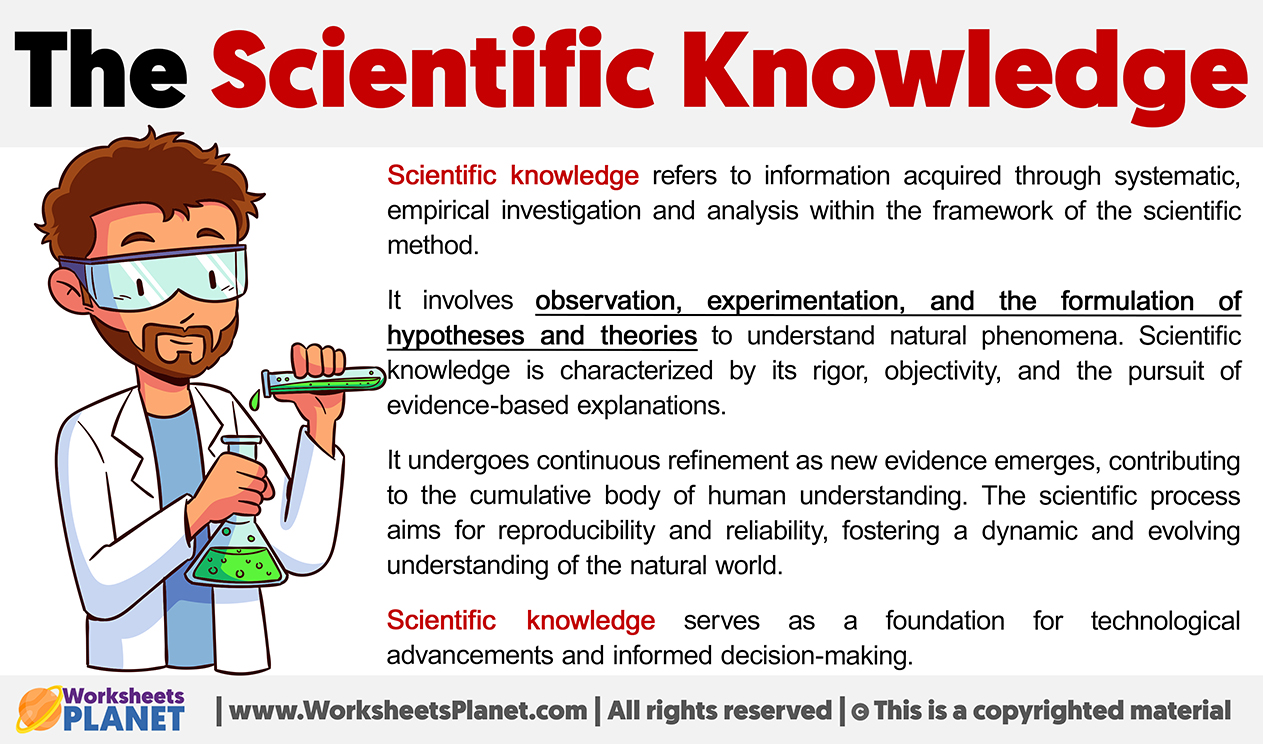
In the contemporary digital landscape, the term “scientific knowledge” has transcended the laboratory. It is no longer confined to test tubes and particle accelerators; instead, it has become the fundamental architecture upon which modern technology is built. For tech professionals, software engineers, and digital strategists, scientific knowledge represents the systematic pursuit of objective truths through observation, experimentation, and validation. In the realm of technology, this knowledge is the raw material used to forge everything from generative artificial intelligence to quantum encryption.
Understanding scientific knowledge in a tech-centric context requires shifting our focus from abstract theories to applied data. It is the process of turning “what if” into “what is” through rigorous testing. As we stand on the precipice of a new industrial revolution driven by silicon and code, exploring the anatomy of scientific knowledge is essential to understanding the future of tech.
The Empirical Foundation of Modern Software Development
At its core, all software development is an exercise in applied scientific knowledge. The transition from legacy systems to modern, cloud-native architectures was not a result of guesswork, but a series of systematic breakthroughs in computer science and engineering physics.
From Theoretical Models to Scalable Architecture
Scientific knowledge begins with a hypothesis. In technology, this often manifests as a theoretical model for solving a problem, such as data latency or memory management. Before a single line of code is written in a production environment, developers rely on the scientific principles of logic and mathematics. These principles allow architects to predict how a system will behave under load. By utilizing established scientific knowledge regarding algorithmic complexity (Big O notation), engineers can ensure that software remains functional as user bases scale from hundreds to millions.
The Role of Peer Review in Software Security and Open Source
One of the hallmarks of scientific knowledge is its susceptibility to peer review and replication. This scientific rigour is the backbone of the open-source movement. When a library is published on platforms like GitHub, it undergoes a process remarkably similar to academic peer review. Thousands of developers scrutinize the “proof” (the code), looking for flaws in logic or vulnerabilities in security. This collective validation ensures that the scientific knowledge embedded in the software is robust, secure, and reproducible, forming a reliable foundation for further technological advancement.
Data Science: The Scientific Method in the Digital Age
If software is the machinery, data is the fuel. However, raw data is not knowledge. The transformation of raw data into “Scientific Knowledge” is the primary function of Data Science, a field that has revolutionized how businesses and tech tools operate.
The Scientific Method in Algorithm Development
Modern algorithms—whether they are driving social media feeds or high-frequency trading platforms—are built using the scientific method. The process begins with observation (gathering user data), followed by hypothesis formation (predicting which content a user prefers). Tech companies then conduct “experiments” through A/B testing. By presenting two different versions of a feature to a controlled group of users, developers can gather empirical evidence to confirm or refute their hypothesis. This iterative process turns speculative ideas into hard scientific knowledge about human behavior and system efficiency.
Hypothesis Testing in UX/UI Design
User Experience (UX) design is often mistaken for a purely aesthetic discipline. However, high-level UX is deeply rooted in cognitive science and psychology. Designers treat every interface change as a scientific experiment. By utilizing heatmaps, eye-tracking technology, and click-through rates, they gather quantitative data to understand how the human brain interacts with digital environments. This scientific knowledge allows for the creation of interfaces that are not just “pretty,” but are optimized for the way the human optical and cognitive systems process information.

AI and Machine Learning: Codifying Scientific Principles
The most profound expression of scientific knowledge in the 21st century is the development of Artificial Intelligence (AI). AI represents a paradigm shift where we are no longer just using science to build tools; we are teaching tools to perform scientific reasoning.
Neural Networks as a Mirror of Biological Science
The architecture of Large Language Models (LLMs) and neural networks is a direct application of scientific knowledge borrowed from biology and neuroscience. By mimicking the synaptic connections of the human brain, AI researchers have created systems capable of pattern recognition and heuristic learning. This isn’t just “coding”; it is the application of biological theories to digital hardware. As we refine our understanding of how the brain processes information, that scientific knowledge is immediately ported into the next generation of AI weights and biases.
Predictive Analytics and the Quantifiable Future
Scientific knowledge is often measured by its predictive power. In technology, machine learning models use historical data to forecast future trends with uncanny accuracy. Whether it is predicting hardware failure in a server farm or forecasting market volatility for a fintech app, these tools rely on “Bayesian inference” and other statistical sciences. By codifying these scientific principles into software, technology allows us to move from a reactive stance to a proactive one, utilizing verified knowledge to mitigate risks before they manifest.
The Future of Tech: Quantum Computing and the Frontiers of Knowledge
As we reach the physical limits of traditional silicon-based computing, the tech industry is looking toward the next frontier of scientific knowledge: Quantum Mechanics.
Digital Security and the Verification of Truth
Modern digital security relies on the scientific knowledge of prime number factorization. However, the advent of quantum computing threatens to render current encryption obsolete. The tech industry is currently in a race to develop “Quantum-Resistant Cryptography.” This transition is a perfect example of how scientific knowledge evolves; as our understanding of physics changes, our technological security protocols must be rewritten from the ground up to reflect those new truths.
The Systematic Shift toward Sustainable Tech
The global push for “Green Tech” is driven by scientific knowledge regarding thermodynamics and environmental science. From optimizing data center cooling systems to the development of high-capacity solid-state batteries, the tech sector is increasingly reliant on material science. This intersection ensures that the gadgets and apps of tomorrow are not just faster, but are scientifically compatible with the planet’s long-term ecological stability.
Conclusion: The Symbiosis of Science and Technology
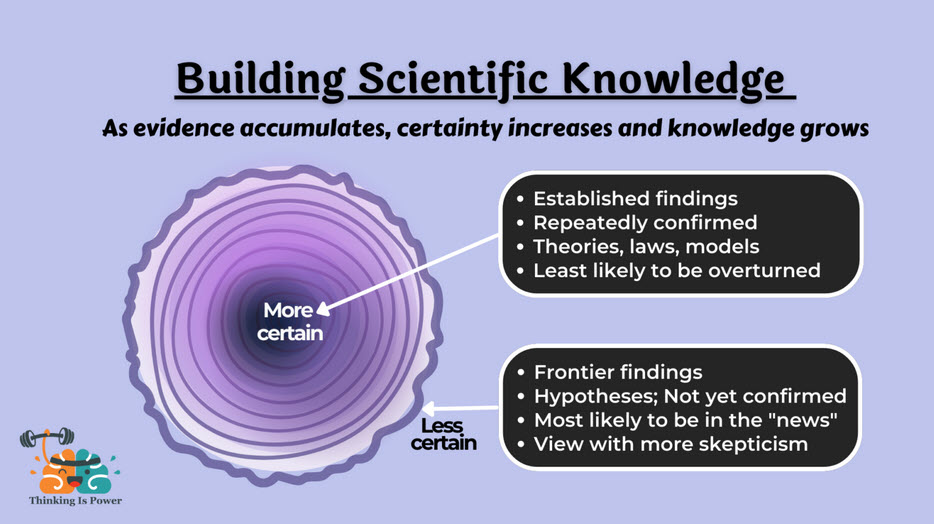
Scientific knowledge is the “why” behind the “how.” It provides the empirical framework that prevents technology from being a series of happy accidents. In the tech world, scientific knowledge is synonymous with reliability, scalability, and truth. It is the process of turning the unknown into the quantifiable.
For those navigating the rapidly evolving landscape of AI, software, and digital tools, staying grounded in scientific knowledge is the only way to distinguish between “hype” and “innovation.” As we continue to push the boundaries of what is possible through code and silicon, our success will depend entirely on our ability to harness, verify, and apply scientific knowledge to solve the complex problems of the modern era. Technology, after all, is simply science made manifest in the palm of our hands.
aViewFromTheCave is a participant in the Amazon Services LLC Associates Program, an affiliate advertising program designed to provide a means for sites to earn advertising fees by advertising and linking to Amazon.com. Amazon, the Amazon logo, AmazonSupply, and the AmazonSupply logo are trademarks of Amazon.com, Inc. or its affiliates. As an Amazon Associate we earn affiliate commissions from qualifying purchases.