
In the dynamic landscape of web technology, where innovations emerge and recede with remarkable speed, Microsoft Silverlight stands as a significant, albeit now largely historical, chapter. For a period, it was touted as a powerful competitor in the realm of Rich Internet Applications (RIAs), a robust framework designed to deliver captivating, interactive web content that went far beyond the capabilities of standard HTML. Understanding Silverlight requires a journey back to a time when the web was grappling with limitations in media delivery and user experience, and companies were vying to define the future of online interactivity.

At its core, Microsoft Silverlight was a plugin-based runtime environment for delivering and running rich web applications. Released by Microsoft in 2007, it aimed to provide a cross-browser, cross-platform solution for creating and delivering high-quality video, animations, graphics, and interactive user interfaces directly within a web browser. It was built upon the formidable .NET framework, allowing developers to leverage familiar programming languages like C# and Visual Basic .NET, along with a powerful declarative markup language called XAML (Extensible Application Markup Language) for designing user interfaces.
The Dawn of a Rich Internet Application Era
The mid-2000s marked a pivotal moment for web development. The internet was maturing beyond static pages and simple forms, and users demanded more engaging, responsive, and media-rich experiences. This era saw a significant push towards what became known as Rich Internet Applications, a class of web applications that had many characteristics of desktop applications.
A Vision for Interactive Web Content
Before Silverlight, and indeed during its tenure, the web was largely dominated by Adobe Flash (formerly Macromedia Flash) for delivering animated content, interactive games, and streaming video. While Flash was ubiquitous, its proprietary nature and perceived performance issues left room for alternatives. Standard HTML and JavaScript, while foundational, struggled to natively support the advanced graphics, smooth animations, and high-definition video necessary for truly immersive online experiences without relying heavily on complex workarounds or browser-specific hacks. There was a clear void for a more robust, standardized, and developer-friendly platform that could elevate the web experience. Developers sought tools that could bridge the gap between the rich functionality of desktop applications and the accessibility of web browsers. They needed frameworks that offered better security, performance, and a more streamlined development workflow for complex interfaces.
Microsoft’s Entry into the RIA Space
Microsoft, ever a major player in the software industry, recognized this burgeoning demand. With its formidable .NET ecosystem and a massive developer community, it was only natural for the company to enter the RIA arena. Silverlight was Microsoft’s direct answer to Flash and a strategic move to extend the reach of its .NET technologies to the web. The ambition was clear: to offer a superior alternative for delivering rich media and sophisticated applications, tightly integrated with Microsoft’s existing development tools and platforms, primarily Visual Studio. It was designed not just as a competitor to Flash but also as a way to showcase the power and versatility of the .NET framework in a browser environment, allowing developers to reuse skills and codebases. This strategic alignment aimed to lock developers into Microsoft’s technology stack while providing a compelling solution for end-users.
Core Features and Technical Prowess
Silverlight was more than just a media player; it was a comprehensive application framework that offered a rich set of features designed to empower developers to create sophisticated web experiences. Its technical foundations were robust, leveraging the strengths of the .NET platform.
Rich Media and Graphics Capabilities
One of Silverlight’s primary strengths was its exceptional ability to handle rich media. It provided native support for high-quality video and audio streaming, often with superior performance and advanced capabilities compared to what was natively available in browsers at the time. This included adaptive streaming, which adjusted video quality based on network conditions, ensuring a smoother viewing experience. It supported vector graphics, allowing for scalable, resolution-independent visual elements that looked crisp on any display size. Complex animations, transitions, and visual effects could be created with relative ease, making it a compelling choice for interactive advertisements, data visualizations, and engaging user interfaces.
Cross-Browser, Cross-Platform Ambitions
A significant selling point for Silverlight was its stated goal of being cross-browser and cross-platform. While primarily a Windows product, Microsoft developed versions of Silverlight that could run on macOS and supported major browsers like Internet Explorer, Firefox, Safari, and Chrome. This commitment to broader compatibility was crucial in an era dominated by different operating systems and browser choices, aiming to ensure that Silverlight content could reach a wide audience without requiring specific browser installations or OS environments. This ambition was a direct challenge to the often fragmented web development landscape.
.NET Framework Integration
For developers, Silverlight’s integration with the .NET Framework was a huge draw. It allowed them to build web applications using familiar languages like C# and VB.NET, bringing the power, type safety, and extensive libraries of the .NET ecosystem to the browser. This contrasted sharply with the JavaScript-centric development prevalent for standard web pages, offering a more structured and robust development model, especially for large-scale enterprise applications. The Common Language Runtime (CLR) underpinned Silverlight, providing memory management, exception handling, and security features that streamlined development and enhanced application reliability.
XAML for User Interfaces
XAML played a critical role in Silverlight’s development model. It is an XML-based declarative language used to define user interfaces, data binding, and events. This separation of UI definition from application logic (often written in C#) allowed designers and developers to work more collaboratively and efficiently. XAML facilitated the creation of complex, visually rich interfaces with less code, and its strong integration with design tools like Microsoft Expression Blend made it appealing for creating sophisticated, pixel-perfect UIs that were difficult to achieve with traditional HTML and CSS at the time.
Adoption, Peak, and Prominent Use Cases
Silverlight, for a period, garnered significant attention and adoption, particularly among enterprises and media companies seeking advanced web capabilities. Its unique blend of features attracted a diverse set of users.
Early Enthusiasm and Developer Community
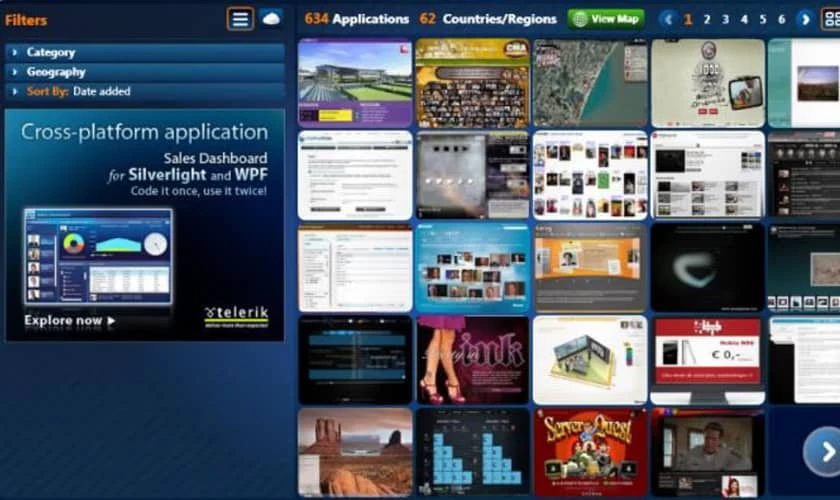
Upon its release, Silverlight generated considerable excitement within the developer community, especially among those already familiar with the Microsoft ecosystem. The promise of building rich web applications with familiar .NET tools and languages, combined with the robust media capabilities, seemed like a winning combination. Microsoft invested heavily in developer evangelism, providing extensive documentation, tools, and training, which fostered a growing community eager to explore its potential. Conferences and online forums buzzed with discussions about Silverlight’s capabilities and its potential to revolutionize web development.
High-Profile Implementations
Silverlight’s peak saw several high-profile implementations that showcased its power. Perhaps the most famous example was Netflix, which used Silverlight to power its Watch Instantly streaming service on PCs and Macs. This was a critical endorsement, as Netflix required a robust, secure, and high-performance platform for delivering premium video content with Digital Rights Management (DRM). Other notable uses included NBC’s streaming coverage of the 2008 Beijing Olympics, which successfully handled massive viewership, proving Silverlight’s scalability and reliability for live media delivery. Many other media outlets, sports organizations, and educational platforms also adopted Silverlight for their streaming and interactive content needs.
Enterprise and Line-of-Business Applications
Beyond media, Silverlight found a strong niche in enterprise and line-of-business (LOB) applications. Its rich UI capabilities, strong data binding features, and integration with the .NET backend made it ideal for creating complex internal tools, dashboards, and data-entry systems that required a highly interactive and responsive user experience. Companies could build sophisticated, data-intensive applications that ran in the browser, offering the convenience of web deployment without sacrificing the richness typically associated with desktop applications. This made it a compelling choice for financial services, healthcare, manufacturing, and other sectors needing robust internal systems.
The Decline and Demise of Silverlight
Despite its initial promise and significant adoption, Silverlight’s star began to wane as the technological landscape shifted dramatically. Several converging factors ultimately led to its decline and official deprecation.
The Rise of HTML5 and Open Standards
The most significant factor in Silverlight’s demise was the rapid evolution and widespread adoption of HTML5, CSS3, and modern JavaScript. These open web standards began to offer many of the capabilities that Silverlight and Flash previously monopolized, but natively within the browser, without the need for a plugin. HTML5 introduced <video> and <audio> tags for native media playback, Canvas for dynamic 2D graphics, and WebGL for hardware-accelerated 3D graphics. CSS3 provided advanced styling and animations, and JavaScript engines became incredibly fast, empowering complex client-side logic. The industry began to rally around these open standards, pushing for a “plugin-free web.” This meant that many developers no longer needed a proprietary plugin to achieve rich experiences, thus eroding Silverlight’s unique selling proposition.
Apple’s Stance Against Plugins
Apple played a pivotal role in accelerating the shift away from plugins. Steve Jobs’ famous 2010 “Thoughts on Flash” letter, which outlined Apple’s reasons for not supporting Flash on iOS devices (iPhone, iPad), created a ripple effect across the industry. While the letter focused on Flash, it signaled a broader industry trend away from plugin-based architectures in favor of native HTML5. This decision, driven by concerns about performance, battery life, security, and developer control, effectively declared that mobile devices, a rapidly growing segment, would be plugin-free. This forced content providers and developers to prioritize HTML5 for cross-device compatibility, leaving technologies like Silverlight at a disadvantage for universal reach.
Microsoft’s Shifting Strategy
Microsoft itself eventually began to pivot away from Silverlight. Recognizing the industry’s clear direction towards HTML5 and open standards, the company started to shift its focus. While Silverlight 5 was released in 2011, it was announced as the final major version. Microsoft’s attention turned to developing its own HTML5 capabilities within Internet Explorer and later Edge, and promoting the Universal Windows Platform (UWP) for building applications that could run across various Windows devices. This strategic change signaled to developers that Silverlight was no longer Microsoft’s primary web development platform, accelerating its obsolescence. The company’s internal resources were reallocated to embrace and enhance the very open standards that had challenged Silverlight’s existence.
End-of-Life and Security Concerns
With the official declaration that Silverlight would no longer be actively developed and its support lifecycle drawing to a close, its fate was sealed. Microsoft officially ended mainstream support for Silverlight in October 2012 and extended support in October 2021. Using unsupported software poses significant security risks, as new vulnerabilities are not patched, making systems susceptible to exploits. Modern browsers also increasingly deprecated or completely removed support for plugin architectures like NPAPI (Netscape Plugin Application Programming Interface), which Silverlight relied upon, making it harder for users to even run existing Silverlight applications. This combination of factors made Silverlight an impractical and risky choice for new development and even for maintaining existing applications.
The Legacy and Lessons Learned
While Silverlight itself is largely a relic of the past, its journey offers valuable insights into the rapid evolution of web technology and leaves behind a subtle legacy that influenced subsequent developments.
Paving the Way for Modern Web Technologies
Silverlight’s innovative approach to UI development, particularly its use of XAML for declarative interfaces and its robust data binding capabilities, influenced later web frameworks and technologies. Concepts refined in Silverlight found echoes in modern JavaScript frameworks and libraries that strive for component-based architectures and efficient data synchronization. The pursuit of rich, desktop-like experiences in the browser, which Silverlight championed, continued with frameworks like React, Angular, and Vue.js, albeit using open web standards. Its strong developer tooling and emphasis on a structured development process for complex applications also set a precedent for what developers expected from web development platforms.
The Plugin Paradox
Silverlight’s rise and fall are a prime example of the “plugin paradox.” Plugins offered a way to extend browser functionality beyond what was natively available, enabling groundbreaking experiences. However, they also introduced significant drawbacks: security vulnerabilities (as plugins ran with elevated privileges), performance overhead, installation friction for users, and compatibility issues across different browsers and operating systems. The industry’s eventual pivot to HTML5 demonstrated a clear preference for native browser capabilities and open standards over proprietary, plugin-based solutions. This paradigm shift affirmed that the core browser engine, continuously enhanced through open standards, should be the primary vehicle for delivering web content.

A Testament to Rapid Technological Evolution
Ultimately, Microsoft Silverlight serves as a powerful testament to the relentless pace of technological evolution in the software world. It was a well-engineered product that addressed a real need at a specific point in time, offering capabilities that were cutting-edge for its era. However, the web is an ever-changing environment, driven by open standards, community collaboration, and fierce competition. Technologies that fail to adapt, or are outpaced by more agile and universally embraced alternatives, are quickly superseded. Silverlight’s story highlights the importance of anticipating shifts in user expectations, embracing open standards, and maintaining flexibility in a landscape where today’s innovation can quickly become tomorrow’s legacy. Its disappearance from active development marks not a failure of engineering, but a success of the broader web ecosystem in evolving to meet the demands of a dynamic digital world.
aViewFromTheCave is a participant in the Amazon Services LLC Associates Program, an affiliate advertising program designed to provide a means for sites to earn advertising fees by advertising and linking to Amazon.com. Amazon, the Amazon logo, AmazonSupply, and the AmazonSupply logo are trademarks of Amazon.com, Inc. or its affiliates. As an Amazon Associate we earn affiliate commissions from qualifying purchases.