
In the traditional sense, the word “arrest” conjures images of law enforcement and physical restraint. However, in the rapidly evolving world of technology, an “arrest” takes on a digital and systemic dimension. Whether it is a sophisticated “Digital Arrest” scam targeting unsuspecting users or a “System Arrest” where critical software processes grind to a halt due to deadlocks, the concept represents a fundamental disruption of flow, security, and functionality.
In this deep dive into the technical niche, we explore what an arrest means within the contexts of digital security, operating system architecture, and network resilience. Understanding these concepts is vital for IT professionals, cybersecurity enthusiasts, and tech-savvy consumers navigating an increasingly interconnected world.

The Rise of the “Digital Arrest”: A New Frontier in Cybersecurity
In the current cybersecurity climate, the term “Digital Arrest” refers to a highly sophisticated form of social engineering and cybercrime. Unlike a physical arrest, a digital arrest occurs when a threat actor uses psychological manipulation, deepfake technology, and network spoofing to convince a victim they are under legal restraint by federal or international agencies.
Anatomy of a Cyber-Scam and Technical Exploitation
A digital arrest typically begins with a technical intrusion. Scammers utilize VoIP (Voice over IP) spoofing to make incoming calls appear as though they originate from legitimate government servers or police departments. The “arrest” is executed by confining the victim to a video call—often via platforms like Skype, WhatsApp, or Zoom—where the perpetrators use high-definition overlays and AI-generated backgrounds to mimic an official interrogation room.
From a technical perspective, these attacks exploit vulnerabilities in Caller ID protocols (STIR/SHAKEN vulnerabilities) and the lack of universal verification in cross-border telecommunications. The goal is “financial arrest”—freezing the victim’s digital assets until a “clearance fee” is paid via untraceable cryptocurrency or wire transfers.
Social Engineering and the Psychological Edge
The success of a digital arrest relies on the “OODA loop” (Observe, Orient, Decide, Act) disruption. By overwhelming the victim with technical jargon—citing “illegal IP addresses,” “money laundering via compromised IDs,” or “suspicious network packets”—scammers create a sense of urgency. For the tech-conscious individual, the “arrest” is a reminder that the greatest vulnerability in any security stack is the human element.
Technical Arrests: Understanding System Deadlocks and Process Freezes
Moving from security to software engineering, an “arrest” refers to a state where a computer system or a specific application ceases to function. This is often categorized as a “System Arrest” or a “Process Hang.” In the world of high-performance computing and server management, these arrests can lead to catastrophic downtime.
The Mechanics of a System Hang and Kernel Panics
A system arrest occurs when the operating system (OS) encounters a condition it cannot recover from. In Linux environments, this is known as a “Kernel Panic”; in Windows, it is the infamous “Blue Screen of Death” (BSOD).
When a system “arrests” its own operations, it is often a defensive mechanism. If the OS detects that a hardware component is failing or that a memory address is being accessed illegally, it halts all processing to prevent data corruption. This “voluntary arrest” of services is the system’s last line of defense against permanent hardware damage or the spreading of corrupted code throughout the file system.
Resource Contention and Race Conditions
One of the primary technical reasons for a software arrest is a “deadlock.” In multi-threaded programming, a deadlock occurs when two or more processes are waiting for each other to release a resource (such as a database lock or a specific memory segment).
Imagine Process A holds Resource 1 and needs Resource 2, while Process B holds Resource 2 and needs Resource 1. Neither can move forward. The system is effectively under arrest. Engineers must use debugging tools like “watchdogs” or “mutex” (mutual exclusion) algorithms to prevent these logical arrests from crashing entire cloud infrastructures.

Safeguarding Digital Assets Against Unauthorized Arrests
In an era where data is the most valuable commodity, the “arrest” or seizing of digital assets by unauthorized actors is a constant threat. Protecting your digital life requires a robust architecture that prevents hackers from placing your data under “custody.”
Zero-Trust Architecture and Identity Management
The best way to prevent a digital arrest—whether it’s a scam or a ransomware attack—is the implementation of Zero-Trust Architecture (ZTA). In a ZTA framework, no user or device is trusted by default, even if they are already inside the network perimeter.
This technical approach utilizes micro-segmentation to ensure that if one part of a system is “arrested” by a malicious script, the rest of the network remains operational. Identity and Access Management (IAM) tools, coupled with Multi-Factor Authentication (MFA) using FIDO2 keys, provide a cryptographic barrier that makes it nearly impossible for a scammer to seize control of a user’s digital identity.
Automated Response Protocols (SOAR)
For enterprises, the answer to digital arrests is SOAR (Security Orchestration, Automation, and Response). SOAR platforms can detect suspicious patterns—such as a sudden attempt to lock down thousands of files (ransomware)—and “arrest” the malicious process before it can propagate.
By using API integrations across firewalls, endpoint detection systems (EDR), and email gateways, SOAR platforms act as a digital police force, identifying “arrestable offenses” within the network traffic and neutralizing them in milliseconds. This level of automated vigilance is essential for maintaining “uptime” in the face of increasingly automated threats.
The Future of Defensive Tech: Preventing Systemic Arrests
As we look toward the future of technology, the concept of an “arrest” is being redefined by Artificial Intelligence and Machine Learning. The goal is to move from reactive measures to proactive resilience, ensuring that neither scams nor system errors can halt the flow of information.
AI-Driven Threat Detection and Behavioral Analysis
The next generation of cybersecurity tools uses AI to prevent “Digital Arrests” before the first contact is made. By analyzing millions of data points, AI models can identify the technical signatures of a scammer’s infrastructure—such as newly registered domains with suspicious SSL certificates or abnormal traffic patterns in VoIP gateways.
These AI systems perform a “pre-emptive arrest” on malicious traffic, filtering out the “arrest scams” and phishing attempts before they ever reach the end-user’s inbox or phone. This shift from signature-based detection to behavioral analysis is a game-changer in digital security.
Self-Healing Systems and Digital Resilience
In software development, the “Arrested System” is being countered by the rise of self-healing architectures. Utilizing containerization tools like Kubernetes, modern applications can detect when a process has “arrested” or hung.
The system automatically kills the “arrested” container and spins up a fresh, healthy instance in its place. This “ephemeral” nature of modern tech means that even if a part of the system is compromised or stalled, the overall service remains uninterrupted. This is the pinnacle of digital resilience: a system so robust that it cannot be arrested by internal errors or external interference.
Conclusion
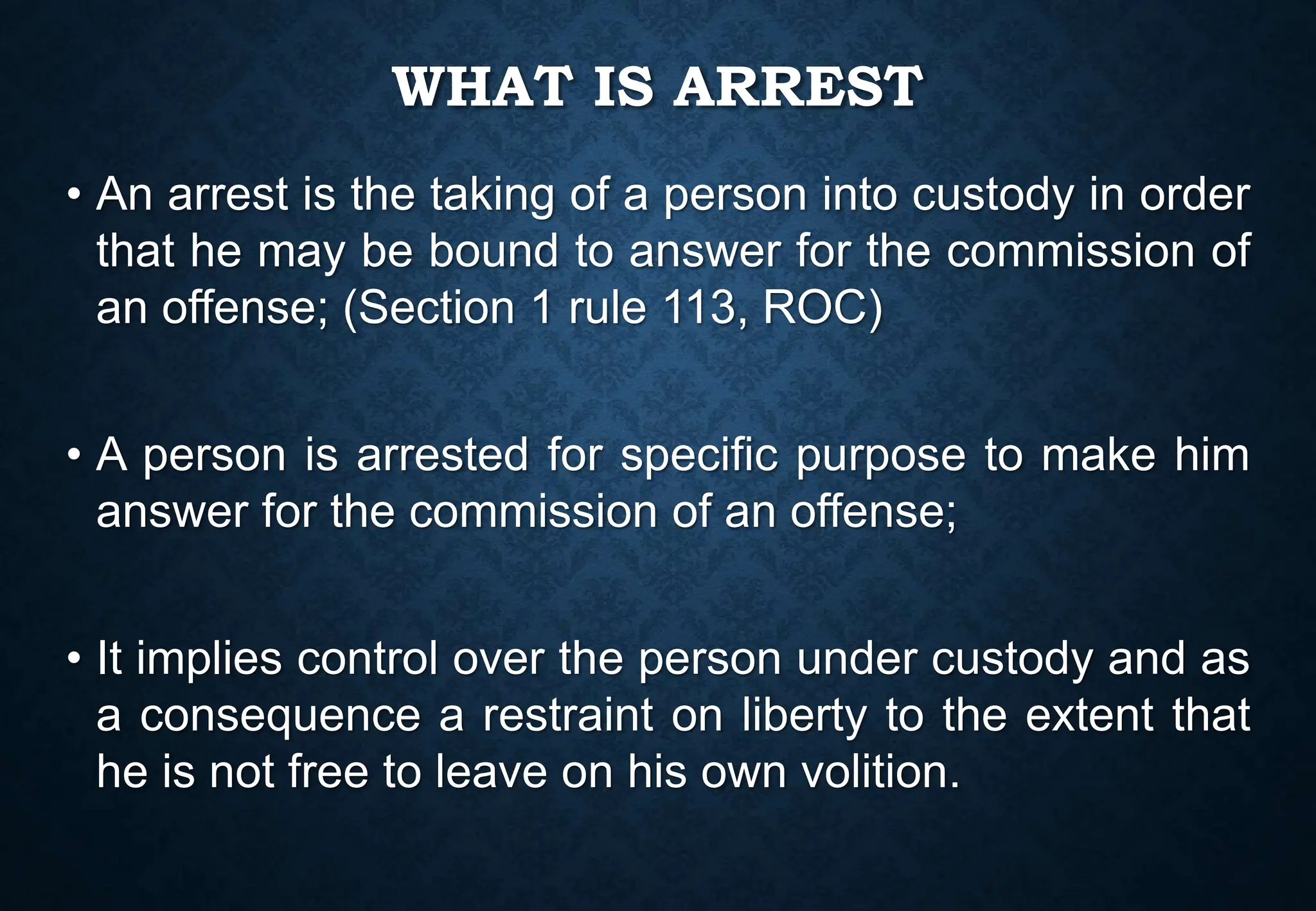
What is an arrest? In the modern tech landscape, it is a multifaceted concept that spans from the dark tactics of cyber-criminals to the complex logical puzzles of software engineering. Whether it is the psychological “Digital Arrest” used in social engineering or the technical “System Arrest” caused by a deadlock, the term signifies a disruption of the digital status quo.
By embracing Zero-Trust frameworks, AI-driven security, and self-healing software architectures, we can mitigate the risks associated with these digital halts. For the individual and the enterprise alike, the key to avoiding an “arrest” lies in constant technical vigilance, a deep understanding of system mechanics, and the implementation of advanced defensive technologies. In a world that never sleeps, ensuring our systems never “arrest” is the ultimate goal of the tech industry.
aViewFromTheCave is a participant in the Amazon Services LLC Associates Program, an affiliate advertising program designed to provide a means for sites to earn advertising fees by advertising and linking to Amazon.com. Amazon, the Amazon logo, AmazonSupply, and the AmazonSupply logo are trademarks of Amazon.com, Inc. or its affiliates. As an Amazon Associate we earn affiliate commissions from qualifying purchases.