
The modern digital landscape is defined by its constant connectivity and the pervasive hum of urban life. As technology has advanced, our environments have become increasingly saturated with auditory stimuli, leading to a surge in demand for solutions that provide “sonic privacy” and improved sleep hygiene. At the forefront of this movement is the white sound machine—a sophisticated piece of acoustic technology designed to manipulate our auditory perception. While often categorized simply as a “sleep aid,” the white sound machine is a marvel of signal processing and hardware engineering.
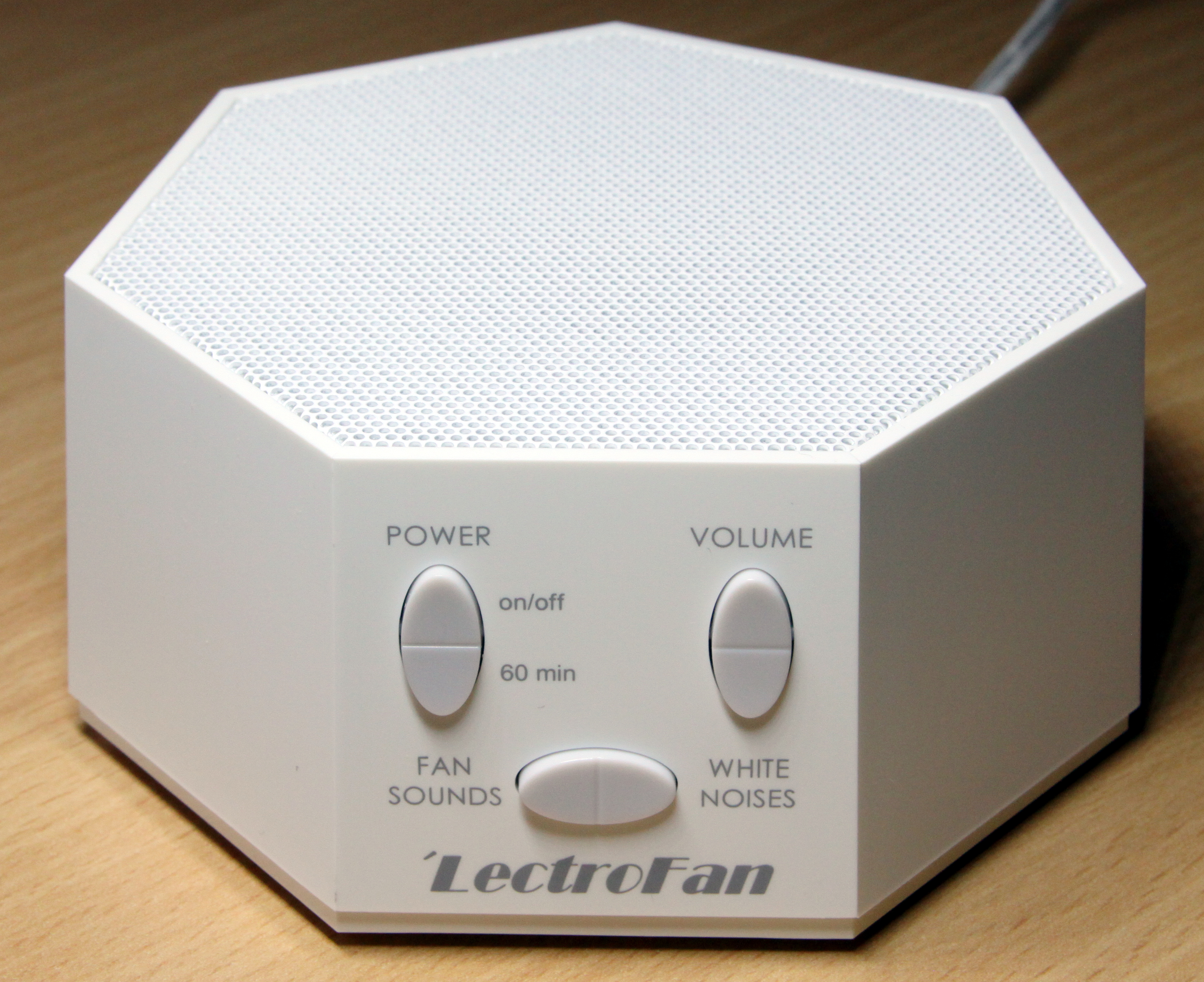
In this comprehensive guide, we will explore the technical nuances of white sound machines, the physics of sound masking, and how the latest gadgets in this space are integrating artificial intelligence and the Internet of Things (IoT) to redefine our relationship with noise.
1. Decoding the Science: How White Sound Technology Works
To understand what a white sound machine is, one must first understand the physics of “white noise.” In technical terms, white noise is a random signal having equal intensity at different frequencies, giving it a constant power spectral density. Much like white light is a combination of all visible wavelengths of the color spectrum, white noise is a combination of all audible frequencies (20 Hz to 20,000 Hz) played at once.
The Mechanism of Sound Masking
The primary technological function of a white sound machine is sound masking. Contrary to popular belief, these machines do not “cancel” sound like active noise-canceling (ANC) headphones do. ANC technology uses destructive interference—creating a sound wave that is the exact inverse of the incoming noise to “zero it out.”
A white sound machine, however, uses “additive masking.” By providing a consistent, predictable floor of sound, the machine raises the ambient noise level of a room. This reduces the signal-to-noise ratio of sudden, jarring sounds—such as a door slamming or a car horn. Because the brain’s auditory cortex is occupied by the steady stream of white noise, it becomes less likely to register the peak frequencies of intrusive sounds, allowing the listener to remain asleep or focused.
Signal Processing and Frequency Distribution
Engineers design these devices to produce a “flat” spectral density. In a digital machine, this is achieved through a random number generator that produces a signal without a repeating pattern. The complexity lies in ensuring the digital-to-analog converter (DAC) and the internal speaker can reproduce these frequencies accurately without distortion. If the hardware is low-quality, the “white” noise may sound tinny or “colored,” failing to provide the full-spectrum coverage required for effective masking.
2. Hardware vs. Software: The Anatomy of Modern Sound Gadgets
The market for white sound machines has diverged into two distinct technological paths: mechanical oscillators and digital synthesizers. Each offers a different approach to the challenge of creating a consistent auditory environment.
Mechanical Engineering: The Fan-Based Approach
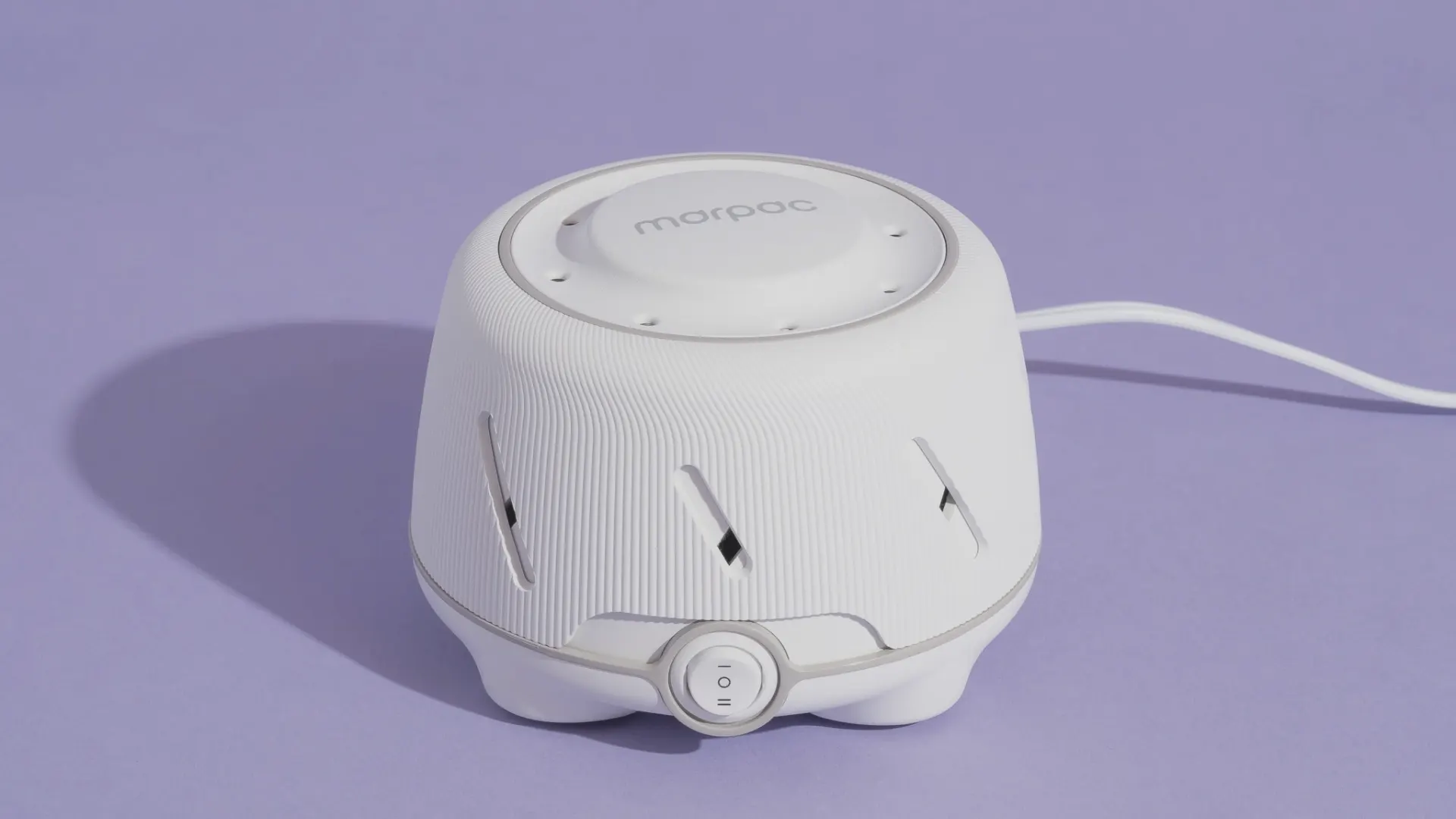
The original white sound machines, popularized by brands like Marpac (now Yogasleep), were purely mechanical. These devices utilize an internal electric motor and a physical fan blade encased in an acoustic chamber. By adjusting the size of the air vents on the outer shell, the user changes the “pitch” of the rushing air.
From a tech perspective, these are prized for their “true” randomness. Unlike digital loops, a mechanical fan produces an analog sound that never repeats, preventing the human brain from identifying a pattern—a phenomenon known as “loop-hunting” that can actually keep a person awake. However, these devices lack the versatility of their digital counterparts, offering only one “type” of sound.
Digital Synthesizers and Solid-State Tech
Modern digital sound machines represent the cutting edge of the niche. These devices use solid-state electronics to play back recorded samples or synthesize sound in real-time. High-end models feature high-fidelity drivers and advanced DSP (Digital Signal Processing) chips.
The advantage of digital hardware is the ability to store vast libraries of sound profiles. Beyond standard white noise, these gadgets can simulate complex environments like a “thunderstorm in a Pacific Northwest forest” or “low-frequency cabin hum.” The technical challenge for digital machines is the “seamless loop.” Cheap hardware often has a noticeable 10-to-30-second loop. Superior gadgets use high-capacity memory and complex algorithms to ensure the loop is either hours long or non-existent, generated algorithmically in real-time.
3. The Expanding Spectrum: Pink, Brown, and AI-Driven Audio
As our understanding of psychoacoustics has evolved, white sound machines have transitioned into multi-spectrum devices. While “white sound” remains the generic term, tech enthusiasts now look for devices capable of producing varied “colors” of noise, each requiring different algorithmic filters.
Pink and Brown Noise Algorithms
- Pink Noise: This is white noise that has been filtered to reduce the volume of higher frequencies. It follows a 1/f power spectrum, meaning it has equal energy per octave. To the human ear, it sounds “smoother” or more balanced than white noise. Engineering a pink noise filter requires precise attenuation to ensure the lower frequencies dominate without becoming muddy.
- Brown (Red) Noise: This focuses even more heavily on the lower-frequency spectrum, mimicking the sound of a deep roar or heavy rainfall. Technologically, this is produced by integrating white noise (in the mathematical sense), resulting in a much deeper bass response.
AI and Adaptive Soundscapes
The latest frontier in white sound tech is the integration of Artificial Intelligence. Some high-end gadgets now include “active monitoring” microphones. These devices listen to the ambient environment; if the machine detects a sudden increase in external noise (like a nearby construction site), the AI automatically adjusts the volume and frequency profile of the white noise to compensate. This “adaptive masking” ensures that the sound environment remains stable regardless of external fluctuations, a significant leap from the static “set-and-forget” models of the past decade.
4. Smart Integration: White Sound in the IoT Ecosystem
The white sound machine is no longer a standalone unit; it is increasingly becoming a central node in the smart home ecosystem. This integration has introduced a new layer of software complexity and user interaction.
Mobile App Connectivity and Customization
Many modern machines, such as those from Hatch or Sleepme, are controlled entirely via smartphone apps. This allows for deep customization of “sound layers.” A user can take a base layer of white noise and digitally overlay the sound of a distant train or light rain, adjusting the mixing levels of each individual track. These settings are then synced to the cloud, allowing the user to maintain their personalized “sleep profile” across multiple devices or locations.
Automation and Biometric Syncing
Integration with platforms like IFTTT, Amazon Alexa, and Google Home has enabled sophisticated automation. A user’s white sound machine can be programmed to fade in gradually as the sun sets (synced with smart lighting) or to shut off automatically when an Apple Watch detects the user has entered a light sleep phase. This level of biometric feedback loop represents the “Tech 2.0” version of the white sound machine, where the device responds to the user’s physiological state in real-time.
5. Security, Privacy, and Technical Specifications: A Buyer’s Perspective
As white sound machines become more “connected,” they also face the same technical scrutiny as any other IoT device. For the tech-savvy consumer, choosing a machine involves more than just listening to a demo.
Privacy in “Listening” Devices
Devices that feature adaptive masking (using microphones) raise valid privacy concerns. Tech-conscious users must investigate whether the audio processing is done “on-edge” (locally on the device’s chip) or if data is sent to the cloud. The most secure hardware performs all spectral analysis locally, ensuring that no private conversations are recorded or transmitted.
Key Technical Specs to Consider
When evaluating white sound gadgets, three technical specifications are paramount:
- Frequency Response: Look for a range of at least 60 Hz to 18 kHz. Without a decent low-end response, “Brown” noise will sound hollow.
- Total Harmonic Distortion (THD): High-quality machines will have a low THD, ensuring the noise remains “clean” at high volumes.
- Power Source and Portability: With the rise of USB-C as a standard, many modern machines have ditched proprietary AC adapters for USB-PD (Power Delivery), making them compatible with high-capacity power banks for travel.

The Future of Auditory Technology
The white sound machine has come a long way from the simple whirring fan of the 1960s. Today, it is a sophisticated intersection of acoustic physics, digital signal processing, and smart home connectivity. As we move forward, we can expect to see further advancements in “Neural Entrainment”—using specific sound frequencies to not just mask noise, but to actively encourage certain brainwave states like Alpha (relaxation) or Delta (deep sleep).
For those living in a world that never truly goes quiet, the white sound machine is more than just a gadget; it is an essential piece of technology for reclaiming one’s cognitive space and ensuring that the digital age doesn’t come at the cost of a good night’s rest. Whether through mechanical ingenuity or AI-driven algorithms, the tech of silence is louder than ever.
aViewFromTheCave is a participant in the Amazon Services LLC Associates Program, an affiliate advertising program designed to provide a means for sites to earn advertising fees by advertising and linking to Amazon.com. Amazon, the Amazon logo, AmazonSupply, and the AmazonSupply logo are trademarks of Amazon.com, Inc. or its affiliates. As an Amazon Associate we earn affiliate commissions from qualifying purchases.