
In the landscape of modern culinary technology, we often focus on high-end gadgets: induction cooktops, precision immersion circulators, and AI-integrated smart ovens. However, one of the most critical technological advancements in the kitchen is also one of the most understated: parchment paper. While it may appear to be a simple analog tool, parchment paper is a marvel of material science and chemical engineering. Understanding the specific thermal limits of this material—specifically, at what temperature parchment paper burns—requires a deep dive into the technology of cellulose fibers and silicone polymers.
The Engineering Behind Non-Stick Surfaces: Understanding Silicone Coating Technology
To understand why parchment paper reacts to heat the way it does, we must first look at its manufacturing process. Modern parchment paper is not simply “paper”; it is a technologically treated substrate designed to withstand extreme environments.
The Chemical Composition of Food-Grade Polymers
The “parchmentizing” process involves passing sheets of paper pulp through a bath of sulfuric acid. This specific chemical treatment partially dissolves the cellulose fibers, creating a denser, more heat-resistant, and non-porous material. However, the true technological breakthrough lies in the coating. Most professional-grade parchment is coated with a thin layer of silicone (polysiloxane).
Silicone is used because of its high thermal stability and low surface energy, which provides the non-stick property. From a tech perspective, silicone is a hybrid between inorganic glass and organic polymers. This molecular structure allows the paper to remain flexible while maintaining structural integrity at temperatures that would cause standard bond paper to ignite instantly.
How Manufacturing Processes Dictate Thermal Resistance
The quality of the parchment paper is often determined by the thickness of the silicone application and the density of the base cellulose. In industrial manufacturing, precision application technology ensures that the silicone is distributed at a micron-level thickness. This consistency is vital; if the coating is too thin, the paper loses its non-stick properties; if it is uneven, “hot spots” can develop, leading to premature carbonization of the paper fibers during high-heat cycles in a convection or infrared oven.
Thermal Thresholds: What Temperature Does Parchment Paper Actually Burn?
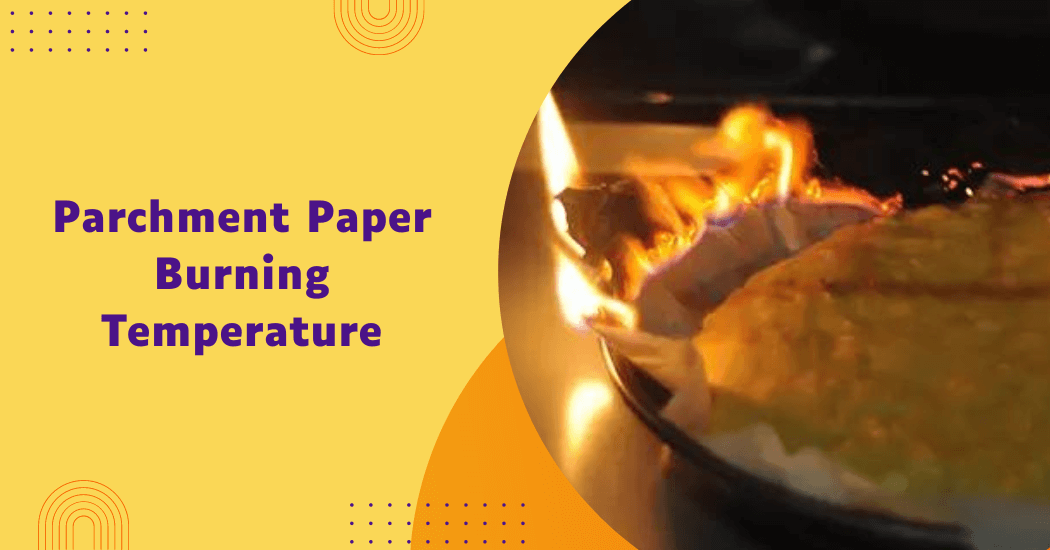
When we ask at what temperature parchment paper burns, we are looking for the “flashpoint”—the temperature at which the material evolves enough flammable vapor to ignite in the air. However, in the world of material science, there is a significant difference between scorching (thermal degradation) and burning (combustion).
Defining the Flashpoint vs. the Scorching Point
Most commercially available parchment paper is rated for temperatures up to 420°F to 450°F (215°C to 232°C). This is the “safe operating limit” defined by manufacturers. Beyond this threshold, the material does not necessarily burst into flames immediately, but it undergoes a process called carbonization.
The cellulose fibers begin to break down, turning the paper brown and brittle. The flashpoint of parchment paper—the point of actual combustion—is typically much higher, often cited around 800°F (427°C). However, the risk in a kitchen environment is that the paper can become so brittle that small fragments break off, or if it comes into direct contact with a heating element (radiative heat), it can ignite at lower ambient temperatures.
The Role of Heat Distribution in Modern Convection Technology
In the context of modern kitchen tech, the way heat is delivered matters as much as the temperature itself. Convection ovens use high-speed fans to circulate air, which increases the rate of heat transfer to the surface of the parchment. This is why parchment paper may scorch faster in a professional convection oven at 400°F than in a standard still-air oven at 425°F.

The technology of heat distribution creates a boundary layer of hot air. If the parchment paper is oversized and curls upward, it enters this high-velocity air stream, increasing the risk of the paper reaching its degradation temperature faster than the food it is supporting.
Safety Standards and Digital Monitoring in High-Heat Culinary Tech
As we move toward the “Smart Kitchen,” the interaction between materials like parchment paper and digital hardware becomes increasingly important. Safety in high-heat environments is now being managed by sophisticated sensors and AI-driven heat management systems.
IoT Integration: Smart Ovens and Thermal Sensors
Modern smart ovens utilize PID (Proportional-Integral-Derivative) controllers to maintain precise temperatures. For tech-savvy users, this precision is the primary defense against parchment paper combustion. Unlike older analog ovens that might overshoot their target temperature by 30 or 50 degrees during the heating cycle, digital sensors ensure that if you set an oven to 400°F, it stays within a tight tolerance.
This technological accuracy allows for the safe use of parchment paper right up to its maximum rated limit. Some high-end commercial ovens are even beginning to integrate optical sensors that can detect the specific light wavelengths associated with smoke or the browning of cellulose, providing an automated safety shut-off before combustion occurs.
Comparative Analysis: Parchment Paper vs. Silpat Silicone Mats
When evaluating kitchen tech, we must compare parchment paper to its primary technological rival: the Silpat or silicone baking mat. While parchment is a treated paper substrate, Silpats are fiberglass-reinforced silicone.
- Thermal Range: Both usually top out around 480°F, but Silpats have a higher thermal mass.
- Heat Transfer: Parchment is a superior conductor of heat due to its thinness, allowing for better “bottom-up” crisping in tech-heavy baking applications.
- Durability: Parchment is a consumable “single-use” technology, whereas silicone mats are a long-term hardware investment.
From a technological efficiency standpoint, parchment paper remains the industry standard for high-precision pastry work because its low profile does not interfere with the airflow or heat conduction of the baking sheet.
The Future of Sustainable Material Tech in the Food Industry
The evolution of parchment paper is currently trending toward sustainability and advanced chemical safety. As digital tools help us bake more efficiently, the materials we use are being redesigned at the molecular level.
Biodegradable Polymers and High-Heat Resistance
The next generation of parchment paper technology is focusing on removing PFAS (per- and polyfluoroalkyl substances) and ensuring the silicone coatings are biodegradable. Material scientists are experimenting with plant-based resins and advanced ceramic coatings that could potentially raise the safe operating temperature of parchment paper to 500°F or higher.
This would bridge the gap between standard baking and high-heat roasting tech, allowing parchment to be used in applications like wood-fired ovens or high-intensity broilers where it currently fails.
Innovations in Heat-Shielding Nanotechnology
We are also seeing the emergence of nanotechnology in food-grade liners. By incorporating nano-ceramics into the paper pulp, manufacturers are creating “smart liners” that can reflect a percentage of radiant heat while still allowing conductive heat to pass through. This would prevent the edges of the paper from scorching while the center remains effective for cooking—a major leap in the technological utility of what was once a simple piece of paper.
In conclusion, while the average user might only see parchment paper as a way to keep pans clean, it is a sophisticated product of material engineering. Its “burn temperature” is not just a safety warning; it is a technical specification derived from the limits of silicone chemistry and cellulose stability. As kitchen technology continues to advance through IoT integration and new material sciences, our understanding of these thermal limits will allow for faster, safer, and more precise culinary outcomes. Whether you are operating a high-tech commercial bakery or a smart-home kitchen, respecting the 420°F–450°F threshold is an exercise in managing the physics of heat and the chemistry of non-stick polymers.
aViewFromTheCave is a participant in the Amazon Services LLC Associates Program, an affiliate advertising program designed to provide a means for sites to earn advertising fees by advertising and linking to Amazon.com. Amazon, the Amazon logo, AmazonSupply, and the AmazonSupply logo are trademarks of Amazon.com, Inc. or its affiliates. As an Amazon Associate we earn affiliate commissions from qualifying purchases.