
In the world of consumer electronics, we are accustomed to analyzing spec sheets. Whether we are comparing the RAM in a smartphone, the nit brightness of an OLED display, or the aerodynamic coefficient of a new electric vehicle, technical data informs our understanding of performance. However, one of the most essential pieces of “hardware” many of us use daily often goes unexamined: our eyeglasses.
To the casual observer, the small sequence of digits printed on the inside of a temple arm might look like a random serial number or a cryptic manufacturing code. In reality, these numbers represent the technical specifications of your optical interface. Understanding these metrics is not merely a matter of curiosity; it is a fundamental aspect of “user experience” (UX) for your vision. In an era where precision engineering and digital customization define our lifestyle, decoding the numbers on your frames is the first step in optimizing your visual hardware.
The Anatomy of Optical Hardware: Decoding the Primary Measurement String
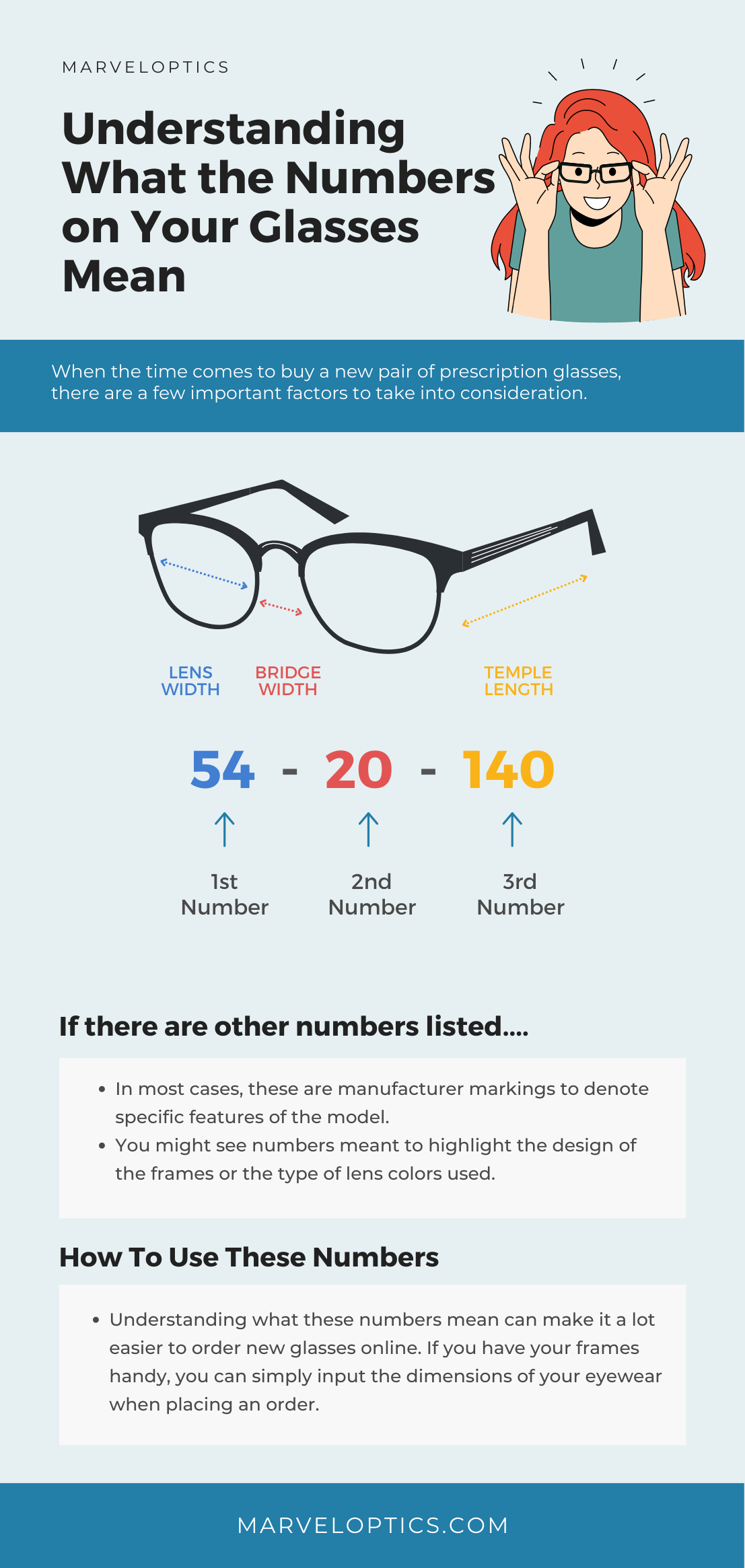
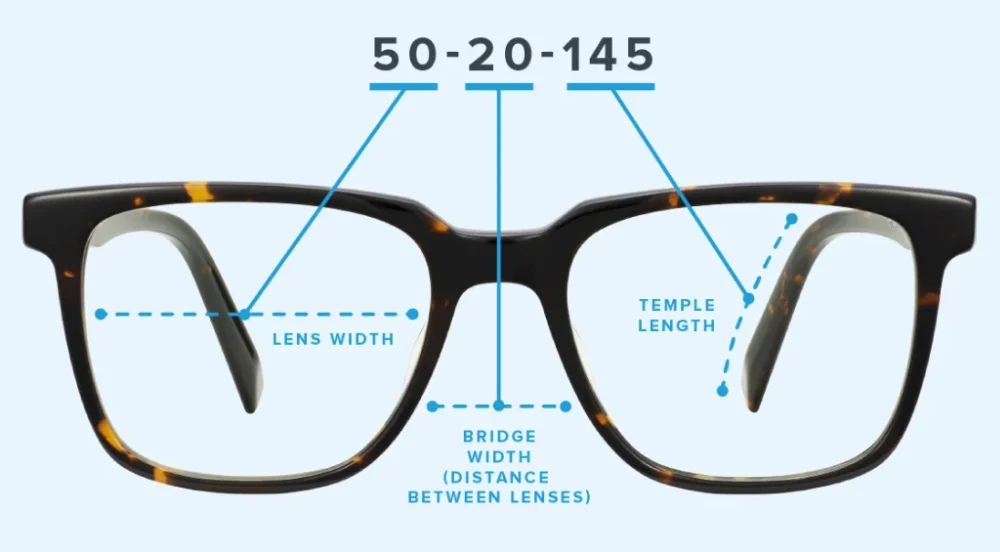
When you examine the inner temple of a pair of high-quality frames, you will typically find a series of three numbers separated by small dashes or squares (e.g., 52-18-140). In the tech world, these are the “form factor” dimensions. They dictate how the hardware interacts with the human anatomy to ensure maximum signal clarity—in this case, light entering the retina.
Lens Width: The Field of View
The first number in the sequence refers to the lens width, measured in millimeters. In technical terms, this is the horizontal diameter of one lens at its widest point. This measurement is crucial because it defines the “display area” of your vision. A wider lens width provides a broader peripheral field of view, which is essential for tasks requiring high situational awareness. From an engineering standpoint, the lens width must be balanced against the frame’s total weight and the user’s pupillary distance (PD) to ensure that the optical center of the lens aligns perfectly with the eye.
Bridge Width: The Ergonomic Interface
The second number, often following a small square symbol, is the bridge width. This is the distance between the two lenses, or more specifically, the space that rests over your nose. In the realm of wearable tech, this is an ergonomic specification. If the bridge width is too narrow, the hardware will sit too high on the face, causing discomfort and optical distortion. If it is too wide, the frames will slip, leading to “signal loss” as the wearer constantly readjusts their focus. For those utilizing high-index lenses or complex prescriptions, the bridge width is a critical variable in maintaining the structural integrity of the frame.
Temple Length: The Stability Component
The third number represents the temple length, which is the overall length of the “arms” of the glasses, including the portion that hooks behind the ear. This measurement ensures the device remains securely anchored. In modern eyewear engineering, temple length is increasingly important as manufacturers integrate more components—such as haptic sensors or Bluetooth modules in smart glasses—into this specific area. A correct temple length ensures that the center of gravity of the frames remains balanced, preventing “nose-heavy” fatigue during long-term use.
Manufacturing Precision and Materials Science in Eyewear Engineering
The numbers on your frames are a testament to the manufacturing tolerances required in modern optics. Just as a processor’s architecture is measured in nanometers, eyeglass frames are the product of rigorous materials science and CAD (Computer-Aided Design) protocols.
High-Tech Materials: From Acetate to Titanium
The durability and weight of the frame depend heavily on the material “stack” used in production. Traditional cellulose acetate is often reinforced with wire cores to allow for cold-fitting adjustments. However, in the high-performance sector, we see the use of Beta-titanium and carbon fiber.
Titanium is favored in tech-centric eyewear for its high strength-to-weight ratio and its biocompatibility. Because titanium is “shape-memory” capable, frames made from this material can withstand significant deformation without losing their calibrated measurements. When you see a specific measurement on a titanium frame, you are looking at a piece of hardware designed for extreme longevity and environmental resistance, much like an aerospace component.
3D Printing and Customization
The industry is currently shifting toward “Additive Manufacturing” or 3D printing. This technology allows for the creation of frames based on a 3D scan of a user’s face, essentially creating “bespoke hardware.” In this context, the numbers on the frame become even more specialized. Instead of choosing from standardized sizes (like a 52mm lens), 3D-printed frames allow for sub-millimeter precision. This level of customization ensures that the “vertex distance”—the space between the back of the lens and the front of the cornea—is optimized for the specific refractive index of the lenses being used.
The Intersection of Optics and Smart Technology
We are currently witnessing a convergence between traditional eyewear and wearable technology. As we move toward a future defined by Augmented Reality (AR) and persistent connectivity, the “numbers” on our frames are evolving to include data beyond mere physical dimensions.
Integration of Wearable Components
Smart glasses, such as those developed by major tech conglomerates, utilize the frame measurements to house sophisticated arrays of sensors, cameras, and batteries. In these devices, the “temple length” isn’t just about fit; it’s about the internal volume available for PCB (Printed Circuit Board) layouts and thermal management. The engineering challenge is to maintain the slim profile of traditional eyewear while packing in the processing power of a smartwatch. When users understand their frame measurements, they can better predict how these tech-heavy devices will distribute weight across their facial structure.
Augmented Reality (AR) and Heads-Up Displays (HUDs)
In AR-enabled eyewear, the measurements on the frame are vital for the calibration of the Heads-Up Display. The “eye box”—the area where the eye can see the full image projected by the AR engine—is incredibly small. If the frame measurements (specifically the bridge and lens width) are off by even a few millimeters, the digital overlay will appear blurry or misaligned. Therefore, for the next generation of tech enthusiasts, knowing your “frame specs” will be as fundamental as knowing your screen resolution or GPU clock speed. It is the bridge between the digital world and our biological perception.
Digital Tools for Fit and Calibration
The process of selecting frames based on these technical numbers has moved from the physical tray of a brick-and-mortar office to the digital storefront. This transition has been facilitated by a suite of AI-driven tools and digital imaging software.
AI-Driven Virtual Try-Ons
Modern e-commerce platforms for eyewear utilize computer vision to perform a “digital fitting.” By using the front-facing camera of a smartphone, AI algorithms can calculate the user’s facial dimensions and map them against the technical specifications of thousands of frame models. This “Virtual Try-On” technology uses spatial mapping to show how a 140mm temple will sit relative to the user’s ear. This is a classic example of “Digital Twin” technology applied to personal accessories, where a digital version of the product is tested against a digital version of the user.
Telehealth and Digital Prescriptions
The numbers on the frames are the physical shell for the most important tech of all: the lenses. Digital lens surfacing has revolutionized how prescriptions are filled. Unlike traditional “molded” lenses, digitally surfaced lenses are carved using diamond-point lathes controlled by sophisticated software. This allows for the compensation of “high-order aberrations” that standard lenses cannot correct.
When you combine the precise physical measurements of the frame with a digital prescription, you are essentially creating a calibrated optical system. This synergy is particularly important for professionals in the tech industry—coders, designers, and engineers—who spend upwards of 10 hours a day in front of high-resolution displays. The correct frame specs ensure that the “blue light” filters and anti-reflective coatings are positioned perfectly to mitigate digital eye strain.

Summary: The Importance of Technical Literacy in Eyewear
Understanding what the numbers on eyeglass frames mean is a vital skill for anyone navigating the modern world. In the context of technology, these numbers represent the specifications of a high-precision instrument. They tell us about the ergonomics, the manufacturing tolerances, and the potential for integrating future smart features.
By treating your eyewear as a piece of essential hardware rather than just a fashion accessory, you can ensure a better “user experience” for your most important sense: your vision. Whether you are choosing a lightweight titanium frame for comfort during long coding sessions or preparing for the transition to AR-enabled smart glasses, those small numbers on the temple are your guide to a perfectly calibrated life. In the future, as the line between our biology and our technology continues to blur, being able to read and interpret these technical specs will be more important than ever.
aViewFromTheCave is a participant in the Amazon Services LLC Associates Program, an affiliate advertising program designed to provide a means for sites to earn advertising fees by advertising and linking to Amazon.com. Amazon, the Amazon logo, AmazonSupply, and the AmazonSupply logo are trademarks of Amazon.com, Inc. or its affiliates. As an Amazon Associate we earn affiliate commissions from qualifying purchases.