
For years, the ABC app was a staple on smartphones, tablets, and smart TVs, serving as the primary gateway for viewers to access live broadcasts and on-demand content from the American Broadcasting Company. However, users recently discovered that the familiar icon has vanished from app stores, or upon opening it, they are greeted with a notification that the service is no longer active. The disappearance of the ABC app is not an isolated event but a calculated technical shift in how media conglomerates manage software architecture and content delivery in the 2020s.
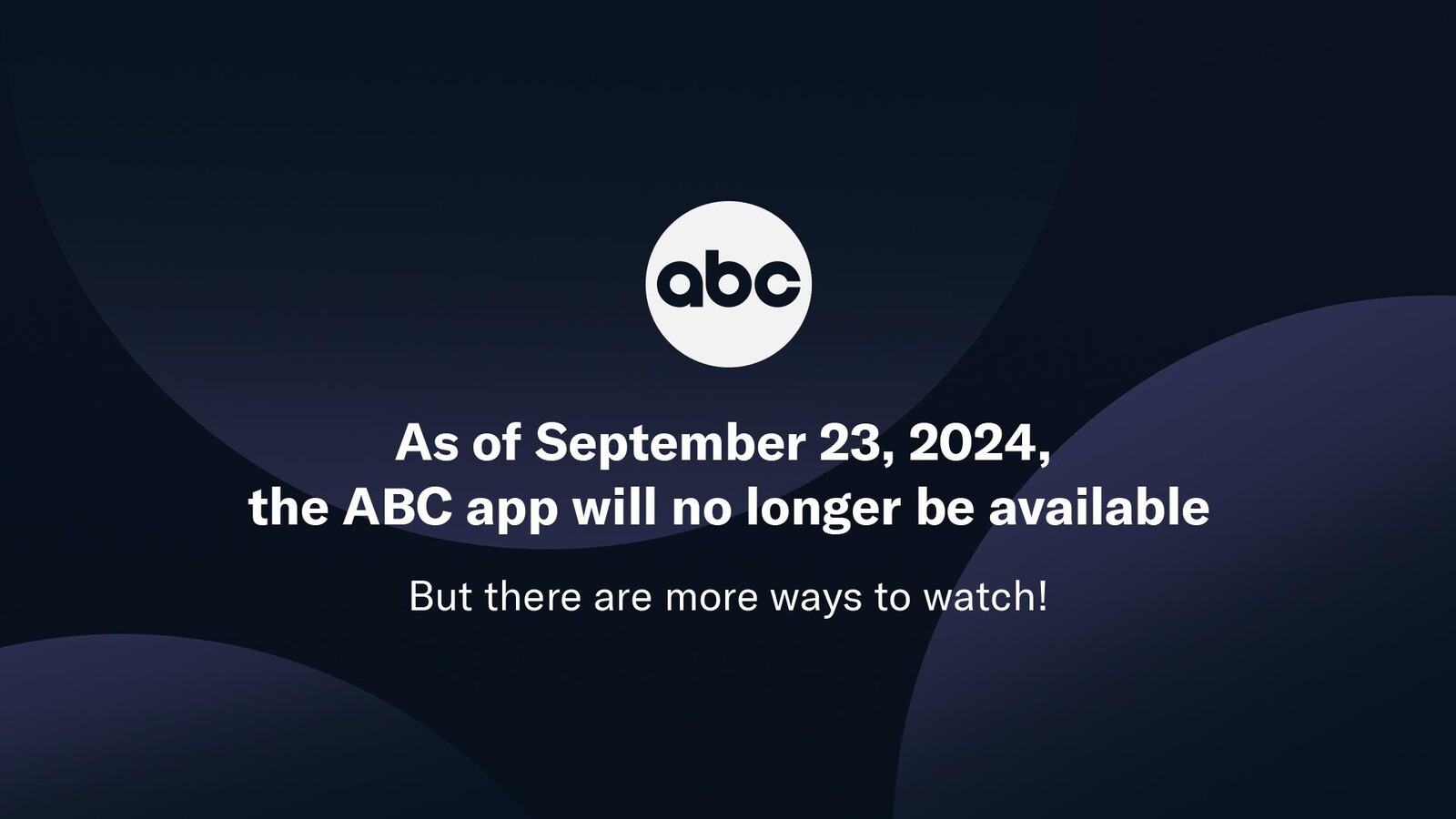
The Discontinuation of the ABC App: A Technical Post-Mortem
The retirement of the ABC app represents a significant pivot in the software lifecycle of network-specific applications. For over a decade, the “TV Everywhere” model prompted every major network to develop and maintain its own standalone application. This led to a fragmented user experience where consumers had to jump between a dozen different interfaces to watch various shows.
The Transition to Integrated Streaming Ecosystems
The primary technical reason for the ABC app’s retirement is the move toward “Platform Consolidation.” ABC is owned by Disney, which also operates Disney+ and Hulu. Maintaining a separate codebase for the ABC app became redundant and inefficient. From a software engineering perspective, consolidating content into a single, robust platform like Hulu or Disney+ allows for a more streamlined CI/CD (Continuous Integration/Continuous Deployment) pipeline. Instead of updating three different video player engines and three different recommendation algorithms, the technical teams can focus on optimizing one high-performance environment.
Software Lifecycle and the End-of-Life (EOL) Phase
Every piece of software eventually enters an “End-of-Life” phase. For the ABC app, the EOL was accelerated by the increasing complexity of modern operating systems. To keep the app functional on the latest versions of iOS, Android, tvOS, and FireOS, developers had to constantly patch security vulnerabilities and update API calls. By sunsetting the app, the parent company effectively reallocated those technical resources toward the “Super App” model, where ABC’s library exists as a sub-vertical within a larger, more stable infrastructure.
Consolidation and the Shift to Unified Platforms
The death of the ABC app is a symptom of the industry’s realization that a “one-size-fits-all” streaming platform is more technically viable than a constellation of micro-apps. This shift addresses several backend challenges that plagued network-specific apps for years.
The Role of Disney+ and Hulu Integration
Disney’s strategy involves integrating ABC’s live feeds and library directly into the Hulu interface and the “Hulu on Disney+” tile. This technical integration requires sophisticated backend mapping. Metadata for ABC shows—such as Grey’s Anatomy or The Bachelor—must be synced across databases to ensure that watch history and “continue watching” features remain consistent regardless of which portal the user chooses. This cross-platform synchronization is much easier to manage when the content is hosted on a unified cloud architecture rather than being bridged between a legacy network app and a modern streaming service.
Improving UX Through Centralized Content Hubs
User Experience (UX) friction was one of the greatest technical hurdles for the standalone ABC app. Users often complained about the clunky “TV Provider Sign-In” process, which relied on aging authentication protocols. By moving ABC content to Hulu and Disney+, the technical team has simplified the authentication stack. Modern streaming platforms use more advanced identity management systems that offer faster load times and fewer session timeouts, significantly improving the “Time to Video” (TTV) metric—a crucial KPI in streaming technology.
Technical Challenges in Modern Network Broadcasting
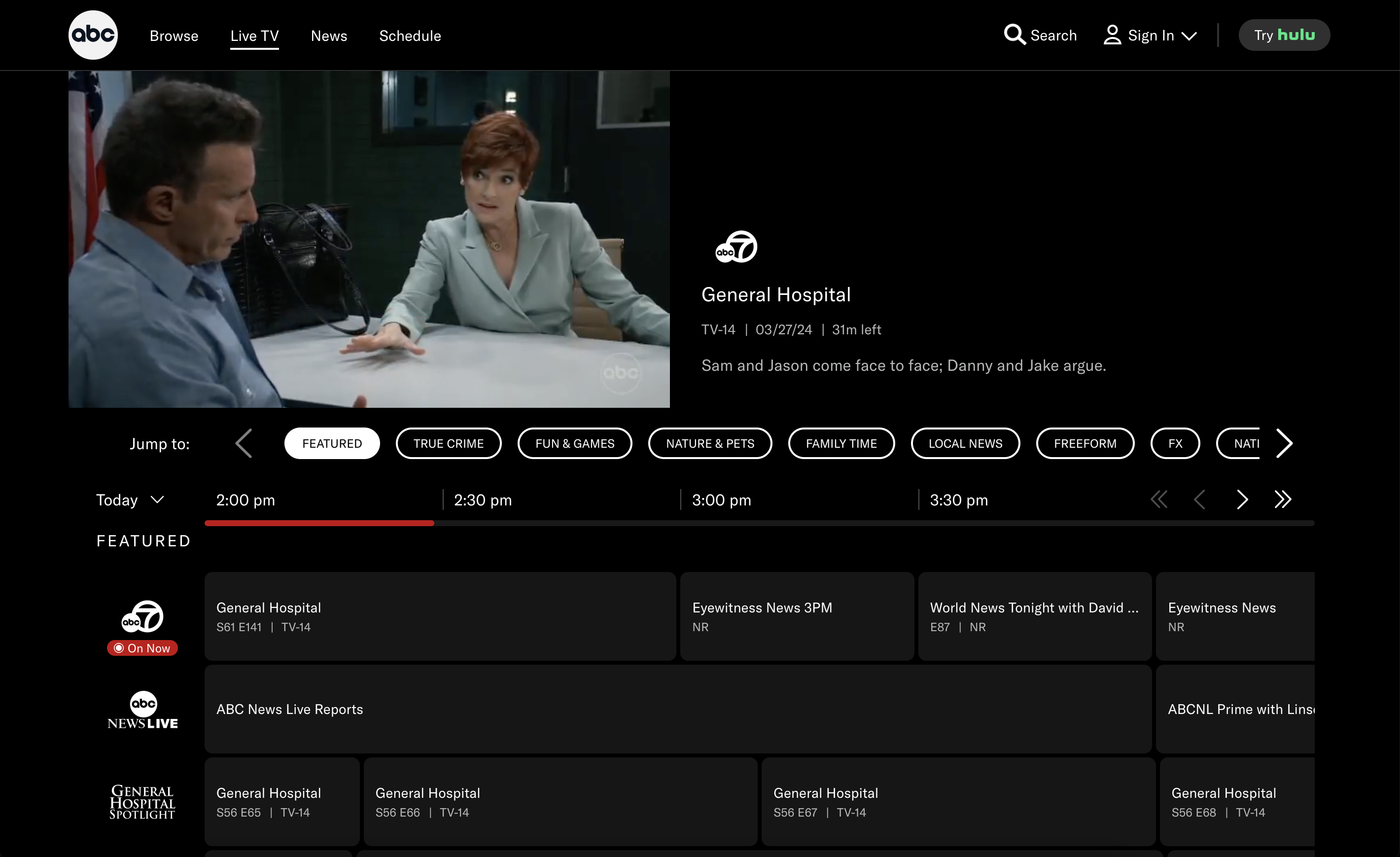
While the move to consolidate apps seems logical, it highlights the immense technical challenges networks face when transitioning from traditional broadcast signals to IP-based delivery. The ABC app was a bridge between these two worlds, and its retirement marks the end of that experimental phase.
Maintenance Overhead of Standalone Applications
Maintaining a high-quality video streaming app requires a massive backend infrastructure. This includes Content Delivery Networks (CDNs) to reduce latency, multi-DRM (Digital Rights Management) systems to prevent piracy, and adaptive bitrate streaming (ABR) logic to ensure smooth playback across varying internet speeds. For a single network app, the cost-to-utility ratio often becomes lopsided. By folding the ABC technical requirements into the larger Hulu/Disney+ stack, the company benefits from economies of scale in server bandwidth and cloud storage costs.
Authentication and the “TV Everywhere” Protocol
The ABC app relied heavily on the “TV Everywhere” (TVE) protocol, which required a handshake between the app and a cable provider’s database. This process was notoriously buggy, often failing due to expired tokens or mismatched API versions. As the industry moves away from traditional cable bundles and toward direct-to-consumer (DTC) models, the technical necessity for the TVE protocol has diminished. The new technical architecture favors OAuth 2.0 and other modern web standards that are natively supported by the consolidated streaming platforms.
The Evolution of Streaming Architecture
The disappearance of the ABC app signals a broader evolution in streaming architecture. We are moving away from the era of “Web 2.0” style applications and into a more data-driven, cloud-native era where the “app” is merely a skin for a massive underlying data lake.
Cloud-Native Delivery and Global Scaling
Modern streaming services are built on cloud-native architectures (like AWS or Google Cloud) that allow for horizontal scaling. When a major live event happens on ABC—such as the Oscars—the traffic spikes are astronomical. A standalone app often struggles to handle these surges without significant latency or crashes. However, the infrastructure supporting Hulu and Disney+ is designed to scale dynamically. By migrating ABC’s live stream to these platforms, the technical team ensures that the broadcast can handle millions of concurrent streams using containerized microservices and automated load balancing.
The Death of the “Walled Garden” App Model
In the early days of mobile tech, every brand wanted a “walled garden”—a standalone app that they controlled entirely. However, the technical reality is that users prefer “aggregator” models. From a development standpoint, it is more efficient to build robust APIs that allow content to be pulled into various aggregators rather than forcing users to download a specific executable file. The retirement of the ABC app is a recognition that the “Walled Garden” model is technically obsolete in a world that prioritizes interoperability and cross-platform accessibility.
Navigating the New Digital Landscape
For users wondering where their favorite shows went, the answer lies in the current API integrations and the new hierarchy of media software. The ABC app hasn’t just been deleted; it has been evolved and absorbed.
How to Access ABC Content via Current API Integrations
Content that was once exclusive to the ABC app is now distributed through several high-bandwidth APIs. Users can access ABC programming via the Hulu app, which uses a sophisticated content management system (CMS) to categorize live vs. on-demand assets. For those who still have a cable subscription, the ABC website remains a functional portal, but even there, the underlying video player has been upgraded to match the tech stack used by Disney’s premium services. This ensures that features like 4K resolution and Dolby Atmos audio are supported, which were often missing from the original standalone app.
The Future of Network-Specific Digital Tools
Will we ever see a return to network-specific apps? The technical trend suggests otherwise. The future lies in “Channels” within larger ecosystems. Much like how Amazon Prime Video or Apple TV+ allow you to subscribe to various “channels” within their interface, the technology is moving toward a modular UI. In this future, ABC is not an “app” you download; it is a “data stream” you toggle on within your preferred media player. This reduces the footprint on user devices and eliminates the need for constant app-store updates, creating a more sustainable and technically sound ecosystem for both developers and viewers.
In summary, the “disappearance” of the ABC app is actually a major technical upgrade. By moving away from a fragmented, high-maintenance standalone application and into a consolidated, cloud-scale environment, ABC has ensured that its content remains accessible, secure, and high-performing in an increasingly competitive digital landscape. The era of the network app is over; the era of the integrated streaming platform has begun.
aViewFromTheCave is a participant in the Amazon Services LLC Associates Program, an affiliate advertising program designed to provide a means for sites to earn advertising fees by advertising and linking to Amazon.com. Amazon, the Amazon logo, AmazonSupply, and the AmazonSupply logo are trademarks of Amazon.com, Inc. or its affiliates. As an Amazon Associate we earn affiliate commissions from qualifying purchases.