
In the rapidly evolving landscape of high-performance computing, smart devices, and hyper-connected data centers, we often focus on the “visible” metrics of technology: gigahertz, terabytes, and pixels. However, the most sophisticated artificial intelligence or the most intricate microchip is utterly dependent on a fundamental physical concept that has remained largely unchanged for a century: the electrical ground.
Grounding is the silent sentinel of the tech world. It is the physical connection to the Earth or a designated zero-potential point that ensures safety, stability, and signal integrity. Without it, the modern digital economy—from the smartphone in your pocket to the servers powering global financial markets—would be prone to catastrophic failure. Understanding what an electrical ground does is not just a lesson in physics; it is a deep dive into the physical layer of digital security and hardware reliability.

The Science of Grounding: Establishing the Path of Least Resistance
At its most basic level, an electrical ground provides a safe path for excess electricity to travel. In any electrical circuit, current flows from a source to a load and returns to the source. However, faults occur. Whether through insulation failure, component degradation, or external interference, electricity can deviate from its intended path.
Defining the Common Return Path
In modern technology, “ground” serves as a common return path for electric current. In complex circuit boards (PCBs) found in laptops and high-end workstations, the ground plane acts as a massive reservoir that can absorb and dissipate stray electrons. This prevents voltage from building up in areas where it shouldn’t, which could otherwise lead to “ghost” signals or hardware malfunction. By providing a stable reference point (zero volts), the ground ensures that every component in a tech stack knows exactly what “high” and “low” signals mean, maintaining the binary logic of 1s and 0s.
The Role of Earth Potential in Digital Circuits
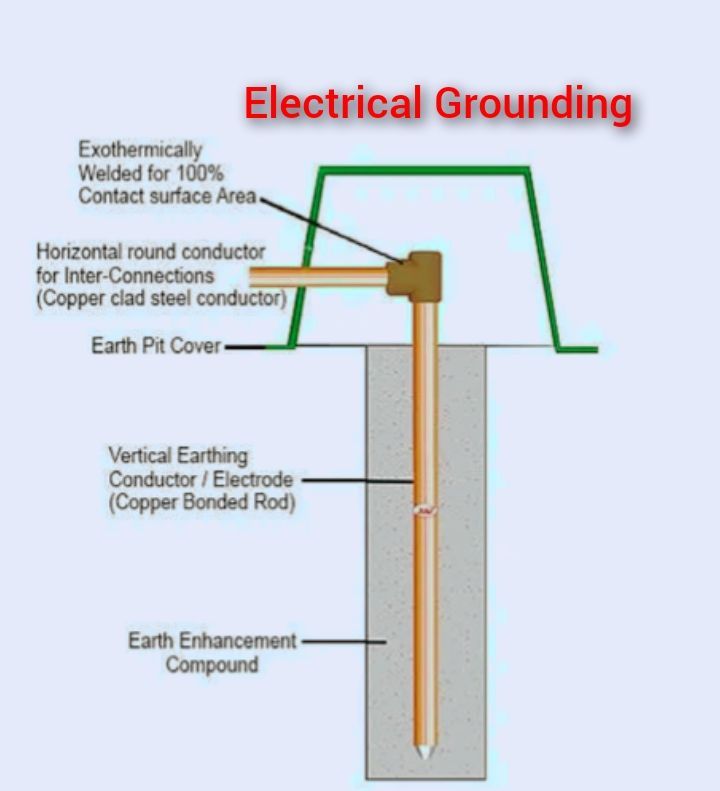
The term “Earth ground” literally refers to a physical connection to the soil. For large-scale tech installations, such as telecommunication towers or server farms, a copper rod is driven deep into the ground. Because the Earth is so massive, it can absorb an almost infinite amount of electrical charge without changing its own potential. For sensitive tech equipment, this acts as a “drain.” If a power surge hits a facility, the ground wire directs that massive energy directly into the Earth, bypassing the delicate silicon wafers that power our digital world.
Safeguarding Modern Tech: Why Your Gadgets Depend on a Ground
As components become smaller and more powerful, they become exponentially more sensitive to electrical fluctuations. The transition from 14nm to 3nm process nodes in semiconductor manufacturing means that even a tiny spark of static electricity—imperceptible to a human—can fry a processor worth thousands of dollars.
Preventing Electrostatic Discharge (ESD) in Microchips
For hardware engineers and tech enthusiasts who build custom PCs, Electrostatic Discharge (ESD) is the primary antagonist. When you touch a circuit board without being “grounded,” the static charge built up on your body can jump to the micro-components. An electrical ground in a workstation or via an ESD wrist strap ensures that this charge is neutralized. In a factory setting, grounding systems are integrated into the floor, the chairs, and the tools to ensure that the delicate architecture of an AI-processing chip remains intact during assembly.
Shielding Sensitive Components from Power Surges
Most high-end consumer tech—think 4K OLED monitors, gaming consoles, and high-fidelity audio equipment—uses a three-prong plug. That third prong is the dedicated ground. Its primary job is to protect the user and the device during a surge. If a capacitor fails inside a power supply, the metal casing of the device could become “live.” Without a ground, touching the device would complete the circuit through your body. With a ground, the electricity takes the path of least resistance through the green wire, blowing the fuse or tripping the circuit breaker and instantly killing the power to prevent a fire or hardware “meltdown.”
Data Centers and Cloud Infrastructure: Grounding at Scale
The cloud is not a nebulous entity; it is a series of massive physical buildings filled with racks of servers. In these environments, grounding moves from a safety feature to a mission-critical operational requirement. Data centers consume vast amounts of power, and where there is high power, there is high electrical noise.
Rack Grounding and Signal Integrity
In a data center, every server rack must be meticulously grounded. This is not just for safety, but for “signal integrity.” High-speed data cables (like Cat6e or Fiber Optic components) are susceptible to electromagnetic interference (EMI). Nearby power cables can “leak” magnetic fields that disrupt data packets, leading to latency or data corruption. Proper grounding of the equipment racks creates a “Faraday Cage” effect, shielding the data-carrying components from this interference. This ensures that the “Tech” we rely on—streaming services, cloud storage, and real-time communication—remains fast and reliable.
Lightning Protection for Communication Towers
The infrastructure that supports 5G networks and satellite communications is often located in exposed, high-altitude positions. These are magnets for lightning. A sophisticated grounding system (often called a Lightning Protection System or LPS) is what allows a cell tower to survive a direct hit. The ground system redirects millions of volts around the sensitive radio equipment and into the earth. For the tech industry, this represents the difference between a minor maintenance check and millions of dollars in destroyed hardware and service downtime.
Digital Security Starts at the Physical Layer
When we think of digital security, we usually think of firewalls and encryption. However, the physical stability of hardware is the first line of defense. If a system’s grounding is poor, it creates vulnerabilities that can be exploited or cause systemic failures.
Noise Reduction and Signal-to-Noise Ratio (SNR)
In the realm of AI and big data analytics, the accuracy of hardware is paramount. Electrical “noise” caused by poor grounding can introduce errors into sensitive sensor data or high-speed computations. In tech reviews of high-end audio interfaces or scientific measuring tools, the “noise floor” is a critical metric. A well-grounded system lowers the noise floor, allowing the “signal” (the actual data) to be processed with higher fidelity. In the world of tech, a better Signal-to-Noise Ratio (SNR) translates directly to better performance and more reliable outputs.
Grounding as a Defense Against Hardware-Based Attacks
Interestingly, grounding plays a role in preventing “Side-Channel Attacks.” Sophisticated hackers can sometimes monitor the electromagnetic emissions or power consumption fluctuations of a CPU to “guess” encryption keys. High-quality grounding and shielding minimize these emissions, making it significantly harder for malicious actors to perform electromagnetic eavesdropping on hardware. Thus, grounding is an essential, albeit overlooked, component of a comprehensive digital security strategy.
Future Trends: Grounding in the Age of EV and IoT
As we move toward a future defined by Electric Vehicles (EVs), the Internet of Things (IoT), and wearable technology, the challenges of grounding are evolving. The tech industry is currently innovating new ways to provide “virtual grounds” or floating grounds for devices that aren’t physically tethered to the Earth.
Challenges in Miniaturization and Wearables
Wearable tech, like smartwatches and medical monitors, cannot be “grounded” to the Earth in the traditional sense. These devices use “chassis ground” or “signal ground” within their own tiny circuits. As these devices become more involved in healthcare—monitoring heart rates or glucose levels—the precision of their internal grounding becomes a matter of life and death. Ensuring that a wearable device doesn’t pick up ambient electrical noise from a smartphone or a microwave is a primary focus for modern hardware developers.

Solid-State Innovations and Grounding Solutions
The shift toward solid-state technology and the electrification of transport is pushing grounding into new frontiers. In an electric vehicle, the “ground” is the entire chassis of the car. Managing the massive currents required to move a vehicle while simultaneously protecting the sensitive AI chips that handle self-driving capabilities requires a masterclass in grounding engineering. As we look toward the next decade of tech, the humble electrical ground will continue to be the foundation upon which all our digital innovations are built.
In conclusion, while “electrical ground” might sound like a relic of the industrial age, it is the bedrock of the information age. It facilitates the miniaturization of our gadgets, ensures the uptime of our global cloud networks, and provides a physical layer of security for our most sensitive data. Whether you are a software developer, a hardware engineer, or a tech consumer, understanding the ground is essential to understanding how the modern world stays powered on and protected.
aViewFromTheCave is a participant in the Amazon Services LLC Associates Program, an affiliate advertising program designed to provide a means for sites to earn advertising fees by advertising and linking to Amazon.com. Amazon, the Amazon logo, AmazonSupply, and the AmazonSupply logo are trademarks of Amazon.com, Inc. or its affiliates. As an Amazon Associate we earn affiliate commissions from qualifying purchases.