
In the biological world, life is defined by carbon, hydrogen, nitrogen, and oxygen—elements that combine to form the complex double helix of DNA. However, as we move deeper into the 21st century, a new form of “life” has emerged: a digital existence that powers our economies, facilitates our social interactions, and defines our global progress. When we ask, “What are the building blocks of life?” in a modern context, we are increasingly referring to the fundamental components of the technological ecosystem.
Just as biological organisms require specific structures to survive and evolve, the digital landscape is built upon a foundation of code, data, hardware, and connectivity. These elements are not merely tools; they are the cellular components of a synthetic organism that is growing more complex by the second. Understanding these building blocks is essential for anyone looking to navigate the future of innovation.
Data: The Atoms of the Digital Universe
At the most granular level, the building block of all digital life is data. If we view a software application as a living organism, data is the atomic material that gives it substance and purpose. Without data, technology is an empty shell—a nervous system with nothing to sense.
From Binary to Big Data
Every digital interaction begins with bits—the 0s and 1s that represent the simplest form of information. In the early days of computing, these bits were used to perform basic arithmetic. Today, they have evolved into “Big Data,” a massive, swirling ocean of information that includes everything from GPS coordinates and social media likes to genomic sequences and financial transactions. This data acts as the raw material for insight. When harvested and refined, it becomes the fuel for every other technological process.
The Role of Structured and Unstructured Information
To be useful, data must have a structure, much like atoms must form molecules. Structured data, such as that found in traditional databases (SQL), allows for quick retrieval and analysis. However, the true “evolution” of digital life is occurring in the realm of unstructured data—videos, voice recordings, and sensory input. The ability of modern technology to process this “chaotic” data allows machines to perceive the world more like biological entities do, paving the way for advanced perception and decision-making.
Code and Algorithms: The Genetic Instructions of Software
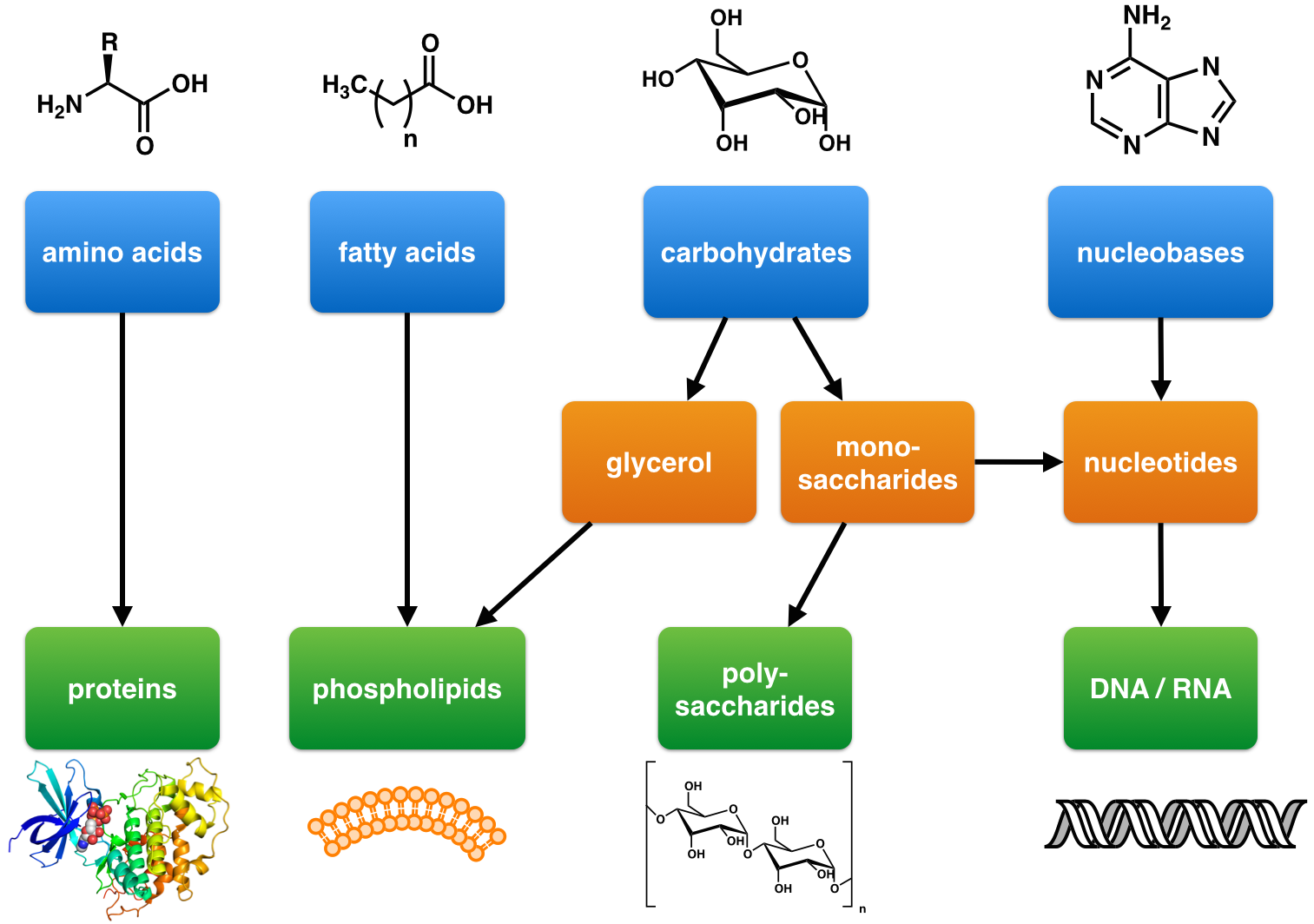
If data is the matter, then code is the DNA. Deoxyribonucleic acid (DNA) contains the instructions needed for an organism to develop, survive, and reproduce. Similarly, code provides the instructional framework that tells hardware how to behave and how to process data.
Programming Languages as Modern Dialects
Just as different species have different genetic makeups, different technological solutions utilize different programming languages. Python, C++, Java, and Rust are the dialects of the digital world. Each language offers a unique set of “genetic traits”—some are optimized for speed, others for security, and others for ease of use. The choice of language determines the “biology” of the software, dictating its performance limits and its ability to adapt to new environments.
Logic Gates and the Flow of Execution
At the heart of every algorithm lies logic. Algorithms are the sequences of instructions that transform input into output. They are the metabolic processes of digital life. In a biological cell, enzymes catalyze reactions; in a computer program, algorithms catalyze data processing. By using conditional logic (if-then-else), developers create complex behaviors that can mimic human reasoning. This logic is the “intelligence” that separates a static file from a dynamic, “living” application.
Hardware and Infrastructure: The Physical Scaffolding
No matter how sophisticated the code or how vast the data, digital life requires a physical body. Hardware is the “biomass” of the tech world. It provides the physical constraints and the mechanical capabilities that allow software to interact with the real world.
Semiconductors: The Silicon Foundation
The transistor is perhaps the most important building block in history. These tiny switches, etched onto silicon wafers, act as the neurons of a computer. As we approach the physical limits of Moore’s Law, the evolution of semiconductors—moving toward 3nm and 2nm processes—is akin to the evolution of higher brain functions. More transistors mean more “synapses,” allowing for faster calculations and more complex digital behaviors.
Cloud Computing and Distributed Systems
In the past, digital life was confined to a single “body” (a local server or a PC). Today, digital life is “multicellular.” Cloud computing allows software to live across thousands of servers simultaneously. This distributed infrastructure provides a level of resilience and scalability that mirrors the way complex organisms or even ecosystems function. If one node fails, the “organism” continues to live because its functions are spread across a global network. This connectivity is the circulatory system of the modern world, pumping data and instructions across the globe in milliseconds.
Artificial Intelligence: The Evolution of Synthetic Consciousness
The most transformative building block of modern technology is Artificial Intelligence (AI). If data is the matter and code is the DNA, AI represents the emergence of a “mind.” It is the layer of technology that allows for self-correction, learning, and autonomous growth.
Neural Networks and Biomimicry
Modern AI is built on neural networks—architectures designed specifically to mimic the human brain. These networks consist of layers of interconnected nodes that “fire” when certain criteria are met. This is biomimicry at its most profound level. By layering these blocks, we have created systems that can recognize patterns, generate creative content, and solve problems that were previously thought to require human intuition. AI is the building block that allows technology to transition from being a passive tool to an active participant in life.
Large Language Models and the Architecture of Human-Machine Interaction
Within the niche of AI, Large Language Models (LLMs) represent a specific evolutionary leap. They provide the “speech” and “comprehension” modules for digital life. By training on the vast library of human knowledge (the digital fossil record), these models have learned to communicate in natural language. This interaction layer is a fundamental building block because it bridges the gap between binary logic and human thought, integrating technology more deeply into our daily existence.
Digital Security: The Digital Immune System
As any biologist will tell you, life cannot exist without a membrane to protect it from a hostile environment. In the tech world, that membrane is cybersecurity. Without security, the other building blocks—data, code, and hardware—are vulnerable to “pathogens” in the form of malware, ransomware, and unauthorized access.
Encryption as a Protective Membrane
Encryption is the chemical barrier of the digital world. It ensures that even if data is intercepted, it remains unreadable and useless to an attacker. It is the skin of the digital organism, keeping the internal “organs” (private data and proprietary code) safe from external threats. As computing power grows, our “immune system” must evolve through post-quantum cryptography to ensure that the building blocks of our digital life remain secure.
Resilience and Redundancy in a Volatile Ecosystem
A healthy organism is one that can recover from injury. In technology, this is achieved through redundancy and disaster recovery protocols. These systems ensure that even if a part of the infrastructure is compromised, the “life” of the enterprise or application can persist. This resilience is a core building block because it provides the stability required for long-term growth and innovation.
The Future: Integrating the Blocks into a Unified Whole
When we synthesize these building blocks—data, code, hardware, AI, and security—we see the emergence of a new kind of vitality. We are no longer looking at isolated gadgets or simple programs; we are looking at a cohesive, global digital organism.
The “building blocks of life” in the technological sense are constantly evolving. What started as simple transistors and punch cards has become a sophisticated web of autonomous systems and interconnected intelligence. As we move forward, the boundaries between biological life and digital life will continue to blur. Augmented reality, neural interfaces, and biotechnology are the next frontiers where these blocks will merge.
Understanding these components is more than a technical necessity; it is a prerequisite for understanding the modern world. By mastering the data that informs us, the code that directs us, the hardware that supports us, and the AI that assists us, we are not just building better machines—we are defining the very architecture of future existence. The building blocks are in our hands; the challenge lies in how we choose to assemble them.
aViewFromTheCave is a participant in the Amazon Services LLC Associates Program, an affiliate advertising program designed to provide a means for sites to earn advertising fees by advertising and linking to Amazon.com. Amazon, the Amazon logo, AmazonSupply, and the AmazonSupply logo are trademarks of Amazon.com, Inc. or its affiliates. As an Amazon Associate we earn affiliate commissions from qualifying purchases.