
Drilling into concrete, a material synonymous with strength and durability, is a task that often intimidates even experienced DIY enthusiasts and sometimes challenges seasoned professionals. The sheer density and abrasive nature of concrete demand specialized tools and a nuanced understanding of the process. Beyond merely selecting any drill bit, the discerning individual understands that the right choice is a confluence of technological advancement, brand reputation, and a wise financial investment. This article delves into the specifics of concrete drill bits, exploring not just what to use, but also why it matters, integrating insights from technology, branding, and smart money management to equip you for success.
The modern world relies heavily on concrete, from foundations and driveways to towering skyscrapers. Interacting with this material effectively, whether for a simple wall mount or a complex renovation, requires precision and power. The wrong drill bit can quickly lead to frustration, project delays, damaged tools, and even safety hazards. Conversely, arming yourself with the correct bit transforms a daunting task into a manageable one, ensuring clean holes, efficient work, and a satisfactory outcome.
The Core Technology: Understanding Concrete Drilling
At its heart, drilling concrete is a battle against a tough, heterogeneous material. Concrete is a mix of aggregates (like sand and gravel) bound together by cement, which hardens into a formidable matrix. To penetrate this, a drill bit doesn’t just cut; it pulverizes and grinds, often requiring percussive force. This fundamental understanding is where the technology behind specialized concrete drill bits truly shines.
The “Why” Behind Specialized Bits: Abrasive Resistance and Impact
Standard drill bits, designed for wood or metal, would quickly dull, overheat, and fail when faced with concrete. Their cutting edges simply aren’t engineered for the extreme abrasion. Concrete drilling requires bits made from materials significantly harder than the concrete itself, capable of withstanding immense friction and heat. The process often involves a “hammering” action, where the drill bit rapidly strikes the concrete surface while rotating, chipping away at the material bit by bit. This combination of rotation and impact is what distinguishes effective concrete drilling from mere brute force.
Anatomy of a Concrete Drill Bit: Engineered for Endurance
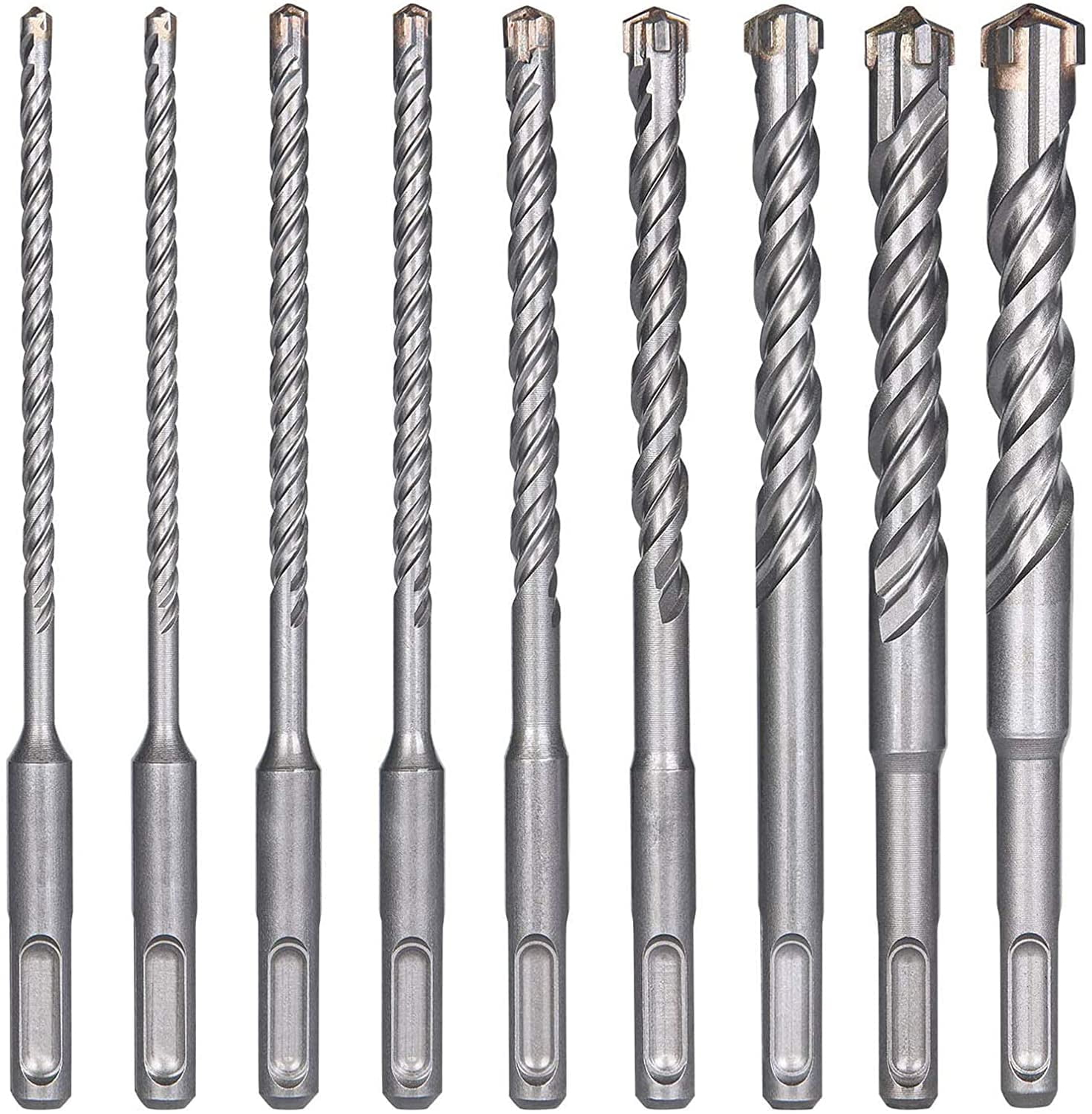
A typical concrete drill bit is a marvel of material science and engineering. Unlike twist bits, they feature:
- Carbide Tips: The most critical component. The tip, often made from tungsten carbide, is brazed or welded onto the steel body. Tungsten carbide is incredibly hard and wear-resistant, allowing it to withstand the pulverizing action against concrete and aggregate. The design of these tips varies, with multi-cutter tips (often four-cutter) becoming popular for faster drilling, better dust removal, and reduced jamming, particularly when encountering rebar.
- Flutes: The spiral grooves along the bit’s body. These are crucial for efficiently removing the pulverized concrete dust (swarf) from the hole. Effective dust removal prevents clogging, reduces heat buildup, and allows the carbide tip to continue its work unimpeded. Different flute designs (e.g., U-flutes, L-flutes) optimize dust extraction for various drilling conditions.
- Shank Types: This is where the bit connects to the drill.
- Straight Shank: Common for smaller masonry bits used in standard hammer drills. These are typically held by a three-jaw chuck.
- SDS-Plus (Slotted Drive System): A revolutionary design developed by Bosch. SDS-Plus shanks feature indentations that slot into the chuck, allowing the bit to slide back and forth for optimal hammer action while being driven positively by the chuck. This system provides superior power transfer and easier bit changes compared to straight shanks, especially for bits up to around 5/8″ (16mm).
- SDS-Max: A larger, heavier-duty version of SDS-Plus, designed for larger diameter bits (typically above 5/8″ or 16mm) and more powerful rotary hammers used in heavy-duty construction. SDS-Max offers even greater impact energy transfer and durability.
The Role of the Drill Machine: Powering the Percussion
The drill bit is only half the equation; the drill machine itself plays a pivotal role in concrete penetration.
- Hammer Drills: These are typically impact drills that offer both rotary and percussive action. They use two ribbed discs that engage and disengage, causing the chuck to move rapidly back and forth. Suitable for occasional drilling into concrete, brick, or masonry for smaller holes (up to 1/2″ or 12mm). Many cordless drills now incorporate a hammer drill function, making them versatile for light to medium tasks.
- Rotary Hammers: These are more powerful, purpose-built machines designed for heavy-duty concrete drilling. They use an electro-pneumatic mechanism to deliver a significantly harder impact blow, similar to a small jackhammer. Rotary hammers are rated by their impact energy (Joules) and are essential for larger holes, continuous use, or very hard concrete. They almost exclusively use SDS-Plus or SDS-Max bits, optimizing the transfer of percussive force.
The evolution from basic percussion drills to sophisticated rotary hammers with advanced SDS chucks represents a significant technological trend, dramatically improving efficiency and reducing operator fatigue.
Navigating the Market: Brands, Selection, and Investment
Choosing the right drill bit isn’t just about understanding the technology; it’s also about navigating the marketplace, recognizing brand value, and making a financially sound investment. With countless options available, an informed decision involves balancing performance, durability, and cost-effectiveness.
Major Players and Their Brand Promises: Reputation and Reliability
The tool industry is dominated by several key players, each with a distinct brand identity and reputation for quality and innovation. When it comes to concrete drill bits, brands like Bosch, DeWalt, Milwaukee, Makita, Hilti, and Irwin stand out.
- Bosch: Often credited with developing the SDS system, Bosch maintains a strong reputation for innovation, particularly in rotary hammer technology and associated bits. Their bits are known for precision and durability.
- DeWalt: A powerhouse in cordless tools, DeWalt offers a comprehensive range of hammer drills and rotary hammers, complemented by a robust line of concrete bits known for their aggressive cutting and long life. Their “ToughSystem” brand philosophy extends to their bit design, emphasizing resilience.
- Milwaukee: Known for their “Nothing but Heavy Duty” ethos, Milwaukee offers high-performance concrete bits, often featuring advanced carbide geometries for faster drilling and superior longevity, especially within their M18 Fuel lineup.
- Makita: Recognized for its ergonomic design and reliable power, Makita provides durable concrete bits that integrate seamlessly with their drills, offering a balance of performance and value.
- Hilti: Positioned at the premium end, Hilti is synonymous with professional-grade construction tools and highly engineered bits, often seen on major job sites where maximum productivity and reliability are paramount. Their bits are often proprietary to their systems, ensuring optimal performance.
Understanding these brand promises and corporate identities helps consumers align their needs with a manufacturer’s strengths. A professional contractor might gravitate towards Hilti or high-end Bosch/Milwaukee for critical projects, while a serious DIYer might find excellent value and performance in DeWalt or Makita.
Making the Smart Investment: Quality vs. Cost
The allure of inexpensive, generic drill bit sets is strong, but when it comes to concrete, they are almost always a false economy. Cheap bits often use lower-grade carbide, inferior brazing, and softer steel bodies. This leads to:
- Rapid wear and dulling: Requiring frequent bit changes.
- Breakage: Particularly if hitting rebar or applying too much pressure.
- Inefficient drilling: Slower penetration, more effort required, and increased heat buildup, shortening the life of both the bit and potentially the drill.
- Poor hole quality: Chipping around the hole entrance or an inconsistent diameter.
Investing in high-quality, reputable brand-name concrete drill bits is a wise financial decision. While the upfront cost might be higher, the long-term benefits include:
- Increased productivity: Faster drilling and fewer bit changes save valuable time, which translates directly to money, especially for professionals on a clock.
- Extended lifespan: Quality bits last significantly longer, reducing replacement costs over time. This is a clear return on investment (ROI).
- Superior results: Cleaner, more precise holes improve the overall quality of your project and reduce rework.
- Reduced frustration and effort: Making the job more enjoyable and less fatiguing.
For businesses, this financial calculus is even more critical. Properly accounting for tool costs and the productivity gains from quality tools is a cornerstone of sound business finance. For individuals, it’s about personal finance: making an informed purchase that avoids hidden costs down the line.

Digital Tools for Informed Decisions: Tech-Enabled Selection
In today’s digital age, selecting the right drill bit is significantly aided by technology. Online resources have revolutionized how we research, compare, and purchase tools.
- Online Reviews and Ratings: Websites like Amazon, Home Depot, Lowe’s, and specialty tool retailers feature user reviews and ratings. These provide real-world insights into bit performance, durability, and common issues, allowing you to learn from others’ experiences. This falls squarely under the “Reviews” aspect of the Tech topic.
- Manufacturer Websites and Specifications: Brand websites offer detailed specifications, material composition, application guides, and sometimes even demonstration videos. Understanding these technical details helps in matching the bit to your specific concrete type and drilling task.
- Comparison Websites and Forums: Dedicated tool review sites and online forums (e.g., DIY forums, professional contractor forums) offer in-depth comparisons, expert opinions, and discussions about the nuances of different bits and drilling techniques. These platforms enhance productivity by streamlining the research phase.
- Product Configurators/Selectors: Some manufacturers or retailers provide interactive tools that help you select the appropriate drill bit based on your drill type, concrete material, hole diameter, and depth. This leverages software to guide decision-making.
Leveraging these digital tools transforms the selection process from guesswork into an informed, data-driven decision, ensuring you get the best tool for your money and project needs.
Beyond the Bit: Technique, Safety, and Project Productivity
While selecting the correct drill bit is paramount, its effectiveness is greatly amplified by proper technique, adherence to safety protocols, and the integration of smart tools and practices that enhance overall project productivity.
Mastering the Art of Concrete Drilling: Precision and Patience
Even the best drill bit needs to be used correctly to achieve optimal results and longevity.
- Start Slow, Finish Strong: Begin drilling at a slow speed without hammer action to create a precise pilot indentation. Once the bit has engaged, switch to hammer mode (if applicable) and gradually increase speed and pressure.
- Maintain Consistent Pressure: Apply firm, consistent pressure directly in line with the drill bit. Avoid excessive force, which can overheat the bit, damage the drill, or cause the bit to wander or break. Let the hammer action do the work.
- Allow for Cooling: Concrete drilling generates significant heat. Periodically withdrawing the bit from the hole for a few seconds allows it to cool and helps clear dust. For deeper holes, consider having a second bit ready to swap, or a small water spray bottle for external cooling (exercise caution, especially with electric drills).
- Clear Dust Frequently: The flutes remove most of the dust, but for deeper holes, manually pulling the bit out and clearing the hole with a shop vacuum or compressed air is beneficial. This prevents dust buildup from bogging down the bit and reducing drilling efficiency.
- Watch for Rebar: Hitting rebar (reinforcing bar) can be jarring. While some multi-cutter carbide tips are designed to power through rebar, it’s generally advisable to stop, assess, and if possible, reposition the hole slightly. Specialized rebar-cutting bits are available for situations where cutting through rebar is unavoidable.
Safety First: Protecting Yourself and Your Project
Safety in concrete drilling is non-negotiable, protecting both the operator and the integrity of the project.
- Personal Protective Equipment (PPE):
- Eye Protection: Always wear safety glasses or goggles to shield against flying concrete chips and dust.
- Hearing Protection: Hammer drills and rotary hammers are loud. Earmuffs or earplugs are essential to prevent hearing damage.
- Dust Mask/Respirator: Concrete dust contains crystalline silica, which can cause serious lung diseases (silicosis) if inhaled. A good quality dust mask (N95 or higher) or a respirator is crucial.
- Gloves: Protect hands from abrasions and vibrations.
- Secure the Workpiece: Ensure the material being drilled is stable and won’t shift during the process. Use clamps or a sturdy workbench.
- Check for Utilities: Before drilling, especially into walls or floors, always verify the absence of electrical wires, plumbing pipes, or gas lines using a stud finder with metal detection capabilities or a dedicated wire/pipe detector. This is a critical aspect of digital security in a practical sense.
- Dust Extraction Systems: Modern technology offers integrated dust extraction systems for drills or attachments that connect to shop vacuums. These significantly reduce airborne dust, improving safety and visibility, and complying with health regulations on job sites. This represents a clear technological advancement in safety gadgets.
Optimizing Your Workflow: Tech for Efficiency
Beyond the drill bit, various technological tools and practices can dramatically enhance the efficiency and precision of your concrete drilling projects.
- Laser Levels and Digital Measuring Tapes: For precise hole placement and alignment, laser levels project lines, while digital measuring tapes offer highly accurate readings, minimizing errors and rework. These gadgets contribute directly to productivity.
- Project Planning Apps: For larger projects, utilizing project management software or even simple planning apps can help track hole locations, depths, and material requirements, streamlining the workflow.
- Battery Technology: The advancement in lithium-ion battery technology for cordless hammer drills and rotary hammers offers unparalleled freedom and mobility without sacrificing significant power, enhancing productivity, particularly on remote sites or where power access is limited.
- Smart Tools: While still emerging, some advanced drills feature sensors that provide feedback on drilling depth, angle, or even material density, guiding the user towards optimal performance. This hints at the future of AI tools and gadgets in construction.
Integrating these technological aids into your drilling process not only makes the job easier and safer but also elevates the overall quality and professionalism of your work.
Concrete Considerations: Beyond the Standard
Not all concrete is created equal, and some applications require even more specialized approaches and tools, pushing the boundaries of what standard concrete drill bits can achieve.
Reinforced Concrete and Rebar: A Tougher Challenge
One of the most common complications in drilling concrete is encountering rebar. Standard masonry bits can quickly dull or even break upon prolonged contact. For frequent rebar encounters or when holes must pass through rebar, specialized bits are available. These often feature aggressive, multi-carbide tips designed to chew through both concrete and steel, or incorporate diamond segments. Some even have a distinct rebar-cutting segment followed by a concrete-drilling segment. Knowing when to use these, or when to switch to a dedicated rebar cutter, is crucial for efficiency and bit longevity.
Large Diameter Holes & Core Drilling: Industrial Precision
For very large diameter holes (e.g., for pipes, vents, or electrical conduits), standard rotary or hammer drills with SDS bits are insufficient. This is where core drills come into play.
- Diamond Core Drills: These systems use diamond-impregnated bits (core barrels) that rotate at high speeds without impact, grinding through concrete, asphalt, and even heavily reinforced concrete. They typically require a dedicated core drill rig, often water-cooled to manage dust and heat, producing a clean, cylindrical slug of material. This technology represents the pinnacle of concrete drilling precision and power, used in serious construction and engineering projects where clean, precise holes of significant diameter are required.

Concrete Aesthetics & Precision: When Branding Demands Perfection
In architectural applications or high-end finishes, the appearance of the drilled hole can be critical. Chipping around the hole entrance or an uneven finish can detract from the overall aesthetic. Using sharp, high-quality bits, applying proper technique (e.g., starting with a pilot hole or using a guide), and sometimes even employing diamond dry core bits for cleaner edges, ensures that the structural integrity is matched by visual perfection. For businesses specializing in high-end installations, the “brand” of their work is tied directly to the precision and finish of every detail, including drilled holes.
In conclusion, the question “what drill bit for concrete” unlocks a deeper exploration into the fascinating interplay of materials science, mechanical engineering, strategic branding, and sound financial decision-making. From understanding the carbide tip’s technology to selecting a reputable brand, and from investing wisely in quality tools to employing cutting-edge digital aids for planning and safety, every aspect contributes to successful concrete drilling. By embracing a holistic approach that integrates insights from tech, brand, and money, individuals and professionals alike can confidently tackle any concrete drilling challenge, ensuring efficient, safe, and high-quality results for every project.
aViewFromTheCave is a participant in the Amazon Services LLC Associates Program, an affiliate advertising program designed to provide a means for sites to earn advertising fees by advertising and linking to Amazon.com. Amazon, the Amazon logo, AmazonSupply, and the AmazonSupply logo are trademarks of Amazon.com, Inc. or its affiliates. As an Amazon Associate we earn affiliate commissions from qualifying purchases.