
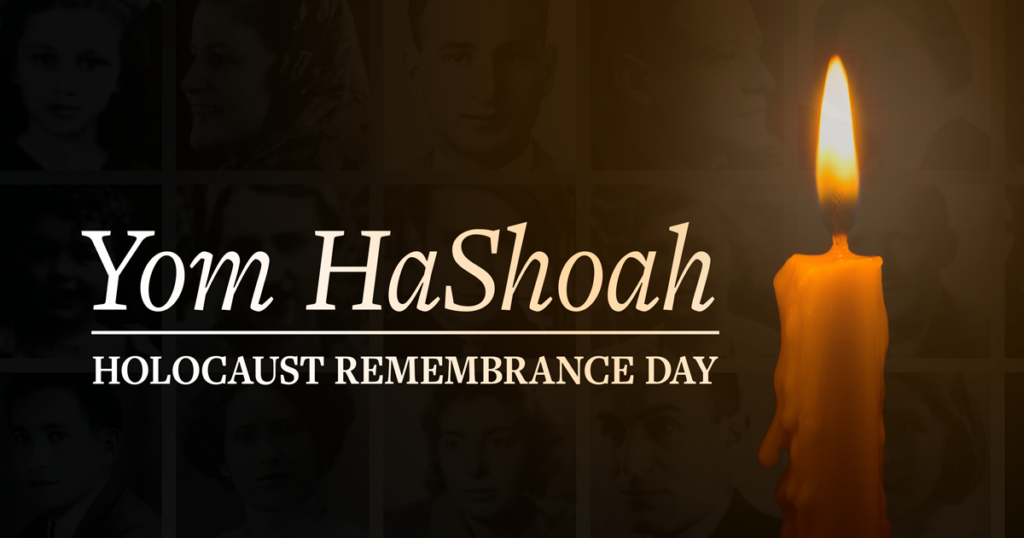
Yom Hashoah, formally known as Yom HaZikaron laShoah ve-laG’vurah (Holocaust and Heroism Remembrance Day), is a day of profound reflection. While traditionally observed through ceremonies, silence, and prayer, the digital age has transformed how we approach this solemn occasion. As we move further away from the events of the mid-20th century, the role of technology in preserving the “what” and the “how” of this history has become paramount.
In the tech industry, the challenge of Yom Hashoah is a challenge of data persistence, immersive education, and the ethical application of Artificial Intelligence (AI). We are currently witnessing a critical transition: the shift from “living history”—where survivors share their stories in person—to “digital memory.” This article explores the sophisticated technological frameworks, from cloud-based archival systems to interactive AI holograms, that ensure the significance of Yom Hashoah remains accessible for generations to come.
The Digital Archive: Engineering Resilience in Historical Data
At the heart of Yom Hashoah is the imperative to “never forget.” In the tech world, this translates to data redundancy, high-fidelity digitization, and decentralized storage. The sheer volume of historical records—ranging from Nazi bureaucratic documents to handwritten letters from the ghettos—requires a sophisticated tech stack to ensure they survive hardware failures and cyber threats.
High-Fidelity Digitization and OCR
The process begins with the physical-to-digital bridge. Organizations like Yad Vashem and the Arolsen Archives utilize industrial-grade scanners and Optical Character Recognition (OCR) specialized for archaic fonts and multiple languages (German, Yiddish, Polish, etc.). This isn’t just about taking a picture of a document; it’s about converting images into searchable, metadata-rich datasets. Advanced OCR algorithms now use machine learning to interpret faded handwriting, allowing researchers to query databases for names that were previously lost in the margins of history.
Cloud Migration and Global Accessibility
In the past, historical records were siloed in physical repositories. Modern tech strategy has moved these archives to the cloud. By utilizing distributed server networks (like AWS or Google Cloud), institutions ensure that even if a physical site is compromised, the digital record of the Shoah remains intact. This global accessibility allows a student in Tokyo or a developer in San Francisco to access the same primary source documents simultaneously, democratizing historical education through high-bandwidth content delivery networks (CDNs).
AI and Interactive Testimony: The “Dimensions in Testimony” Project
Perhaps the most groundbreaking tech development related to Yom Hashoah is the use of Natural Language Processing (NLP) and 3D capture to create interactive biographies. As the survivor generation passes away, the tech industry has stepped in to fill the void with “conversational AI.”
Natural Language Processing (NLP) and Speech Recognition
The USC Shoah Foundation’s “Dimensions in Testimony” project is a masterclass in AI application. Using thousands of recorded answers to a vast array of questions, developers use NLP to match a user’s spoken question with the most relevant recorded response from a survivor. This creates the illusion of a real-time conversation. The technology requires sophisticated intent-recognition algorithms to ensure that the AI understands context, nuance, and even the emotional weight of a query, providing a response that is both accurate and respectful.
Volumetric Capture and Display Tech
To make these interactions feel personal, tech firms use volumetric capture—filming a subject with dozens of high-definition cameras from all angles to create a 3D “digital twin.” When displayed through specialized light-field displays or high-end projection systems, the survivor appears to sit in the room with the audience. This use of “holographic” tech ensures that the human element of Yom Hashoah is not lost in a sea of flat text and 2D video.
Virtual Reality (VR) and the Spatial Reconstruction of History

For many, the physical sites of the Holocaust are too distant to visit, or have been reclaimed by nature and time. Tech-driven spatial reconstruction through Virtual and Augmented Reality (VR/AR) has emerged as a powerful tool for cognitive and emotional engagement.
Digital Twin Modeling of Historical Sites
Architectural historians and software engineers now use LiDAR (Light Detection and Ranging) and photogrammetry to create millimeter-accurate digital twins of concentration camps and ghettos. These models serve two purposes: they provide a permanent record of the site’s current state for conservation and allow for the creation of VR experiences. By donning a VR headset, a user can “walk” through a reconstruction of the Warsaw Ghetto, providing a sense of scale and geography that a textbook simply cannot convey.
The Ethics of Immersive Experiences
The tech community faces significant ethical hurdles in this niche. How do you design a VR experience about the Holocaust without it becoming a “game”? Developers must prioritize “serious gaming” frameworks that focus on empathy and education over entertainment. This involves strict UI/UX guidelines that prevent “gamification” elements—such as points or levels—which would be inappropriate for the gravity of Yom Hashoah. The goal is “presence,” not “play.”
Big Data and the Algorithmic Search for Identity
One of the most agonizing aspects of the Holocaust was the systematic erasure of identity. Today, big data and genealogical algorithms are being used to restore those identities, reuniting families and identifying the nameless.
Algorithmic Matching in Genealogy
Platforms like MyHeritage and Ancestry.com use complex matching algorithms to cross-reference DNA data with digitized transport lists and death records. For many descendants of survivors, technology is the only tool capable of piercing the fog of war. By analyzing “shared segments” of DNA across millions of users, these platforms can find third or fourth cousins, helping families piece together what happened to their ancestors during the Shoah.
Cybersecurity and Sensitive Data Protection
Working with Holocaust data presents a unique cybersecurity challenge. These databases contain highly sensitive personal information, including DNA and historical trauma. Protecting this data from malicious actors—including those who might wish to delete or alter historical records—requires robust encryption and blockchain-based “proof of existence” protocols. By hashing a document onto a blockchain, archives can prove that the digital record has not been tampered with, providing a cryptographic defense against Holocaust denialism.
The Future: Countering Misinformation with Tech Integrity
As we look to the future of Yom Hashoah in the digital realm, the tech industry’s biggest battle is against the rise of deepfakes and AI-generated misinformation.
Deepfake Detection and Content Authenticity
The same generative AI that can recreate a survivor’s voice for a memorial can also be used by bad actors to create fake testimonies or “alternative” histories. The tech industry is responding with initiatives like the Content Authenticity Initiative (CAI). By embedding digital signatures and “provenance metadata” into historical files, tech companies can ensure that a video of a survivor is authentic and has not been manipulated.
Content Moderation and Algorithmic Bias
Social media platforms play a massive role in how Yom Hashoah is remembered online. The engineering challenge here lies in content moderation. Developers must train AI classifiers to distinguish between historical education and prohibited hate speech. This requires high-level machine learning models that understand historical context, preventing the accidental “shadow-banning” of memorial content while effectively scrubbing denialist propaganda.
In conclusion, “What is Yom Hashoah?” is a question that, in the 21st century, is increasingly answered through the lens of technology. From the servers that house our collective memory to the AI that gives voice to the voiceless, the tech niche is the new guardian of history. As we observe this day, we recognize that our code, our clouds, and our algorithms are the modern-day monuments built to ensure that “Never Again” remains a technical reality as much as a moral one.
aViewFromTheCave is a participant in the Amazon Services LLC Associates Program, an affiliate advertising program designed to provide a means for sites to earn advertising fees by advertising and linking to Amazon.com. Amazon, the Amazon logo, AmazonSupply, and the AmazonSupply logo are trademarks of Amazon.com, Inc. or its affiliates. As an Amazon Associate we earn affiliate commissions from qualifying purchases.