
The question “What does a railroad crossing sign look like?” might seem straightforward, evoking an immediate mental image for most drivers. Yet, beneath the simplicity of its design lies a complex ecosystem of safety engineering, technological innovation, strategic branding, and significant financial implications. Far from being just a static piece of metal, a railroad crossing sign is the visual frontier of a sophisticated system designed to prevent tragedy at points where road and rail intersect. In an era increasingly dominated by smart infrastructure and data-driven decisions, understanding these signs goes beyond mere recognition; it delves into the vital interplay of design, technology, and economic foresight that keeps our communities safe.

The Anatomy of a Warning: Decoding Railroad Crossing Signs
At its core, a railroad crossing sign serves a singular, critical purpose: to warn drivers and pedestrians of an impending railway track and the potential for an approaching train. This seemingly simple objective is achieved through a universally recognized visual language, albeit with variations that reflect differing levels of hazard and technological sophistication.
The Classic “Crossbuck” Sign
The quintessential railroad crossing sign is the “crossbuck.” This iconic white ‘X’ shaped sign, typically mounted on a tall pole, features the words “RAILROAD CROSS CROSSING” (or sometimes just “RAILROAD”) in bold black letters, one word on each arm of the ‘X’. This design is deliberately minimalist, focusing on high contrast and immediate recognition. Its shape is distinctive, setting it apart from other traffic signs, ensuring that even a quick glance communicates its unique hazard. Often, a supplementary sign below the crossbuck will indicate the number of tracks present, such as “2 TRACKS,” informing drivers to be aware of multiple potential trains.
Flashing Lights and Gates: Dynamic Warnings
While the crossbuck provides a static warning, many railroad crossings, particularly those with higher traffic volumes or impaired visibility, are equipped with dynamic warning systems. These include:
- Flashing Red Lights: Two bright red lights, mounted horizontally, that flash alternately when a train is approaching. These are highly attention-grabbing, especially at night or in adverse weather conditions.
- Crossing Gates: Often accompanying the flashing lights, these sturdy barriers extend across the roadway when a train is imminent, physically preventing vehicles and pedestrians from entering the crossing. The gates are typically striped with red and white or red and yellow reflective material for maximum visibility.
- Audible Bells: An alarm bell usually rings in conjunction with the flashing lights and descending gates, providing an additional sensory warning, crucial for pedestrians, cyclists, and drivers who might be distracted.
These active warning systems are vital because they communicate not just the presence of a crossing, but the imminence of a train, demanding immediate action from road users.
Other Ancillary Signs and Markings
Beyond the primary signs, several other visual cues contribute to railroad crossing safety:
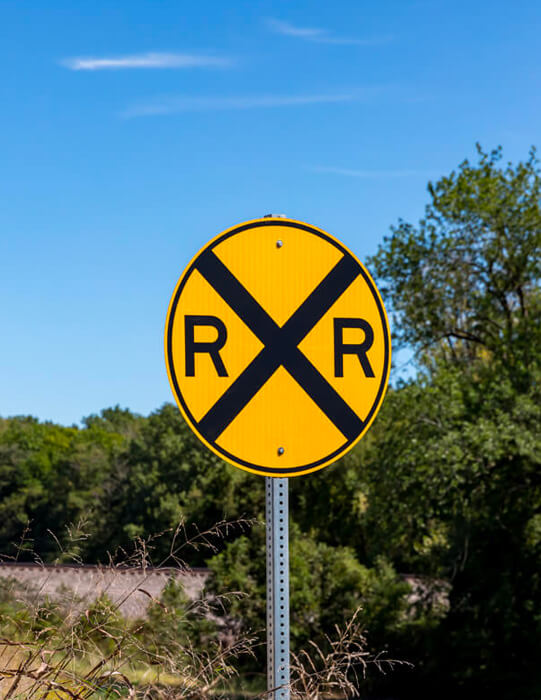
- Advance Warning Signs: A circular yellow sign with a black ‘X’ and ‘RR’ letters, typically placed a few hundred feet before the actual crossing. This gives drivers ample time to prepare to stop.
- Stop Signs: In some locations, a standard red octagonal “STOP” sign may be mounted on the crossbuck pole, indicating that drivers must stop regardless of whether a train is visible.
- Yield Signs: Less common but present, requiring drivers to yield to any approaching train.
- Pavement Markings: The letters “RR” painted on the road surface, often preceded by an ‘X’ and a stop line, serve as ground-level reminders of the crossing ahead and where to stop safely.
International Variations and Universal Principles
While the specifics might vary by country (e.g., European signs often use a triangle with a locomotive icon, or simply a red border with a cross), the underlying principles remain universal: distinct shape, high contrast colors, clear symbols, and often dynamic warnings. This global consistency in warning signage highlights the universal recognition of rail hazards and the shared commitment to public safety across diverse cultures and geographies.
Beyond the Symbol: How Technology Elevates Railroad Crossing Safety
The physical signs, while crucial, are just the visible tip of an increasingly sophisticated technological iceberg when it comes to railroad crossing safety. In an age of rapid advancements in data science, artificial intelligence, and connectivity, technology plays an ever-growing role in making these intersections safer and more efficient. This integration of tech transforms a passive warning into an active, intelligent safety system.
Smart Sensors and IoT Integration
Modern railroad crossings are becoming “smart” through the deployment of an array of sensors and Internet of Things (IoT) devices. These include:
- Train Detection Sensors: Advanced sensors (e.g., radar, lidar, magnetic loops, acoustic sensors) detect approaching trains with greater precision and reliability than traditional track circuits. They can determine train speed, direction, and even length, allowing for more accurate activation of warning systems.
- Road User Detection: Sensors can monitor traffic patterns and pedestrian presence at crossings. If a vehicle is stalled on the tracks, or a pedestrian is lingering, these systems can trigger additional warnings or alerts to train operators and emergency services.
- Environmental Sensors: Weather stations at crossings can provide data on fog, ice, heavy rain, or high winds, allowing for adjusted warning times or real-time alerts to drivers and train dispatchers about reduced visibility or hazardous conditions.
- Remote Monitoring: All these sensors are often connected to a centralized monitoring system, allowing railroad operators to oversee the status of hundreds or thousands of crossings from a single control center. This enables proactive maintenance, faster response to malfunctions, and real-time data collection.
AI, Predictive Analytics, and Autonomous Vehicles
The data collected from smart crossings is invaluable, especially when processed through artificial intelligence and predictive analytics:
- Predictive Maintenance: AI algorithms can analyze sensor data to predict when crossing equipment (lights, gates, sensors) might fail, enabling preventive maintenance before a dangerous malfunction occurs. This reduces downtime and enhances reliability.
- Incident Prediction: By correlating data on traffic volume, train schedules, weather conditions, and past incidents, AI can identify “hot spots” or times of increased risk, allowing for targeted safety interventions or enhanced surveillance.
- Autonomous Vehicles (AVs): The rise of self-driving cars presents both opportunities and challenges for railroad crossings. AVs rely heavily on advanced perception systems (cameras, lidar, radar) and precise GPS mapping to detect and react to railroad crossing signs and active warnings. AI models train these vehicles to understand the dynamic behavior of gates and lights, ensuring they safely stop and wait for trains. Furthermore, vehicle-to-infrastructure (V2I) communication could allow crossings to directly transmit warnings and status updates to AVs, creating a redundant layer of safety.
- AI-Powered Sign Recognition: AI models are constantly being trained to recognize and interpret a vast array of road signs, including railroad crossing signs, under various lighting and weather conditions, a crucial component for AV safety and driver assistance systems.
Digital Security and Infrastructure Protection
As railroad crossing systems become more interconnected and reliant on digital components, cybersecurity becomes paramount. Protecting these critical infrastructure elements from cyber threats is essential to prevent:
- Tampering with Signals: Malicious actors could theoretically disable warning systems, leading to catastrophic accidents.
- Data Breaches: Sensitive operational data or personal information could be compromised.
- Disruption of Services: Cyberattacks could halt train traffic, leading to massive economic and logistical disruptions.
Robust digital security protocols, including encryption, access controls, and continuous monitoring, are vital to ensure the integrity and reliability of smart crossing technologies.
Modern Training and Simulation Tools
Technology also extends to the human element of safety. Virtual reality (VR) and augmented reality (AR) are increasingly used for:
- Driver Training: Simulating various railroad crossing scenarios (e.g., distracted driving, adverse weather, sudden gate activation) allows new drivers to experience and react to dangers in a safe, controlled environment.
- Engineer Training: Train engineers can use VR simulations to practice safely navigating crossings, understanding signal indications, and reacting to emergencies.
- First Responder Training: Firefighters, police, and paramedics can use simulations to train for emergency responses at railroad crossings, including accident management and hazardous material spills.
These immersive tools enhance preparedness and decision-making skills, complementing the physical signage and active warning systems.
The Branding of Safety: Design, Recognition, and Public Trust

The railroad crossing sign, like all public safety signage, functions as a powerful piece of “branding.” It’s not about selling a product, but about communicating a critical message with clarity, authority, and universality. The effectiveness of this “safety brand” directly impacts public behavior and trust.
The Power of Standardized Design
The standardization of railroad crossing signs is a masterstroke in public safety branding. Whether you’re in a bustling city or a remote rural area, an X-shaped white sign with “RAILROAD CROSSING” instantly conveys the same meaning. This consistency is not accidental; it’s the result of decades of design principles focused on:
- Universal Recognition: The distinct shape and color scheme make it immediately identifiable, even before the text is legible.
- Legibility: High-contrast colors (black on white, red on white/yellow) ensure visibility in various lighting conditions. Reflective materials further enhance this, especially at night.
- Memorability: Simple, strong graphics and concise messaging make the sign easy to remember and associate with its specific hazard.
- Authority: The uniform application across regions and jurisdictions imbues the sign with official authority, signaling that its warning must be heeded without question.
This standardization builds a brand of unwavering reliability, a promise that the sign consistently means “danger, proceed with caution.”
Public Awareness Campaigns and Corporate Responsibility
Railroad companies and government agencies invest significantly in public awareness campaigns to reinforce the message conveyed by the signs. These campaigns leverage various media to educate the public about rail safety rules, the dangers of trespassing, and the consequences of ignoring crossing signals.
- Messaging Strategy: Campaigns often use stark imagery, relatable scenarios, and memorable slogans (e.g., “See Tracks? Think Train!”) to cut through noise and resonate emotionally.
- Target Audiences: Efforts are often tailored to specific demographics, such as young drivers, pedestrians, or commercial truck operators, addressing their unique risks and behaviors.
- Corporate Branding: For railroad companies, promoting safety at crossings is a core aspect of their corporate social responsibility. A strong safety record protects their brand reputation, mitigates legal risks, and demonstrates a commitment to the communities they serve. Conversely, frequent accidents can severely damage a brand’s image, leading to public outcry, regulatory scrutiny, and financial penalties.
These branding efforts extend the warning beyond the physical sign, creating a pervasive culture of safety around railway lines.
Evolving Aesthetics and Human Factors Engineering
The design of railroad crossing signs isn’t static; it evolves based on research in human factors engineering, which studies how humans interact with systems. As vehicle speeds increase, driver distractions rise, and visibility challenges change, designers continually refine sign aesthetics to maximize impact. This includes:
- Font Choices: Ensuring fonts are clear and readable at speed.
- Reflectivity Standards: Improving materials for better nighttime visibility.
- Placement and Size: Optimizing the location and dimensions of signs to capture attention effectively without overwhelming drivers.
- Integration with Digital Displays: Exploring how traditional signs can be augmented or complemented by dynamic message boards that provide real-time updates.
The goal is to create a “brand experience” for road users that is unmistakable, urgent, and effective in preventing accidents, leveraging psychological principles of attention, perception, and decision-making.
The Cost of Caution: Financial Implications of Railroad Crossings
While the visual design and technological sophistication of railroad crossing signs are geared towards safety, there is an undeniable and substantial financial underpinning to their existence and effectiveness. From the initial investment in infrastructure to the staggering costs of accidents, money plays a critical role in every aspect of railroad crossing safety.
Investment in Infrastructure and Maintenance
Installing and maintaining railroad crossing safety systems is a considerable financial undertaking. This includes:
- Initial Construction Costs: The expense of purchasing, installing, and integrating crossbucks, flashing lights, gates, bells, and advanced sensor systems. These costs can range from tens of thousands for basic passive crossings to several million dollars for complex, multi-track, grade-separated (bridges or tunnels) crossings.
- Land Acquisition and Engineering: For new crossings or upgrades, costs associated with surveying, environmental impact studies, and acquiring necessary land.
- Ongoing Maintenance: Regular inspection, repair, and replacement of equipment are essential to ensure reliability. This includes servicing lights, gates, circuitry, and ensuring the structural integrity of poles and foundations. Predictive maintenance technologies, while an initial investment, aim to reduce long-term reactive repair costs.
- System Upgrades: As technology advances, older systems require upgrades to meet new safety standards or incorporate more effective modern solutions. This continuous investment ensures that crossings remain at the forefront of safety.
These costs are often borne by a combination of federal, state, and local governments, as well as railroad companies, reflecting a shared responsibility for public safety.
The High Price of Accidents: Legal, Medical, and Economic Fallout
The financial argument for investing in railroad crossing safety becomes overwhelmingly clear when considering the costs associated with accidents. A single incident can trigger a cascade of severe financial burdens:
- Human Costs (Monetized): While impossible to fully quantify, the legal and compensatory costs related to fatalities and serious injuries are immense. This includes medical bills, long-term care, lost wages, and wrongful death lawsuits, often totaling millions of dollars per incident.
- Property Damage: Destruction of vehicles, trains, track infrastructure, and surrounding property can run into hundreds of thousands, if not millions, of dollars. Derailments can cause extensive damage to freight, rolling stock, and the rail line itself.
- Legal and Litigation Fees: Accidents invariably lead to extensive legal battles, involving multiple parties (victims, railroad companies, local authorities), incurring substantial legal fees and settlement costs.
- Operational Delays and Disruptions: A crossing accident can shut down rail lines for hours or even days, leading to massive delays in freight and passenger transport. The economic impact of these disruptions on supply chains, businesses, and commuters can be staggering, sometimes affecting regional or national economies.
- Emergency Response Costs: Police, fire, ambulance, and hazmat teams incur significant costs for their response, cleanup, and investigation efforts.
- Environmental Cleanup: If hazardous materials are involved in a train derailment at a crossing, the environmental cleanup costs can be astronomical, in addition to fines and long-term ecological damage.
These cumulative costs far outweigh the preventative investments in robust crossing infrastructure and technology, making safety an economically sound investment.
Funding Mechanisms and ROI of Safety Investments
Recognizing the immense costs of accidents, governments and railroad companies have established various funding mechanisms to improve crossing safety:
- Federal Grants: Programs like the Federal Railroad Administration (FRA) and Department of Transportation (DOT) grants provide significant funding for states and localities to upgrade or install new safety systems at crossings.
- State and Local Budgets: Direct allocations from state and local taxes support crossing improvements, especially in high-risk areas.
- Railroad Company Investments: Railroads often contribute substantial capital as part of their operational budgets and safety commitments.
- Public-Private Partnerships: Collaborative models allow for shared funding and expertise in large-scale crossing improvement projects.
The Return on Investment (ROI) for these safety expenditures is exceptionally high. Every dollar invested in preventing accidents saves many more dollars in avoided legal costs, medical expenses, property damage, and economic disruptions. Beyond the immediate financial savings, there is an invaluable ROI in terms of human lives saved and the preservation of public trust and community well-being.
Insurance, Liability, and Risk Management
Railroad crossing safety also heavily influences insurance markets and risk management strategies:
- Insurance Premiums: Railroad companies carry extensive liability insurance, and their premiums are directly affected by their safety record and the number of incidents at crossings. Likewise, vehicle owners’ insurance rates can be impacted by accident statistics involving trains.
- Liability Allocation: In the event of an accident, determining liability is complex. Factors include the condition of the crossing equipment, compliance with safety regulations, driver behavior, and visibility. The financial consequences for the liable party can be severe.
- Risk Assessment: Railroads and regulatory bodies continuously assess the risk profiles of various crossings, prioritizing investments where the potential for severe accidents is highest. This data-driven approach ensures that financial resources are allocated where they can have the greatest impact on reducing risk.
Ultimately, the economic imperative reinforces the human imperative for robust railroad crossing safety. The simple crossbuck sign, supported by advanced technology, strategic branding, and significant financial investment, represents a collective societal effort to mitigate risk and protect lives.
In conclusion, the answer to “What does a railroad crossing sign look like?” is far more profound than a mere visual description. It’s an intricate narrative of design ingenuity, technological progress, public communication, and financial commitment. The iconic crossbuck, complemented by flashing lights and gates, forms the visible layer of a safety system increasingly powered by smart sensors, AI, and predictive analytics. This warning iconography, carefully branded for universal recognition, fosters public trust and guides behavior, while the massive financial investments in infrastructure and the staggering costs of accidents underscore the critical economic calculus behind every safety measure. As our world becomes more interconnected and automated, the seemingly simple railroad crossing sign continues to evolve, serving as a dynamic symbol of our collective dedication to safeguarding lives at these vital intersections of progress and precaution.
aViewFromTheCave is a participant in the Amazon Services LLC Associates Program, an affiliate advertising program designed to provide a means for sites to earn advertising fees by advertising and linking to Amazon.com. Amazon, the Amazon logo, AmazonSupply, and the AmazonSupply logo are trademarks of Amazon.com, Inc. or its affiliates. As an Amazon Associate we earn affiliate commissions from qualifying purchases.