
A dental bridge is a restorative prosthetic that literally bridges the gap created by one or more missing teeth. It’s a common and effective solution for restoring both the function and aesthetics of your smile, allowing you to chew, speak, and smile with confidence. While the term “bridge” evokes an image of a physical structure connecting two points, in dentistry, it refers to a fixed dental prosthesis designed to attach to adjacent teeth or dental implants. Understanding what a dental bridge looks like, both in its fabricated form and its appearance once placed in the mouth, is crucial for patients considering this treatment option.
The Anatomy of a Dental Bridge: Components and Construction
A dental bridge is not a single, monolithic piece. Instead, it’s a carefully constructed assembly of individual components, each with a specific purpose. The overall appearance and function are a direct result of how these parts are designed and fabricated.
The Pontic: The Missing Tooth Replacement
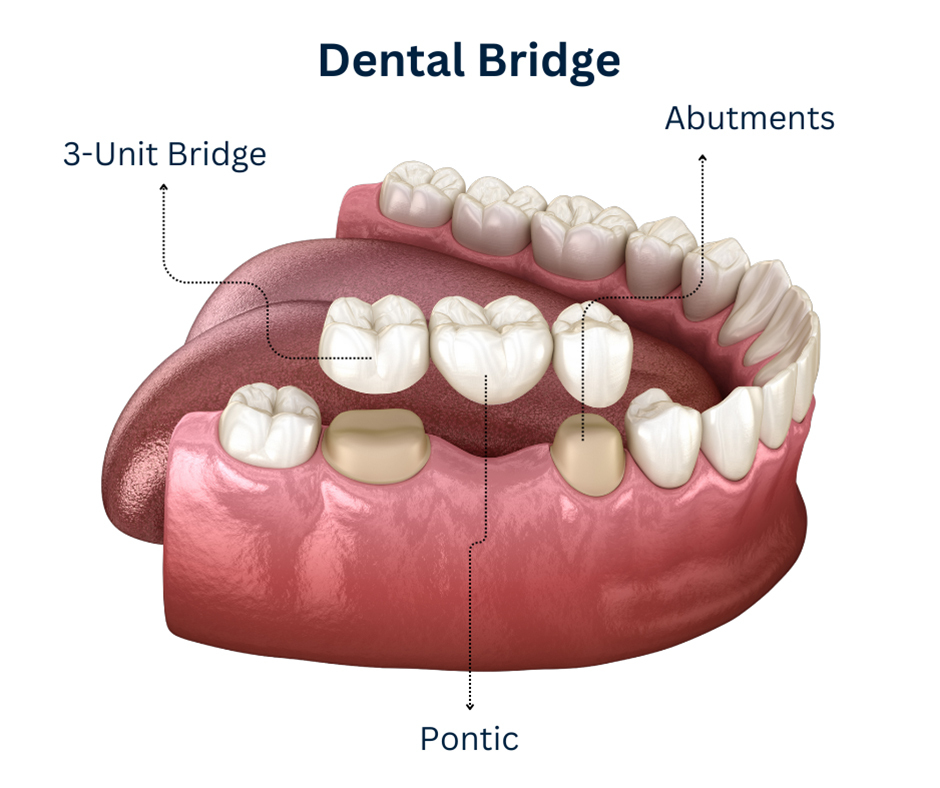
At the heart of every dental bridge is the pontic. This is the artificial tooth or teeth that replace your missing ones. The appearance of the pontic is paramount to achieving a natural-looking smile.
- Material: Pontics are typically made from porcelain, ceramic, or a combination of porcelain fused to metal (PFM). High-quality ceramics, like zirconia or lithium disilicate, offer excellent translucency and color matching, mimicking the natural enamel of your teeth. PFM bridges have a metal substructure for strength, covered by a layer of porcelain for aesthetics. The metal can sometimes show through as a grey line at the gum line, especially in older PFM designs, but modern advancements have significantly improved their appearance.
- Shape and Size: The pontic is meticulously sculpted to match the size, shape, and contour of your natural teeth. Dentists and dental technicians work together to ensure it fits harmoniously with the surrounding dentition. They consider the incisal edge (the biting surface), the lingual (tongue) side, and the mesial and distal (side) surfaces to replicate the form of a healthy tooth.
- Gum Line Integration: A critical aspect of the pontic’s appearance is how it meets the gum line. Ideally, it should rest gently on the gum tissue without causing irritation or creating an unnatural gap. In some cases, particularly with longer bridges or where gum recession has occurred, the pontic may have a slight convexity at its base to provide a fuller appearance to the gums.
The Retainers: Anchoring the Bridge
The pontic doesn’t float in isolation; it’s supported by retainers. These are the crowns that are cemented onto the teeth or implants that flank the gap.
- Abutment Teeth: When a bridge is supported by natural teeth, these teeth are called abutment teeth. They must be strong and healthy enough to bear the added load of supporting the bridge. The appearance of the abutment teeth, once they are prepared for crowns, is a key part of the overall look.
- Crown Preparation: To accommodate the retainer crowns, the abutment teeth are typically shaped. This involves reducing their size to create space for the crown to be fitted snugly over them. From an aesthetic perspective, this preparation is usually done conservatively to preserve as much natural tooth structure as possible.
- Retainer Crown Appearance: The retainer crowns are designed to look identical to natural teeth. They are made from the same materials as the pontic and are color-matched to the surrounding teeth. The goal is for these crowns to blend seamlessly, making it difficult to discern them from the original teeth.
The Connector: Linking the Components
The pontic and the retainers are joined together by a connector. This element ensures the structural integrity of the entire bridge.
- Design: The connector can be a solid piece of material or a more intricate design depending on the bridge type and the forces it will need to withstand. For traditional bridges, the connector is integral to the fabricated unit.
- Impact on Appearance: While the connector is primarily functional, its design can subtly influence the overall appearance. A well-designed connector will be discreet and not create any visible bulk or asymmetry.
Different Types of Dental Bridges and Their Visual Characteristics
The appearance of a dental bridge can vary depending on the specific type of bridge prescribed by your dentist, which in turn is dictated by the location and number of missing teeth, as well as the health of your jawbone and surrounding teeth.
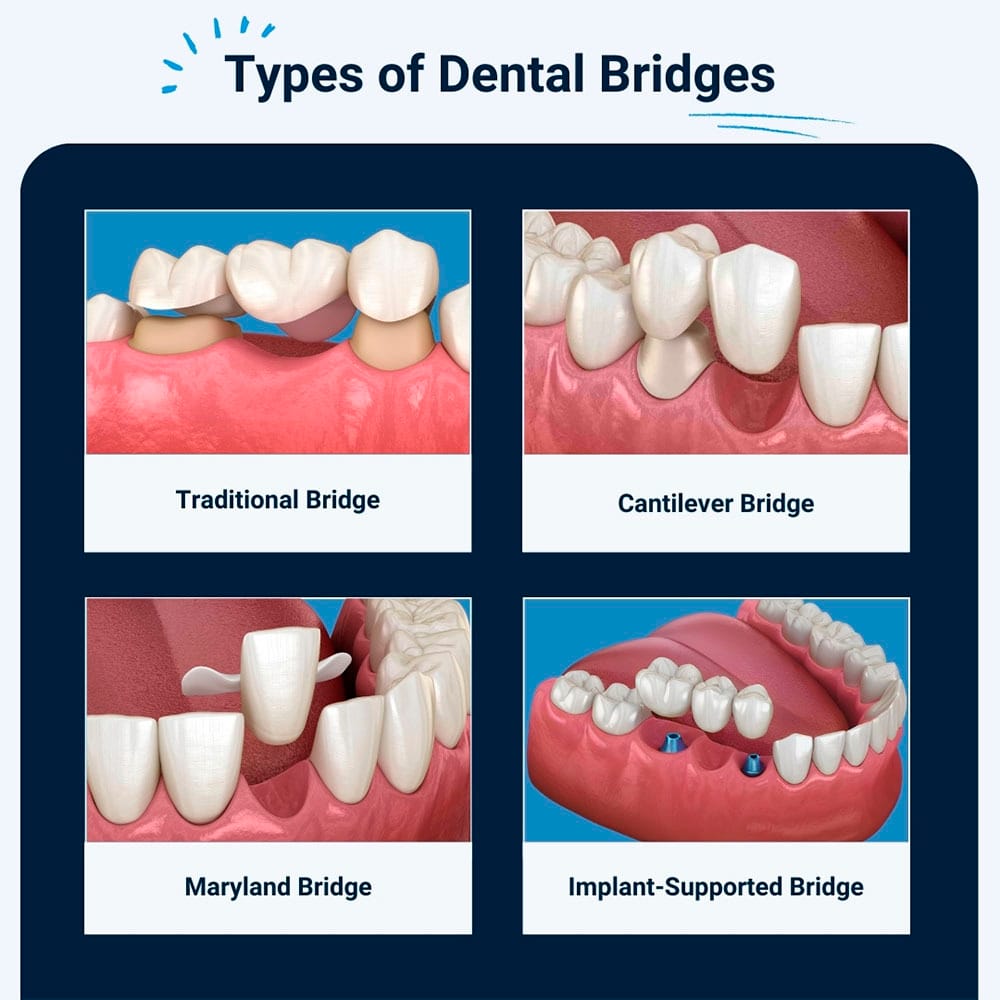
Traditional Bridges: The Most Common Type
Traditional bridges are the most frequently used type of dental bridge. They consist of one or more pontics, with a crown on each side to anchor the bridge.
- Visual Impact: When you look at a traditional bridge, you’ll see the artificial tooth or teeth (pontic) filling the gap. On either side of this gap, you’ll see the crowns that cover the prepared abutment teeth. The crowns are designed to look like natural teeth, and the pontic is sculpted to match them. The overall impression is that of a contiguous row of teeth, with the crowns and pontic blending in seamlessly. The color, shape, and translucency are carefully matched to your natural teeth.
- Material Considerations: Bridges made entirely of porcelain or ceramic often have a more natural, lifelike appearance than older PFM bridges, especially concerning their ability to reflect light and mimic the subtle translucency of natural enamel.
Cantilever Bridges: For Specific Situations
A cantilever bridge is used when there are adjacent teeth on only one side of the missing tooth or teeth.
- Visual Distinction: The most noticeable visual characteristic of a cantilever bridge is that the pontic is supported by a crown on only one side. This means that one of the “anchor” teeth will have a crown, while the other side of the pontic is unsupported by a natural tooth. This is typically used in areas of the mouth where the biting forces are not as significant, such as the front teeth. Visually, it will look like a tooth is attached to another tooth on one side only.
Maryland Bridges (Resin-Bonded Bridges): A Less Invasive Option
Maryland bridges, also known as resin-bonded bridges ormaryland bridges, are a more conservative option. They typically consist of a pontic with metal or porcelain “wings” that are bonded to the back surfaces of the abutment teeth.
- Subtle Integration: The defining visual aspect of a Maryland bridge is its discreet nature. The wings are bonded to the back of the abutment teeth, meaning they are largely hidden from view when you smile or speak. The pontic itself will look like a natural tooth filling the gap. This type of bridge often requires minimal or no preparation of the abutment teeth, preserving their original structure and appearance. The bonding material used is typically tooth-colored, further minimizing any visual impact.
Implant-Supported Bridges: The Most Stable Solution
Implant-supported bridges are a highly stable and durable option that utilizes dental implants for support. Instead of relying on natural teeth, the bridge is anchored to dental implants surgically placed in the jawbone.
- Seamless Appearance: Visually, implant-supported bridges offer some of the most natural-looking results. The implants themselves are not visible once placed and integrated into the bone. The bridge, which can consist of one or more pontics supported by crowns attached to the implants, will look like a continuous set of natural teeth. There are no crowns on natural abutment teeth to prepare, so the focus is solely on replicating the appearance of healthy teeth and gums. The gums surrounding the implant abutments are also carefully managed to ensure a natural transition.
The Aesthetic Considerations: Achieving a Natural Smile
The primary goal of a dental bridge, beyond restoring function, is to create a seamless and aesthetically pleasing result that complements your natural smile. This involves meticulous attention to detail by both the dentist and the dental laboratory.
Color Matching and Translucency
- Shade Selection: The process of color matching is critical. Dentists use shade guides to precisely determine the hue, chroma (intensity of color), and value (lightness or darkness) of your surrounding natural teeth. This is done under various lighting conditions to ensure accuracy.
- Mimicking Enamel: Modern dental materials are designed to mimic the natural translucency of tooth enamel. This allows light to pass through the material and reflect back, giving the bridge a depth and vitality that makes it indistinguishable from natural teeth. A bridge that is too opaque can look dull, while one that is too translucent might appear unnatural.
Shape and Contours
- Individualized Design: Each pontic and retainer crown is custom-designed to match the size, shape, and proportions of your natural teeth. This includes the curvature of the surfaces, the presence of any natural grooves or ridges, and the overall profile.
- Gum Line Harmony: The way the bridge interfaces with the gum line is crucial for a natural appearance. A well-fitting bridge will have a smooth transition to the gums, avoiding any dark spaces or unnatural bulges. The gum tissue should appear healthy and well-supported.
Material Advancements
- Porcelain and Ceramics: The evolution of porcelain and ceramic materials has dramatically improved the aesthetic capabilities of dental bridges. Materials like zirconia and lithium disilicate offer superior strength, durability, and aesthetic qualities, allowing for very thin restorations that exhibit excellent light transmission and color stability.
- PFM Evolution: Even porcelain-fused-to-metal (PFM) bridges have seen advancements. Newer alloys and layering techniques allow for more opacification of the metal substructure, reducing the risk of a greyish hue showing through the porcelain, especially in areas with thinner gum tissue.
The Process of Getting a Dental Bridge: What to Expect Visually
Understanding the steps involved in creating and fitting a dental bridge can demystify the process and help you visualize the final outcome.
Initial Consultation and Planning
- Visual Assessment: Your dentist will examine your teeth, gums, and jawbone, taking X-rays and possibly 3D scans. They will discuss your aesthetic goals and assess the health of potential abutment teeth or the suitability for implants.
- Treatment Options: Based on the assessment, you’ll discuss the various bridge types that are suitable for your situation, considering both functional and aesthetic requirements.
Tooth Preparation and Impressions
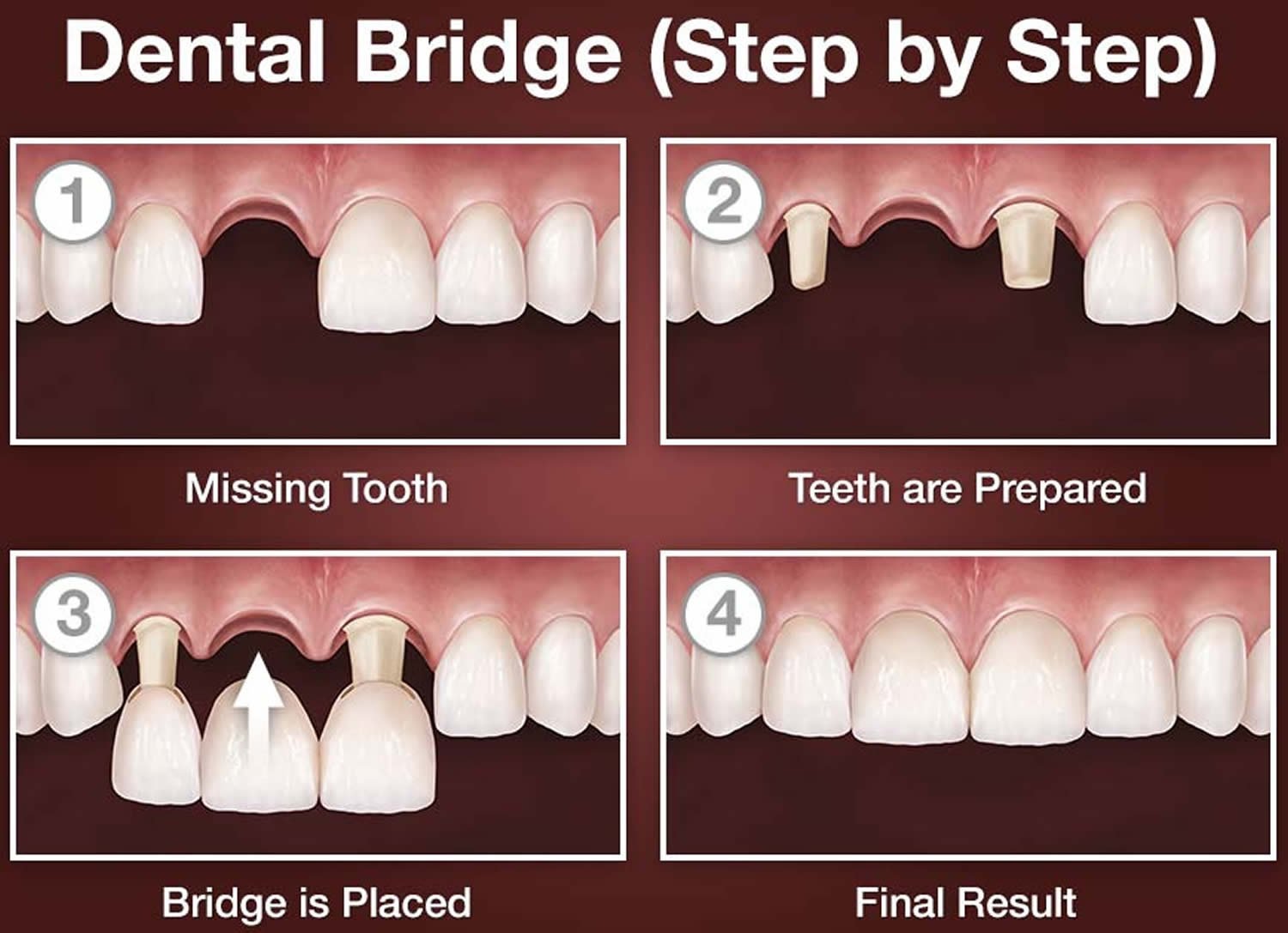
- Shaping Abutment Teeth: If a traditional or cantilever bridge is chosen, your dentist will prepare the abutment teeth by carefully shaping them. This involves reducing their size to create space for the crowns. You’ll be able to see the prepared teeth, which will be smaller and have a distinct shape ready to receive the bridge.
- Impressions: Highly accurate impressions (molds) of your prepared teeth and the surrounding areas are taken. These impressions are sent to a dental laboratory where the bridge will be custom-fabricated. You might also have digital scans taken, which serve the same purpose.
Temporary Bridge Placement
- Interim Protection: While your permanent bridge is being made, you’ll usually be fitted with a temporary bridge. This temporary prosthesis serves to protect the prepared teeth, maintain spacing, and allow you to function normally while the permanent restoration is being crafted. It will look and feel like a bridge but may be made of a less durable material.
Try-In and Adjustment
- Preview of the Final Bridge: Before cementing the permanent bridge, you’ll have a try-in appointment. This is a crucial step where you get to see and feel the actual bridge. Your dentist will check the fit, bite, and color.
- Aesthetic Refinements: This is your opportunity to provide feedback on the appearance. If any adjustments are needed to enhance the color, shape, or fit, they can often be made at this stage or sent back to the lab for minor modifications.
Final Cementation
- Securing the Bridge: Once you and your dentist are satisfied with the look and fit, the permanent bridge will be securely cemented into place. You’ll then be able to see and feel your complete, restored smile, with the bridge seamlessly integrated among your natural teeth.
In conclusion, a dental bridge, when expertly crafted and placed, is designed to be virtually indistinguishable from your natural teeth. It’s a testament to modern dental technology and artistry, offering a functional and aesthetically pleasing solution to missing teeth. The appearance is a harmonious blend of precisely shaped artificial teeth and well-fitted retainers, all meticulously color-matched and contoured to restore confidence and enhance your smile.
aViewFromTheCave is a participant in the Amazon Services LLC Associates Program, an affiliate advertising program designed to provide a means for sites to earn advertising fees by advertising and linking to Amazon.com. Amazon, the Amazon logo, AmazonSupply, and the AmazonSupply logo are trademarks of Amazon.com, Inc. or its affiliates. As an Amazon Associate we earn affiliate commissions from qualifying purchases.