
The 2006 Duke lacrosse case remains one of the most significant case studies in the intersection of legal battles and brand management. What began as a local criminal investigation quickly spiraled into a global media firestorm that fundamentally altered the personal brands of three young men—Reade Seligmann, Collin Finnerty, and David Evans—and the institutional identity of Duke University. When asking “what happened to the Duke lacrosse players,” the answer lies not just in the legal outcome, but in a decades-long journey of reputation restoration, crisis management, and the rebuilding of professional identities from the ashes of a public relations catastrophe.

The Anatomy of a Brand Catastrophe: The Collapse of Public Image
The initial phase of the Duke lacrosse case represents a “worst-case scenario” for any personal or corporate brand. Within weeks of the allegations being made, the three players involved moved from being elite student-athletes at a prestigious university to being the faces of a narrative that combined systemic privilege, racial tension, and criminal misconduct.
The Speed of Narrative Contagion
In the world of branding, first impressions are often indelible. The “contagion” of the Duke lacrosse narrative was accelerated by a pre-social media landscape that was just beginning to experience the 24-hour digital news cycle. The players’ brands were effectively hijacked by external stakeholders—media outlets, political activists, and academic critics—who used the players’ identities to represent broader societal failings. For the players, their personal identity was replaced by a “cardboard cutout” brand of the entitled, reckless athlete.
The Failure of Institutional Shielding
Duke University’s initial branding strategy during the crisis was one of distance. Fearing for the university’s corporate identity and its “Global Duke” brand, the administration pivoted away from its students. In branding terms, the university attempted a “divestment strategy,” suspending the team and forcing the resignation of the coach. This left the individual players to manage their own brands against a tidal wave of international scrutiny without the support of the larger entity they represented.
Rebuilding the Personal Brand: Life After the Headlines
For Reade Seligmann, Collin Finnerty, and David Evans, the process of “what happened next” was a masterclass in strategic reputation management. Once the North Carolina Attorney General, Roy Cooper, declared them “innocent” (a much stronger brand statement than “not guilty”), the players had to decide how to re-enter the professional world.
Reade Seligmann: From Defendant to Advocate
Reade Seligmann’s post-crisis branding is perhaps the most profound. Instead of retreating from the public eye, Seligmann integrated his experience into his professional identity. He became a lawyer, specializing in criminal defense and civil rights. By doing so, he transitioned his brand from “victim of a system” to “expert within the system.” This is a classic brand pivot: taking a perceived weakness or trauma and transforming it into a unique value proposition (UVP) of empathy and lived experience.
Professional Integration and Privacy
Collin Finnerty and David Evans chose a different branding route: professional excellence and strategic privacy. Both men transitioned into the world of high finance and corporate leadership. Their brand recovery was built on the foundation of “meritocratic silence.” By excelling in high-pressure financial environments, they signaled to the market that their core competencies—discipline, intelligence, and resilience—remained intact despite the external noise of the 2006 scandal. Their success in the corporate world serves as a testament to the brand’s ability to recover through sustained performance.
The Institutional Brand: How Duke University Navigated the Fallout
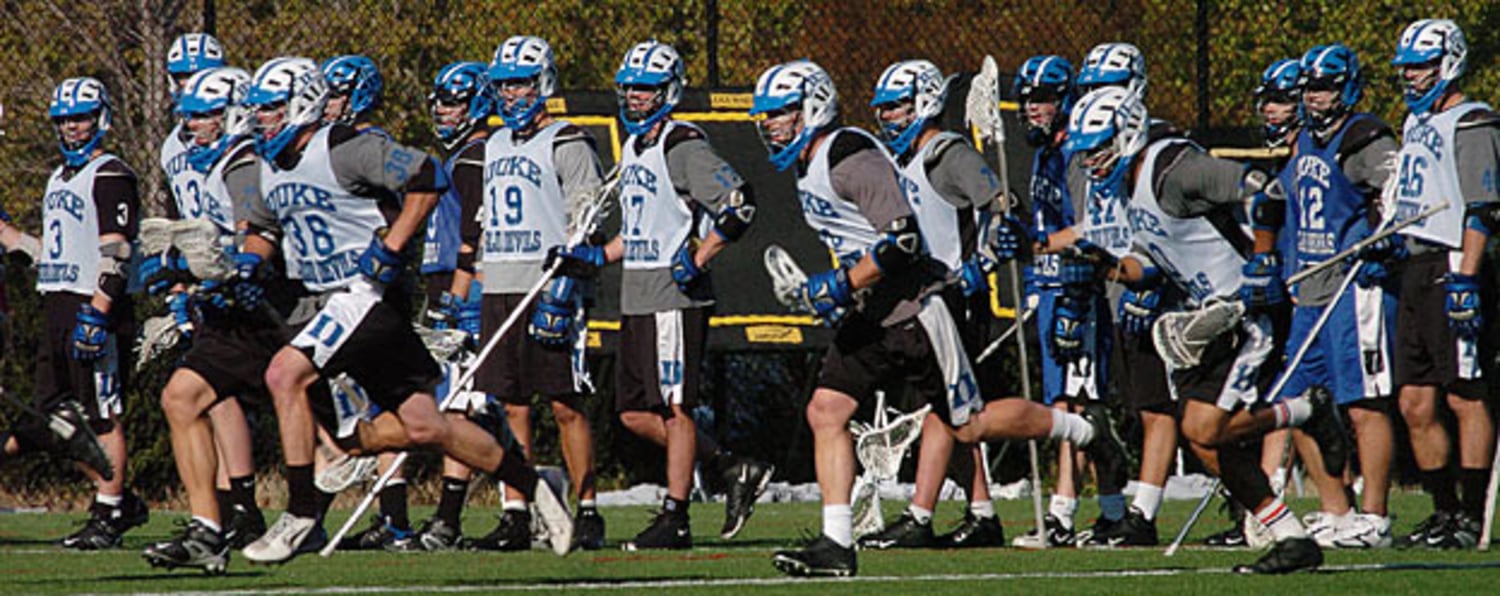
The Duke lacrosse case did not just affect three individuals; it threatened the multibillion-dollar brand of Duke University. The institution had to manage a complex stakeholder environment including alumni, donors, prospective students, and the faculty.
The “Atonement” Branding Strategy
Following the dismissal of the charges, Duke University had to undergo a brand audit. They moved from a defensive posture to one of structural reform. The university invested heavily in ethics programs and revamped their athletic department’s oversight. In the world of corporate branding, this is known as a “corrective pivot.” By acknowledging the failures in their initial response, Duke was able to slowly win back the trust of its donor base and maintain its status as a premier educational brand.
The Role of Compensation in Brand Closure
A significant part of the institutional brand recovery involved legal settlements. While the details of the settlements between the players and the university remained largely confidential, they represented a “financial brand reconciliation.” By settling with the players, Duke effectively closed the book on the legal chapter, allowing the university to stop being associated with active litigation and start being associated with academic and athletic excellence once again.
Lessons in Reputation Management for Modern Leaders
The trajectory of the Duke lacrosse players provides several essential takeaways for brand strategists and public relations professionals operating in today’s “cancel culture” environment.
The Power of the “Innocent” Declaration
In most legal cases, a “not guilty” verdict is the best-case scenario. However, in branding, “not guilty” implies a lack of evidence, whereas “innocent” implies a lack of wrongdoing. The North Carolina Attorney General’s decision to use the word “innocent” was the most valuable branding asset the players ever received. It allowed them to move from a “rehabilitation” brand strategy to a “vindication” brand strategy. For any brand facing a crisis, achieving total exoneration rather than a mere dismissal is the key to a full recovery.
Resilience as a Brand Value
The fact that all three players went on to have successful careers in law and finance is a powerful narrative. In branding, resilience is a highly marketable trait. When a brand survives a catastrophic event and thrives, it often becomes stronger than it was before the crisis. The Duke lacrosse players became symbols of the “unbreakable brand,” which helped them in professional circles where mental toughness and the ability to handle pressure are prized.
Controlling the Digital Footprint
The Duke lacrosse case occurred just before the explosion of Twitter (now X) and Instagram. Today, “what happened to the players” would be documented in real-time by the players themselves. Their strategy of strategic silence and professional excellence would be much harder to execute today. Modern personal branding requires a proactive digital presence to counteract negative SEO. The players were fortunate to live in an era where they could rebuild their lives away from the constant prying of a social media-obsessed public, allowing their professional achievements to eventually outpace their Google search results.

Conclusion: The Long-Term Impact on Brand Identity
The story of the Duke lacrosse players is ultimately one of successful brand reclamation. While the events of 2006 will always be a part of their history, they no longer define their future. Reade Seligmann, Collin Finnerty, and David Evans have managed to do what many thought was impossible: they survived a total brand collapse and emerged as respected professionals.
For Duke University, the brand has remained prestigious, though the case serves as a permanent cautionary tale in every crisis management textbook. The enduring answer to “what happened to the Duke lacrosse players” is that they became symbols of the importance of due process and the power of a resilient personal brand. They proved that while a reputation can be damaged in a day, it can be rebuilt over a decade through integrity, professional excellence, and a steadfast commitment to the truth.
aViewFromTheCave is a participant in the Amazon Services LLC Associates Program, an affiliate advertising program designed to provide a means for sites to earn advertising fees by advertising and linking to Amazon.com. Amazon, the Amazon logo, AmazonSupply, and the AmazonSupply logo are trademarks of Amazon.com, Inc. or its affiliates. As an Amazon Associate we earn affiliate commissions from qualifying purchases.