
In the dynamic world of photography and digital imaging, lenses are far more than mere pieces of glass; they are sophisticated optical instruments that shape light, perspective, and ultimately, the story a photograph tells. For anyone from the budding enthusiast looking to upgrade their kit, to the professional content creator, or the tech aficionado curious about optical engineering, understanding the array of numbers emblazoned on a lens can feel like deciphering a cryptic code. These numbers, however, are not random; they are critical specifications that define a lens’s capabilities, its ideal use cases, and even its value as a technological investment. This guide aims to demystify these numerical markings, offering a comprehensive breakdown that connects directly to technological trends, branding insights, and sound financial decision-making for your photographic endeavors.
Decoding the Aperture: The F-Numbers
Perhaps the most frequently referenced and often misunderstood lens marking is the “f-number,” also known as the f-stop. This crucial specification dictates the size of the lens’s aperture – the opening through which light passes to reach the camera’s sensor. Understanding f-numbers is fundamental to controlling exposure, depth of field, and ultimately, the aesthetic quality of your images.
Understanding Aperture Basics (f/stops)
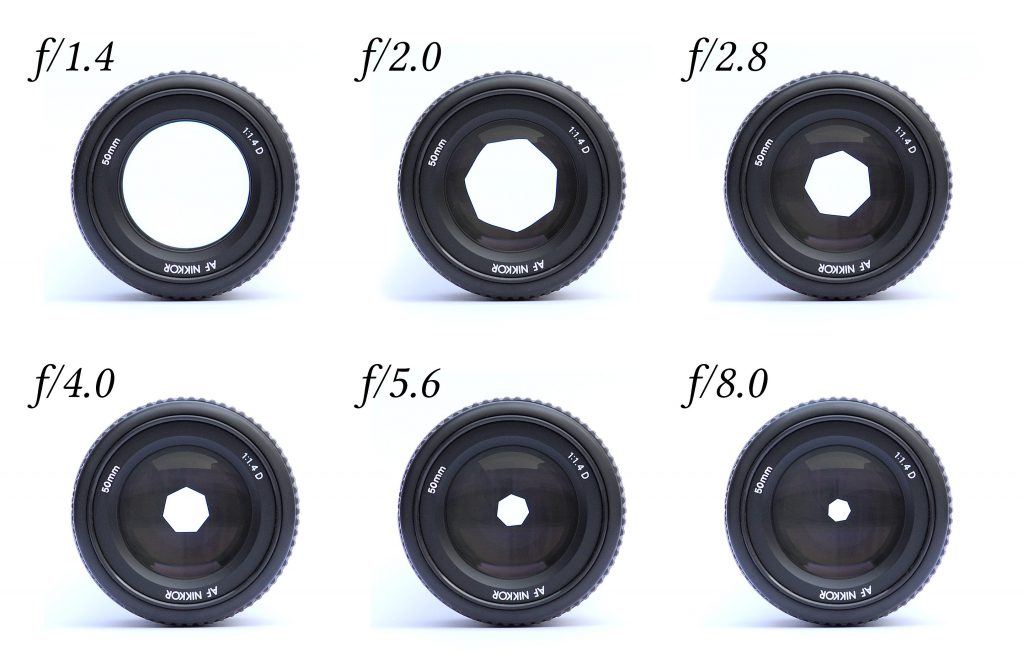
The f-number is expressed as a fraction (e.g., f/1.4, f/2.8, f/8, f/16), where a smaller f-number actually signifies a larger aperture opening. Conversely, a larger f-number indicates a smaller aperture. For instance, an f/1.4 lens has a much wider opening than an f/8 lens. This relationship directly impacts two primary photographic elements:
- Light Gathering Capability (Exposure): A wider aperture (smaller f-number) allows more light to enter the lens, making it ideal for low-light conditions or achieving faster shutter speeds to freeze motion. This is a critical technological advantage for modern photography, enabling sharp images in challenging environments without resorting to excessively high ISO settings, which can introduce digital noise.
- Depth of Field (DoF): This refers to the range of distance in a photograph that appears acceptably sharp. A wider aperture (smaller f-number) produces a shallower depth of field, meaning only a narrow plane of your image will be in focus, while the foreground and background elegantly blur into a pleasing effect known as “bokeh.” This characteristic is highly sought after in portrait photography, where the subject needs to stand out from a soft, dreamy background. A narrower aperture (larger f-number), on the other hand, yields a deeper depth of field, keeping more of the scene in focus, which is essential for landscapes or group shots where overall sharpness is paramount.
The aperture mechanism itself is a marvel of engineering, a series of overlapping blades that open and close precisely to control light. The number of these blades and their shape can even influence the quality and smoothness of the bokeh produced, a detail often highlighted in brand marketing for premium lenses.
Constant vs. Variable Aperture
When exploring zoom lenses, you’ll encounter two main types regarding aperture: constant aperture and variable aperture. This distinction has significant implications for both photographic utility and financial outlay.
-
Constant Aperture Lenses: These lenses maintain their maximum aperture setting across their entire zoom range. For example, a 70-200mm f/2.8 lens will retain its f/2.8 aperture whether you’re shooting at 70mm or 200mm. This technological consistency is invaluable for professionals and serious enthusiasts. It ensures consistent exposure and depth of field regardless of the focal length chosen, simplifying workflow and providing greater flexibility in changing light conditions. For videographers, a constant aperture prevents distracting shifts in brightness as they zoom during recording. However, achieving this optical excellence typically involves more complex designs, leading to larger, heavier, and significantly more expensive lenses. From a “Money” perspective, these are considered premium investments, often holding their value well due to their robust performance and professional appeal.
-
Variable Aperture Lenses: Often found in more affordable kit lenses (e.g., 18-55mm f/3.5-5.6), these lenses have a maximum aperture that changes as you zoom. The aperture will be widest (smallest f-number) at the widest focal length and narrowest (largest f-number) at the telephoto end. For instance, an 18-55mm f/3.5-5.6 lens will have a maximum aperture of f/3.5 at 18mm, but it will shrink to f/5.6 by the time you zoom to 55mm. While these lenses are more compact and budget-friendly, the changing aperture can be a limitation in low light or when aiming for a consistent shallow depth of field across different zoom levels. Understanding this variable is crucial for managing exposure settings, particularly for those dabbling in online income generation through photography, where consistent image quality across various shots is paramount.
Creative and Technical Implications
The f-number is not just a technical spec; it’s a creative tool. Portrait photographers often gravitate towards “fast” lenses (lenses with very wide maximum apertures like f/1.2 or f/1.8) to create stunning subject isolation with creamy bokeh, enhancing the perceived professionalism and artistic value of their work. Landscape photographers, on the other hand, might prefer to shoot at narrower apertures (f/8 to f/16) to ensure maximal sharpness from foreground to horizon, capturing every detail in expansive scenes.
For those pushing the boundaries of technology, such as astrophotographers, a wide aperture is non-negotiable for gathering enough light from faint stars and galaxies within reasonable exposure times. The choice of f-number directly impacts the “Tech” aspect of photography, allowing photographers to optimize their gadget for specific outcomes. Moreover, lens manufacturers often brand their high-performance, wide-aperture lenses with specific series names (e.g., Canon’s ‘L’ series, Nikon’s ‘N’ glass) to signify their premium status and superior optical design, reinforcing their market “Brand” image.
Focal Lengths: Perspective and Magnification
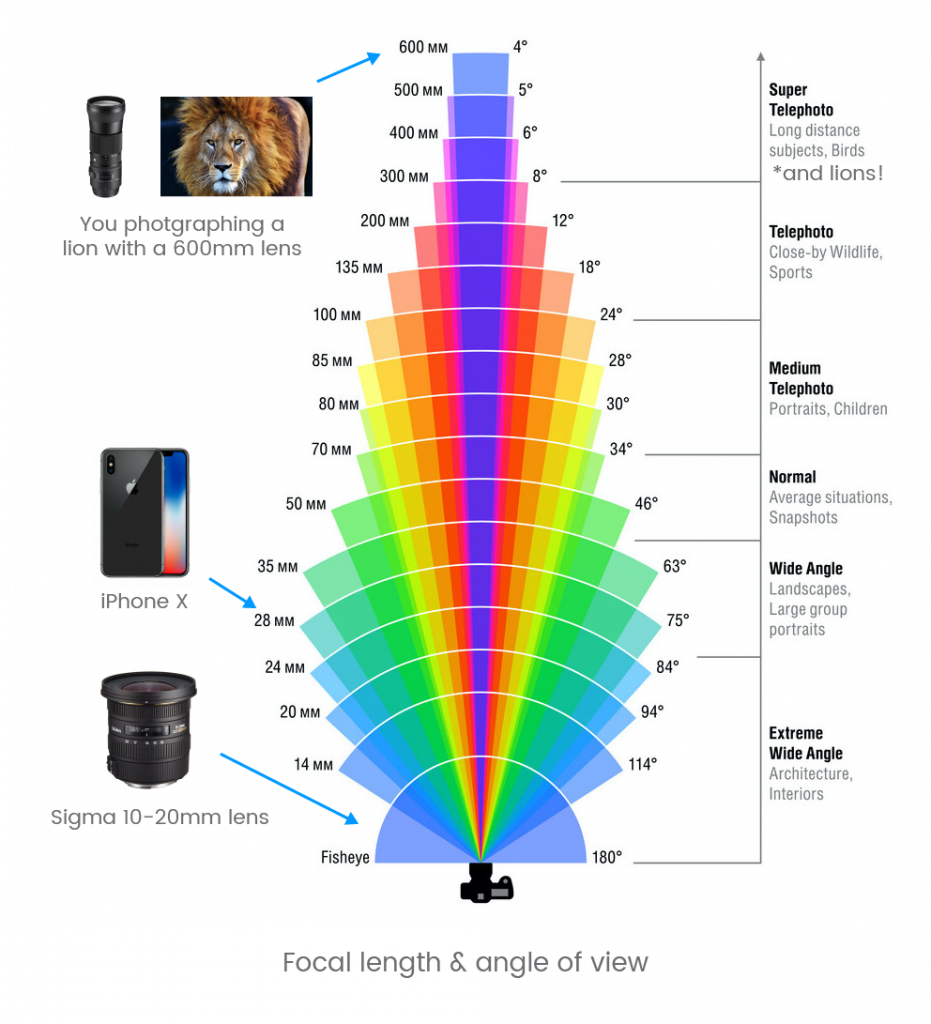
Beyond aperture, the most prominent number on a lens, typically expressed in millimeters (mm), is its focal length. This seemingly simple number is the fundamental determinant of a lens’s field of view and its magnification capabilities, profoundly influencing the perspective and compression of your images.
Understanding Millimeters (mm) – The Core Number
Focal length defines how “zoomed in” or “zoomed out” a lens appears. It’s the distance from the optical center of the lens to the camera’s sensor when the subject is in focus at infinity.
- Shorter Focal Lengths (e.g., 14mm, 24mm, 35mm): These are wide-angle lenses. They capture a broader field of view, making objects appear smaller and further away. Wide-angle lenses are known for exaggerating perspective, making foreground elements seem larger and more dominant, and are popular for capturing expansive landscapes, architectural interiors, and dynamic street scenes. Vlogging and real estate photography heavily rely on these wider perspectives to immerse viewers or showcase spaces.
- Medium/Standard Focal Lengths (e.g., 50mm, 85mm): Often described as mimicking human vision (particularly the 50mm), these lenses offer a natural perspective with minimal distortion. They are incredibly versatile and are favorites for portraiture, documentary photography, and general-purpose shooting. The 85mm, in particular, is revered for its flattering compression and ability to create beautiful bokeh for portraits.
- Longer Focal Lengths (e.g., 100mm, 200mm, 400mm+): These are telephoto lenses. They “zoom in” on distant subjects, narrowing the field of view and making objects appear closer and larger. Telephoto lenses are indispensable for wildlife, sports, and astrophotography, allowing photographers to capture subjects that are physically inaccessible. They also create a phenomenon known as “telephoto compression,” where background elements appear closer to the subject, flattening the perspective beautifully for certain types of portraits and landscapes.
Lenses can also be categorized by whether their focal length is fixed or variable:
- Prime Lenses: Have a fixed focal length (e.g., a 50mm f/1.8). They are often praised for their superior optical quality, wider maximum apertures, and lighter weight compared to zooms, making them excellent choices for specific tasks.
- Zoom Lenses: Offer a range of focal lengths (e.g., 24-70mm f/2.8). They provide versatility, allowing photographers to adjust their field of view without changing lenses, which is a major productivity boost in fast-paced shooting environments.
Types of Focal Lengths and Their Applications
The application of different focal lengths is where the “Productivity” and “Tech” aspects truly merge with creative vision:
- Wide-angle (14-35mm): For breathtaking landscapes, immersive architectural shots, and increasingly, vlogging and content creation where a broad context is desired. The ability to capture expansive scenes effectively boosts the utility of these lenses for online visual content.
- Standard/Normal (35-85mm): The workhorses for everyday photography, street scenes, and flattering portraiture. These lenses are crucial for establishing personal branding through consistent visual storytelling, be it for a blog or a professional portfolio.
- Telephoto (100mm+): Indispensable for capturing distant subjects in sports, wildlife, and concert photography. They enable photographers to get “closer” without physical proximity, a technological workaround that significantly broadens shooting opportunities. Macro lenses, a specialized form of telephoto, allow for extreme close-ups, revealing intricate details not visible to the naked eye.
Understanding the strengths of each focal length helps optimize your gadget usage and ensures you select the right tool for the job, minimizing wasted time and maximizing image impact for any purpose, from personal enjoyment to generating online income through high-quality visuals.
The Crop Factor Conundrum
While focal length is explicitly marked on the lens, its effective field of view is also influenced by the size of the camera’s sensor, a concept known as “crop factor.” This is a critical technological detail that impacts lens selection:
- Full-Frame Sensors: These are the largest standard digital sensors (roughly the size of 35mm film) and provide the true focal length as marked on the lens.
- APS-C Sensors: Smaller than full-frame, these sensors have a crop factor (typically 1.5x or 1.6x, depending on the brand). A 50mm lens on an APS-C camera will provide a field of view equivalent to a 75mm (50mm x 1.5) or 80mm (50mm x 1.6) lens on a full-frame camera.
- Micro Four Thirds (MFT) Sensors: Even smaller, with a crop factor of 2x. A 50mm lens on an MFT camera acts like a 100mm lens on full-frame.
This crop factor is crucial for making informed financial decisions regarding lens purchases. A photographer with an APS-C camera might find a 35mm prime lens offers a “standard” field of view equivalent to a 50mm on full-frame, making it a versatile and often more affordable option than a dedicated 50mm full-frame lens. This awareness allows for smarter “Money” allocation, ensuring that the chosen lens performs as expected within a specific camera system.
Beyond the Basics: Advanced Lens Markings
Beyond aperture and focal length, lenses carry a host of other numerical and alphanumeric markings that denote advanced features and specific design characteristics. These details contribute to the lens’s overall technological sophistication, impact its usability, and often differentiate brands.
Image Stabilization (IS, VR, OS, OIS, VC, IBIS)
One of the most valuable technological advancements in modern lenses is image stabilization. Different brands use their own acronyms:
- Canon: IS (Image Stabilization)
- Nikon: VR (Vibration Reduction)
- Sigma: OS (Optical Stabilizer)
- Panasonic/Olympus: OIS (Optical Image Stabilization)
- Tamron: VC (Vibration Compensation)
Regardless of the acronym, the core function is the same: internal lens elements shift to counteract camera shake, allowing photographers to handhold their cameras at slower shutter speeds than would otherwise be possible without blur. This significantly improves image sharpness, especially in low light or when using telephoto lenses where shake is more pronounced. The benefit to “Productivity” is immense, reducing the need for tripods in many situations and increasing the keeper rate of handheld shots. It’s also worth noting the rise of In-Body Image Stabilization (IBIS) in many modern mirrorless cameras, which works in conjunction with or sometimes independently of, lens-based stabilization, further enhancing the stability of your gadget setup.
Minimum Focus Distance & Magnification Ratio
These numbers are particularly important for close-up and macro photography.
- Minimum Focus Distance (MFD): This is the closest distance at which a lens can achieve focus on a subject. A shorter MFD allows you to get physically closer to your subject, leading to more dramatic close-up shots.
- Magnification Ratio: Often expressed as 1:1, 1:2, or 1:4, this ratio indicates how large a subject appears on the sensor relative to its actual size. A 1:1 (or 1.0x) magnification ratio means the subject is projected onto the sensor at its actual size, which is the hallmark of a true macro lens. A 1:2 ratio means the subject appears half its actual size on the sensor. Understanding this helps select the right lens for detailed product photography, nature close-ups, or any work requiring extreme magnification for impactful visuals that can drive “Online Income.”
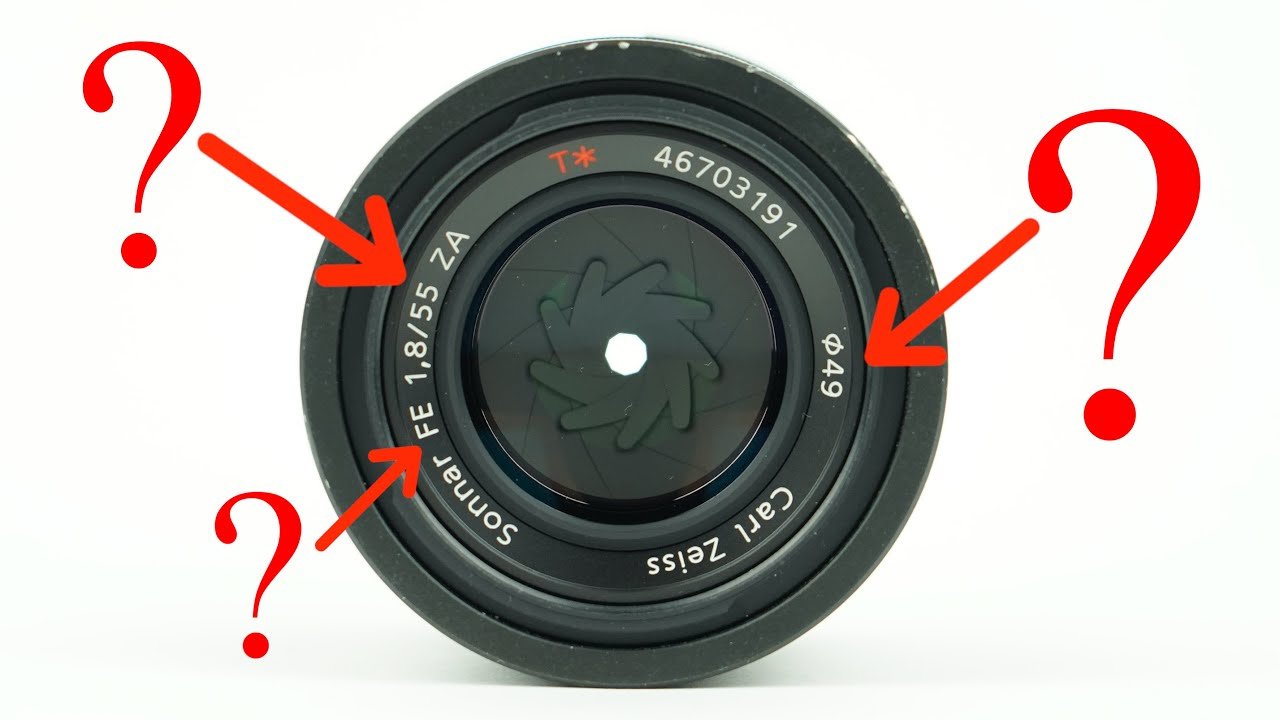
Filter Thread Size (ø)
Indicated by a circle with a diagonal line through it (ø) followed by a number (e.g., ø77mm), this denotes the diameter of the lens’s front element, specifically where filters screw on. This seemingly small detail has practical and financial implications. A larger filter thread size typically correlates with larger, heavier, and more expensive filters (UV, CPL, ND, etc.). For photographers managing their “Personal Finance” or building a kit, standardizing filter sizes across lenses (perhaps by using step-up rings) can reduce overall accessory costs, making it a smart “Money” decision.
Lens Mounts (RF, EF, Z, E, F, A, X, MFT)
While not always “numbers” in the traditional sense, lens mount designations are critical identifiers for compatibility. Different camera brands and even different camera lines within the same brand use distinct lens mounts:
- Canon: EF (for DSLRs), RF (for mirrorless)
- Nikon: F (for DSLRs), Z (for mirrorless)
- Sony: E (for mirrorless), A (for DSLRs, largely legacy)
- Fujifilm: X
- Micro Four Thirds (Olympus/Panasonic): MFT
These mounts are proprietary, meaning an RF lens won’t natively fit an E-mount camera without an adapter (and often not even then). Understanding your camera’s mount is the first step in any lens purchase. It defines your “Tech” ecosystem and influences your investment path, as you’re buying into a brand’s specific lens system, which directly impacts “Brand” loyalty and future upgrade paths.
Strategic Lens Selection: A Tech, Brand, and Money Perspective
The myriad of lens numbers ultimately converges into the strategic decision-making process of choosing the right tools for your photographic journey. This choice is rarely purely technical; it’s a careful balance of technological capabilities, brand reputation, and financial investment.
The Investment Angle: Making Smart Financial Choices
Lenses, particularly high-quality ones, represent a significant financial commitment. Unlike camera bodies that tend to depreciate rapidly with new technological iterations, well-maintained lenses can often hold their value remarkably well, sometimes even appreciating.
- Lenses as Assets: Viewing lenses as long-term assets, rather than disposable gadgets, can shape your purchasing strategy. Investing in versatile, optically superior lenses (often those with wider, constant apertures and robust build quality) can be a shrewd “Personal Finance” move for any serious photographer.
- Balancing Cost vs. Performance vs. Need: The most expensive lens isn’t always the “best” for your specific needs. Understanding the impact of f-numbers, focal lengths, and advanced features allows you to identify lenses that offer the optimal balance of performance for your budget and photographic goals, whether for personal hobby or “Business Finance” considerations in a professional setting.
- Rent vs. Buy: For specialized projects or occasional use, renting expensive lenses can be a smart way to access high-end “Tech” without the full financial commitment, especially for those testing waters for “Online Income” opportunities that require specific gear.
- Future-Proofing Your Kit: While camera bodies evolve rapidly, lens designs have a longer lifespan. Investing in a strong collection of quality lenses (especially modern mirrorless designs) can be a wise “Money” strategy, ensuring your optical tools remain relevant across several camera body upgrades.
Brand Loyalty vs. Third-Party Alternatives
The “Brand” aspect of lenses is undeniable. Major camera manufacturers (Canon, Nikon, Sony, Fujifilm, etc.) produce their own “OEM” (Original Equipment Manufacturer) lenses. These lenses are designed to perfectly integrate with their camera systems, often offering advanced features, superior autofocus performance, and impeccable optical corrections. This seamless integration and perceived quality foster strong brand loyalty.
However, the market also features highly reputable third-party lens manufacturers like Sigma, Tamron, Viltrox, and Samyang. These companies specialize in lenses and often offer compelling alternatives with competitive optical quality, wider apertures, or unique focal lengths at a more accessible price point.
- Price-Performance Tradeoffs: A Sigma Art series lens might offer similar or even superior optical performance to an OEM counterpart for a fraction of the cost, presenting a compelling “Money” proposition.
- Marketing and Reputation: Third-party brands strategically position themselves to offer value, innovation, or specialized niches. Their marketing often highlights their sharp optics and robust build quality to build their own “Brand” reputation, challenging the dominance of the camera manufacturers. Understanding these tradeoffs empowers photographers to make financially astute decisions without necessarily compromising on optical quality.
Optimizing Your Workflow and Output
Ultimately, understanding lens numbers is about optimizing your “Productivity” and the quality of your visual “Output.” Choosing the right lens for a specific task—a wide-angle for real estate, a fast prime for portraits, a stabilized telephoto for sports—streamlines your workflow, reduces the need for extensive post-processing (though software tools remain crucial), and consistently delivers high-impact results.
Furthermore, the characteristics of a lens (e.g., sharpness, distortion, vignetting) are factors that post-processing software often corrects. The cleaner and higher quality the input from the lens, the less work required in programs like Lightroom or Photoshop. This integration of hardware (“Tech”) and software (“AI Tools” for advanced editing and optimization) ensures that the creative vision born from understanding your lens numbers can be fully realized, leading to visually compelling content that can captivate audiences and even generate “Online Income.”
Conclusion
The array of numbers and symbols etched onto a photographic lens, initially daunting, reveals itself as a comprehensive language of optical engineering and creative potential. From the transformative power of the f-numbers dictating light and depth of field, to the perspective-altering effects of focal lengths, and the practical enhancements of stabilization and magnification, each marking tells a vital part of the lens’s story.
For the tech enthusiast, these numbers highlight the incredible advancements in optical design. For those building a personal or corporate brand, they represent tools for consistent, high-quality visual communication. And for individuals managing their finances or pursuing income-generating ventures, understanding these specifications empowers smart investment decisions, ensuring that every dollar spent contributes effectively to their creative and professional goals.
By demystifying “what do lens numbers mean,” photographers are not just acquiring technical knowledge; they are gaining the confidence to choose the right gear, unleash their creative vision, and make informed choices that stand the test of time, both optically and financially. So, next time you pick up a lens, read its story – it holds the key to unlocking your photographic potential.
aViewFromTheCave is a participant in the Amazon Services LLC Associates Program, an affiliate advertising program designed to provide a means for sites to earn advertising fees by advertising and linking to Amazon.com. Amazon, the Amazon logo, AmazonSupply, and the AmazonSupply logo are trademarks of Amazon.com, Inc. or its affiliates. As an Amazon Associate we earn affiliate commissions from qualifying purchases.