
The world of technology is experiencing an unprecedented boom, with software engineering standing at its very epicenter. From the applications on our smartphones to the complex algorithms driving artificial intelligence and the cloud infrastructure powering global enterprises, software engineers are the architects of our digital future. This dynamic and ever-evolving field offers immense opportunities for innovation, problem-solving, and significant career growth. Consequently, a common question echoes among aspiring professionals: “What degree do I need to be a software engineer?”
While traditionally a computer science degree was considered the undisputed gateway, the landscape has broadened considerably. Today, the path to becoming a successful software engineer is far more diverse, embracing various educational backgrounds, accelerated programs, and even self-taught expertise. This article delves into the various educational avenues, essential skills, financial considerations, and personal branding strategies that will help you navigate your journey into this exciting profession, regardless of whether you choose a traditional university route or an unconventional alternative.
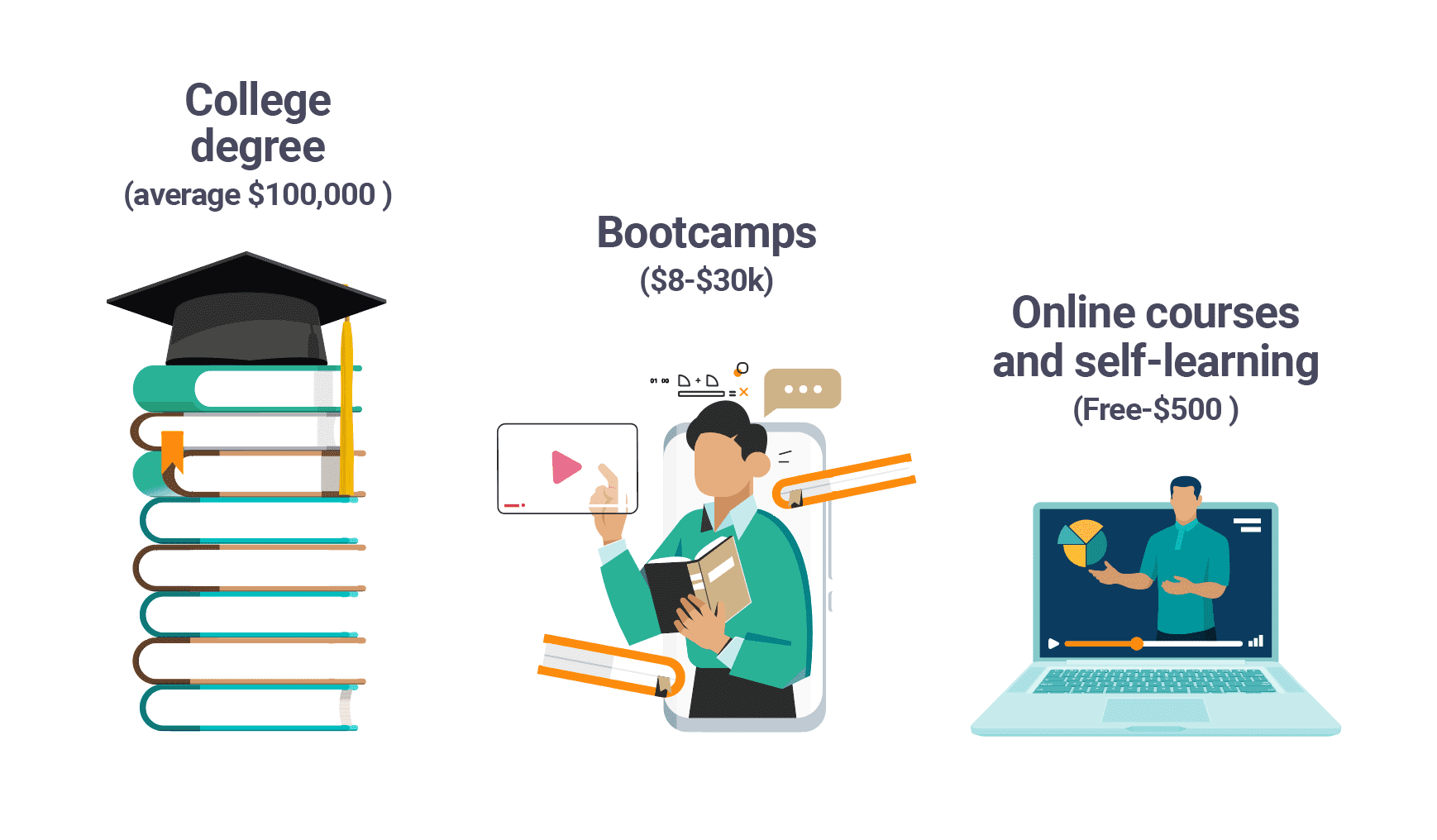
The Traditional Path: Computer Science and Related Degrees
For decades, a university degree has been the gold standard for entering professional fields, and software engineering is no exception. A structured academic environment provides a foundational understanding that can be invaluable, especially for roles requiring deep theoretical knowledge and complex problem-solving.
Bachelor’s in Computer Science (CS): The Gold Standard?
A Bachelor of Science in Computer Science (CS) remains, for many, the most direct and highly respected route into software engineering. This four-year degree typically offers a comprehensive curriculum designed to equip students with a robust understanding of computing principles.
Core Curriculum: A typical CS program delves into subjects like:
- Data Structures and Algorithms: The bedrock of efficient software, teaching how to organize and manipulate data effectively.
- Operating Systems: Understanding how software interacts with hardware.
- Computer Architecture: The design and organization of computer systems.
- Programming Languages: Mastery of several languages, often starting with foundational ones like C++ or Java, and progressing to others like Python or JavaScript.
- Database Systems: Designing, implementing, and querying databases.
- Networking: Principles of computer communication and internet protocols.
- Software Engineering Principles: Methodologies for designing, developing, testing, and maintaining software systems.
- Discrete Mathematics and Calculus: Providing the logical and mathematical frameworks for computational thinking.
Why it’s Highly Valued: Employers, particularly larger tech companies, often favor CS graduates for several reasons. The rigorous theoretical background provides a strong base for understanding complex problems and designing scalable, robust solutions. CS programs also tend to foster strong analytical and problem-solving skills, which are crucial for innovation and adapting to new technologies. A CS degree signals a comprehensive understanding that goes beyond just writing code, preparing graduates for roles in research, systems design, and architect-level positions. It also typically covers the fundamental concepts that underpin various specialized fields within software engineering, from cybersecurity to artificial intelligence.
Pros and Cons:
- Pros: Deep theoretical knowledge, strong analytical skills, widely recognized by employers, networking opportunities with peers and faculty, potential for higher starting salaries, and a solid foundation for advanced degrees.
- Cons: Can be expensive and time-consuming (four years), some curricula may be less practical or project-focused, and may not cover the very latest industry-specific tools or frameworks immediately.
Exploring Other Relevant Bachelor’s Degrees
While CS is prominent, several other degrees offer pathways to a software engineering career, often with a slightly different focus.
-
Software Engineering (SE): This degree is often more applied and project-oriented than pure CS. While it still covers fundamental programming and data structures, it places a greater emphasis on the software development lifecycle (SDLC), project management, testing, and collaboration tools. SE programs aim to produce graduates ready to immediately contribute to development teams. It’s a pragmatic choice for those who want to focus more directly on the craft of building software.
-
Computer Engineering (CE): A CE degree bridges the gap between hardware and software. Graduates often work on embedded systems, operating systems, firmware, or hardware-accelerated computing. While they might write code, their focus is typically on the interaction between software and the underlying physical components. This degree is ideal for those interested in the lower-level aspects of computing, robotics, or IoT (Internet of Things) development.
-
Information Technology (IT) or Information Systems (IS): These degrees often have a stronger business or organizational focus. While they involve programming and database management, they lean more towards deploying, managing, and securing technology systems within an organization. Graduates might work as system administrators, network engineers, IT consultants, or support roles, but with additional self-study and practical experience, they can transition into software development, particularly for enterprise applications or front-end development where user interaction and business logic are paramount.
-
Mathematics or Physics with Strong Programming Skills: A less common but highly respected path. Degrees in quantitative fields like mathematics, physics, or statistics can provide exceptional analytical and problem-solving abilities. If coupled with self-taught programming skills, these graduates are often sought after for roles in data science, machine learning, algorithm development, or quantitative analysis, where deep mathematical understanding is crucial. Their rigorous training in abstract thinking and logical reasoning makes them highly adaptable learners.
Pros and Cons of Alternatives:
- Pros: Specialization (e.g., hardware focus for CE, project focus for SE, business focus for IT/IS), strong analytical skills from quantitative degrees, potentially better fit for specific niche roles.
- Cons: May require more self-study to fill gaps in core software engineering concepts (especially for IT/IS or math/physics), may not be as universally recognized as a CS degree for all software engineering roles.
Alternative Pathways: Beyond the Traditional Degree
The tech industry is unique in its meritocratic nature; skills and demonstrable ability often outweigh traditional credentials. For many, a four-year degree might not be feasible or necessary, opening doors to more accelerated and self-directed learning models.
Coding Bootcamps and Accelerated Programs
In recent years, coding bootcamps have emerged as a popular and effective alternative to traditional university degrees. These intensive, short-term programs are designed to equip students with job-ready skills in a specific area of software development.
What They Offer: Bootcamps typically last anywhere from 10 to 24 weeks and focus heavily on practical, hands-on coding. Common tracks include full-stack web development (covering front-end and back-end technologies), data science, mobile development, or cybersecurity. The curriculum is often industry-driven, teaching popular languages, frameworks, and tools like JavaScript, Python, React, Node.js, Ruby on Rails, or specific cloud platforms. Many bootcamps also incorporate career services, helping graduates with resume building, interview preparation, and job placement.
Target Audience: Bootcamps are ideal for career changers, recent graduates looking to specialize, or individuals who prefer a fast-paced, immersive learning environment. They appeal to those who want to enter the workforce quickly without the extensive time and financial commitment of a four-year degree.
Effectiveness and Employer Perception: The effectiveness of bootcamps varies, but many have strong success rates in placing graduates into entry-level software engineering roles. Employers’ perceptions have evolved; while some still prefer degree holders, many progressive companies recognize the value of bootcamp graduates, especially for their practical skills, ability to hit the ground running, and strong work ethic. A key factor in success post-bootcamp is the individual’s dedication, the quality of their portfolio, and their networking efforts. The “Brand” of the bootcamp itself can also play a role, with some programs gaining a reputation for producing high-caliber talent.
Cost vs. Time Investment (Money Aspect): Bootcamps are considerably cheaper than a four-year degree, with costs typically ranging from $10,000 to $20,000. While still a significant investment, the shorter duration means less time out of the workforce, translating to a faster return on investment (ROI). Many offer income share agreements (ISAs) where tuition is paid back only after securing a job above a certain salary threshold, reducing upfront financial risk. This accelerated path allows individuals to start earning sooner, making it a compelling option from a financial perspective.

Self-Taught and Experiential Learning
Perhaps the most challenging yet potentially rewarding path is becoming a self-taught software engineer. This route demands immense self-discipline, curiosity, and a proactive approach to learning.
Importance of Online Resources, Personal Projects, Open-Source Contributions: The internet is a treasure trove of learning materials. Platforms like Coursera, Udemy, edX, freeCodeCamp, Codecademy, and countless YouTube tutorials offer structured courses and practical exercises. Aspiring self-taught engineers must actively seek out these resources, follow tutorials, and, most importantly, apply what they learn through personal projects. Building applications from scratch, contributing to open-source projects on GitHub, or even participating in coding challenges are crucial for developing skills and demonstrating capability.
Building a Portfolio as Proof of Skill: Without a traditional degree or bootcamp certificate, a strong portfolio is absolutely essential. This portfolio, often hosted on platforms like GitHub or a personal website, showcases your coding abilities, problem-solving skills, and understanding of software development principles. It should include diverse projects, well-documented code, and clear explanations of the technologies used and the problems solved. A compelling portfolio acts as your resume, demonstrating your “Brand” as a developer.
Networking and Mentorship: For self-taught individuals, networking is even more critical. Attending local tech meetups, joining online developer communities, and connecting with experienced engineers on LinkedIn can provide invaluable learning opportunities, feedback on projects, and potential job leads. Mentorship can accelerate learning, offering guidance and insights that are hard to gain in isolation.
Challenges and Self-Discipline Required: The self-taught path requires exceptional motivation. Without the structure of a formal program, it’s easy to get sidetracked or overwhelmed. It demands continuous learning, resilience in the face of debugging frustrations, and the ability to identify and fill knowledge gaps independently. While the cost of learning resources can be low (or free), the “cost” in terms of time and effort is substantial.
Essential Skills and Qualities for Software Engineers (Beyond the Diploma)
While educational background provides a foundation, the actual work of a software engineer relies on a blend of technical prowess and critical soft skills. These are what ultimately define your effectiveness and career trajectory.
Core Technical Competencies
Regardless of how you learn, mastery of certain technical skills is non-negotiable for any aspiring software engineer.
- Programming Languages: Proficiency in at least one or two widely used languages is fundamental. Examples include Python (for data science, AI, web backend), Java (enterprise applications, Android), C++ (systems programming, game development), JavaScript (web front-end and back-end with Node.js), Go (cloud infrastructure), and C# (Microsoft ecosystem, game development). The ability to quickly learn new languages and frameworks is equally important.
- Data Structures and Algorithms: Understanding how to efficiently store and retrieve data (e.g., arrays, linked lists, trees, graphs) and how to design efficient solutions to computational problems (e.g., sorting, searching, recursion) is critical for writing performant and scalable software. These concepts are frequently tested in technical interviews.
- Version Control (Git): Essential for collaborative development, Git allows engineers to track changes to code, revert to previous versions, and merge contributions seamlessly. A strong understanding of Git workflows is expected.
- Databases: Knowledge of both relational databases (SQL, PostgreSQL, MySQL) and NoSQL databases (MongoDB, Cassandra) is vital for data persistence and management in most applications.
- Understanding of Software Development Lifecycle (SDLC): Familiarity with methodologies like Agile or Scrum, understanding requirements gathering, design, implementation, testing, deployment, and maintenance phases.
- Cloud Platforms (AWS, Azure, GCP): As more applications move to the cloud, experience with leading cloud providers is increasingly valuable. This includes understanding services like compute (EC2, VMs), storage (S3, Blob Storage), databases (RDS, Cosmos DB), and serverless functions (Lambda, Azure Functions).
- Problem-Solving and Debugging: The ability to logically break down complex problems, identify root causes of errors, and systematically find solutions is arguably the most crucial technical skill.
Soft Skills and Professional Development
Technical expertise alone is often insufficient. Highly successful software engineers possess a strong suite of soft skills that enable them to collaborate, communicate, and continuously improve. These skills contribute significantly to your professional “Brand.”
- Communication and Teamwork: Software development is a team sport. Engineers must effectively communicate technical concepts to both technical and non-technical stakeholders, collaborate on projects, give and receive constructive feedback, and work harmoniously within a team structure.
- Adaptability and Continuous Learning: The technology landscape changes at a blistering pace. New languages, frameworks, tools, and paradigms emerge constantly. A successful software engineer must be a lifelong learner, curious, and willing to embrace new technologies and methodologies. This aligns perfectly with the “Tech” aspect of continuous learning and staying updated with trends.
- Critical Thinking: Beyond just solving problems, critical thinking involves analyzing requirements, evaluating potential solutions, foreseeing potential issues, and making informed decisions about design and implementation choices.
- Attention to Detail: Small errors in code can lead to significant bugs. A meticulous approach to writing, testing, and reviewing code is crucial for producing high-quality software.
- Time Management and Productivity: Software engineers often juggle multiple tasks, deadlines, and priorities. Effective time management, prioritization, and the use of productivity tools are essential for meeting commitments and delivering projects efficiently.
The Financial and Career Outlook
Beyond the intellectual challenge and creative satisfaction, a career in software engineering is financially rewarding and offers robust long-term prospects.
Salary Expectations and ROI of Education
The financial incentives for software engineers are a significant draw. Salaries vary widely based on location, company size, experience level, and specific technical skills, but generally, they are among the highest in the technology sector.
- Average Salaries: Entry-level software engineers can expect to earn anywhere from $70,000 to $120,000+ annually in major tech hubs, with averages typically higher for those with a strong CS degree from a reputable university. Mid-career professionals (5-10 years experience) often command salaries ranging from $120,000 to $200,000+, and senior or principal engineers, architects, or managers can earn $200,000 to $300,000+ per year, sometimes significantly more at top-tier tech companies.
- Impact of Degree Type vs. Skill Set on Compensation (Money Aspect): While a CS degree might open doors to higher-paying roles, especially at large corporations or in highly theoretical fields, demonstrable skills and experience eventually become the primary drivers of compensation. A self-taught engineer with a stellar portfolio and a few years of experience can easily outearn a fresh graduate with a degree but limited practical exposure. The market rewards competence and ability to deliver value.
- Comparing Bootcamp ROI to Degree ROI: As discussed, bootcamps offer a faster, lower-cost entry into the job market. While starting salaries might be slightly lower than for CS graduates, the ability to begin earning income within months rather than years often results in a quicker overall financial return, especially when considering the opportunity cost of lost earnings during a four-year degree.
- Long-term Career Growth and Earning Potential: Software engineering offers diverse career paths, including technical leadership (senior engineer, architect), management (team lead, engineering manager), or specialization (AI/ML engineer, cybersecurity, DevOps). Each path offers continued growth and increased earning potential, often accompanied by stock options and other benefits that significantly boost total compensation.
Crafting Your Professional Brand for Success
In a competitive job market, how you present yourself – your “Personal Branding” – is as important as your technical skills. This is true whether you have a degree or not.
- Importance of a Strong Portfolio and GitHub Profile: Your portfolio is your professional calling card. It should be well-organized, showcase a variety of projects (including personal projects, open-source contributions, or bootcamp projects), and demonstrate your problem-solving process. A clean, active GitHub profile is a critical component, showing your commitment to coding and version control best practices.
- Networking and Online Presence (LinkedIn, Personal Website): Proactive networking is crucial. A professional LinkedIn profile, highlighting your skills, experience, and projects, can connect you with recruiters and industry peers. A personal website can serve as a central hub for your portfolio, blog posts (demonstrating thought leadership), and contact information, further solidifying your “Brand” as a capable developer. Attending industry events and online forums expands your network and keeps you abreast of “Tech” trends.
- Interview Preparation (Technical and Behavioral): Excelling in interviews requires preparation beyond just knowing how to code. This includes practicing data structures and algorithm problems (often on platforms like LeetCode), understanding system design concepts, and being ready to articulate your thought process. Behavioral questions, which assess communication, teamwork, and problem-solving under pressure, are equally important.
- Continuing Education and Certifications: Even after securing a job, continuous learning is vital. Obtaining certifications in specific cloud platforms (AWS Certified Developer), programming languages, or specialized areas like cybersecurity (CompTIA Security+) can enhance your skills, validate your expertise, and improve your marketability. This commitment to ongoing development strengthens your professional “Brand” and ensures you remain competitive in the rapidly evolving tech landscape.

Conclusion
The question “what degree do I need to be a software engineer?” no longer has a single, definitive answer. While a Bachelor’s in Computer Science remains a highly respected and valuable pathway, it is certainly not the only one. The tech industry has matured to embrace diverse educational backgrounds, recognizing that practical skills, a robust portfolio, and an insatiable curiosity are often more indicative of success than a specific diploma.
Whether you choose the traditional academic route, an accelerated bootcamp, or embark on a self-taught journey, your success ultimately hinges on several core elements: mastering essential technical skills, cultivating vital soft skills like communication and adaptability, committing to continuous learning, and meticulously crafting your professional brand.
The landscape of software engineering is constantly evolving, driven by new technologies and innovative approaches. Those who thrive are not just code writers but lifelong learners, critical thinkers, and effective collaborators who can adapt to change and consistently deliver value. So, while a degree can certainly help open the first door, it’s your dedication, your projects, your problem-solving abilities, and your professional drive that will truly define your career as a software engineer.
aViewFromTheCave is a participant in the Amazon Services LLC Associates Program, an affiliate advertising program designed to provide a means for sites to earn advertising fees by advertising and linking to Amazon.com. Amazon, the Amazon logo, AmazonSupply, and the AmazonSupply logo are trademarks of Amazon.com, Inc. or its affiliates. As an Amazon Associate we earn affiliate commissions from qualifying purchases.