
The landscape of mobile connectivity is constantly evolving, with 5G technology leading the charge into an era of unprecedented speed, ultra-low latency, and massive network capacity. For consumers and businesses alike, understanding the intricacies of 5G, particularly which frequency bands their chosen carrier utilizes, is crucial for optimizing device performance and making informed decisions. T-Mobile, a dominant force in the U.S. wireless market, has aggressively pursued 5G deployment, establishing a reputation for extensive coverage and robust speeds. But what precisely are the digital highways—the 5G bands—that power T-Mobile’s network, and why do they matter so much?

At its core, 5G operates across different slices of the radio frequency spectrum, often categorized into low-band, mid-band, and high-band (mmWave). Each category possesses distinct characteristics in terms of range, penetration, and data throughput, leading to a layered approach that carriers like T-Mobile strategically employ to build a comprehensive and resilient network. T-Mobile’s strategy has been particularly notable for its early and widespread deployment of mid-band 5G, largely thanks to its acquisition of Sprint and its valuable 2.5 GHz spectrum. This move fundamentally reshaped its competitive standing and influenced its branding, marketing, and ultimately, its financial performance.
This article delves deep into the specific 5G bands T-Mobile leverages, explaining their technical significance and practical implications. We’ll explore how these bands translate into the “Extended Range” and “Ultra Capacity” experiences that T-Mobile promotes, and how this strategic allocation impacts everything from user experience and device compatibility to T-Mobile’s brand identity and financial investments in the fiercely competitive telecommunications sector.
The Foundation of T-Mobile’s 5G: A Spectrum Powerhouse
T-Mobile’s 5G network is a testament to strategic spectrum acquisition and diligent infrastructure deployment. Unlike some competitors who initially focused heavily on high-band millimeter wave (mmWave) for raw speed, T-Mobile prioritized a layered approach, ensuring broad coverage first, then enhancing it with significant capacity. This strategy is defined by its use of three primary types of spectrum: low-band, mid-band, and, to a lesser extent, high-band. Each serves a distinct purpose in delivering T-Mobile’s expansive 5G experience.
Extended Range 5G (Low-Band n71)
The cornerstone of T-Mobile’s nationwide 5G coverage is its low-band spectrum, primarily band n71, which operates at 600 MHz. This frequency range is often referred to as “Extended Range 5G” because of its exceptional propagation characteristics. Low-band signals travel great distances and penetrate buildings much more effectively than higher frequency bands. Think of it like a long-distance runner: it might not be the fastest, but it can cover vast territories and overcome many obstacles.
For T-Mobile, the 600 MHz spectrum was a strategic investment, acquired in a 2017 FCC auction. This acquisition provided T-Mobile with a significant advantage, allowing it to rapidly deploy 5G across large geographical areas, including rural regions, where higher frequencies would struggle to reach. While speeds on n71 might not be as blazing fast as mid-band or mmWave, typically ranging from tens to low hundreds of Mbps, it ensures that a broad base of T-Mobile subscribers has access to a 5G signal, delivering a noticeable improvement over LTE in terms of latency and often speed in many areas. This foundational layer is crucial for achieving T-Mobile’s goal of widespread 5G accessibility and solidifying its brand as a network with broad reach.
Ultra Capacity 5G (Mid-Band n41 and n258)
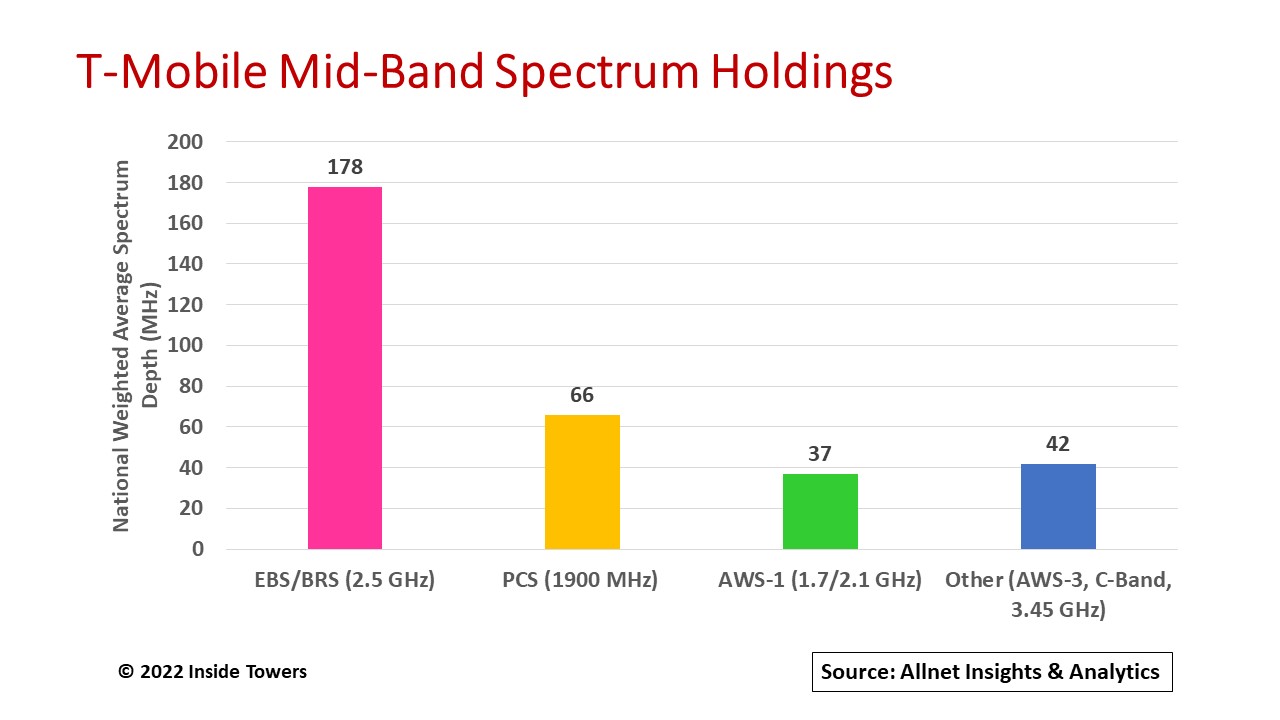
Where Extended Range 5G provides the breadth, “Ultra Capacity 5G” brings the brawn. This is T-Mobile’s game-changer, largely driven by its substantial holdings in mid-band spectrum, primarily band n41 (2.5 GHz). This spectrum was largely acquired through the merger with Sprint, which had amassed significant holdings in this band. Mid-band spectrum strikes an optimal balance between coverage and capacity: it doesn’t travel as far as low-band, but it provides significantly higher speeds and greater capacity than n71, typically delivering hundreds of Mbps and, in some cases, topping a gigabit per second.
Band n41 is the engine behind T-Mobile’s claim of having the fastest and most widely available 5G network in many urban and suburban areas. It’s ideal for handling dense concentrations of users and data-intensive applications, providing a robust experience for streaming, gaming, and complex business operations. In addition to n41, T-Mobile also uses a portion of its PCS G-Block spectrum for 5G, designated as band n258 (1.9 GHz). While not as expansive as n41, n258 further bolsters T-Mobile’s mid-band capacity and offers additional speed and performance in specific areas, contributing to the overall “Ultra Capacity” experience. The strategic deployment of these mid-band frequencies is a key differentiator for T-Mobile, significantly impacting its competitive edge and its ability to attract and retain high-value customers.
Millimeter Wave (mmWave) 5G (High-Band n260, n261)
While not T-Mobile’s primary focus for mass deployment, like its competitors Verizon and AT&T initially, T-Mobile does possess and utilize some high-band millimeter wave (mmWave) spectrum, specifically bands n260 (39 GHz) and n261 (28 GHz). This spectrum offers the highest potential speeds, often exceeding gigabit per second, with incredibly low latency. However, mmWave signals have extremely limited range and poor penetration characteristics; they can be blocked by almost anything, from leaves on a tree to a pane of glass.
Consequently, T-Mobile’s mmWave deployment is highly targeted, found primarily in dense urban environments, specific venues like stadiums, and enterprise campuses where pinpoint capacity is critical. While it offers a “wow factor” for speed tests, its limited availability means it doesn’t contribute significantly to the overall user experience for the vast majority of T-Mobile customers on a daily basis. For T-Mobile, mmWave is less about broad consumer rollout and more about niche applications and future-proofing, potentially for specialized industrial use cases or extremely high-density hot spots. This strategic decision highlights T-Mobile’s pragmatic approach, prioritizing a widely accessible, high-performance network over headline-grabbing but localized speed records.
Why Spectrum Matters: Performance, Coverage, and User Experience
Understanding T-Mobile’s 5G bands goes beyond mere technical specifications; it directly impacts what a user experiences on their device every day. The blend of low, mid, and high-band frequencies dictates the delicate balance between vast geographical coverage, blistering data speeds, and consistent network reliability. This layered strategy is not accidental; it’s a deliberate engineering and marketing choice that underpins T-Mobile’s entire 5G narrative.
Balancing Speed and Reach
The inherent physics of radio waves dictate a fundamental trade-off: lower frequencies travel farther and penetrate obstacles better, but carry less data; higher frequencies carry more data (meaning higher speeds) but have a much shorter range and are easily obstructed. T-Mobile’s diverse spectrum portfolio allows it to skillfully navigate this trade-off.
The widespread deployment of low-band n71 ensures that T-Mobile can claim the largest 5G footprint in the U.S., offering customers 5G connectivity even in areas where competitors might only provide LTE. This broad reach is a significant competitive advantage, allowing the brand to appeal to a wider demographic across urban, suburban, and rural settings. However, it’s the mid-band n41 that truly defines T-Mobile’s 5G performance. By layering this high-capacity spectrum over its extensive low-band coverage, T-Mobile delivers an experience that is not only widespread but also remarkably fast. This dual approach means that users benefit from consistent 5G service in more places, with a significant boost in speed and responsiveness when they are within range of an “Ultra Capacity” site. This balance is key to both customer satisfaction and T-Mobile’s brand promise.
The Impact on Device Compatibility and Performance
For consumers, the relevance of 5G bands often comes down to their devices. A 5G-enabled smartphone must support the specific bands utilized by the carrier to access the corresponding 5G network. Early 5G phones might not have supported all of T-Mobile’s critical bands, particularly n71 and n41, leading to a fragmented experience. However, as 5G technology has matured, newer devices are designed with broader band compatibility.
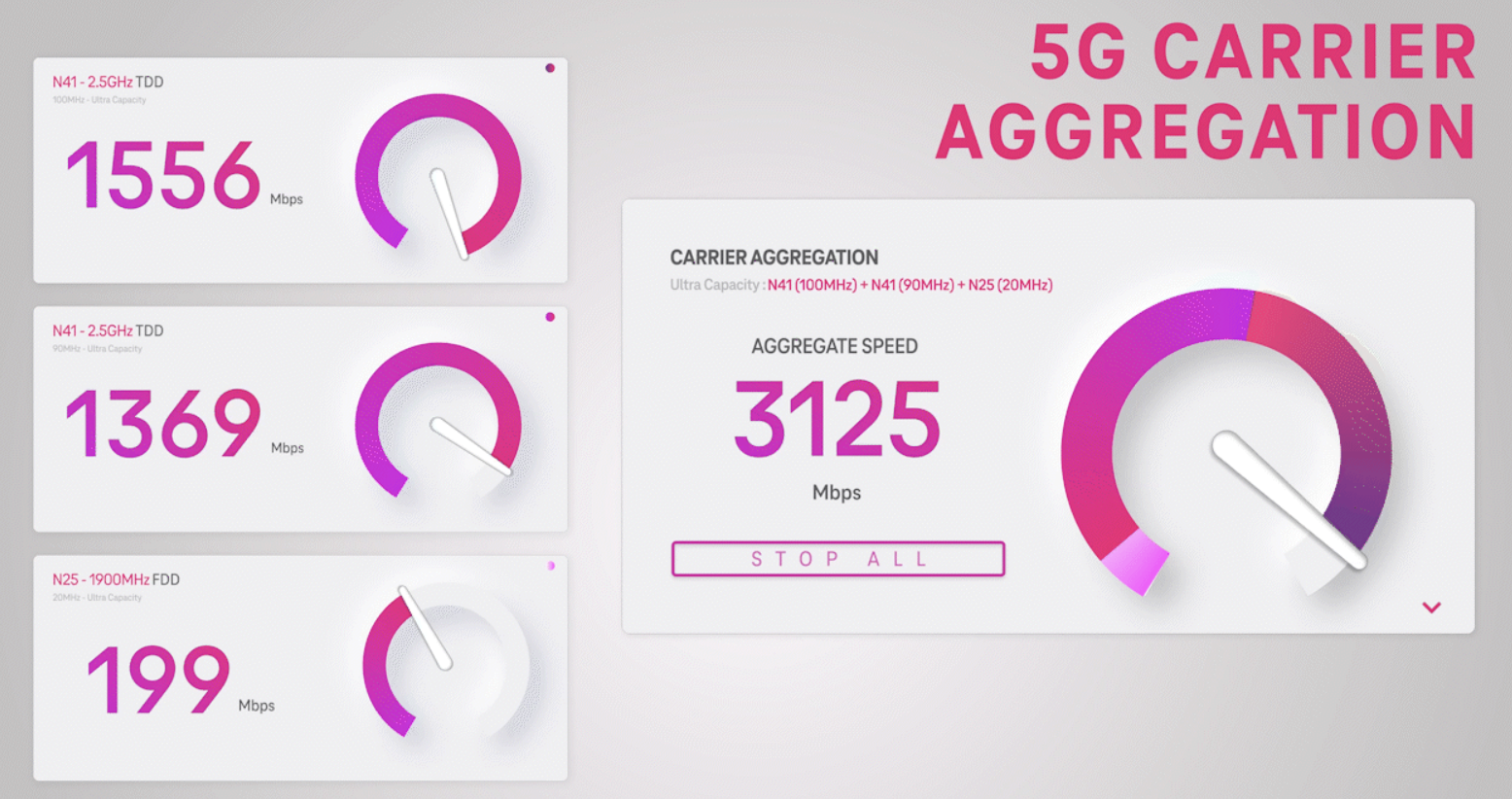
Modern 5G smartphones from major manufacturers (Apple, Samsung, Google, etc.) typically support T-Mobile’s crucial n71 and n41 bands, allowing users to fully experience both “Extended Range” and “Ultra Capacity” 5G. This compatibility is vital for maximizing the investment in a new device and ensuring access to the best available network performance. Furthermore, advanced features like carrier aggregation—where a device combines multiple 5G bands simultaneously (e.g., n71 and n41) for even higher speeds and capacity—are becoming more common, further enhancing the user experience. For T-Mobile, ensuring broad device compatibility is critical for driving 5G adoption and demonstrating the real-world value of its network.
Understanding T-Mobile’s Layered 5G Strategy
T-Mobile’s approach is often described as a “layered cake” strategy. The bottom layer is the robust and expansive low-band 600 MHz (n71), providing the base coverage. The middle layer, and arguably the most impactful for performance, is the 2.5 GHz (n41) mid-band spectrum, offering the significant speed and capacity boost. The top layer, sparingly used, is the mmWave (n260/n261) for niche, ultra-high-speed scenarios.
This strategic layering is how T-Mobile aims to deliver “5G for all,” not just in select urban pockets. It ensures that while not every user will consistently experience gigabit speeds, a very large majority will have access to a demonstrably better experience than LTE. This strategy has allowed T-Mobile to lead in 5G coverage and, increasingly, in speed metrics, positioning it favorably against competitors. The ability to switch seamlessly between these layers, depending on signal availability and user demand, is a core strength of T-Mobile’s network design and a key factor in its brand differentiation.
The Business and Brand Advantage: T-Mobile’s Strategic 5G Play
T-Mobile’s calculated investment in specific 5G bands is not just an engineering feat; it’s a profound business strategy with significant implications for its brand, market position, and financial health. The distinct characteristics of its spectrum holdings have allowed T-Mobile to carve out a unique niche in the competitive U.S. wireless market.
Marketing T-Mobile’s 5G Dominance
The terms “Extended Range 5G” and “Ultra Capacity 5G” are more than just technical descriptors; they are powerful branding tools. T-Mobile has effectively translated complex spectrum allocation into clear, benefit-driven messaging for consumers. “Extended Range” evokes a sense of ubiquitous coverage, addressing the common fear of dead zones. “Ultra Capacity,” on the other hand, promises speed and reliability, directly appealing to the demand for fast, seamless digital experiences.
This branding strategy effectively highlights T-Mobile’s strengths: its industry-leading 5G coverage thanks to low-band, and its impressive speeds and capacity driven by mid-band. By framing its 5G network in these consumer-friendly terms, T-Mobile differentiates itself from competitors who may have started with limited mmWave hotspots or relied solely on low-band DSS (Dynamic Spectrum Sharing). This marketing narrative reinforces T-Mobile’s brand identity as an innovator and a customer-centric provider, leveraging its technical advantages for commercial gain. It’s a classic example of turning a technical specification into a compelling value proposition that resonates with the target audience.
The Financial Investment and Return
Building a nationwide 5G network across multiple spectrum bands requires immense capital investment. This includes the cost of acquiring spectrum licenses through auctions (like the 600 MHz in 2017), the massive infrastructure build-out (new towers, small cells, backhaul fiber), and the integration of acquired assets (Sprint’s 2.5 GHz spectrum). For T-Mobile, the Sprint merger was a pivotal financial gamble, driven largely by the strategic acquisition of that mid-band spectrum.
The financial return on these investments comes in various forms. A superior 5G network can lead to increased subscriber growth, as customers are drawn to better coverage and speeds. It can also support higher Average Revenue Per User (ARPU) if T-Mobile can upsell customers to premium 5G plans or attract business clients with specialized 5G solutions. Furthermore, a robust 5G network can reduce churn, as satisfied customers are less likely to switch carriers. From a broader economic perspective, T-Mobile’s 5G deployment also has ripple effects, fostering innovation in connected devices, smart cities, and various industries, potentially opening up new revenue streams beyond traditional consumer wireless services. This interplay between financial strategy, technological investment, and market outcome is central to T-Mobile’s long-term viability and growth.
Competition and Market Position
T-Mobile’s 5G band strategy has profoundly impacted its competitive standing against Verizon and AT&T. While all three major carriers are building extensive 5G networks, their initial approaches and spectrum portfolios led to different strengths. T-Mobile’s early lead in 5G coverage, combined with its rapid deployment of mid-band, has allowed it to position itself as the undisputed leader in both 5G coverage and often 5G speed in many independent tests.
This market positioning is critical for attracting new subscribers from competitors, especially those seeking a more consistent and high-performance 5G experience. The mid-band advantage, in particular, provided T-Mobile with a head start that its rivals are now furiously trying to match by acquiring more mid-band spectrum and accelerating their own deployments. This fierce competition ultimately benefits consumers through continuous network improvements and potentially more aggressive pricing. T-Mobile’s strategic use of its diverse 5G bands has not only strengthened its brand but also forced its competitors to adapt, driving innovation across the entire industry.
Looking Ahead: The Evolution of T-Mobile’s 5G Network
The deployment of 5G is not a static event but an ongoing evolution. T-Mobile, like its competitors, continues to refine and expand its network, leveraging technological advancements and anticipating future demands. The strategic decisions made regarding 5G bands today will lay the groundwork for tomorrow’s innovations and economic opportunities.
Enhanced 5G Capabilities and Future Innovations
T-Mobile is not resting on its current 5G laurels. The company is actively pursuing advancements like 5G Standalone (SA) architecture, which utilizes 5G core network infrastructure rather than relying on the older LTE core. 5G SA unlocks the full potential of 5G, enabling ultra-low latency, network slicing, and massive IoT connectivity, which are crucial for advanced applications like autonomous vehicles, augmented reality, and industrial automation. T-Mobile was the first in the U.S. to launch a nationwide 5G SA network, further solidifying its technical leadership.
Furthermore, T-Mobile continues to optimize its existing bands through techniques like carrier aggregation, combining multiple channels across low and mid-band frequencies to deliver even faster speeds and greater efficiency. The company is also exploring the use of new spectrum, such as the C-band (3.7-3.98 GHz) that other carriers are heavily investing in, should opportunities arise. Beyond 5G, discussions about 6G are already underway, hinting at a future where even more diverse spectrum bands and revolutionary technologies will come into play, potentially impacting everything from communication paradigms to energy efficiency and global connectivity.
What This Means for Consumers and Businesses
For consumers, the continuous evolution of T-Mobile’s 5G network promises an even more seamless, responsive, and powerful mobile experience. As the network matures and new capabilities like network slicing become widely available, personalized services, enhanced gaming, and immersive AR/VR experiences will become more commonplace. The increasing density of 5G coverage, especially “Ultra Capacity,” means more consistent access to high-speed internet, potentially challenging traditional wired broadband services. This could translate into more reliable home internet alternatives, especially in underserved areas.
For businesses, T-Mobile’s robust 5G infrastructure, powered by its diverse band portfolio, opens up a world of possibilities. Industries such as manufacturing, logistics, healthcare, and smart cities can leverage 5G for private networks, real-time data analytics, remote operations, and highly efficient IoT deployments. The low latency and high reliability enabled by 5G SA are critical for mission-critical applications, while the massive capacity can support dense sensor networks. This technological foundation provides fertile ground for innovation, potentially leading to new business models, increased productivity, and significant economic growth. T-Mobile’s strategic use of its 5G bands is not just about connecting people; it’s about enabling a connected future that benefits everyone.
In conclusion, T-Mobile’s command of specific 5G bands—particularly the widespread low-band n71 and the high-capacity mid-band n41—forms the bedrock of its current market leadership in 5G. This strategic allocation of spectrum, combined with aggressive network deployment and clever branding, has allowed T-Mobile to deliver a compelling 5G experience to millions. As technology continues to advance, and the demands of both consumers and businesses grow, T-Mobile’s ongoing investment in its network, guided by its spectrum strategy, will remain crucial for its continued success and its role in shaping the future of connectivity.
aViewFromTheCave is a participant in the Amazon Services LLC Associates Program, an affiliate advertising program designed to provide a means for sites to earn advertising fees by advertising and linking to Amazon.com. Amazon, the Amazon logo, AmazonSupply, and the AmazonSupply logo are trademarks of Amazon.com, Inc. or its affiliates. As an Amazon Associate we earn affiliate commissions from qualifying purchases.