
An 8-speed automatic transmission represents a significant advancement in automotive technology, offering drivers a refined blend of performance, fuel efficiency, and a smoother driving experience. Far from being a mere numerical designation, the “8 speed” signifies a sophisticated engineering solution that impacts how your vehicle accelerates, consumes fuel, and ultimately, how it feels to drive. Understanding what this means can demystify a crucial component of modern cars and empower you as a consumer and driver.
The core concept behind an automatic transmission is to eliminate the need for the driver to manually select gears. Instead, the vehicle’s onboard computer, in conjunction with hydraulic pressure and a complex system of planetary gear sets, automatically shifts through different gear ratios to optimize engine performance for various driving conditions. The number of gears – in this case, eight – directly relates to the number of distinct ratios the transmission can utilize. More gears generally translate into a more granular control over the engine’s power delivery, allowing it to operate within its most efficient and powerful ranges more consistently.
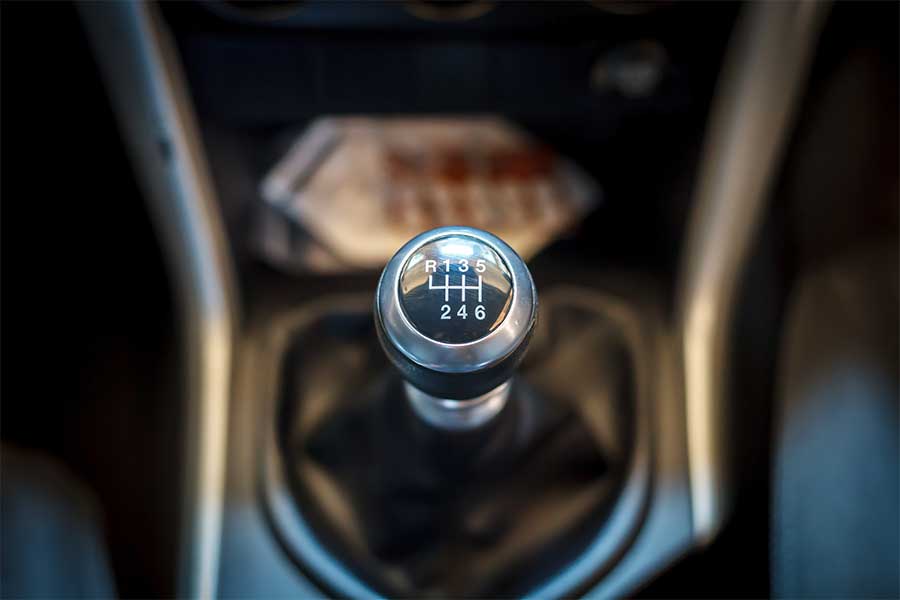
The Technological Advancements Behind 8-Speed Automatics
The evolution from simpler 3-speed or 4-speed automatics to the current 8-speed systems is a testament to ongoing innovation in automotive engineering. These advancements aren’t just about adding more gears; they involve intricate mechanical and electronic systems working in harmony.
Planetary Gear Sets and Torque Converters: The Foundation
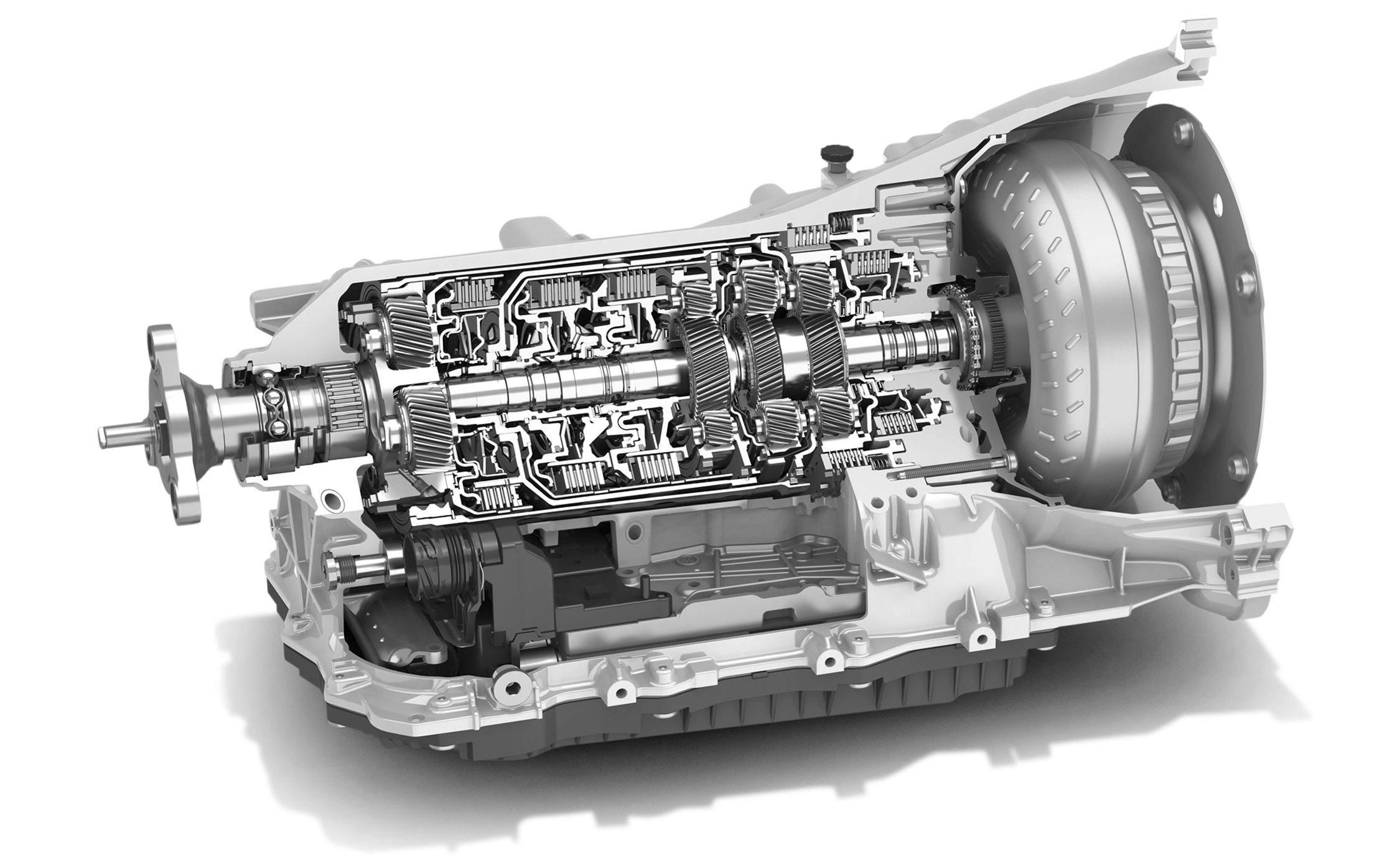
At the heart of virtually all automatic transmissions, including 8-speed units, are planetary gear sets. These are elegantly designed mechanical components that consist of a sun gear at the center, surrounded by several planet gears that orbit the sun gear. These planet gears are held in place by a carrier. By locking or releasing different elements of this planetary gear set, various gear ratios can be achieved. An 8-speed transmission typically utilizes multiple interconnected planetary gear sets to generate the eight distinct ratios.
Alongside the planetary gear sets, the torque converter plays a vital role. This fluid coupling acts as a clutch, allowing the engine to spin independently of the transmission when the vehicle is stopped. As the accelerator pedal is pressed, the fluid within the torque converter transfers power from the engine to the transmission, initiating movement. Modern torque converters in 8-speed automatics are highly efficient, often incorporating lock-up clutches that mechanically connect the engine to the transmission at higher speeds, further reducing energy loss and improving fuel economy.
Sophisticated Control Systems: The Brains of the Operation
The “automatic” aspect of an automatic transmission is driven by a sophisticated electronic control unit (ECU), often referred to as the Transmission Control Module (TCM). This computer receives data from a multitude of sensors throughout the vehicle, including engine speed (RPM), throttle position, vehicle speed, brake pedal position, and even external factors like ambient temperature. Based on this real-time data, the TCM meticulously calculates the optimal gear for any given situation.
For an 8-speed transmission, the TCM’s algorithms are considerably more complex than those for transmissions with fewer gears. It must manage shifts across a wider spectrum of ratios, making split-second decisions to ensure smooth transitions and efficient power application. The programming of the TCM is a crucial element of an automaker’s tuning, influencing the transmission’s character – whether it prioritizes sporty responsiveness or economical cruising.
Enhanced Efficiency and Performance: The Benefits of More Gears
The primary advantage of having eight gears is the ability to keep the engine operating within its “sweet spot” – the RPM range where it produces the most power efficiently. With more gears, the steps between each ratio are smaller. This means that as the vehicle accelerates, the engine speed doesn’t need to jump as dramatically between shifts.
Fuel Economy: By allowing the engine to run at lower RPMs for longer periods, particularly at highway speeds, 8-speed automatics significantly contribute to improved fuel efficiency. A higher gear ratio at cruising speed essentially means the engine is working less to maintain a given velocity, directly translating to fewer fuel stops and reduced emissions. The ability to “overdrive” – where the output shaft spins faster than the input shaft – is more effectively utilized with a greater number of gears, further enhancing highway MPG.
Performance and Acceleration: While often associated with fuel savings, 8-speed automatics can also deliver impressive performance. The smaller steps between gears allow for quicker and smoother acceleration. The transmission can rapidly cycle through lower gears to build speed, and the closer ratios ensure that the engine is always close to its peak power band, minimizing power loss during shifts. This results in a more engaging and responsive driving experience, especially when rapid acceleration is required, such as during overtaking maneuvers.
Smoothness and Refinement: The finer granularity of gear ratios in an 8-speed transmission leads to a noticeably smoother driving experience. Shifts are often imperceptible, blending seamlessly from one gear to the next. This is due to both the mechanical advantage of closer ratios and the sophisticated control logic of the TCM, which can precisely time shifts and manage hydraulic pressure to minimize any jolts or interruptions in power delivery. This heightened refinement contributes to a more comfortable and luxurious feel, even in performance-oriented vehicles.
Types of 8-Speed Automatic Transmissions
While the fundamental principle of having eight forward gears remains constant, manufacturers employ different technologies to achieve this. The most common types include traditional torque converter automatics and dual-clutch transmissions (DCTs).
Torque Converter Automatics: The Tried and True
The most prevalent form of 8-speed automatic utilizes a torque converter. This design is a direct evolution of earlier automatic transmissions. Automakers like ZF, Aisin, and General Motors have all developed highly capable 8-speed torque converter automatics that are widely adopted across various vehicle segments. These transmissions are known for their durability, smooth operation, and relatively lower cost of development and production compared to some other advanced transmission types. The sophistication lies in the intricate control of hydraulic pressure by the TCM to engage and disengage clutches and bands within the planetary gear sets, and the precise management of the torque converter’s lock-up clutch.
Dual-Clutch Transmissions (DCTs): Performance-Oriented Shifting
Dual-clutch transmissions, while technically a type of automated manual transmission, are often categorized alongside traditional automatics due to their automatic shifting capabilities. An 8-speed DCT, such as those found in many performance-oriented European vehicles, utilizes two separate clutches – one for odd-numbered gears (1, 3, 5, 7) and one for even-numbered gears (2, 4, 6, 8). While one gear is engaged, the next anticipated gear is pre-selected on the other clutch. This allows for incredibly rapid and almost instantaneous gear changes, as the clutch for the current gear disengages precisely as the clutch for the next gear engages.

DCT Advantages: The primary advantage of a DCT is its unparalleled shift speed and direct connection to the engine, often providing a more sporty and engaging feel. There’s minimal power loss during shifts, as there’s no fluid slip like in a torque converter.
DCT Considerations: DCTs can sometimes be less smooth at very low speeds or in stop-and-go traffic compared to torque converter automatics, and they can be more complex and expensive to manufacture and repair. The electronic and mechanical complexity is extremely high, requiring precise synchronization between the two clutches and the gear selection mechanism.
How 8-Speed Automatics Impact Your Driving Experience
The presence of an 8-speed automatic transmission is not just a spec sheet item; it directly influences how your car behaves on the road. Understanding these impacts can help you appreciate the engineering that goes into modern vehicles.
The Shift Feel: From Noticeable to Nearly Invisible
The transition from older automatic transmissions, where gear shifts could be felt as distinct “kicks,” to modern 8-speed units is remarkable. The smaller gear steps mean that the engine doesn’t have to work as hard to reach the next gear, and the TCM is programmed to smooth out these transitions. In many 8-speed automatics, shifts are so seamless that you might not even realize a gear change has occurred unless you’re consciously observing the tachometer.
This refined shift feel contributes significantly to overall driving comfort. Whether you’re navigating city traffic, cruising on the highway, or enjoying a spirited drive on a winding road, the transmission’s ability to provide smooth, timely gear changes enhances the driving experience. Manufacturers spend a considerable amount of time tuning these shift characteristics, offering different modes (e.g., Eco, Normal, Sport) that alter the transmission’s behavior to prioritize economy or performance.
Responsiveness and Power Delivery
When you demand acceleration, an 8-speed automatic is designed to deliver it efficiently. With eight ratios to choose from, the transmission has more options for keeping the engine in its powerband. This means that when you press the accelerator, the transmission can quickly downshift to the appropriate gear, allowing the engine to rev up and provide the necessary torque for acceleration.
The responsiveness of an 8-speed automatic is also a function of its programming. Modern TCMs are highly predictive, using data from your driving style and the vehicle’s sensors to anticipate your needs. For example, if you briefly lift off the throttle before accelerating again, the TCM might hold the current gear or even downshift proactively, ensuring that power is immediately available when you reapply throttle. This intelligent anticipation makes the car feel more connected to your intentions.
Fuel Efficiency: A Major Advantage
As mentioned earlier, fuel efficiency is one of the most significant benefits of an 8-speed automatic transmission. The ability to keep the engine operating at lower RPMs for extended periods, particularly at cruising speeds, directly reduces fuel consumption. This is achieved by utilizing higher gear ratios that allow the engine to run at a slower rotational speed while maintaining vehicle speed.
The widespread adoption of 8-speed automatics by manufacturers is largely driven by increasing government regulations on fuel economy and emissions. By optimizing engine operation across a wider range of speeds, these transmissions help vehicles meet stringent environmental standards while also saving consumers money at the pump. It’s a clear example of how technological advancement in one area of a vehicle can have widespread benefits.
The Future of Automatic Transmissions
The 8-speed automatic transmission represents a highly developed and efficient solution for modern vehicles. However, the automotive industry is in constant pursuit of innovation, and the evolution of transmissions is far from over.
Beyond Eight: The Rise of 9, 10, and Beyond
While 8-speed automatics are now commonplace, some manufacturers are pushing the boundaries further, introducing transmissions with 9, 10, or even more speeds. The rationale behind this trend is the pursuit of even finer gear steps, leading to further improvements in fuel efficiency and a more refined driving experience. Each additional gear allows the engine to operate closer to its ideal RPM for a wider range of speeds.
However, there are diminishing returns with each added gear. The complexity, weight, and cost of manufacturing and controlling transmissions with an ever-increasing number of gears become more significant. Engineers must balance the benefits of more gears against these practical considerations. The sophisticated control systems and the integration of these advanced transmissions are at the forefront of automotive technology.
Electrification and Hybrid Integration
The automotive landscape is rapidly shifting towards electrification and hybrid powertrains. As this transition progresses, the role and design of transmissions are also evolving. In many hybrid vehicles, the transmission system is integrated with the electric motor(s) and the internal combustion engine, creating complex and highly efficient powertrains.
For fully electric vehicles (EVs), the need for multi-speed transmissions is often eliminated or significantly reduced. Many EVs utilize a single-speed transmission, as electric motors provide instant torque across a very wide RPM range, negating the need for multiple gear ratios to optimize performance and efficiency. However, some high-performance EVs are beginning to explore multi-speed transmissions to enhance acceleration and top-end speed. The integration of advanced gearing solutions, even in electric powertrains, continues to be an area of active research and development.
In conclusion, an 8-speed automatic transmission signifies a sophisticated piece of automotive engineering designed to optimize your vehicle’s performance, fuel efficiency, and overall driving comfort. It represents a culmination of decades of development in planetary gear sets, torque converters, and advanced electronic control systems. As technology continues to advance, the evolution of transmissions will undoubtedly continue, promising even more efficient and engaging driving experiences in the years to come.
aViewFromTheCave is a participant in the Amazon Services LLC Associates Program, an affiliate advertising program designed to provide a means for sites to earn advertising fees by advertising and linking to Amazon.com. Amazon, the Amazon logo, AmazonSupply, and the AmazonSupply logo are trademarks of Amazon.com, Inc. or its affiliates. As an Amazon Associate we earn affiliate commissions from qualifying purchases.