
For the average household, a vehicle represents the second-largest financial investment after a home. However, unlike real estate, which historically appreciates over time, a car is a rapidly depreciating asset. Understanding the precise value of your vehicle is not merely a matter of curiosity; it is a fundamental pillar of personal finance. Whether you are looking to sell, trade-in for a newer model, or simply calculate your total net worth, knowing your car’s market value allows you to make data-driven decisions rather than emotional ones.

In today’s volatile economic climate—marked by fluctuating supply chains and shifting consumer interest toward electric vehicles—the “book value” of a car can change in a matter of weeks. This guide explores the financial mechanics of automotive valuation, the tools available to measure it, and the strategic steps you can take to preserve your vehicle’s equity.
Understanding the Financial Mechanics of Automotive Depreciation
Depreciation is the silent killer of wealth in the context of car ownership. From a financial perspective, a vehicle is a “wasting asset.” To manage your money effectively, you must understand how and why your car loses value over time and what external factors can temporarily halt or accelerate that slide.
The Standard Depreciation Curve
Most vehicles lose approximately 20% of their value within the first year of ownership. Following that initial hit, a car typically loses about 15% of its remaining value every year until it reaches its “floor” value—the point where its utility or scrap metal value outweighs its brand prestige. Understanding where your car sits on this curve is vital for determining the optimal time to exit the investment. If you sell too early, you absorb the steepest part of the depreciation curve; if you wait too long, maintenance costs may exceed the vehicle’s remaining equity.
Macroeconomic Influences and Market Volatility
While the depreciation curve is the standard, external economic factors can create anomalies. We saw this clearly between 2021 and 2023, when semiconductor shortages and supply chain disruptions caused used car prices to skyrocket, in some cases appreciating in value. High inflation also impacts the “replacement cost” of your vehicle. When new car prices rise, the value of used cars often follows suit as buyers are priced out of the new market. Monitoring the Consumer Price Index (CPI) for used vehicles can give you a professional edge in timing your sale.
Regional Demand vs. National Averages
Valuation is not a monolith. A rear-wheel-drive convertible has a significantly higher value in Southern California than it does in a snowy Vermont winter. Similarly, high-efficiency hybrid vehicles command a premium in urban centers with high fuel costs compared to rural areas. When asking, “What is the value of my car?” you must look beyond national averages and analyze your specific geographic market.
Essential Tools and Methods for Determining Accurate Market Value
To treat your car as a serious financial asset, you cannot rely on guesswork. You need to leverage the same data sets used by dealerships and insurance companies. In the modern fintech landscape, several high-quality tools provide a clear picture of your car’s standing.
Leveraging Online Valuation Algorithms
Platforms like Kelley Blue Book (KBB), NADAguides, and Edmunds use massive datasets of recent auction results and private sales to generate value estimates. However, the key to using these tools effectively is objectivity. Most owners overestimate their car’s condition. Financially savvy owners categorize their vehicles as “Good” rather than “Excellent,” as “Excellent” condition usually applies to less than 5% of vehicles on the road. This conservative approach ensures that your financial planning is based on realistic expectations rather than optimistic projections.
Distinguishing Between Trade-In, Private Party, and Retail Value
One of the most common financial mistakes car owners make is confusing “Retail Value” with “Trade-In Value.”
- Trade-In Value: This is what a dealer will pay you. It is the lowest value because the dealer must account for reconditioning costs and a profit margin.
- Private Party Value: This is what you can expect to receive if you sell the car yourself. It is generally 10% to 15% higher than trade-in value but requires more effort and carries more risk.
- Retail Value: This is what a dealer asks for on the lot. It is the highest number, but it is a figure you will almost never receive as a seller.
The Role of VIN-Specific Data and History Reports
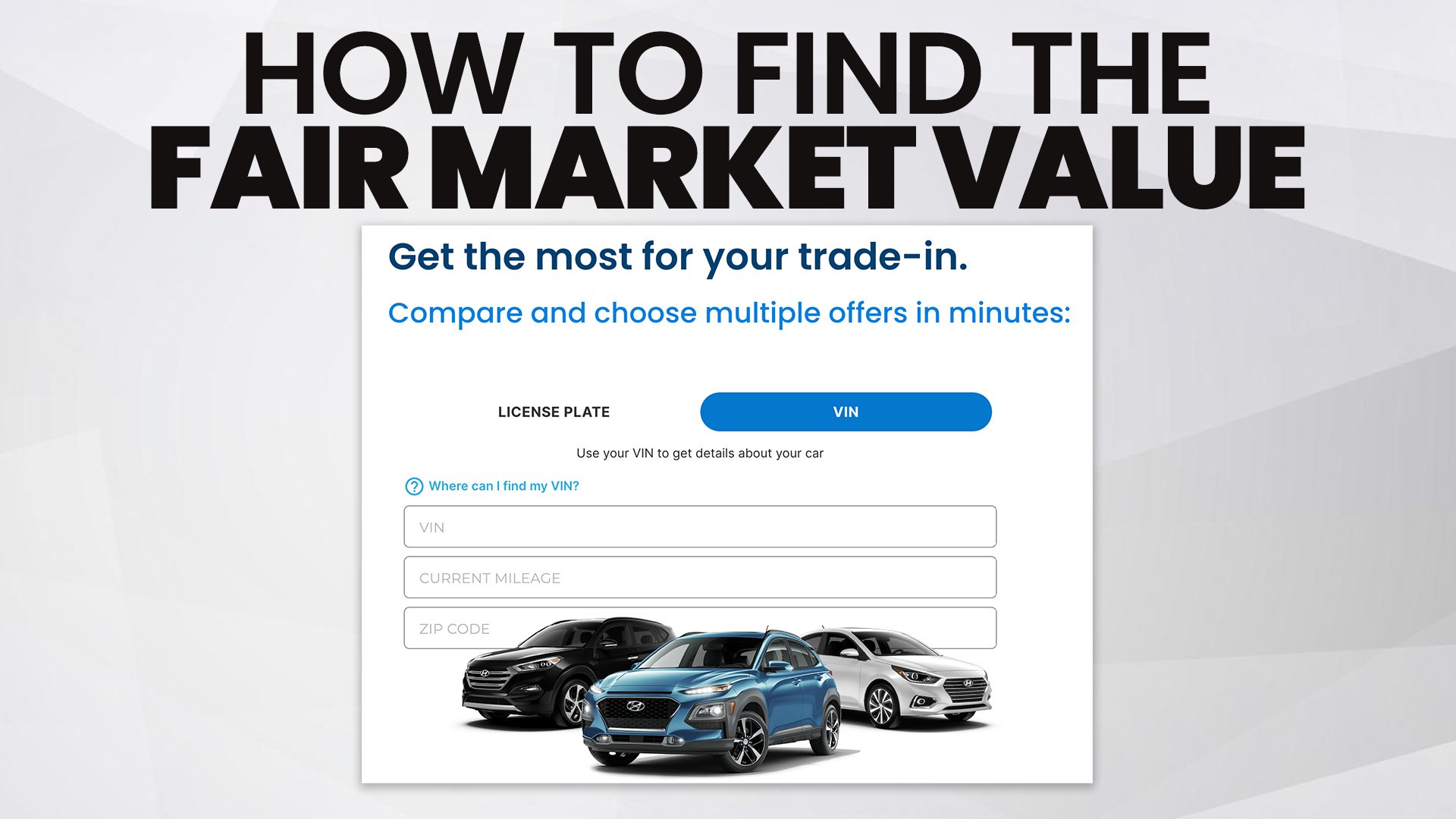
Generic year-make-model searches only provide a baseline. To find the true financial value, you must look at the vehicle’s specific history. Tools like CARFAX or AutoCheck provide reports that track accidents, title brands (like “Salvage” or “Lemon”), and service records. A car with a “clean” title and a documented service history can command a 20% premium over an identical model with a “Total Loss” record or missing maintenance logs. In the eyes of a buyer or a lender, documentation is a form of currency.
Maximizing Your Vehicle’s Resale Potential and ROI
Maintaining the value of your car is a form of passive income. By reducing the rate of depreciation, you effectively lower your “cost of ownership.” There are strategic, professional-grade steps you can take to ensure your car remains at the top of its valuation bracket.
Maintenance Records as Financial Documentation
In the world of personal finance, if it isn’t documented, it didn’t happen. Keeping a meticulous folder of every oil change, brake job, and tire rotation transforms your car from a “used machine” into a “certified asset.” When it comes time to sell, providing a complete service history reduces the buyer’s perceived risk, allowing you to hold firm on a higher asking price. This transparency often results in a faster sale and a higher Return on Investment (ROI) on those maintenance costs.
Strategic Reconditioning: When to Spend to Make
Before selling or trading in, many owners wonder if they should fix dents or replace tires. This is a classic “cost-benefit analysis.” Spending $200 on a professional interior and exterior detail almost always yields a $500 to $1,000 increase in perceived value. However, spending $1,500 on a major mechanical repair right before selling may not be fully recouped. The goal is “curb appeal”—addressing the visual and sensory factors that lead a buyer to believe the car was well-cared for.
Timing the Market for Maximum Equity
Just like the stock market, the automotive market has seasonal cycles. Four-wheel-drive SUVs often peak in value during late autumn, while sports cars and convertibles see a surge in the spring. Furthermore, selling a car just before it hits major mileage milestones—such as 36,000 miles (end of bumper-to-bumper warranty) or 100,000 miles (a psychological barrier for many buyers)—can prevent a significant “valuation cliff.”
The Impact of Vehicle Value on Your Total Net Worth
Your car is a significant line item on your personal balance sheet. Managing it correctly involves understanding how its value interacts with your debt, your insurance, and your overall financial health.
Managing the Loan-to-Value (LTV) Ratio
If you have a loan on your vehicle, the most important number is the “equity”—the difference between the car’s market value and your remaining loan balance. If you owe more than the car is worth, you are “underwater” or have “negative equity.” This is a dangerous financial position, especially if the car is totaled in an accident. Regularly checking your car’s value against your loan balance allows you to decide if you need to make extra principal payments to reach a neutral or positive equity position.
Insurance Implications of Actual Cash Value (ACV)
In the event of a total loss, insurance companies do not pay you what you owe on the car; they pay the “Actual Cash Value” (ACV). If you haven’t tracked your car’s value, you may be shocked by a low insurance settlement. Understanding your car’s current market value helps you determine if you need “Gap Insurance” to cover a potential shortfall or if you can afford to raise your deductible to save on monthly premiums.
The Opportunity Cost of Upgrading
Finally, knowing the value of your current car is the first step in calculating the “opportunity cost” of a new purchase. If your current car is worth $15,000 and is paid off, but you want a new $45,000 model, you are essentially deciding to move $30,000 of capital (plus interest) out of other potential investments (like a 401k or high-yield savings account) and into a depreciating asset. Viewing your car through this financial lens ensures that you only upgrade when the utility and reliability of a new vehicle outweigh the financial growth you’re sacrificing.

Conclusion: Value as a Tool for Financial Freedom
“What is the value of my car?” is a question that serves as a gateway to better financial literacy. By moving away from the idea of a car as just a mode of transportation and seeing it as a volatile financial asset, you gain control over one of your largest expenses.
By tracking depreciation, utilizing professional valuation tools, maximizing resale potential through documentation, and integrating vehicle equity into your broader net worth strategy, you turn a potential “money pit” into a managed investment. In the landscape of personal finance, knowledge is the only thing that doesn’t depreciate—and applying that knowledge to your garage is a hallmark of sophisticated wealth management.
aViewFromTheCave is a participant in the Amazon Services LLC Associates Program, an affiliate advertising program designed to provide a means for sites to earn advertising fees by advertising and linking to Amazon.com. Amazon, the Amazon logo, AmazonSupply, and the AmazonSupply logo are trademarks of Amazon.com, Inc. or its affiliates. As an Amazon Associate we earn affiliate commissions from qualifying purchases.