
In the world of finance, timing is often as critical as the asset itself. For seasoned investors and novice traders alike, the question of “when is the market opening” is more than a simple inquiry about a clock; it is a fundamental pillar of strategy. The opening bell represents a surge of liquidity, a reaction to overnight news, and the beginning of a daily psychological battle between bulls and bears. Understanding the rhythmic cycles of global exchanges—from the high-speed floors of New York to the tech-heavy boards of Tokyo—is essential for anyone looking to navigate the complexities of personal finance and institutional investing.
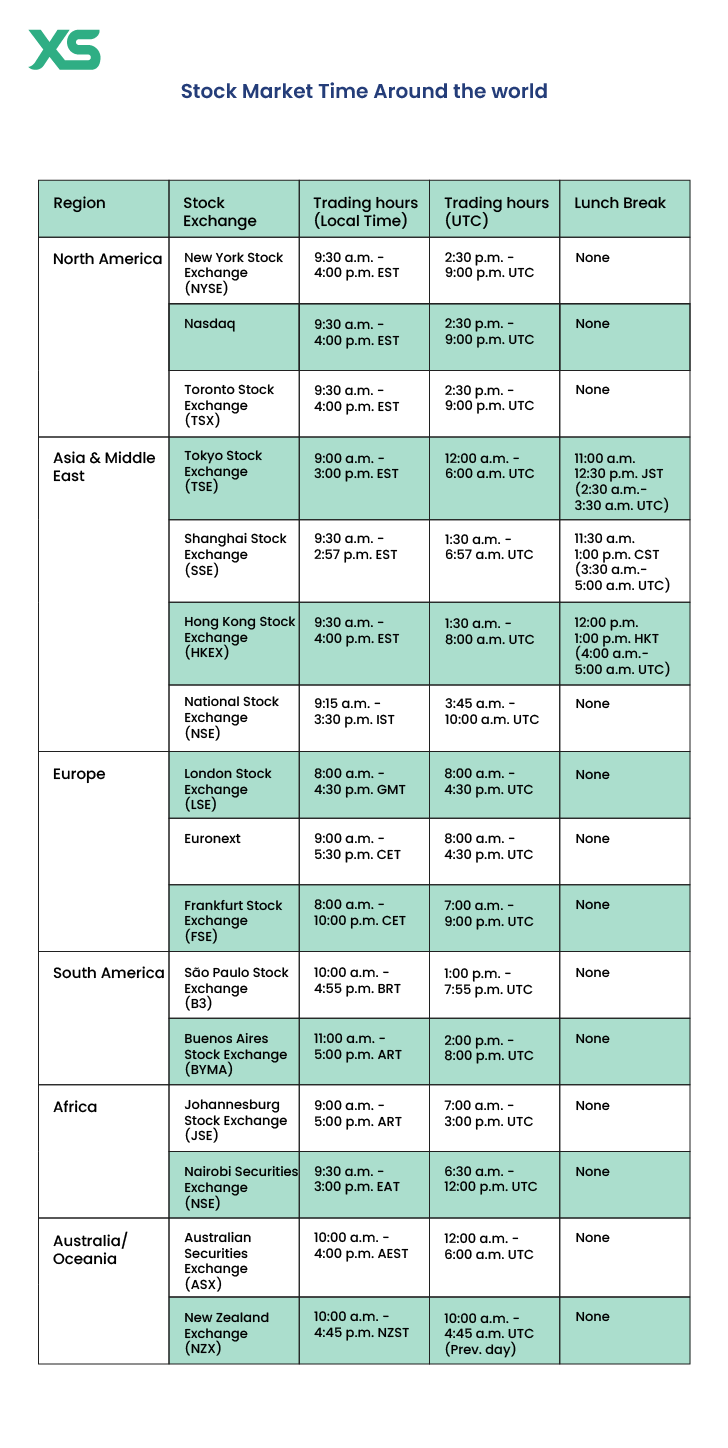
This guide explores the intricate schedule of global financial markets, the mechanics of pre-market sessions, and how the timing of the “open” can dictate the success of your investment strategy.
1. The Global Trading Clock: Major Exchange Hours
Financial markets operate on a “follow the sun” model. As one major financial hub winds down, another is just beginning its session. This continuous cycle ensures that global capital is always in motion, but it also means that “market opening” depends entirely on which geography you are targeting.
The Powerhouse of the West: NYSE and NASDAQ
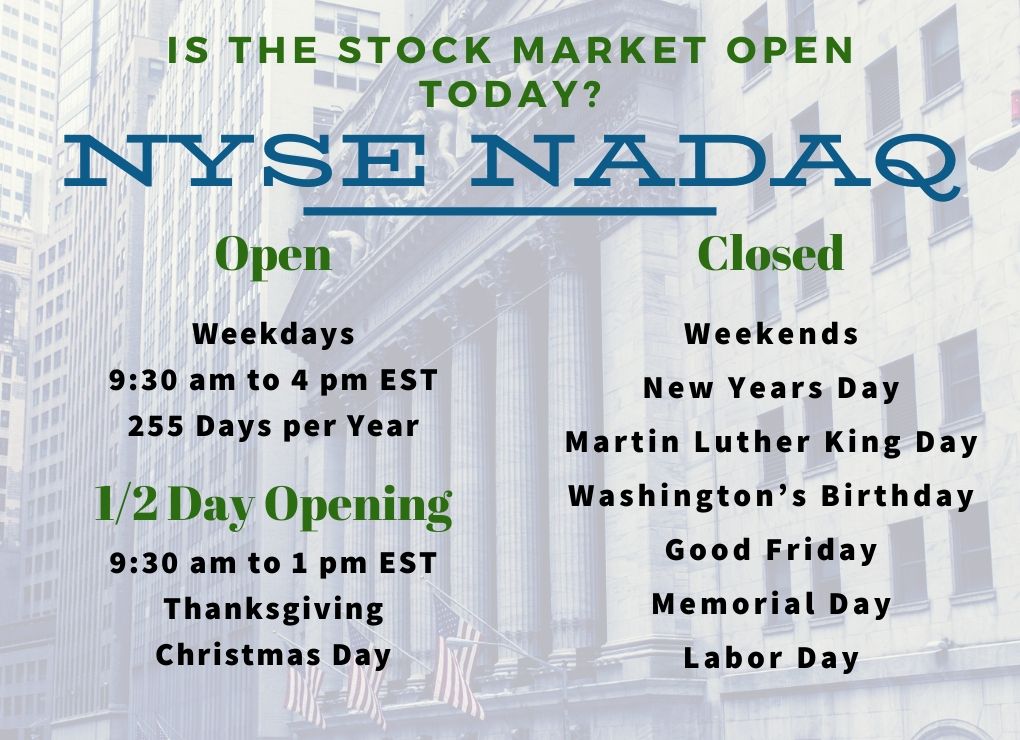
For the majority of retail and institutional investors, the primary focus is the North American market. The New York Stock Exchange (NYSE) and the NASDAQ both operate from 9:30 AM to 4:00 PM Eastern Time (ET), Monday through Friday. The opening at 9:30 AM is historically the most volatile period of the day. This is when the “opening cross” occurs—a process where the exchange matches buy and sell orders accumulated overnight to determine a fair starting price for each security.
The European Hubs: LSE and Euronext
The London Stock Exchange (LSE) is a cornerstone of global finance, opening at 8:00 AM and closing at 4:30 PM Greenwich Mean Time (GMT). Because London sits geographically between the Asian and American sessions, its opening hours often see significant overlap with the tail-end of the Tokyo session and the start of the New York session. This overlap typically creates a “golden hour” of high liquidity and narrow spreads.
The Asian Powerhouses: Tokyo, Hong Kong, and Shanghai
In the East, the Tokyo Stock Exchange (TSE) kicks off the global trading day, opening at 9:00 AM and closing at 3:00 PM Japan Standard Time (JST). Notably, many Asian markets, including the Hong Kong Stock Exchange and the Shanghai Stock Exchange, incorporate a “lunch break” into their trading day—a practice that has largely disappeared in Western markets. Understanding these mid-day pauses is crucial for traders who may see a sudden halt in price action during these intervals.
2. Beyond the Regular Session: Pre-Market and After-Hours Trading
While the “official” opening bell rings at 9:30 AM ET in the U.S., the reality is that the market never truly stops. Professional traders and sophisticated retail investors often utilize extended-hours trading to react to news before the general public can.
The Mechanics of Pre-Market Trading
In the United States, pre-market trading can begin as early as 4:00 AM ET, though the bulk of the volume starts around 8:00 AM. This period is driven by Electronic Communication Networks (ECNs), which match buy and sell orders directly without a traditional exchange floor. Investors use this time to react to early-morning economic data, such as the Consumer Price Index (CPI) or the monthly Jobs Report, which are typically released at 8:30 AM ET.
The Risks of Low Liquidity
The primary danger of trading before the official market opening is low liquidity. During the regular session, thousands of participants ensure that the “spread” (the difference between the buy and sell price) remains narrow. In the pre-market, fewer participants mean the spread can widen significantly. A stock might be quoted at $100.00 to buy and $102.00 to sell; an investor who isn’t careful could find themselves overpaying or selling at a steep discount simply because the “real” market hasn’t opened yet.
Why Institutional Players Dominate
While retail platforms like Robinhood or Schwab allow pre-market access, the early hours are often dominated by institutional players—hedge funds, pension funds, and algorithmic high-frequency traders. These entities have the resources to digest complex earnings reports or geopolitical events in seconds, often setting the tone for how the market will open for the rest of the world.
3. The Psychology of the Opening Bell: Volatility and Volume
The first 30 to 60 minutes after a market opens is often referred to as “the amateur hour” by professionals—not because amateurs are the only ones trading, but because the price action is often erratic and driven by emotion.
The Overnight News Catalyst
When the market opens, it must account for everything that happened since the previous day’s close. If a major tech company releases a transformative AI tool at 6:00 PM, the market cannot fully price that in until the following morning’s open. This leads to “gapping”—where a stock opens significantly higher or lower than its previous closing price. This gap creates immediate pressure as traders rush to either take profits or cut losses.
The Search for Price Discovery
Price discovery is the process of determining the spot price of an asset. At the market open, price discovery is at its most intense. Sellers who were anxious overnight are hitting “sell,” while buyers who missed out are hitting “buy.” This tug-of-war results in high volume, which is excellent for liquidity but dangerous for those without a disciplined entry and exit strategy.
Understanding the “Closing Cross”
Just as the opening is critical, the “market opening” for the final leg of the day—the closing cross—is equally vital. The final minutes of the trading day often see a massive spike in volume as institutional funds rebalance their portfolios to match the closing prices. For long-term investors, the closing price is often more significant than the opening price, as it represents the “settled” value of the day’s debates.
4. Market Holidays and Seasonal Timing: When the Market Stays Closed
Knowing when the market is open also requires knowing when it is unexpectedly closed. Global markets do not share a universal holiday calendar, which can create “blind spots” for international investors.
Regional Holidays and Their Impact
The U.S. markets close for holidays like Thanksgiving, Independence Day, and Labor Day. However, the rest of the world remains open. If a global economic crisis occurs on a Monday while U.S. markets are closed for Memorial Day, American investors may find themselves unable to adjust their positions while European and Asian markets react. This “holiday risk” is a critical consideration for those holding leveraged positions or derivatives.
The “Santa Claus Rally” and Seasonality
Market timing also involves seasonal “openings.” The term “Santa Claus Rally” refers to the tendency for the stock market to increase during the last five trading days of December and the first two of January. Similarly, the “January Effect” suggests that markets often open the year with a surge as investors redeploy capital after year-end tax-loss harvesting. While not guaranteed, these seasonal patterns are vital for timing large-scale entries into the market.
Early Closures
Investors must also be aware of half-day sessions. In the U.S., the day after Thanksgiving and Christmas Eve (if it falls on a weekday) typically see the market close at 1:00 PM ET. These sessions are usually characterized by extremely low volume, making price movements less reliable than a standard full-day session.
5. The Evolution of the 24/7 Market: Forex and Cryptocurrency
The traditional concept of “market opening” is being challenged by the rise of decentralized and digital assets. For the modern investor, the market may never actually close.
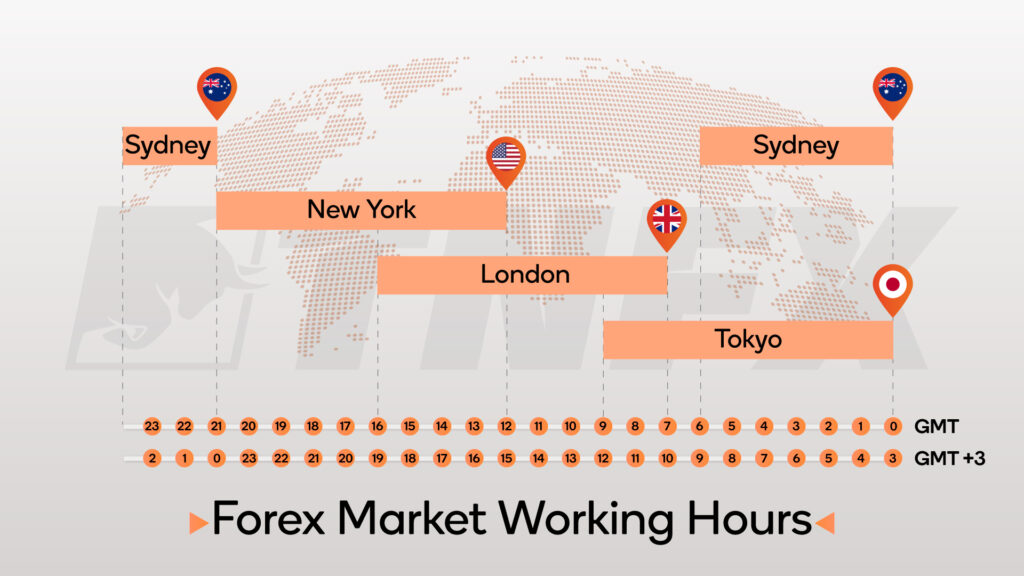
Forex: The 24/5 Utility
The Foreign Exchange (Forex) market operates 24 hours a day, five days a week. It opens on Sunday evening (ET) as the Asian sessions begin and doesn’t close until Friday afternoon (ET). Because currencies are traded globally, there is always a “market opening” happening somewhere. However, the most significant moves occur when the London and New York sessions overlap (8:00 AM to 12:00 PM ET), as this is when the highest volume of US Dollar and Euro transactions occur.
Cryptocurrency: The Market That Never Sleeps
Unlike traditional stocks or bonds, the cryptocurrency market is open 24 hours a day, 7 days a week, 365 days a year. There is no opening bell for Bitcoin or Ethereum. This creates a unique set of challenges for personal finance management, as “overnight risk” is a constant factor. For crypto investors, the “open” is often artificially defined by the start of the UTC (Coordinated Universal Time) day, which many charting tools use to calculate daily gains and losses.
The Future of Traditional Exchanges
There is growing discussion within the financial industry about moving toward 24/7 trading for traditional stocks. Proponents argue that in a globalized, digital economy, waiting until 9:30 AM to react to news is antiquated. Critics, however, argue that 24/7 trading would fragment liquidity and lead to increased volatility and trader burnout. For now, the “opening bell” remains a necessary anchor for the world’s financial stability.
Conclusion: Mastering the Clock
Understanding when the market opens is the first step in mastering the “when” of investing. For the long-term investor, the opening bell is a reminder of the market’s ongoing vitality. For the active trader, it is the starting gun of a high-stakes competition.
By recognizing the nuances of different time zones, the risks of pre-market sessions, and the psychological weight of the opening cross, you can better protect your capital and identify opportunities that others might miss. In the realm of money and finance, the clock is just as important as the calculator. Whether you are waiting for the NYSE at 9:30 AM or navigating the 24/7 world of crypto, remember that the best trades are those made with a full understanding of the market’s temporal landscape.
aViewFromTheCave is a participant in the Amazon Services LLC Associates Program, an affiliate advertising program designed to provide a means for sites to earn advertising fees by advertising and linking to Amazon.com. Amazon, the Amazon logo, AmazonSupply, and the AmazonSupply logo are trademarks of Amazon.com, Inc. or its affiliates. As an Amazon Associate we earn affiliate commissions from qualifying purchases.