
How to Solve Algebraic Equations
Algebraic equations are fundamental to mathematics and a cornerstone of scientific and technological advancement. While the term “algebraic equations” might conjure images of complex formulas and intimidating variables, the process of solving them is, at its core, about understanding relationships and isolating unknown quantities. In today’s digitally driven world, mastering these skills is not just an academic pursuit but a crucial asset for navigating a landscape increasingly reliant on data, algorithms, and computational thinking. This article will delve into the practical application and mastery of solving algebraic equations, emphasizing their relevance within the Tech niche. We will explore how these mathematical tools are not merely abstract concepts but are actively employed in the development and understanding of the technologies that shape our lives.

The Foundational Principles of Algebraic Equation Solving
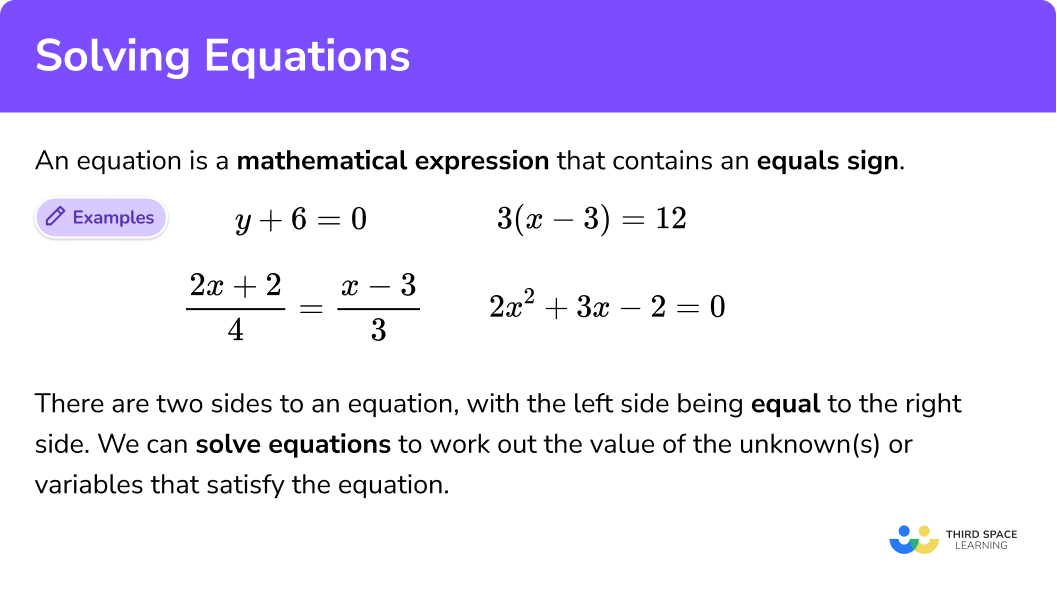
Before diving into specific techniques, it’s essential to grasp the underlying principles that govern the solving of algebraic equations. At its heart, solving an equation is akin to solving a puzzle or a logic problem. The goal is to determine the value(s) of the variable(s) that make the equation true. This means ensuring that both sides of the equals sign maintain their balance.
Understanding the Anatomy of an Algebraic Equation
An algebraic equation consists of several key components:
- Variables: These are symbols, typically letters like ‘x’, ‘y’, or ‘z’, that represent unknown values. The value of a variable is what we aim to find.
- Constants: These are fixed numerical values that do not change. For example, in the equation 2x + 5 = 11, ‘2’ and ‘5’ are constants.
- Coefficients: These are numbers that multiply a variable. In 2x + 5 = 11, ‘2’ is the coefficient of ‘x’.
- Operators: These are mathematical symbols that indicate an operation to be performed, such as addition (+), subtraction (-), multiplication (* or implied), and division (/).
- Equality Sign (=): This is the central symbol that signifies that the expression on the left side has the same value as the expression on the right side.
The fundamental rule when solving any equation is to maintain equality. Whatever operation you perform on one side of the equation, you must perform the identical operation on the other side. This ensures that the balance is preserved, and the resulting equation remains equivalent to the original one.
The Concept of Inverse Operations
Solving algebraic equations relies heavily on the concept of inverse operations. These are operations that undo each other. For instance:
- Addition and subtraction are inverse operations. Adding a number can be undone by subtracting the same number.
- Multiplication and division are inverse operations. Multiplying by a number can be undone by dividing by the same number.
The strategy for solving an equation is to systematically apply inverse operations to isolate the variable. We move terms around the equation by performing the opposite operation on both sides, effectively “canceling out” operations until the variable stands alone.
Common Techniques for Solving Linear Algebraic Equations
Linear algebraic equations are those where the highest power of the variable is one. They form the bedrock of more complex algebraic manipulations and are prevalent in many technological applications.
The One-Step Equation: Isolating the Variable Directly
The simplest form of an algebraic equation requires a single step to solve.
- Example: x + 7 = 15
To isolate ‘x’, we need to undo the addition of 7. The inverse operation of addition is subtraction.
- Subtract 7 from both sides of the equation:
x + 7 – 7 = 15 – 7 - Simplify:
x = 8
Similarly, for an equation like:
- Example: 3y = 21
To isolate ‘y’, we need to undo the multiplication by 3. The inverse operation of multiplication is division.
- Divide both sides of the equation by 3:
3y / 3 = 21 / 3 - Simplify:
y = 7
The Two-Step Equation: Combining Inverse Operations
Many equations require two steps to isolate the variable. These typically involve a coefficient multiplying the variable and a constant term added or subtracted.
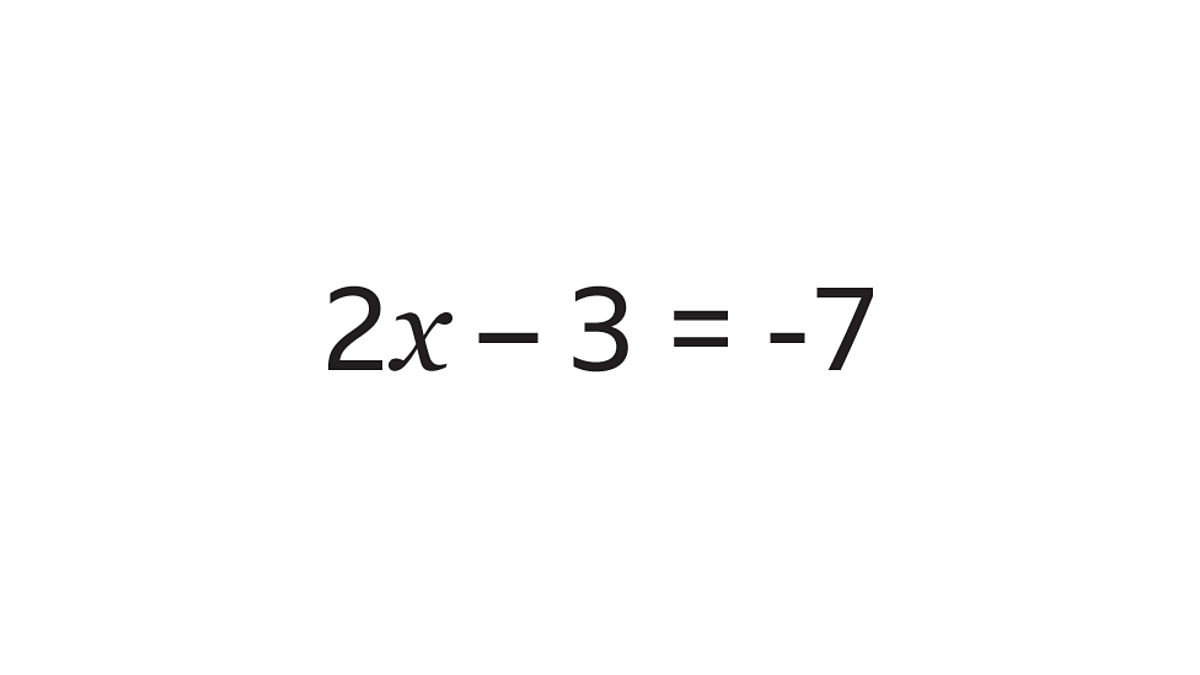
- Example: 2x – 5 = 13
Here, ‘x’ is multiplied by 2, and then 5 is subtracted. To solve, we reverse these operations.
- Address the addition/subtraction first: The inverse of subtracting 5 is adding 5. Add 5 to both sides:
2x – 5 + 5 = 13 + 5 - Simplify:
2x = 18 - Address the multiplication/division: The inverse of multiplying by 2 is dividing by 2. Divide both sides by 2:
2x / 2 = 18 / 2 - Simplify:
x = 9
The order of operations in solving is crucial. Generally, you want to “undo” addition and subtraction before undoing multiplication and division. This is often remembered by an acronym like SADMEP (Solve Addition/Subtraction, then Division/Multiplication, then Exponents, then Parentheses), though for simple linear equations, focusing on the first two is sufficient.
Equations with Variables on Both Sides
When variables appear on both sides of the equation, the first step is to consolidate them onto one side.
- Example: 5x + 3 = 2x + 15
To begin, we want to move all terms containing ‘x’ to one side and all constant terms to the other.
- Move the variable terms: It’s often easier to subtract the smaller ‘x’ term to avoid negative coefficients, though not strictly necessary. Subtract 2x from both sides:
5x + 3 – 2x = 2x + 15 – 2x - Simplify:
3x + 3 = 15 - Now, this is a two-step equation: Subtract 3 from both sides:
3x + 3 – 3 = 15 – 3 - Simplify:
3x = 12 - Isolate ‘x’: Divide both sides by 3:
3x / 3 = 12 / 3 - Simplify:
x = 4
The Role of Algebraic Equations in Technology
The ability to solve algebraic equations is not just an academic exercise; it’s a foundational skill that underpins a vast array of technological advancements and applications. From the algorithms that power our search engines to the simulations that design our aircraft, algebraic equations are the silent architects of the modern digital world.
Computational Thinking and Problem-Solving
At its core, solving algebraic equations teaches computational thinking. This involves breaking down complex problems into smaller, manageable steps, identifying patterns, and developing logical sequences of instructions. These are precisely the skills required for programming and developing software. When a programmer writes code to solve a specific problem, they are often translating a mathematical or logical relationship, frequently expressed through algebraic equations, into a series of commands that a computer can execute.
For instance, consider a simple recommendation algorithm on a streaming service. It might use an equation to calculate a “similarity score” between users based on their viewing habits. Solving this equation allows the system to predict what other content a user might enjoy. The precision and efficiency of these calculations, derived from solving algebraic equations, directly impact the user experience.
Data Analysis and Machine Learning
The fields of data analysis and machine learning are heavily reliant on algebraic equations.
- Linear Regression: A fundamental statistical technique used to model the relationship between a dependent variable and one or more independent variables. The goal is to find the “best-fit” line through a scatter plot of data points. The equation of this line (y = mx + b, where ‘y’ is the dependent variable, ‘x’ is the independent variable, ‘m’ is the slope, and ‘b’ is the y-intercept) is derived by solving a system of algebraic equations. This technique is used in everything from predicting housing prices to forecasting stock market trends.
- Neural Networks: The complex architectures of neural networks, which power advanced AI like image recognition and natural language processing, are built upon layers of interconnected nodes. Each connection has a weight, and at each node, a weighted sum of inputs is calculated, often followed by an activation function. The learning process in neural networks involves iteratively adjusting these weights to minimize errors, a process that fundamentally involves solving complex systems of algebraic equations (often using calculus and optimization techniques that build upon algebraic principles).
Graphics and Game Development
The visual world of computer graphics and video games is built upon geometric transformations that are expressed mathematically using algebra.
- Transformations: Translating, rotating, and scaling 2D and 3D objects in a virtual environment are achieved through matrix operations. These matrices represent the algebraic transformations. Solving for the correct matrix parameters to achieve a desired visual effect or movement involves algebraic manipulation.
- Physics Engines: The realistic simulation of physical phenomena in games – how objects move, collide, and react – is managed by physics engines. These engines use a series of algebraic equations to model forces, velocity, acceleration, and momentum. Solving these equations in real-time allows for dynamic and believable interactions within the game world.
Advanced Concepts and Computational Tools
While manual calculation is essential for understanding, the scale and complexity of modern technological problems often necessitate the use of computational tools to solve algebraic equations.
Symbolic Computation and Computer Algebra Systems (CAS)
Symbolic computation involves manipulating mathematical expressions in a symbolic form, rather than just numerical approximations. Computer Algebra Systems (CAS) are software programs designed to perform symbolic mathematical computations.
- Examples of CAS: Mathematica, MATLAB (with its Symbolic Math Toolbox), SymPy (a Python library), and Wolfram Alpha.
- Functionality: These systems can:
- Solve algebraic equations and systems of equations symbolically.
- Simplify complex expressions.
- Perform differentiation and integration.
- Factor polynomials.
- Generate plots from equations.
Using a CAS can significantly accelerate the process of solving complex algebraic problems encountered in engineering, scientific research, and advanced software development. For instance, a researcher designing a new algorithm might use a CAS to symbolically derive the equations that govern the algorithm’s behavior, allowing for rigorous analysis before implementation.
Numerical Methods for Complex Equations
Not all algebraic equations can be solved analytically (i.e., finding an exact symbolic solution). In such cases, numerical methods are employed. These methods use iterative processes to find approximate solutions to a high degree of accuracy.
- Root-Finding Algorithms: Algorithms like the Newton-Raphson method or the bisection method are used to find the roots (solutions) of equations. These methods are implemented in software and are crucial for solving equations that arise in simulations, optimization problems, and many areas of scientific computing.
- Applications: Numerical methods are essential in fields like fluid dynamics, finite element analysis (used in structural engineering), and complex financial modeling, where analytical solutions are often intractable.
The Importance of Algorithmic Thinking
Understanding how to solve algebraic equations translates directly into an appreciation for algorithmic thinking. When using a CAS or a numerical solver, we are essentially leveraging pre-built algorithms. However, for those aspiring to develop new technologies or push the boundaries of existing ones, a deep understanding of the underlying algebraic principles is crucial for designing, modifying, or even creating new algorithms. This knowledge allows for a more profound comprehension of why certain approaches work, what their limitations are, and how to optimize them for specific computational tasks.
Conclusion: Algebraic Fluency for a Technological Future
In an era where technology is not just a tool but a pervasive force shaping every aspect of our lives, the ability to understand and manipulate algebraic equations is more critical than ever. From the fundamental logic of programming to the complex algorithms that drive artificial intelligence and data science, algebra provides the essential language and toolkit.
Mastering the art of solving algebraic equations equips individuals with powerful problem-solving skills, fosters computational thinking, and opens doors to a wide range of exciting careers in the tech industry. By understanding the foundational principles, applying common techniques, and leveraging modern computational tools, you can not only navigate the technological landscape but actively contribute to its future. The journey of solving algebraic equations is a journey towards a deeper understanding of the digital world and the empowerment to shape it.
aViewFromTheCave is a participant in the Amazon Services LLC Associates Program, an affiliate advertising program designed to provide a means for sites to earn advertising fees by advertising and linking to Amazon.com. Amazon, the Amazon logo, AmazonSupply, and the AmazonSupply logo are trademarks of Amazon.com, Inc. or its affiliates. As an Amazon Associate we earn affiliate commissions from qualifying purchases.