
Starting a company is often romanticized as an exercise in creativity and passion. While vision is the spark, the engine that keeps a business running is capital. Without a rigorous financial foundation, even the most innovative ideas fail to gain traction. To start your own company successfully, you must transition from a “founder with an idea” to a “chief financial strategist.” This guide explores the essential financial pillars of entrepreneurship, from capital acquisition and tax structuring to revenue modeling and long-term fiscal growth.
1. Capital Acquisition and Funding Strategies
The first hurdle every founder faces is the “capital gap”—the distance between an idea and the resources required to execute it. Deciding how to fund your company is one of the most consequential decisions you will make, as it dictates your level of control and the speed at which you must scale.

Bootstrapping: The Art of Self-Funding
Bootstrapping involves starting a company using personal savings and the initial revenue generated by the business. The primary advantage is total autonomy. When you bootstrap, you do not answer to a board of directors or external investors. Financially, this forces a “lean” mentality, ensuring that every dollar spent is scrutinized for its return on investment (ROI). However, bootstrapping can limit your growth speed if your industry requires heavy upfront research and development or inventory costs.
Navigating the Venture Capital and Angel Investor Landscape
If your business model requires rapid scaling or significant initial infrastructure, seeking external equity is a common path. Angel investors usually provide earlier, smaller “seed” amounts, while Venture Capital (VC) firms step in for larger rounds (Series A, B, and C). The trade-off here is equity for expertise and speed. When you take on investors, you are essentially selling a piece of your future profits for the ability to capture a market today. It requires a pitch-perfect financial model that demonstrates a clear path to a “10x” return.
Alternative Financing: Crowdfunding and Small Business Loans
For companies with a physical product or a strong community focus, reward-based crowdfunding (like Kickstarter) can provide “free” capital that doesn’t require giving up equity. Alternatively, traditional Small Business Administration (SBA) loans or lines of credit allow you to maintain ownership while leveraging debt. Debt is a powerful tool, but it carries the burden of interest payments, which can strain a young company’s cash flow during lean months.
2. Building a Robust Financial Infrastructure
Once the capital is secured, the focus shifts to the “plumbing” of the business. Many founders ignore the administrative side of finance until tax season, which is often a fatal mistake. A solid infrastructure ensures that your financial data is accurate, accessible, and actionable.
Choosing the Right Legal Structure for Tax Efficiency
The legal entity you choose—be it a Sole Proprietorship, LLC, S-Corp, or C-Corp—has massive implications for your personal liability and tax obligations. For many small-to-medium startups, an LLC (Limited Liability Company) offers a balance of protection and “pass-through” taxation. However, if you plan to go public or seek significant VC funding, a C-Corp is often the gold standard due to its ability to issue different classes of stock. Consulting with a tax strategist early can save you thousands in self-employment taxes and corporate levies.
Setting Up Comprehensive Accounting and Bookkeeping Systems
You cannot manage what you do not measure. Implementing cloud-based accounting software from day one allows for real-time tracking of expenses and income. At this stage, it is vital to separate personal and business finances entirely. A dedicated business bank account and corporate credit card are non-negotiable. Proper bookkeeping allows you to generate three critical reports: the Balance Sheet, the Income Statement (P&L), and the Cash Flow Statement.
Managing Burn Rate and Runway
In the early stages, most companies spend more than they earn. Your “burn rate” is the amount of money you are losing each month, and your “runway” is the number of months you can survive before you run out of cash. Monitoring these metrics is the difference between a controlled pivot and a sudden bankruptcy. A professional founder knows exactly when the runway ends and has a plan to reach profitability or secure the next round of funding before that date arrives.
3. Revenue Models and Profitability Planning

A company without a clear path to profit is merely a hobby. To start your own company, you must define exactly how you will extract value from the market. This involves more than just setting a price; it requires a deep understanding of unit economics.
Designing Scalable Revenue Streams
Sustainability comes from scalability. Service-based businesses often struggle to scale because they are limited by “billable hours.” To build true wealth, look for ways to productize your offerings or move toward a subscription-based (SaaS) model. Recurring revenue is the “holy grail” of business finance because it provides predictability. Investors and banks value companies with high recurring revenue far more than those relying on one-off sales.
Pricing Strategies for Market Penetration and Margin
Pricing is a psychological game as much as a mathematical one. You must account for your Cost of Goods Sold (COGS) while also considering the “value-based” price the market is willing to pay.
- Cost-Plus Pricing: Adding a standard markup to your costs.
- Value-Based Pricing: Pricing based on the perceived benefit to the customer.
- Freemium Models: Offering a basic service for free while charging for premium features to capture a large user base quickly.
Understanding your Gross Margin—the percentage of revenue that exceeds COGS—is essential. If your margins are too thin, you won’t have enough capital left over to cover your “Opex” (Operating Expenses) like marketing and rent.
4. Financial Risk Management and Growth Reinvestment
As the company matures, the challenge shifts from survival to optimization. Managing wealth within a company requires a balance between aggressive growth and defensive risk management.
The Importance of Cash Flow Forecasting
Profit is not the same as cash. A company can be “profitable” on paper but still go bankrupt because its cash is tied up in accounts receivable or inventory. Cash flow forecasting involves predicting when money will actually enter and leave your bank account. By looking 6 to 12 months into the future, you can identify potential “dry spells” and arrange for credit or adjust spending before a crisis occurs.
Scaling Operations: When to Reinvest vs. Take Profit
Every dollar earned by the company presents a choice: Should it be paid out as a dividend to the owners, or should it be reinvested back into the business? In the growth phase, reinvestment is usually the priority. This might mean hiring key personnel, investing in automation software, or increasing the marketing budget. However, a prudent founder also builds a “corporate reserve”—a liquid fund that can cover 3-6 months of operating expenses, acting as an insurance policy against market volatility or economic downturns.
Unit Economics: LTV vs. CAC
To grow sustainably, you must master the relationship between Lifetime Value (LTV) and Customer Acquisition Cost (CAC).
- CAC: How much do you spend on marketing/sales to get one customer?
- LTV: How much profit will that customer generate over their entire relationship with you?
A healthy business typically aims for an LTV that is at least three times the CAC. If your CAC is higher than your LTV, you are effectively “buying” your way toward bankruptcy. By focusing on these money-centric metrics, you ensure that every dollar spent on growth is actually building a more valuable asset.
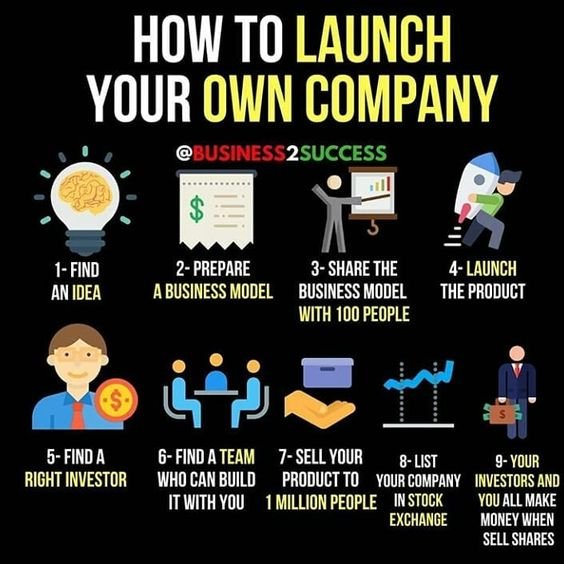
Conclusion: The Founder as a Financial Steward
Starting a company is one of the most effective ways to build personal and generational wealth, but it requires a disciplined approach to business finance. By securing the right capital, building a professional financial infrastructure, designing profitable revenue models, and managing risk through forecasting, you move beyond the “startup” phase into a legitimate, thriving enterprise.
Success in business is rarely about the “big break.” Instead, it is the result of thousands of small, calculated financial decisions made every day. When you treat your company’s finances with the same respect and rigor as you do your product development, you create a foundation that can withstand market fluctuations and deliver long-term financial freedom. Turn your vision into a line item, your passion into a profit margin, and your company into a wealth-generating machine.
aViewFromTheCave is a participant in the Amazon Services LLC Associates Program, an affiliate advertising program designed to provide a means for sites to earn advertising fees by advertising and linking to Amazon.com. Amazon, the Amazon logo, AmazonSupply, and the AmazonSupply logo are trademarks of Amazon.com, Inc. or its affiliates. As an Amazon Associate we earn affiliate commissions from qualifying purchases.