
In the realm of finance, numbers are the language of progress. Whether you are a seasoned investor tracking portfolio volatility, a business owner streamlining operational costs, or an individual trying to master a household budget, understanding the “percent reduction” is fundamental. At its core, percent reduction is a mathematical tool that expresses the decrease in a value relative to its original starting point.
While the concept might seem simple, its applications are vast and vital for making informed financial decisions. Knowing how to calculate percent reduction allows you to quantify savings, measure the impact of inflation, evaluate investment losses, and optimize business expenditures. This guide explores the mechanics of this calculation through the lens of personal and business finance, providing you with the insights needed to navigate your economic landscape with precision.
Understanding the Fundamentals of Percent Reduction in Finance
Before applying the concept to complex financial models, one must master the basic arithmetic. Percent reduction is the measure of how much a value has dropped, expressed as a percentage of the original amount. In the world of money, this percentage often represents the difference between profit and loss, or efficiency and waste.
The Core Formula: From Raw Data to Actionable Percentages
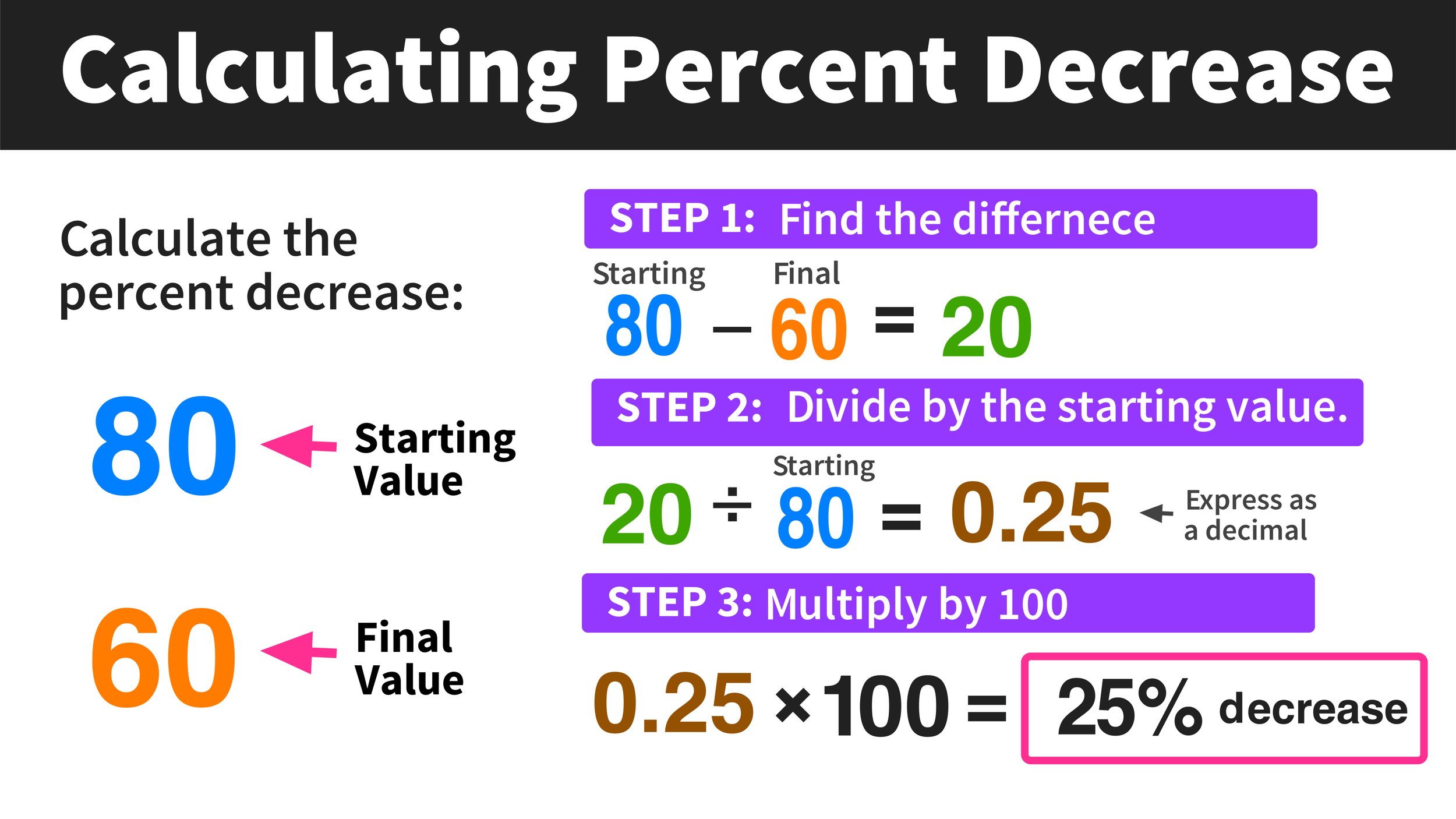
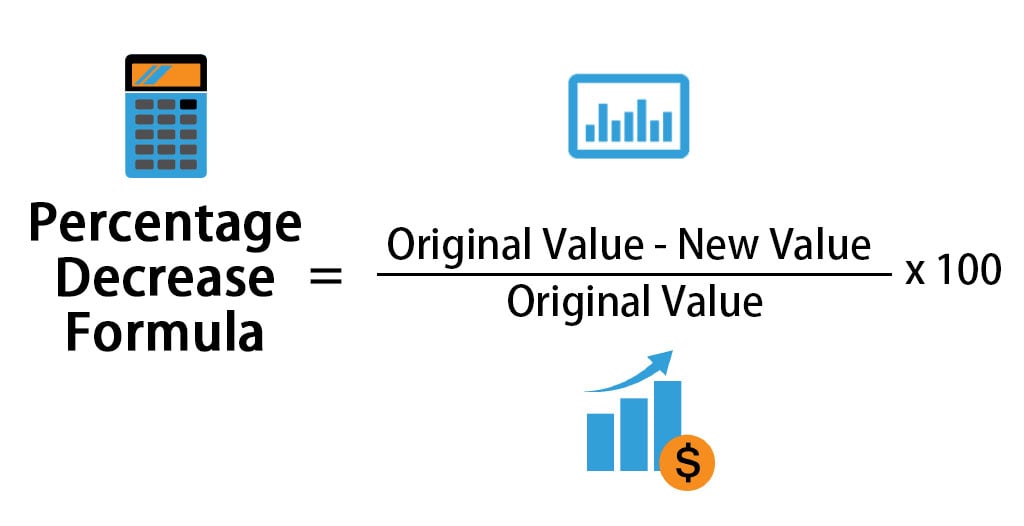
To calculate percent reduction, you follow a straightforward three-step process. First, subtract the new (lower) value from the original (higher) value to find the “absolute decrease.” Second, divide that absolute decrease by the original value. Finally, multiply the result by 100 to convert the decimal into a percentage.
The formula looks like this:
Percent Reduction = [(Original Value – New Value) / Original Value] × 100
For example, if a subscription service you use drops from $50 per month to $40 per month, the calculation would be:
- $50 – $40 = $10 (The absolute decrease)
- $10 / $50 = 0.2
- 0.2 × 100 = 20%
In this scenario, you have achieved a 20% reduction in your monthly overhead. Mastering this formula is the first step toward financial literacy, as it strips away the ambiguity of raw numbers and reveals the true scale of change.
Why Accuracy Matters in Your Budget and Forecasting
In financial planning, a small margin of error in calculating percentages can lead to significant discrepancies over time. For instance, if a business owner incorrectly calculates a 5% reduction in shipping costs as a 3% reduction, their year-end projections will be fundamentally flawed.
Accuracy in these calculations allows for better “benchmarking.” By knowing exactly how much your expenses have decreased year-over-year, you can set realistic goals for the future. In personal finance, this accuracy helps in “zero-based budgeting,” where every dollar is accounted for. If you know you have reduced your discretionary spending by 15%, you can confidently reallocate those funds toward high-yield investments or debt repayment.
Applying Percent Reduction to Personal Finance and Savings
For the individual consumer, percent reduction is most commonly encountered in the context of discounts and debt management. Being able to perform these calculations mentally or via a quick spreadsheet can save thousands of dollars over a lifetime.
Mastering the Art of Discount Shopping and Value Investing
Retailers often use “percent off” signs to entice shoppers, but the savvy consumer looks at the percent reduction to determine true value. However, the concept extends beyond the grocery store. In “value investing,” an investor looks for stocks trading at a significant reduction from their intrinsic value.
If a blue-chip stock typically trades at $200 but is currently priced at $150 due to a temporary market correction, that represents a 25% reduction. An investor who understands this calculation can determine if the “margin of safety” is sufficient to justify the risk. By calculating the percent reduction in asset prices, you can identify “buying the dip” opportunities that align with your long-term wealth-building strategy.
Debt Reduction Strategies: Cutting Interest Rates and Principal
One of the most powerful applications of percent reduction is in debt elimination. When you consolidate high-interest credit card debt into a lower-interest personal loan, the percent reduction in your interest rate is a primary metric of success.
If you move a $10,000 balance from a card with a 24% APR to a loan with a 12% APR, you have achieved a 50% reduction in your interest rate. This doesn’t just lower your monthly payment; it drastically reduces the total “cost of capital” over the life of the debt. Using the percent reduction formula helps you visualize the speed at which you are escaping the “debt trap,” providing psychological motivation alongside mathematical clarity.
Business Finance: Optimizing Operations and Cost Management
In a corporate or small business setting, percent reduction is a Key Performance Indicator (KPI). Profitability is often a game of margins, and reducing costs by even a small percentage can lead to a massive increase in the bottom line.
Analyzing Overhead and Operational Expenses
Effective business managers constantly scrutinize their “burn rate”—the rate at which a company spends its capital. To increase runway, a manager might look for a percent reduction in overhead costs like rent, utilities, or software licenses.
When a company switches from a traditional office to a hybrid model and reduces its square footage, calculating the percent reduction in rent helps the CFO determine how much capital can be redirected toward Research and Development (R&D). For example, reducing monthly operational costs from $100,000 to $85,000 is a 15% reduction. If the company’s profit margin was previously 10%, this 15% reduction in costs could potentially double the net profit, demonstrating the “leverage” effect of cost-cutting.
Inventory Management and Stock Reduction
For businesses that deal with physical goods, inventory is often “trapped capital.” A high inventory level represents money that isn’t earning interest or being used for growth. Calculating the percent reduction in “Days Sales of Inventory” (DSI) is a crucial metric for efficiency.
If a warehouse reduces its average stock-holding time from 60 days to 45 days, that is a 25% reduction in inventory duration. This means the business is turning over its product faster, improving cash flow, and reducing the risk of obsolescence. By focusing on percent reduction in these operational areas, businesses become leaner and more resilient to market fluctuations.
Investment Metrics: Calculating Portfolio Drawdowns
For investors, the most sobering use of percent reduction is calculating a “drawdown”—the peak-to-trough decline during a specific record period of an investment or fund.
Understanding Market Volatility and the Math of Recovery
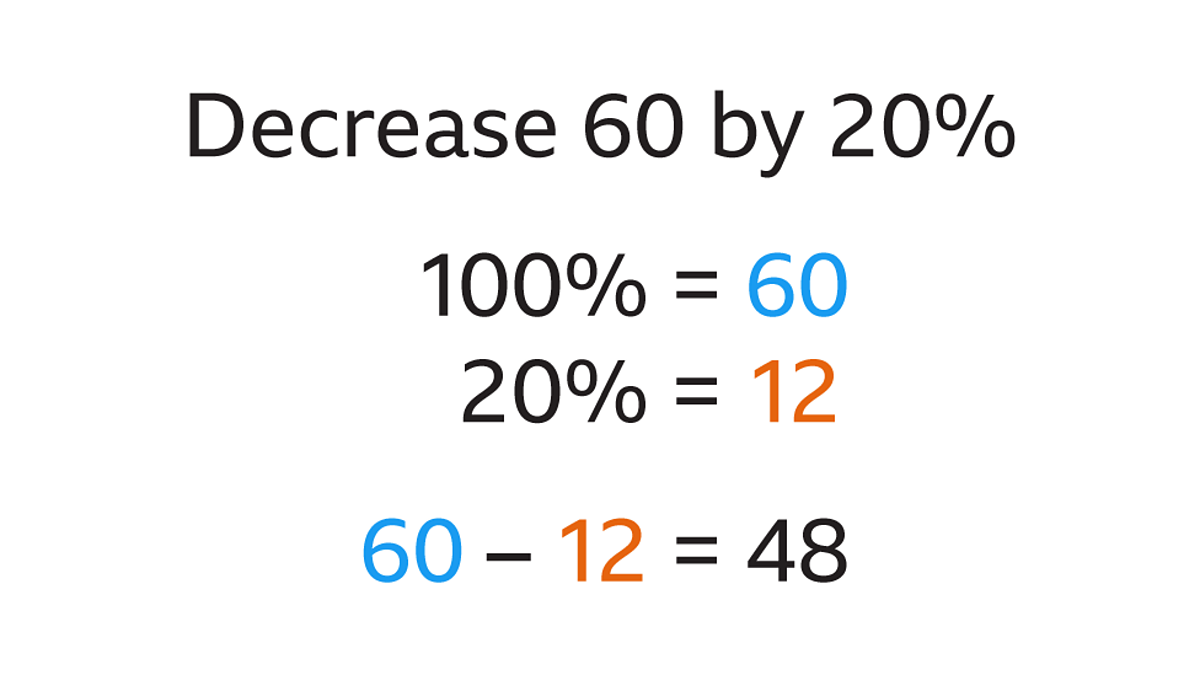
Percent reduction is non-linear when it comes to recovering losses. This is one of the most important lessons in finance. If your portfolio suffers a 20% reduction, you do not need a 20% gain to get back to even; you actually need a 25% gain. If you suffer a 50% reduction, you need a 100% gain to recover.
Understanding this “asymmetry of loss” changes how an investor views risk. By calculating the percent reduction during a market downturn, you can objectively assess your risk tolerance. If a 15% reduction in your portfolio’s value causes you significant stress, it is a sign that your asset allocation is too aggressive.
Using Percent Reduction to Set Stop-Loss Orders
To protect capital, professional traders use “stop-loss orders,” which are automated instructions to sell an asset if it falls by a certain percentage. A trader might decide that they are only willing to tolerate a 10% reduction in a specific stock’s price before exiting the position.
By pre-calculating this percent reduction, the investor removes emotion from the decision-making process. They aren’t “hoping” the stock goes back up; they are following a disciplined financial framework designed to prevent a small loss from turning into a catastrophic one.
Advanced Tools and Digital Calculators for Financial Modeling
In the modern era, you don’t need to rely on a hand-held calculator for every transaction. Technology has integrated percent reduction formulas into the very fabric of financial management.
Automating Calculations with Spreadsheets
Spreadsheets like Microsoft Excel or Google Sheets are the gold standard for financial modeling. To calculate percent reduction across hundreds of rows of data, you can use a simple cell formula:
=(A1-B1)/A1 (where A1 is the old value and B1 is the new value), then format the cell as a percentage.
This automation allows for “sensitivity analysis.” A business owner can ask, “What happens to our net income if we achieve a 5% reduction in COGS (Cost of Goods Sold) versus a 10% reduction?” By seeing these percentages fluctuate in real-time, leadership can make data-driven decisions rather than relying on intuition.
Financial Planning Software Integration
Modern fintech apps and corporate ERP (Enterprise Resource Planning) systems often have “percent reduction” tracking built into their dashboards. Personal finance apps like Mint or YNAB (You Need A Budget) automatically calculate the percent reduction in your spending categories month-over-month.
These tools provide a visual representation of your financial health. Seeing a bar chart that shows a consistent 5% reduction in monthly utility bills over six months provides a clear indicator of successful behavior change. In business, these tools allow for “variance analysis,” where the actual percent reduction in costs is compared against the budgeted or “target” reduction.
By mastering the calculation of percent reduction, you gain more than just a mathematical skill; you acquire a lens through which to view every financial transaction. Whether you are cutting costs to save a business, calculating the impact of a market dip, or simply trying to get the best deal on a car, the ability to quantify “less” as a percentage of “more” is an essential pillar of financial mastery.
aViewFromTheCave is a participant in the Amazon Services LLC Associates Program, an affiliate advertising program designed to provide a means for sites to earn advertising fees by advertising and linking to Amazon.com. Amazon, the Amazon logo, AmazonSupply, and the AmazonSupply logo are trademarks of Amazon.com, Inc. or its affiliates. As an Amazon Associate we earn affiliate commissions from qualifying purchases.