
The journey toward financial independence often feels like navigating a complex labyrinth. Among the various paths available, stock market investing stands out as one of the most historically reliable ways to grow wealth over time. However, for the uninitiated, the barrier to entry can seem daunting, filled with jargon like “capital gains,” “dividend yields,” and “market volatility.”
Investing is not a get-rich-quick scheme; it is a disciplined approach to putting your money to work so that, eventually, you don’t have to. By purchasing shares of a company, you are essentially buying a piece of that business’s future earnings and assets. This guide will demystify the process, providing a structured roadmap for anyone ready to transition from a saver to an investor.
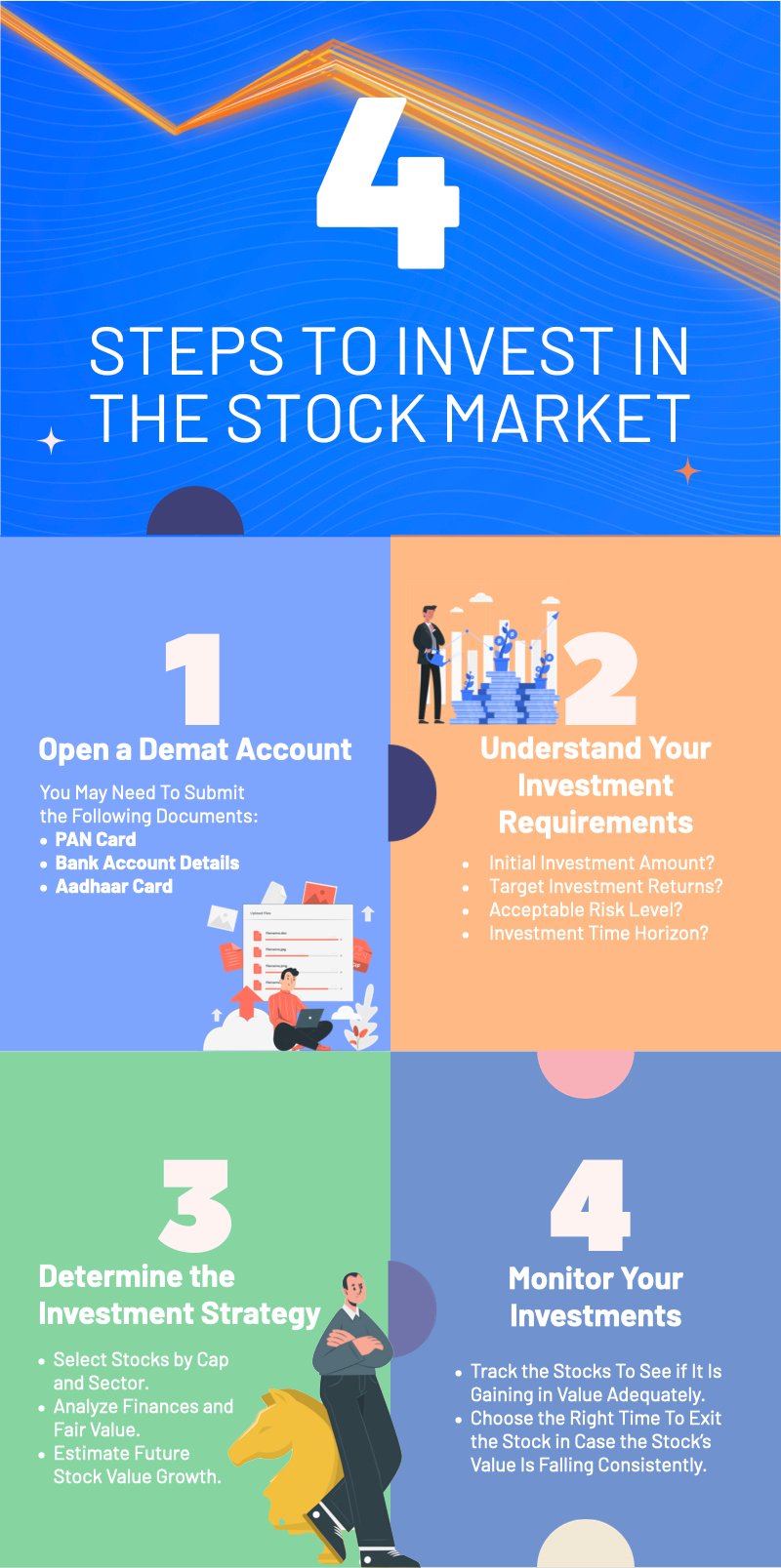
1. The Financial Foundation: Preparing Before You Buy
Before you place your first trade, you must ensure your financial house is in order. Investing in the stock market involves risk, and the last thing an investor should do is put “rent money” or “emergency money” into a volatile asset. A professional approach to investing begins with a solid defensive strategy.
Building an Emergency Fund
The stock market can be unpredictable in the short term. If you invest money that you might need in three months, you risk being forced to sell your positions during a market downturn, locking in losses. Most financial advisors recommend having three to six months of living expenses in a high-yield savings account. This “buffer” ensures that your investments can remain untouched, allowing them the time they need to recover and grow during market cycles.
Eliminating High-Interest Debt
It is difficult to justify investing in a stock market that historically returns 7% to 10% annually if you are carrying credit card debt with an interest rate of 20% or higher. Mathematically, paying off high-interest debt is a “guaranteed return” on your money. Before diving deep into the stock market, focus on aggressive debt repayment for any liabilities with interest rates exceeding 7-8%.
Defining Your Risk Tolerance
Risk tolerance is your emotional and financial ability to withstand a drop in the value of your investments. Are you a “conservative” investor who loses sleep over a 5% dip, or an “aggressive” investor who views a 20% market correction as a buying opportunity? Understanding your timeline—how many years until you need the money—is the biggest factor here. Generally, the longer your time horizon, the more risk you can afford to take.
2. Choosing Your Investment Vehicle and Brokerage
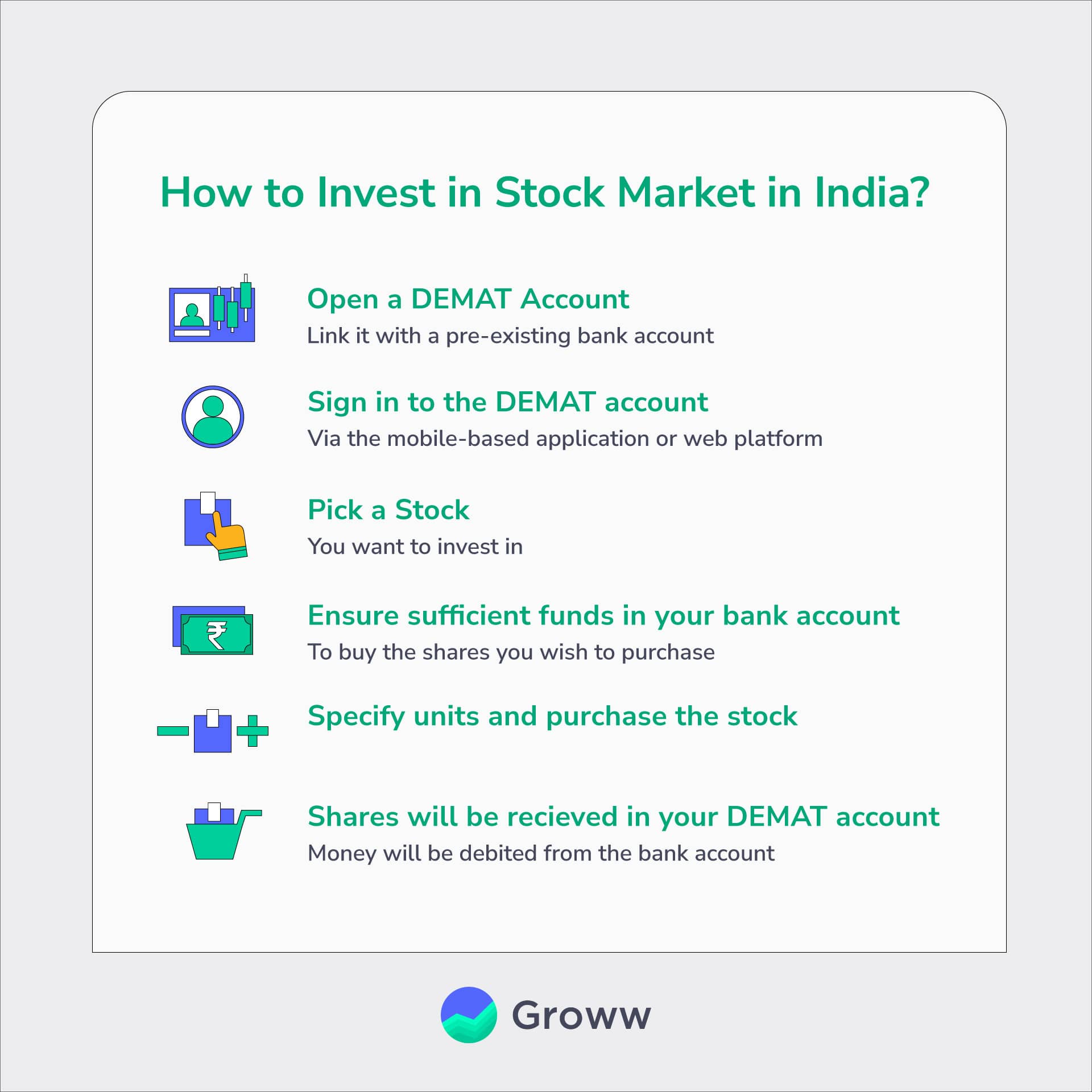
Once your foundation is secure, the next step is to decide where your money will live. In the modern era, opening an investment account is as simple as opening a bank account, but the type of account you choose can have significant tax implications.
Selecting the Right Account Type
There are two primary categories of accounts for stock investing:
- Tax-Advantaged Retirement Accounts: In the United States, these include 401(k)s and IRAs (Individual Retirement Accounts). These accounts offer significant tax breaks—either tax deductions on contributions or tax-free growth—but they usually come with restrictions on when you can withdraw the money (typically age 59½).
- Taxable Brokerage Accounts: These offer the most flexibility. You can deposit and withdraw money at any time without penalty. However, you will owe taxes on any dividends earned and any capital gains realized when you sell a stock for a profit.
Choosing a Brokerage Platform
The “broker” is the middleman that executes your trades. Today, most major online brokers (such as Vanguard, Fidelity, Charles Schwab, and Robinhood) offer $0 commissions on stock and ETF trades. When choosing a platform, look for a user interface that fits your level of expertise, robust educational resources, and a lack of hidden “account maintenance” fees.
The Role of Fractional Shares
For beginners with limited capital, fractional shares are a game-changer. Historically, if a single share of a high-performing company cost $3,000, a beginner might be priced out. Today, many brokers allow you to buy “slices” of shares for as little as $1 or $5. This allows you to start investing immediately, regardless of how much capital you have.
3. Developing an Investment Strategy: What to Buy
Entering the market without a strategy is akin to sailing without a compass. You need to decide whether you want to be an active investor, picking individual companies, or a passive investor, tracking the broader market.

Individual Stocks vs. ETFs
Buying individual stocks requires significant research. You need to analyze financial statements, understand competitive advantages, and follow industry trends. For many, this is a time-consuming hobby or a profession.
Conversely, Exchange-Traded Funds (ETFs) allow you to buy a “basket” of hundreds of stocks in a single transaction. For example, an S&P 500 ETF gives you exposure to the 500 largest publicly traded companies in the U.S. This provides instant diversification and is the preferred method for the majority of long-term investors.
The Power of Index Funds
Index funds are a type of mutual fund or ETF designed to mimic the performance of a specific market index. They are popular because they have very low fees (expense ratios) and historically outperform the majority of actively managed funds over long periods. As legendary investor John Bogle famously said, “Don’t look for the needle in the haystack. Just buy the haystack.”
Diversification Across Sectors
A common mistake for new investors is “concentration risk”—putting all their money into one sector, such as Technology or Energy. If that specific sector faces a regulatory hurdle or economic downturn, your entire portfolio suffers. A well-diversified portfolio spreads investments across various sectors (Healthcare, Consumer Staples, Utilities, Tech) to smooth out volatility and protect against localized crashes.
4. Executing the Trade and Mastering Market Mechanics
With an account opened and a strategy in place, it is time to execute your first trade. This is often the most nerve-wracking part for beginners, but understanding the mechanics can alleviate the anxiety.
Market Orders vs. Limit Orders
When you go to “Buy,” you will usually see two primary order types:
- Market Order: This tells the broker to buy the stock immediately at the current market price. This is the simplest way to trade, but in volatile markets, the execution price might be slightly different than what you saw on your screen.
- Limit Order: This tells the broker to only buy the stock if it hits a specific price or lower. This gives you more control over your entry point, though there is a risk the trade won’t execute if the price never drops to your limit.
Understanding Dividends and DRIP
Many established companies pay out a portion of their profits to shareholders in the form of dividends. A powerful tool for wealth building is the Dividend Reinvestment Plan (DRIP). By enabling DRIP, your broker automatically uses your dividend payments to buy more shares of that stock, creating a powerful compounding effect where your shares produce dividends that buy more shares, which in turn produce even more dividends.
The Importance of Dollar-Cost Averaging (DCA)
Market timing—trying to buy at the absolute bottom and sell at the absolute top—is a losing game for most. Instead, successful investors use Dollar-Cost Averaging. This involves investing a fixed amount of money at regular intervals (e.g., $200 every payday), regardless of whether the market is up or down. When prices are high, your $200 buys fewer shares; when prices are low, your $200 buys more. Over time, this lowers your average cost per share and removes the emotional stress of timing the market.
5. Portfolio Maintenance and the Psychology of Investing
Investing is a marathon, not a sprint. Once your portfolio is built, the work shifts from selection to maintenance and, perhaps most importantly, emotional management.
Rebalancing Your Portfolio
Over time, some of your investments will grow faster than others, which can throw your original asset allocation out of balance. For example, if you wanted 80% stocks and 20% bonds, a big stock market rally might leave you with 90% stocks. Rebalancing involves selling some winners and buying underperformers to bring your portfolio back to your target risk level. This should typically be done once or twice a year.
Tuning Out the “Noise”
Financial news cycles thrive on fear and excitement. “Market Crash Imminent!” or “The Next Big Stock!” are headlines designed to get clicks, not to provide sound investment advice. A professional investor learns to ignore the daily fluctuations of the ticker tape. If your investment thesis for a company or fund remains valid, short-term price drops are merely “noise” and should not trigger an emotional sale.
The Magic of Compounding
The greatest “tool” in an investor’s kit isn’t a piece of software or a specific stock—it is time. Compound interest is the process where the value of an investment increases because the earnings on an investment, both capital gains and interest, earn interest as time passes. The earlier you start, the less money you actually have to contribute out of pocket to reach your financial goals.
Conclusion
Investing in stocks is one of the most effective ways to outpace inflation and secure your financial future. By establishing a firm financial foundation, choosing the right brokerage account, opting for a diversified strategy like index fund investing, and remaining disciplined through market volatility, you can build a portfolio that serves you for decades. Remember: the best time to start investing was ten years ago; the second best time is today. Approach the market with patience, keep your costs low, and let the power of the global economy work in your favor.
aViewFromTheCave is a participant in the Amazon Services LLC Associates Program, an affiliate advertising program designed to provide a means for sites to earn advertising fees by advertising and linking to Amazon.com. Amazon, the Amazon logo, AmazonSupply, and the AmazonSupply logo are trademarks of Amazon.com, Inc. or its affiliates. As an Amazon Associate we earn affiliate commissions from qualifying purchases.