
In the intricate world of finance, percentages are the universal language. From understanding a discount on a new purchase to deciphering the interest rate on a loan, or even evaluating the growth of an investment portfolio, the ability to swiftly and accurately calculate percentages is not just a useful skill—it’s an indispensable financial superpower. Far from being a mere academic exercise, mastering percentage calculations with a calculator empowers individuals and businesses to make informed decisions, optimize spending, save effectively, and grow wealth strategically.
This guide will demystify the process of calculating percentages using a calculator, anchoring each explanation in real-world financial scenarios. We’ll move beyond the simple mechanics, delving into the practical applications that directly impact your personal finance, investments, and business acumen. Equip yourself with this knowledge, and transform your calculator from a basic arithmetic tool into a powerful financial navigator.
The Ubiquity of Percentages in Personal Finance
Percentages are woven into the fabric of our daily financial lives, often dictating the true cost or benefit of a transaction. Without a clear understanding of how they work, consumers can easily misinterpret deals, underestimate debt accumulation, or overlook valuable financial opportunities. A calculator, therefore, becomes an essential companion in navigating this landscape.
Understanding Discounts and Sales
The allure of a “20% off” sign is powerful, but what does it truly mean for your wallet? Whether it’s a retail markdown, an online coupon code, or a service package deal, calculating the exact savings is critical for budgeting and assessing value. To find the discount amount, you multiply the original price by the percentage (expressed as a decimal). To find the final price, you subtract that discount from the original. A calculator makes this instantaneous, allowing you to quickly compare offers and ensure you’re truly getting a good deal.
Navigating Interest Rates: Savings, Loans, Credit Cards
Interest rates, perhaps more than any other financial percentage, have a profound impact on your long-term financial health.
- Savings Accounts & Investments: Understanding the annual percentage yield (APY) helps you project how much your money will grow over time. Calculating compound interest—where interest earns interest—is a primary application.
- Loans & Mortgages: The annual percentage rate (APR) dictates the cost of borrowing. Knowing how to calculate the interest portion of your monthly payment or the total interest paid over the life of a loan can influence your borrowing decisions and help you plan repayments effectively.
- Credit Cards: High APRs on credit cards can quickly escalate debt. Calculating minimum payments, interest charges on outstanding balances, and the time it takes to pay off debt at different payment levels is crucial for avoiding a debt trap.
Calculating Tips and Service Charges
In many service industries, tipping is customary, and service charges are sometimes automatically applied. Knowing how to quickly calculate a 15%, 18%, or 20% tip ensures fair compensation for service providers without overpaying. Similarly, understanding how service charges are levied—often as a percentage of the total bill—allows you to verify accuracy and budget accordingly, especially when dining out or using specialized services.
Deciphering Taxes and Deductions
Taxes, in their myriad forms, are almost always expressed as percentages. Sales tax, income tax brackets, property tax rates, and payroll deductions (like FICA or retirement contributions) all require percentage calculations. Knowing how to calculate these helps you:
- Estimate Final Costs: When making a purchase, adding sales tax to the item’s price provides the true out-the-door cost.
- Understand Paycheck Deductions: Calculating how much of your gross income goes to taxes, insurance, or retirement contributions helps you understand your net pay and plan your budget.
- Tax Planning: For more complex situations, estimating tax liabilities based on income and deductions is a critical aspect of financial planning, often involving various percentage calculations for different income tiers or eligible deductions.
Mastering Basic Percentage Calculations with Your Calculator
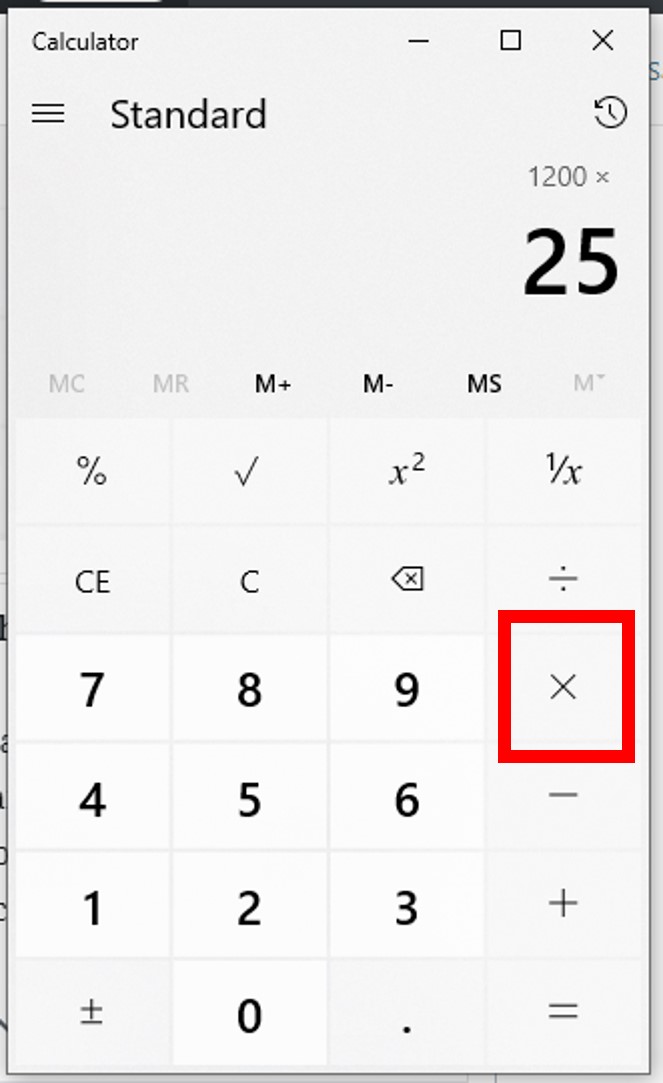
While many calculators have a dedicated percent (%) button, relying on it blindly can sometimes lead to confusion due to varying functionalities across brands. It’s more robust to understand the underlying mathematical principles, which can be universally applied with any calculator.
Finding a Percentage of a Number
This is perhaps the most common percentage calculation. To find ‘X percent’ of a ‘Y’ number, the formula is:
(X / 100) * Y
Example: To find 15% of $200:
- Enter
15 - Divide by
100(15 / 100 = 0.15) - Multiply by
200(0.15 * 200 = 30)
So, 15% of $200 is $30.
Calculating Percentage Increase or Decrease
This calculation helps you understand change over time, crucial for investment growth, inflation rates, or budget fluctuations.
Formula for Percentage Increase: ((New Value - Original Value) / Original Value) * 100
Example: An investment grew from $1,000 to $1,200.
- Subtract original from new:
1200 - 1000 = 200 - Divide by original:
200 / 1000 = 0.2 - Multiply by 100:
0.2 * 100 = 20
The investment increased by 20%.
Formula for Percentage Decrease: ((Original Value - New Value) / Original Value) * 100
Example: A stock dropped from $50 to $40.
- Subtract new from original:
50 - 40 = 10 - Divide by original:
10 / 50 = 0.2 - Multiply by 100:
0.2 * 100 = 20
The stock decreased by 20%.
Determining What Percentage One Number Is of Another
This helps evaluate proportions, such as what percentage of your income goes towards housing, or what portion of a company’s sales comes from a specific product.
Formula: (Part / Whole) * 100
Example: If you spent $500 on rent from a $2,000 income.
- Divide the part by the whole:
500 / 2000 = 0.25 - Multiply by 100:
0.25 * 100 = 25
25% of your income goes to rent.
The ‘Percent’ Button and Manual Alternatives
While some calculators have a ‘%’ button, its function can vary.
- Finding a percentage of a number (e.g., 15% of 200): You might enter
200 * 15 %and get30. - Adding/subtracting a percentage (e.g., 200 + 15%): You might enter
200 + 15 %and get230.
Due to these variations, it’s generally safer and more consistent to use the manual decimal conversion method (15 / 100 = 0.15) unless you are very familiar with your specific calculator’s percent button behavior. This ensures accuracy across all devices.
Advanced Financial Applications: Beyond the Basics
With a solid grasp of basic percentage calculations, you can unlock more sophisticated financial analyses. These applications are critical for strategic planning, investment evaluation, and business management.

Investment Returns and Portfolio Growth
Investors constantly use percentages to evaluate performance. Calculating compound annual growth rate (CAGR), dividend yields, return on investment (ROI), and portfolio allocation (what percentage of your assets are in stocks vs. bonds) are all percentage-driven. Your calculator becomes a powerful tool for projecting future growth, comparing investment options, and rebalancing your portfolio to maintain desired asset allocations.
Budgeting and Expense Analysis
Effective budgeting relies heavily on percentages. You can analyze what percentage of your income is allocated to different categories (housing, food, transportation, savings, debt repayment). This gives you a clear visual of your spending habits and helps identify areas for optimization. Tracking your actual spending as a percentage of your budgeted amount provides real-time feedback on your financial discipline.
Loan Repayments and Amortization Schedules
While complex loan amortizations often require specialized software, understanding the percentage breakdown of principal and interest in each payment is crucial. Your calculator can help you estimate remaining loan balances after extra payments or project how much interest you’ll save by adjusting your payment schedule. This insight is invaluable for aggressively paying down debt and minimizing interest costs.
Business Finance: Profit Margins and Growth Rates
For entrepreneurs and business owners, percentages are fundamental to measuring financial health and performance.
- Profit Margins: Gross profit margin, operating profit margin, and net profit margin (all percentages) indicate how efficiently a business converts revenue into profit. Calculating these regularly helps identify areas for cost reduction or pricing adjustments.
- Growth Rates: Sales growth, customer acquisition growth, and market share growth are typically expressed as percentages. Monitoring these helps businesses assess their trajectory, set realistic goals, and make strategic decisions for expansion or adaptation.
Choosing the Right Calculator for Your Financial Journey
The “right” calculator depends on your specific needs, but understanding the options available can enhance your financial calculations.
Standard vs. Scientific Calculators
For most personal finance tasks, a basic standard calculator is perfectly adequate. Its straightforward interface is ideal for quick calculations of discounts, tips, and simple interest. A scientific calculator, while offering more advanced functions like logarithms and trigonometry, is typically overkill for everyday financial percentage calculations and can sometimes be more cumbersome due to its complexity.
Financial Calculators and Their Advantages
Dedicated financial calculators (like those from HP or Texas Instruments) are specifically designed for complex financial equations. They feature specialized functions for time value of money (TVM), net present value (NPV), internal rate of return (IRR), amortization, and bond calculations. While they have a steeper learning curve, they are indispensable for professionals in finance, real estate, and accounting, and for serious investors planning long-term financial strategies.
Smartphone Apps and Online Tools
In the digital age, your smartphone is a powerful calculator. Most default calculator apps handle basic percentages flawlessly. Furthermore, a plethora of specialized financial calculator apps are available, offering features from mortgage calculators to investment return estimators. Online tools and spreadsheets (like Excel or Google Sheets) also offer robust percentage calculation capabilities, often allowing for more complex modeling and data analysis, which is particularly useful for budgeting and tracking investment portfolios over time.
Common Pitfalls and How to Avoid Them
Even with a calculator, errors can creep into percentage calculations, leading to costly financial misjudgments. Awareness and careful execution are key.
Misinterpreting Base Values
A common mistake is applying a percentage to the wrong “whole” or “original value.” For instance, when calculating a “20% raise,” ensure you’re applying it to your current salary, not your previous one. When calculating an increase or decrease, the base value is always the original amount from which the change is measured. Double-checking the context of the percentage is crucial.
Rounding Errors and Precision
In finance, small rounding errors can accumulate, especially in long-term calculations like compound interest or complex loan amortizations. While it’s acceptable to round final results to two decimal places (for currency), avoid rounding intermediate steps. Use your calculator’s full precision until the very end to ensure the most accurate results, particularly when dealing with large sums or sensitive financial projections.
Forgetting the Context
A percentage figure alone rarely tells the full story. A “20% return” on an investment might sound fantastic, but if it took 10 years to achieve, the annual return is far less impressive. Similarly, a “5% interest rate” on a credit card is only good if it’s an annual rate; if it’s a monthly rate, it’s exorbitant. Always consider the time frame, the principal amount, and other relevant factors alongside the percentage to gain a complete financial understanding.
Conclusion
The ability to calculate percentages with a calculator is more than just a mathematical trick; it’s a fundamental pillar of financial literacy. From navigating daily transactions to making significant investment decisions and managing business operations, percentages provide the crucial insights needed to make informed choices. By understanding the underlying mechanics, practicing various financial applications, and choosing the right tools, you can transform your calculator into an invaluable asset for building and maintaining a healthy financial life. Embrace these skills, and empower yourself to be a more confident, capable, and financially astute individual.
aViewFromTheCave is a participant in the Amazon Services LLC Associates Program, an affiliate advertising program designed to provide a means for sites to earn advertising fees by advertising and linking to Amazon.com. Amazon, the Amazon logo, AmazonSupply, and the AmazonSupply logo are trademarks of Amazon.com, Inc. or its affiliates. As an Amazon Associate we earn affiliate commissions from qualifying purchases.