
When an investor asks, “What’s the Dow Jones at today?” they are rarely looking for just a five-digit number. That question is often a shorthand for a much deeper inquiry: “How is the economy doing, and what does it mean for my financial future?” The Dow Jones Industrial Average (DJIA), often simply called “the Dow,” is the most recognized stock market index in the world. Despite the rise of more complex indices like the S&P 500 or the tech-heavy Nasdaq, the Dow remains the primary pulse check for the American corporate landscape.

To understand what the Dow is doing today, one must look beyond the green or red arrows on a screen. One must understand the mechanics of the index, the macroeconomic forces driving its movement, and the psychological impact it has on the global financial markets.
Decoding the Dow: What It Is and Why It Matters
The Dow Jones Industrial Average is a price-weighted measurement of 30 prominent companies listed on stock exchanges in the United States. Founded by Charles Dow and Edward Jones in 1896, it originally tracked just 12 industrial companies. Today, it has evolved into a diverse cross-section of the American economy, including giants in technology, healthcare, finance, and consumer goods.
The History and Composition of the DJIA
While the word “Industrial” remains in its name, the index is no longer dominated by heavy manufacturing or railroads. The 30 components are selected by the editors of the Wall Street Journal, and they represent “blue-chip” companies—businesses that are household names with a reputation for quality, reliability, and the ability to operate profitably in good times and bad.
Current members include tech titans like Microsoft and Apple, financial powerhouses like Goldman Sachs and JPMorgan Chase, and consumer staples like Coca-Cola and Walmart. Because the list is curated, being added to the Dow is considered a mark of prestige, signaling that a company is a fundamental pillar of the U.S. economy.
Price-Weighted vs. Cap-Weighted Indices
One of the most important—and often misunderstood—aspects of the Dow is that it is a price-weighted index. This means that companies with a higher stock price have a greater influence on the index’s daily movement than companies with lower stock prices, regardless of their actual market capitalization (the total value of all shares).
For example, if a stock priced at $400 moves by 1%, it will have a much larger impact on the Dow’s point total than a stock priced at $40 moving by 1%. This contrasts with the S&P 500, which is market-cap weighted, meaning the largest companies by total valuation exert the most influence. Understanding this distinction is crucial for investors who want to know why the Dow might be up while other indices are down.
Factors Influencing Today’s Market Movements
When you see the Dow swinging hundreds of points in a single afternoon, it is usually a reaction to specific catalysts. These factors range from high-level government policy to the micro-details of a single company’s quarterly performance.
Macroeconomic Indicators and Fed Policy
The single most influential factor in today’s market is often the Federal Reserve. Investors keep a hawk-like watch on interest rate decisions and the “dot plot” of future rate expectations. When interest rates rise, borrowing becomes more expensive for corporations, potentially slowing growth and making the Dow’s dividends less attractive compared to fixed-income bonds.
Inflation data, such as the Consumer Price Index (CPI), also dictates the Dow’s movement. If inflation is higher than expected, the market anticipates that the Fed will keep rates high, often leading to a sell-off. Conversely, signs of a “soft landing”—where inflation cools without a massive recession—can send the Dow to record highs.
Corporate Earnings and Sector Performance
Because the Dow consists of only 30 stocks, the earnings reports of a single company can significantly sway the entire index. “Earnings season” occurs four times a year when companies disclose their profits, revenue, and future guidance. If a heavyweight like UnitedHealth Group or Boeing reports disappointing figures or lowers its outlook, the Dow can drop even if the rest of the market is stable.
Furthermore, the Dow is sensitive to sector-specific rotations. If investors are moving money out of “growth” stocks (like tech) and into “value” stocks (like energy or consumer staples) due to economic uncertainty, the Dow may outperform the Nasdaq because it is more heavily weighted toward established, dividend-paying companies.
Interpreting the Numbers: Is the Dow a Good Economic Barometer?
Financial experts often debate whether the Dow is still a relevant tool for modern investors. While it is the most cited index in mainstream media, it has limitations that every serious investor should acknowledge.

The Concentration Risk of 30 Stocks
The primary criticism of the Dow is its narrow scope. With only 30 companies, it represents only a fraction of the thousands of publicly traded stocks in the U.S. This concentration means the index can be “skewed” by an outlier. If one company suffers a catastrophic legal or operational failure, the Dow might look like the whole economy is suffering, even if 90% of other American businesses are thriving.
However, proponents argue that these 30 companies are so massive and interconnected that their health is a reliable proxy for the broader economy. When American consumers stop buying iPhones (Apple), stop using credit cards (Visa/Amex), or stop building homes (Home Depot), it is a genuine signal of an economic downturn.
Comparing the Dow to the S&P 500 and Nasdaq
To get a full picture of “what the market is doing today,” investors must look at the Dow in context.
- The S&P 500: Often considered the “real” market benchmark by professionals, it tracks 500 of the largest U.S. companies. It is more diversified and reflects the broader market’s health more accurately.
- The Nasdaq Composite: This index is heavily weighted toward the technology and biotech sectors. It is the “risk-on” barometer; when the Nasdaq is soaring, it usually means investors are feeling optimistic about future innovation and growth.
If the Dow is up but the Nasdaq is down, it suggests a “defensive” market where investors are seeking safety in established giants rather than betting on speculative growth.
How Investors Should React to Daily Fluctuation
In an age of instant notifications and 24-hour financial news, it is easy to get caught up in the “noise” of daily Dow fluctuations. However, successful personal finance management requires a different perspective.
Long-term Investing vs. Short-term Noise
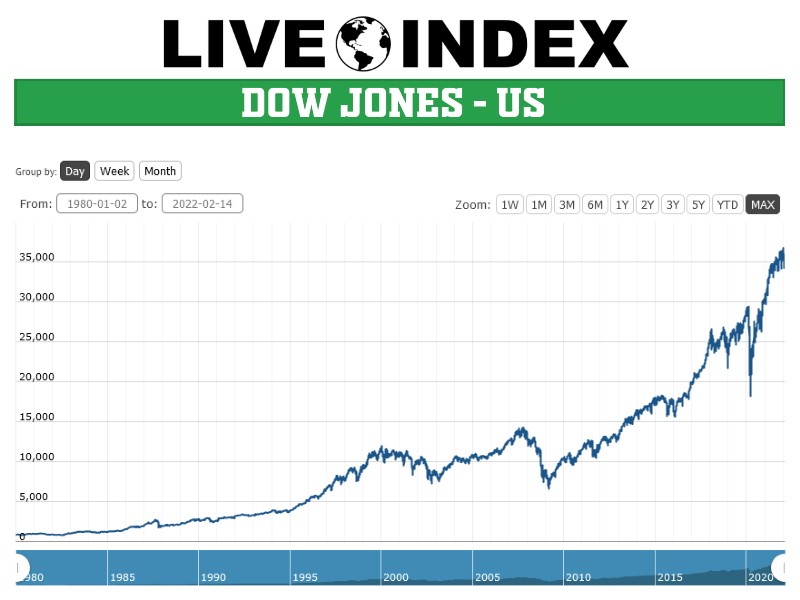
For the average individual investor, the Dow’s movement on any given Tuesday is largely irrelevant to their 20-year financial plan. Market volatility is the “price of admission” for the superior returns that stocks offer over long periods. History shows that despite wars, depressions, and pandemics, the Dow has a long-term upward trajectory.
Reacting emotionally to a 500-point drop by selling off assets often results in “locking in” losses and missing the subsequent recovery. The most successful investors are those who view “today’s Dow” as a data point, not a call to action.
Portfolio Diversification Strategies
A common mistake is building a portfolio that mirrors only the Dow. Because the index is limited to 30 large-cap U.S. stocks, an investor who only buys Dow-related funds is missing out on small-cap companies, international markets, and emerging technologies that have yet to reach “blue-chip” status.
Strategic asset allocation involves using the Dow as a “core” component of a portfolio while diversifying into other areas. This protects the investor if a specific sector—such as traditional banking or manufacturing—faces a localized slump.
The Future of the Dow in a Changing Economy
As we look at “what the Dow is at today,” we must also consider what it will look like tomorrow. The index is not static; it evolves to reflect the changing reality of global business.
The Impact of Technological Transformation
We are currently witnessing a shift in the Dow’s composition. In recent years, we have seen the removal of old-guard companies like ExxonMobil and the addition of tech-centric firms like Salesforce and Amazon. This reflects the reality that the “industrial” strength of the 21st century lies in data, cloud computing, and e-commerce rather than just oil and steel. As artificial intelligence (AI) becomes a larger driver of corporate productivity, expect the Dow to continue its transformation into a more “intellectual-capital” focused index.
Globalization and the Modern Industrial Average
While the Dow is an American index, the companies within it are global entities. Most Dow 30 companies derive a significant portion of their revenue from overseas markets. Therefore, “today’s Dow” is influenced by the GDP of China, the energy policies of Europe, and the stability of supply chains in Southeast Asia.
In conclusion, when you ask “What’s the Dow Jones at today?”, remember that you are looking at a living history of corporate excellence and economic resilience. Whether the index is up or down in the short term, its value lies in its ability to condense the complexities of global commerce into a single, understandable metric. For the savvy investor, the goal is not to trade the daily swings, but to understand the fundamental business health that the Dow represents, using that knowledge to build a robust, long-term financial strategy.
aViewFromTheCave is a participant in the Amazon Services LLC Associates Program, an affiliate advertising program designed to provide a means for sites to earn advertising fees by advertising and linking to Amazon.com. Amazon, the Amazon logo, AmazonSupply, and the AmazonSupply logo are trademarks of Amazon.com, Inc. or its affiliates. As an Amazon Associate we earn affiliate commissions from qualifying purchases.