
In the fast-paced world of global finance, time is arguably the most valuable commodity. For the seasoned day trader and the novice retail investor alike, the question “what time does the share market close?” is more than a logistical inquiry; it is a fundamental pillar of trading strategy. The closing bell of a major stock exchange represents more than just the end of a business day—it marks the culmination of daily price discovery, the finalization of institutional positions, and the transition into the speculative world of extended-hours trading.
Understanding the temporal boundaries of the stock market is essential for managing risk, ensuring liquidity, and capitalizing on market-moving news. While digital platforms allow us to check portfolio balances 24/7, the actual window for executing trades at standard market prices is strictly regulated. This article explores the intricate schedules of the world’s major exchanges, the mechanics of extended-hours trading, and the strategic implications of market timing.
The Pulse of Wall Street: Standard Operating Hours
For the majority of investors focusing on the U.S. equities market, the rhythmic cycle of the New York Stock Exchange (NYSE) and the NASDAQ defines their financial day. These two giants of high finance operate on a synchronized schedule that provides a standardized window for price discovery.
The Core Trading Session (9:30 AM – 4:00 PM ET)
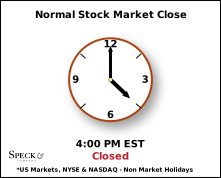
The standard trading session in the United States runs from 9:30 AM to 4:00 PM Eastern Time, Monday through Friday. During these six and a half hours, the market experiences its highest levels of liquidity. Liquidity refers to the ease with which an asset can be converted into cash without affecting its market price. Because the vast majority of institutional investors, mutual funds, and pension funds execute their trades during this window, the “bid-ask spread” (the difference between what a buyer is willing to pay and what a seller is willing to accept) is typically at its narrowest.
The Significance of the Opening and Closing Bells
The “Opening Bell” at 9:30 AM is often characterized by a surge in volatility as the market reacts to news that broke overnight or during the pre-market session. Conversely, the “Closing Bell” at 4:00 PM is perhaps the most critical moment of the trading day. The closing price of a stock is used as the official benchmark for valuing investment portfolios, calculating mutual fund Net Asset Values (NAVs), and triggering margin calls.
In the final minutes leading up to 4:00 PM, trading volume often spikes. This is frequently driven by “market-on-close” (MOC) orders, where institutional players seek to execute large blocks of shares at the final price of the day to ensure their portfolios mirror the index they are tracking.
Extended Hours Trading: The World of Pre-Market and After-Hours
While the “closing bell” signals the end of regular trading, the modern financial ecosystem never truly sleeps. Electronic Communication Networks (ECNs) allow investors to trade outside of the standard 9:30 AM to 4:00 PM window, though these sessions operate under a different set of rules and risks.
The Dynamics of Pre-Market Sessions
In the U.S., pre-market trading can begin as early as 4:00 AM ET, though the bulk of the activity occurs between 8:00 AM and 9:30 AM. This session is primarily used by traders to react to early-morning economic data (such as employment reports or CPI data) or overnight developments in European markets. Pre-market trading is characterized by lower volume and higher volatility, meaning prices can swing wildly on relatively small trades.
Post-Market Trading: Reacting to Earnings and News
The after-hours session begins immediately at 4:00 PM ET and can run until 8:00 PM ET. This is arguably the most dramatic time for individual stocks, as the majority of publicly traded companies release their quarterly earnings reports shortly after the closing bell. If a company misses its revenue targets, its stock price may plummet in the after-hours session before the general public has a chance to react during the next day’s regular session.
Risks and Rewards of Trading Outside Regular Hours
The primary allure of extended-hours trading is the ability to act quickly on news. However, the Money niche emphasizes caution here. Because there are fewer participants, the lack of liquidity can lead to “slippage,” where your order is filled at a significantly worse price than expected. Furthermore, many retail brokerages only allow “limit orders” during these sessions to protect investors from extreme price fluctuations.
A Global Perspective: When the World Trades
For the diversified investor, the sun never sets on the share market. As the U.S. market closes, attention often shifts to the East, where Asian markets are preparing to open. Understanding global market hours is crucial for those trading international ETFs or American Depositary Receipts (ADRs).
Major International Exchanges
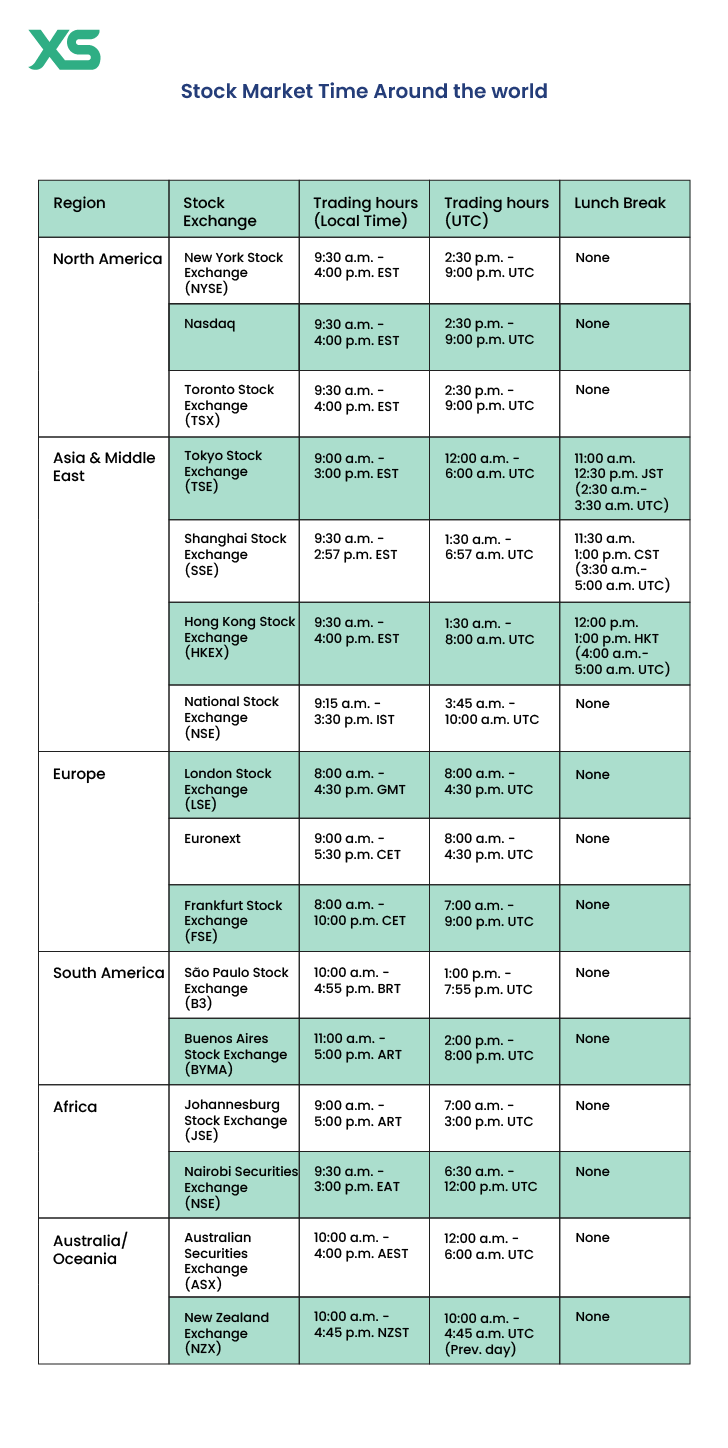
- London Stock Exchange (LSE): Operating from 8:00 AM to 4:30 PM GMT, the LSE is the hub of European finance. For U.S.-based traders, the London market overlaps with the New York open for a few hours in the morning, often creating a period of intense global liquidity.
- Tokyo Stock Exchange (TSE): The TSE operates from 9:00 AM to 3:00 PM JST, but notably includes a “lunch break” from 11:30 AM to 12:30 PM. This mid-day pause is a relic of traditional trading floor culture that many Western markets have abandoned.
- Hong Kong Stock Exchange (HKEX): Similar to Tokyo, the HKEX operates with a morning session (9:30 AM – 12:00 PM) and an afternoon session (1:00 PM – 4:00 PM).
The 24-Hour Cycle of Global Finance
While equities have set hours, other financial instruments like Forex (foreign exchange) and Cryptocurrencies trade 24/7. However, even in a 24-hour cycle, the “close” of the New York session remains a psychological and functional anchor for the global financial system. When New York closes on a Friday, it effectively sets the “weekend price” that the rest of the world will contemplate until the Sydney and Tokyo markets open on Monday morning.
Market Holidays and Special Scheduling
Just as important as knowing the daily closing time is knowing which days the market doesn’t open at all. In the world of personal finance and professional trading, the calendar is a vital tool.
Observing the Financial Calendar
The U.S. stock markets observe several federal holidays, including New Year’s Day, Martin Luther King Jr. Day, Presidents’ Day, Good Friday, Memorial Day, Juneteenth, Independence Day, Labor Day, Thanksgiving, and Christmas. On these days, the “market close” is essentially a 24-hour hiatus. For investors, these breaks are periods of “gap risk,” where significant news can occur while the markets are closed, leading to a massive price “gap” up or down when the market finally reopens.
Early Closures and Modified Sessions
Occasionally, the market operates on a modified schedule. The most common examples are the day after Thanksgiving (Black Friday) and Christmas Eve (if it falls on a business day). On these days, the market typically closes early at 1:00 PM ET. These shortened sessions are usually characterized by “thin” trading (low volume), as many institutional traders take the day off, which can lead to unpredictable price movements.
Mastering Market Timing for the Individual Investor
For the individual focused on long-term wealth accumulation, the exact minute of the market close might seem trivial. However, strategic awareness of timing can significantly impact the “all-in” cost of your investments.
High Volatility Periods: The First and Last Hour
Financial experts often refer to the first and last hour of the trading day as “The Power Hour.” These are periods where institutional “smart money” is most active. For a long-term investor looking to enter a position with minimal drama, the “mid-day doldrums” (roughly 11:30 AM to 2:00 PM ET) often provide a more stable environment with less erratic price swings. Conversely, if you are looking to sell a large position, the high volume of the closing hour ensures that your trade is absorbed by the market more efficiently.
Liquidity and Its Impact on Your Portfolio
The reason we care about “what time the market closes” is ultimately rooted in liquidity. When the market is closed, your assets are “illiquid”—you cannot easily exchange them for cash. For those utilizing margin (borrowed money) or trading options, the closing time is a hard deadline. An option that is “in the money” at 3:59 PM but “out of the money” by 4:01 PM can result in a total loss of the premium paid.
Furthermore, the “Weekend Effect” is a documented phenomenon in finance where stock prices tend to behave differently on Mondays compared to the previous Friday’s close. Being aware of the Friday 4:00 PM close allows investors to decide whether they want to hold a volatile position over the weekend or move to the safety of cash.
Conclusion: The Strategic Value of the Clock
The question “what time does the share market close?” serves as the entry point into a deeper understanding of market mechanics. While the 4:00 PM ET bell signals the end of the official session, the financial world is a continuous loop of preparation, execution, and reaction.
For the modern investor, success is not just about what you buy, but when you execute. By respecting the boundaries of the core trading session, understanding the risks of extended-hours trading, and keeping a watchful eye on the global financial calendar, you can navigate the markets with greater precision. In the realm of money and investing, the clock is not just a tool for telling time—it is a tool for managing risk and maximizing opportunity. Whether you are a day trader or a long-term saver, the closing bell is a reminder that in the market, as in life, timing is everything.
aViewFromTheCave is a participant in the Amazon Services LLC Associates Program, an affiliate advertising program designed to provide a means for sites to earn advertising fees by advertising and linking to Amazon.com. Amazon, the Amazon logo, AmazonSupply, and the AmazonSupply logo are trademarks of Amazon.com, Inc. or its affiliates. As an Amazon Associate we earn affiliate commissions from qualifying purchases.