
Cruising has long been perceived as either a bastion of unattainable luxury or a budget-friendly way to see the world. In reality, the financial landscape of the cruise industry is a complex ecosystem of fixed costs, variable expenses, and hidden fees. For the financially conscious traveler, understanding how much a cruise actually costs requires looking far beyond the initial sticker price found on a booking website. From a personal finance perspective, a cruise is a strategic investment in leisure, and like any investment, it requires a thorough analysis of its components to ensure a high return on value.
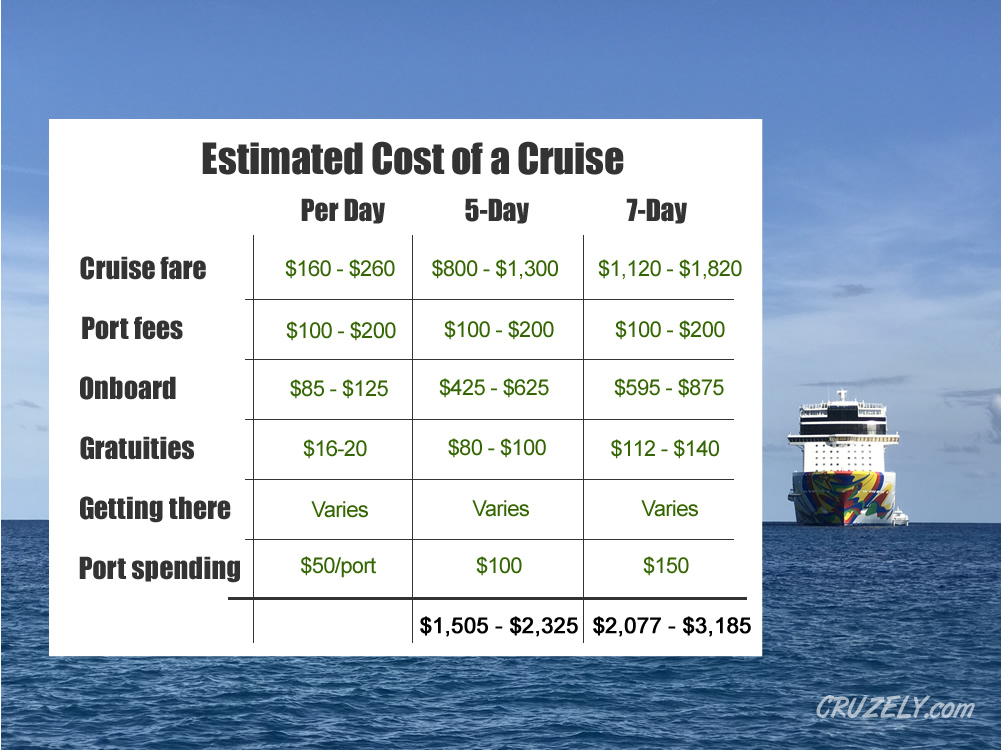
To accurately budget for a voyage, one must deconstruct the pricing model of modern cruise lines. This guide explores the financial intricacies of cruising, categorizing expenses into base fares, onboard variables, and external logistical costs, providing a clear roadmap for your next major discretionary expenditure.
Understanding the Base Fare: What’s Included and What’s Not?
The advertised price of a cruise—the “lead-in rate”—is often designed to capture attention, but it rarely reflects the final balance on your credit card statement. When analyzing the base fare, it is essential to distinguish between the various tiers of the market, as the financial structure varies significantly between mass-market, premium, and luxury lines.
The Inclusion Spectrum: Mass Market vs. Luxury
In the “Money” niche of travel, we look at value-to-cost ratios. Mass-market lines (such as Carnival, Royal Caribbean, or Norwegian) typically offer lower base fares—sometimes as low as $50 to $100 per person, per night. However, these are “unbundled” models. You are paying for your stateroom, basic meals in the main dining room or buffet, and standard entertainment.
Conversely, luxury lines (such as Silversea or Regent Seven Seas) might charge $500 to $1,000 per night. While the upfront cost is significantly higher, these are often “all-inclusive” models. This means your beverages, gratuities, Wi-Fi, and sometimes even shore excursions are baked into the price. For the high-net-worth individual or the disciplined saver, the luxury model can often provide better financial predictability than the a la carte model of budget lines.
Port Fees and Taxes: The Hidden Upfront Costs
When you see a cruise advertised for $499, the final checkout screen will almost always show a higher number. Port fees and government taxes are mandatory charges that the cruise line passes directly to the consumer. Depending on the itinerary, these can range from $100 to over $500 per person. For example, an Alaskan cruise involves numerous port calls with high environmental fees, significantly impacting the total cost. When calculating your initial outlay, always ensure you are looking at the “taxes and fees included” total to maintain an accurate personal finance ledger.
Navigating Onboard Expenses: The “Nickel and Diming” Factor
Once you step onto the ship, you enter a secondary economy. Cruise lines are masters of generating “onboard revenue,” which often accounts for a substantial portion of their profit margins. For the traveler, this is where a budget can quickly spiral out of control.
Beverage Packages and Specialty Dining
The financial decision of whether to purchase a beverage package is one of the most debated topics in cruise budgeting. Most lines offer tiered packages for soda, premium coffees, and alcohol. These can range from $20 to $100 per day. From a purely mathematical standpoint, a traveler must calculate their average daily consumption to see if the “insurance” of a package outweighs the “pay-as-you-go” method.
Similarly, “Specialty Dining” has become a major revenue driver. While the buffet is free, high-end steakhouses or sushi bars on board usually carry a cover charge of $30 to $70 per person. If you plan to dine at these venues every night, you must add approximately 30-50% to your initial cruise fare.
Gratuities and Service Charges
Many first-time cruisers are surprised by the automatic daily gratuity added to their onboard account. This is a service charge—usually between $16 and $20 per person, per day—that is distributed among the housekeeping and dining staff. For a family of four on a seven-night cruise, this adds over $500 to the final bill. While these can sometimes be adjusted at the guest services desk, they are a standard part of the cruise economy and should be treated as a fixed cost in your financial planning.
Connectivity and Entertainment
In the digital age, staying connected is often a necessity for those managing businesses or side hustles while traveling. However, satellite Wi-Fi on ships remains expensive. Packages often cost $20 to $30 per day for a single device. Furthermore, while most entertainment is free, “premium” experiences—such as escape rooms, go-karting, or spa treatments—carry heavy price tags. A single spa session can easily cost $200 plus an automatic 18% gratuity.
External Costs: Logistics and Land Excursions
The cost of a cruise does not begin and end at the gangway. To get a true sense of the “all-in” price, you must account for the logistics of reaching the port and the activities conducted at each destination.
Airfare and Pre-Cruise Accommodations
Seasoned travelers know that flying into a port city on the day of embarkation is a high-risk financial move. A flight delay could result in a missed ship and a total loss of the cruise fare. Therefore, budgeting for a hotel stay the night before is essential. Depending on the port (e.g., Miami, Barcelona, or Singapore), a one-night stay and meals can add $300 to $600 to your total trip cost. When you add round-trip airfare, these “getting there” costs can sometimes equal the price of the cruise itself.
Shore Excursions: Budgeting for Adventure
The primary reason to cruise is to see the world, but seeing it isn’t always free. Cruise lines sell organized shore excursions that offer convenience and security but at a premium. A simple city tour might cost $75, while a helicopter tour over a glacier in Alaska can exceed $600 per person.
From a financial management perspective, one can opt for third-party tours or self-guided exploration to save money. However, this requires more intensive research and carries the risk of the ship leaving without you if you are late. Most financial experts recommend setting a “per port” budget for excursions to avoid overspending in the heat of the moment.
Strategies for Optimizing Value: Getting the Most for Your Money
Just as with the stock market, timing and strategy are everything in the cruise industry. Understanding the fluctuations in pricing can save a traveler thousands of dollars.
Timing Your Booking: Last-Minute vs. Early Bird
The cruise industry uses dynamic pricing models. Generally, there are two “sweet spots” for booking. Booking 12 to 18 months in advance often secures the lowest possible “Early Bird” rates and the best cabin selection. Alternatively, “Last-Minute” deals (usually 60 to 90 days before sailing, after the final payment date) can offer deep discounts as the line tries to fill empty cabins. However, the savings on a last-minute cruise are often offset by higher last-minute airfare, so the two must be balanced in your budget.
Leveraging Credit Card Rewards and Loyalty Programs
For those focused on maximizing their personal finance strategy, co-branded cruise credit cards or general travel reward cards (like Chase Sapphire or Amex Platinum) can be invaluable. Points can be redeemed for “Onboard Credit” (OBC), which functions as “found money” to pay for drinks, excursions, or gratuities. Additionally, once you have sailed with a line, you enter their loyalty program. High-tier loyalty status can provide significant financial perks, such as free laundry, complimentary Wi-Fi, or even free cruises, drastically reducing the cost of future travel.

Conclusion: The True Bottom Line
So, how much does a cruise cost? For a standard seven-night Caribbean cruise on a mid-range line, a realistic budget for a couple—including taxes, fees, moderate onboard spending, airfare, and one or two excursions—typically lands between $3,500 and $5,000.
Cruising offers a unique value proposition: it is one of the few vacation formats where you can pre-pay for the majority of your expenses, allowing for disciplined financial management. By deconstructing the costs into base fares, onboard variables, and external logistics, you can move away from “guesstimating” and toward a precise financial plan. Whether you choose the unbundled budget approach or the all-inclusive luxury model, the key to a successful cruise investment is transparency and preparation. By understanding the “how much,” you can focus on the “how well” you enjoy your journey.
aViewFromTheCave is a participant in the Amazon Services LLC Associates Program, an affiliate advertising program designed to provide a means for sites to earn advertising fees by advertising and linking to Amazon.com. Amazon, the Amazon logo, AmazonSupply, and the AmazonSupply logo are trademarks of Amazon.com, Inc. or its affiliates. As an Amazon Associate we earn affiliate commissions from qualifying purchases.