
When the public asks about the background or religion of George Soros, the inquiry often stems from a desire to understand the man behind one of the most successful financial legacies in human history. While Soros was born into a non-observant Jewish family in Budapest and identifies as an atheist, his “religion” in the professional sense is not found in a house of worship, but in the rigorous, often contrarian application of philosophical inquiry to the global markets.
To understand George Soros from a “Money” perspective is to understand how a survivor of the mid-20th century’s greatest upheavals translated a deep-seated distrust of absolute truths into a multi-billion-dollar investment strategy. His approach to wealth is not merely about accumulating capital; it is about a specific worldview that treats the market as a living, breathing, and inherently flawed entity.

The Foundations of the Soros Mindset: From Personal Identity to Open Society
George Soros’s early life in Nazi-occupied Hungary and his subsequent move to England served as the crucible for his financial ideologies. His Jewish heritage meant he lived through a period where the “rules” of society were violently rewritten overnight. This instilled in him a permanent skepticism toward the status quo—a trait that would later allow him to bet against entire nations when the rest of the world believed they were stable.
Secularism and the Influence of Karl Popper
While Soros is secular, he found a different kind of gospel during his studies at the London School of Economics: the philosophy of Karl Popper. Popper’s work on the “Open Society” and his critique of historicism became the bedrock of Soros’s intellectual life. In the context of money and investing, this translated to a belief that no one possesses the ultimate truth. If the market claims to be perfectly efficient or a government claims its currency is unshakeable, Soros views these as “closed” systems ripe for correction.
The “Open Society” as a Financial and Social Blueprint
The term “Open Society” refers to a social order where individuals are free to make decisions based on their own judgment, and where institutions are transparent and accountable. For Soros, an open society is a prerequisite for a healthy economy. His financial maneuvers often mirror this belief: he invests heavily in emerging markets where he sees a shift toward openness, and he has famously shorted regimes or systems that he perceives as brittle, closed, or unsustainable.
Reflexivity: The Core Creed of a Market Legend
If Soros has a singular “doctrine” that governs his wealth management, it is the Theory of Reflexivity. This concept is what separates him from traditional value investors like Warren Buffett. While Buffett looks for intrinsic value that the market has ignored, Soros looks at how the market’s own perceptions—even if they are wrong—can change the reality of the underlying asset.
Challenging the Efficient Market Hypothesis
Most modern financial theory is built on the Efficient Market Hypothesis (EMH), which suggests that stock prices reflect all available information. Soros rejects this. He argues that market participants do not base their decisions on reality, but on their interpretation of reality. Because these interpretations are inherently biased, market prices are almost always “wrong” in one direction or another. This creates opportunities for those who can identify the gap between perception and reality.
The Feedback Loop: How Perceptions Shape Reality
Reflexivity posits a two-way feedback loop. For example, if investors believe a certain tech sector is the future, they pour money into it. This influx of capital allows companies in that sector to hire more, expand, and perhaps even succeed, regardless of whether their original business model was sound. The “false” perception actually created a “true” reality. Soros’s genius lies in identifying when these feedback loops have gone too far (creating bubbles) and betting on the inevitable “bust” when the loop reverses.
The Quantum Fund and the Art of High-Stakes Speculation
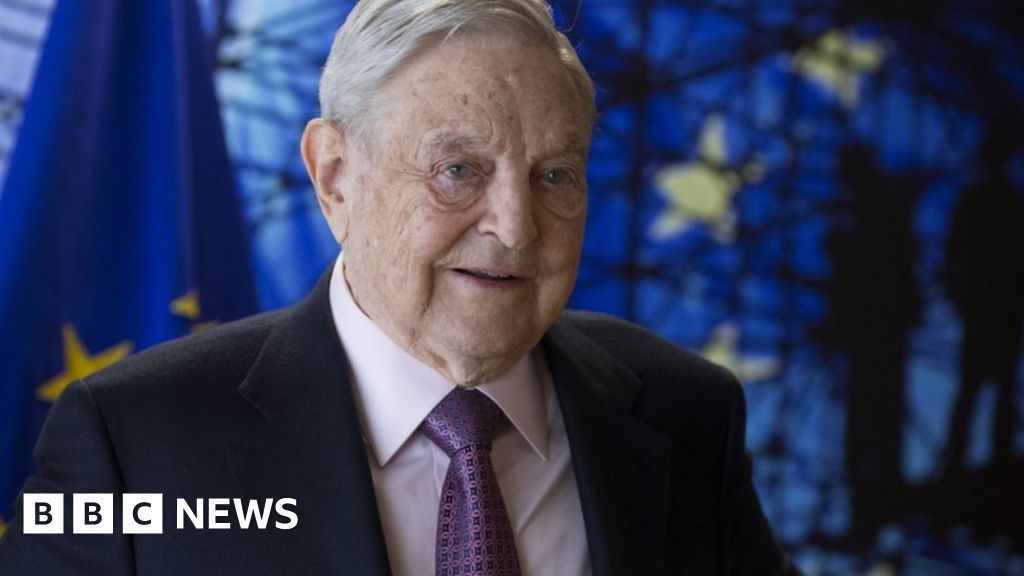
To understand the Soros “Money” niche, one must examine the Quantum Fund. Established in the early 1970s, it became the vehicle for some of the most daring and successful trades in history. Soros didn’t just invest; he speculated with a level of conviction that few could match, backed by his philosophical frameworks.
“Breaking the Bank of England”: A Case Study in Conviction
The most famous example of Soros’s financial philosophy in action occurred on “Black Wednesday” in 1992. Britain was part of the European Exchange Rate Mechanism (ERM), and the government was committed to keeping the pound above a certain value. Soros, applying his theory of reflexivity, realized the British economy was too weak to support that price. He didn’t just make a small bet; he “broke” the bank by short-selling more than $10 billion worth of pounds.
His logic was purely financial: he saw a system that was trying to defy reality. When the British government was forced to withdraw from the ERM and the pound plummeted, Soros reportedly made over $1 billion in a single day. This trade solidified his reputation as the premier macro-investor of his generation.
Risk Management and the “Backache” Signal
Despite his reputation for massive bets, Soros is obsessed with risk management. Interestingly, he has often spoken about a psychosomatic reaction to risk: a physical backache. When his investments were going south or the market was behaving in a way he didn’t understand, his back would begin to hurt. Rather than ignoring this or pushing through with “faith,” he would take it as a sign to exit his positions. This illustrates a key Soros principle: being willing to admit you are wrong is more important than being right.
Philanthro-Capitalism: Reinvesting in Global Stability
Soros’s relationship with money shifted in his later years from accumulation to distribution. However, he treats his philanthropy with the same strategic rigor as he treated his hedge fund. He does not see his wealth as a static pile of gold, but as a tool for systemic change.
The Open Society Foundations (OSF) as a Strategic Entity
The Open Society Foundations is one of the most well-funded private philanthropic networks in the world. Its mission—to promote democracy, human rights, and economic reform—is the direct application of Soros’s investment philosophy to the geopolitical stage. By funding education and legal reform, Soros is essentially “investing” in the long-term stability of global markets. He understands that capitalism flourishes best in transparent, rule-of-law environments.
Navigating the Controversy of Political Investment
Because Soros uses his money to influence political and social outcomes, he has become a lightning rod for controversy. From a financial perspective, however, his actions are consistent. He believes that extreme inequality and closed political systems are “disequilibrium” events that lead to market crashes and social ruin. By spending billions to prevent these outcomes, he is attempting to “hedge” against global instability.
Lessons for the Modern Investor
While few will ever manage a fund the size of Quantum, the Soros approach offers several vital lessons for anyone interested in personal finance and investing. His success is a testament to the power of combining deep philosophical thought with cold, hard market data.
Embracing Fallibility
The first lesson Soros teaches is the importance of admitting fallibility. Most investors fail because they fall in love with their own ideas and refuse to sell when they are proven wrong. Soros’s “religion” is the religion of the mistake. He actively seeks out evidence that he is wrong so he can exit a position before it destroys him. In his own words, “I’m only rich because I know when I’m wrong.”

The Importance of a Defined Personal Philosophy
Finally, Soros proves that to succeed in the world of money, you need more than just a spreadsheet; you need a philosophy. Whether it is reflexivity or a commitment to open markets, having a set of guiding principles allows an investor to remain calm during market volatility. While the world may focus on his religious background or his political leanings, the true story of George Soros is found in his ability to translate abstract thought into one of the greatest fortunes ever made, proving that in the world of high finance, the most valuable asset is a clear and disciplined mind.
aViewFromTheCave is a participant in the Amazon Services LLC Associates Program, an affiliate advertising program designed to provide a means for sites to earn advertising fees by advertising and linking to Amazon.com. Amazon, the Amazon logo, AmazonSupply, and the AmazonSupply logo are trademarks of Amazon.com, Inc. or its affiliates. As an Amazon Associate we earn affiliate commissions from qualifying purchases.