
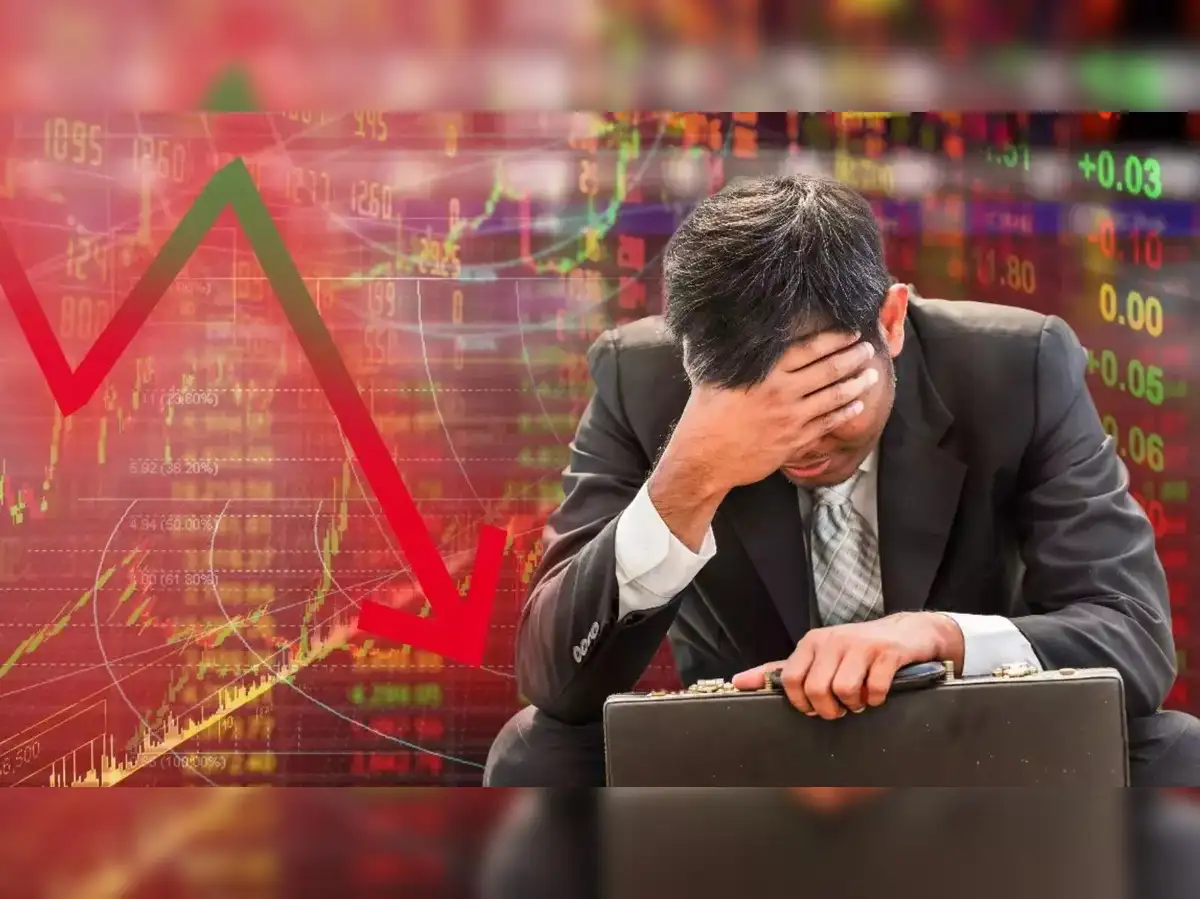
For many investors, opening a brokerage account to find a sea of red can be a jarring experience. The stock market, while historically a powerful engine for wealth creation, is rarely a straight line upward. When the market begins a sustained descent, the immediate reaction is often one of concern or even panic. However, market pullbacks are a natural—and necessary—part of the economic cycle. Understanding the underlying mechanics of why the stock market drops is essential for any investor looking to maintain a disciplined, long-term strategy.
Broadly speaking, market downturns are rarely caused by a single isolated event. Instead, they are usually the result of a confluence of macroeconomic pressures, shifts in monetary policy, and changes in investor psychology. By dissecting these factors, we can gain a clearer picture of the forces at play and better prepare for the inevitable periods of volatility.

The Role of Macroeconomic Pressures and Monetary Policy
The most significant driver of stock market movement is the macroeconomic environment, specifically the relationship between inflation and interest rates. Central banks, such as the Federal Reserve in the United States, act as the “conductors” of the economy, and their primary tools for managing growth are interest rates.
The Federal Reserve’s Tightening Cycle
When the economy grows too quickly or inflation begins to spiral, central banks raise interest rates to cool down the heat. This is known as “monetary tightening.” Higher interest rates make borrowing more expensive for both consumers and corporations. When it costs more for a company to take out a loan for expansion, its future growth potential is curtailed. Furthermore, the “discount rate” used by analysts to value future cash flows increases. Since the value of a stock is essentially the present value of all its future earnings, a higher interest rate mathematically reduces the current value of those stocks, leading to a drop in market prices.
How Inflation Erodes Corporate Profitability
Inflation is a double-edged sword. While a small amount of inflation is considered healthy for a growing economy, runaway inflation increases the cost of raw materials, labor, and logistics. If companies cannot pass these costs onto consumers quickly enough, their profit margins begin to shrink. When a company reports lower-than-expected earnings or provides “weak guidance” (a pessimistic outlook for the future), investors often sell their shares, fearing that the era of easy growth has ended. This collective selling pressure across multiple sectors can trigger a broader market correction.
Global Geopolitics and Supply Chain Fragility
The stock market does not exist in a vacuum; it is deeply interconnected with global events. Geopolitical instability is one of the most potent catalysts for sudden market drops because it introduces “uncertainty”—the one thing that markets dislike more than bad news.
Impact of International Conflict on Energy and Commodities
Geopolitical tensions, particularly in regions rich in natural resources, can send shockwaves through the global economy. For instance, conflict in Eastern Europe or the Middle East often leads to a spike in crude oil and natural gas prices. Because energy is an input cost for almost every industry—from manufacturing to transportation—high energy prices act as a “tax” on the global economy. When investors foresee a period of high energy costs, they anticipate lower consumer spending and higher corporate expenses, leading to a preemptive sell-off in the equity markets.
The Fragility of Modern Global Trade
The modern economy relies on a “just-in-time” global supply chain. When geopolitical disputes lead to trade wars, tariffs, or the closure of shipping lanes, the flow of goods is disrupted. These bottlenecks create shortages, which in turn drive up prices and delay production. For technology and automotive companies that rely on specialized components from around the world, a single supply chain disruption can stall billions of dollars in revenue. The stock market reacts to these vulnerabilities by discounting the shares of companies most exposed to international logistical risks.

Shifting Investor Sentiment and Market Psychology
While fundamentals like earnings and interest rates provide the framework for stock prices, human psychology provides the momentum. The stock market is often driven by the oscillating forces of fear and greed. When the market begins to drop, psychological triggers can accelerate the decline, turning a minor dip into a significant downturn.
The Fear and Greed Index and Panic Selling
Investor sentiment is a powerful contrarian indicator. When markets are at all-time highs, “greed” often leads to overvaluation. Conversely, when a drop begins, “fear” can take over. Once a certain threshold of loss is met, many retail and institutional investors engage in panic selling—liquidating positions to “save” what capital they have left. This emotional response ignores the long-term value of the underlying businesses and focuses entirely on the immediate price action. This cascading effect of selling creates a feedback loop where lower prices breed more fear, which leads to more selling.
Systematic Selling: Algorithmic Trading and Margin Calls
In the modern era, a significant portion of daily trading volume is executed by computers using complex algorithms. Many of these programs are designed to sell automatically when certain “technical levels” are broken. For example, if the S&P 500 drops below a specific moving average, algorithms may trigger a massive sell order. Additionally, many investors trade on “margin”—essentially using borrowed money from their broker to buy more shares. When the value of those shares drops significantly, the broker issues a “margin call,” requiring the investor to either deposit more cash or sell their positions immediately. This forced liquidation adds massive downward pressure on the market, often leading to “flash crashes” or rapid intraday drops.
Corporate Earnings and Growth Deceleration
At the end of the day, a stock is a claim on a company’s future earnings. If the collective outlook for corporate America (or any global market) begins to dim, the stock market will reflect that change in expectations.
Why “Good” News Isn’t Always Good Enough
The stock market is a forward-looking mechanism; it prices in what it thinks will happen six to twelve months from now. Sometimes, a company will report record-breaking profits, yet its stock price will drop. This happens because the market had already “priced in” the good news and was looking for even better guidance. If a company suggests that its growth is “peaking” or that the “comparisons” for next year will be difficult, investors may rotate their capital out of that stock and into safer assets like bonds or cash. When this happens across the heavyweight “Big Tech” or “Blue Chip” sectors, it can pull the entire index down.
The High Cost of Capital for Growth Stocks
During periods of market drops, “growth stocks”—companies that are expected to grow at a rate significantly above the average—are often hit the hardest. These companies often reinvest all their profits back into the business and may not even be profitable yet. They rely on cheap capital to fund their operations. When interest rates rise or the economy slows, the “cost of capital” increases, and the patience of investors thins. Investors shift from a “growth at any price” mindset to a “flight to quality,” seeking out companies with strong balance sheets, consistent dividends, and predictable cash flows. This rotation out of speculative growth and into “value” stocks often results in high-profile indices (like the Nasdaq) experiencing sharp declines.
Conclusion: Navigating the Downturn
While seeing the stock market drop is never pleasant, it is important to remember that markets move in cycles. Periods of contraction are necessary to clear out “excess” and overvaluation from the system. For the disciplined investor, these periods often represent an opportunity to acquire high-quality assets at a discount.
The reasons for a falling market are multifaceted: a combination of central bank policy, geopolitical unrest, the mechanics of algorithmic trading, and shifting corporate expectations. By understanding that these factors are temporary components of a larger economic machine, investors can avoid the trap of emotional decision-making. History has shown that the markets have a 100% recovery rate from every downturn they have ever faced. The key to surviving—and eventually thriving—during a market drop is to maintain a diversified portfolio, focus on fundamental value, and keep a long-term perspective that extends beyond the daily noise of the financial news cycle.
aViewFromTheCave is a participant in the Amazon Services LLC Associates Program, an affiliate advertising program designed to provide a means for sites to earn advertising fees by advertising and linking to Amazon.com. Amazon, the Amazon logo, AmazonSupply, and the AmazonSupply logo are trademarks of Amazon.com, Inc. or its affiliates. As an Amazon Associate we earn affiliate commissions from qualifying purchases.