
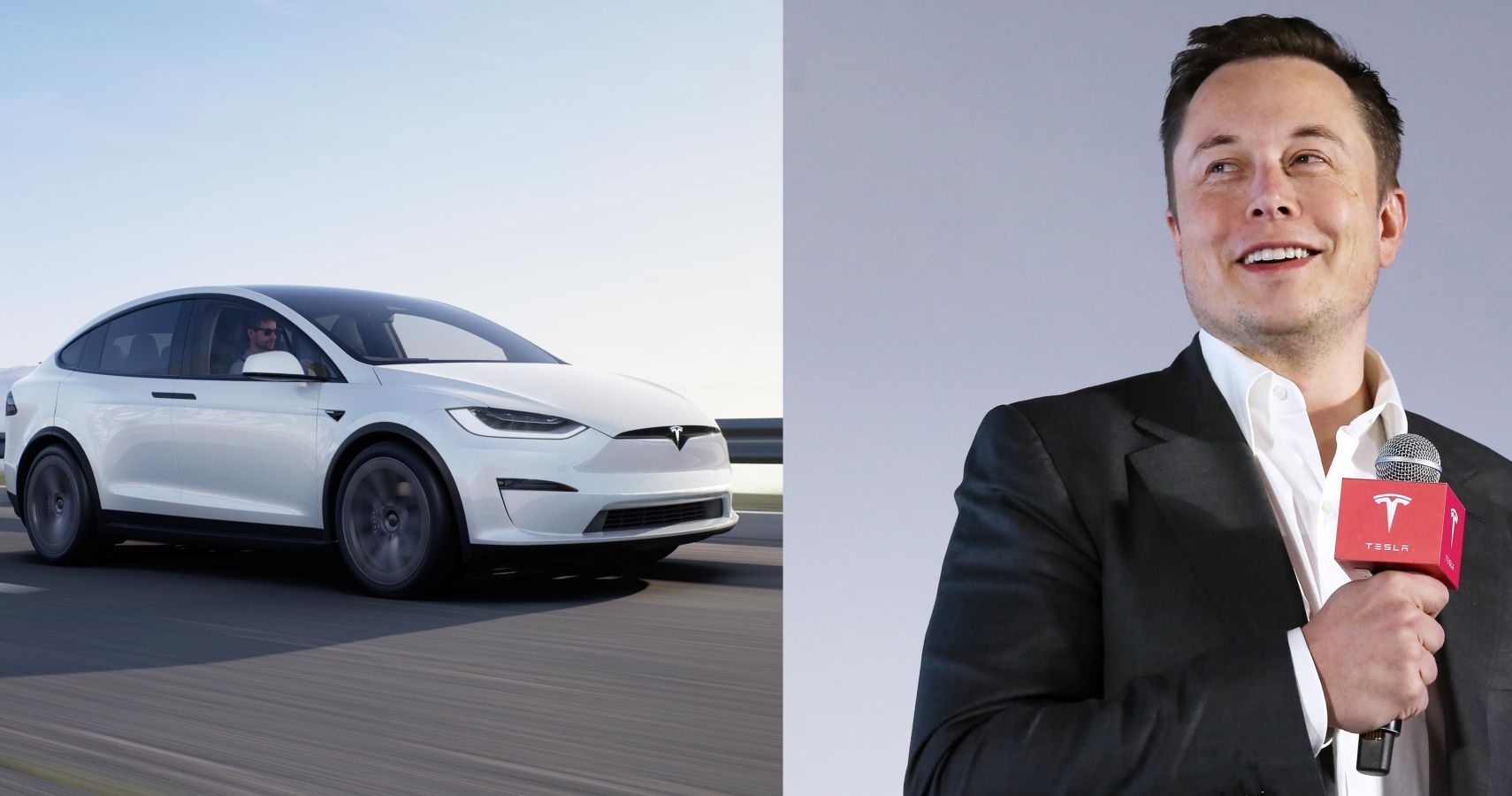
The question “who made the Tesla car?” often elicits a simple, one-word answer: Elon Musk. While Musk’s transformative leadership and vision are undeniably central to Tesla’s meteoric rise and its current status as an automotive and technology titan, the full story of the Tesla car’s creation is far richer, more complex, and deeply rooted in the collective brilliance of multiple founders, pioneering engineers, and an unwavering commitment to technological innovation. Tesla cars are not merely vehicles; they are sophisticated computing platforms, advanced battery systems, and cutting-edge AI experiments on wheels, embodying a paradigm shift in how we conceive of personal transportation. This article delves into the technological lineage and collaborative spirit that truly “made” the Tesla car, positioning it squarely within the realm of ground-breaking tech.
The Foundational Visionaries: Pre-Musk Era
Before Elon Musk became synonymous with Tesla, the company was conceived by two astute engineers who recognized the burgeoning potential of electric vehicle technology and the urgent need for sustainable transportation solutions. Their initial vision laid the critical groundwork upon which Tesla’s future technological marvels would be built.
Martin Eberhard and Marc Tarpenning: The Original Spark
In July 2003, Martin Eberhard and Marc Tarpenning co-founded Tesla Motors. Their motivation was not merely to build an electric car, but to create a high-performance electric sports car that could compete with, and ideally surpass, gasoline-powered equivalents. They were driven by a desire to reduce reliance on fossil fuels and saw electric vehicles as the inevitable future, but believed existing offerings lacked desirability and performance.
Eberhard, with a background in engineering and a track record of successful tech ventures (including NuvoMedia, which created one of the first e-readers), served as Tesla’s first CEO. Tarpenning, an experienced software engineer and entrepreneur, brought crucial expertise in system design and development. Together, they articulated a vision that an electric car could be exhilarating, efficient, and technologically advanced. Their initial technical challenge was immense: how to create an electric powertrain capable of supercar-level acceleration and a practical range, without the prohibitive costs and limitations of existing battery technologies.
The AC Propulsion Tzero and Battery Technology Breakthroughs
A pivotal source of inspiration for Eberhard and Tarpenning was the AC Propulsion Tzero, a high-performance electric sports car prototype. The Tzero demonstrated that electric vehicles could indeed be fast and fun. Crucially, the Tzero had experimented with using thousands of small, commercially available lithium-ion cells, similar to those found in laptop computers, instead of larger, custom-built battery packs. This approach, while unconventional for automotive applications at the time, offered significant advantages in terms of energy density and cost efficiency.
Eberhard and Tarpenning recognized the immense potential of this distributed battery architecture. Their early technological focus at Tesla was therefore centered on perfecting the integration of these small cells into a robust, safe, and high-performance automotive battery pack. This involved pioneering work in battery management systems (BMS), thermal management, and pack design – complex engineering challenges that were crucial for mitigating risks like overheating and ensuring optimal cell longevity and power delivery. This decision to leverage existing, high-volume lithium-ion cells from consumer electronics, rather than developing bespoke automotive batteries from scratch, was a foundational technological choice that set Tesla apart and enabled its early success.
Elon Musk’s Pivotal Role: Scaling and Innovation Acceleration
While the initial spark and foundational technology were established by Eberhard and Tarpenning, Elon Musk’s involvement, starting in 2004, dramatically reshaped Tesla’s trajectory, injecting massive capital, an ambitious long-term vision, and a relentless drive for innovation that transcended the initial sports car niche.
Early Investment and Strategic Direction
Elon Musk, having already co-founded PayPal and SpaceX, invested $6.5 million into Tesla Motors in February 2004, becoming the company’s chairman and largest shareholder. His vision for Tesla extended far beyond creating a niche electric sports car. Musk saw Tesla as a means to accelerate the world’s transition to sustainable energy by developing a full range of compelling electric vehicles for the mass market.
Under his influence, Tesla began to shift its strategic focus. While the Roadster, based on the Lotus Elise chassis and utilizing Tesla’s proprietary powertrain, remained the immediate priority, Musk pushed for an aggressive roadmap that included more affordable sedans and SUVs. This required not just scaling up production capabilities but also vastly expanding the scope of their technological development, from advanced manufacturing techniques to sophisticated software platforms. Musk’s leadership instilled a culture of audacious goals and rapid iteration, characteristic of Silicon Valley tech companies rather than traditional automotive manufacturers.
The Master Plan: From Roadster to Mass Market EVs
In 2006, Elon Musk published “The Secret Tesla Motors Master Plan (just between you and me),” a public articulation of Tesla’s long-term technological and business strategy. This plan outlined a clear, phased approach to achieving his grand vision:
- Build a sports car: The Tesla Roadster, to prove electric cars could be desirable and high-performance. This vehicle served as a crucial technology demonstrator for their battery and powertrain systems.
- Use that money to build an affordable car: The Model S, to enter the premium sedan market. This required significant advances in battery scale, electric motor efficiency, and vehicle integration.
- Use that money to build an even more affordable car: The Model 3, to achieve true mass-market penetration. This necessitated entirely new approaches to manufacturing, supply chain, and cost reduction, all while maintaining technological superiority.
- While doing above, also provide zero emission electric power generation options: Later evolving into Tesla Energy, with Powerwall and Solar Roof products, showcasing an integrated approach to sustainable energy solutions.
This “Master Plan” wasn’t just a business strategy; it was a technological roadmap. Each step demanded significant engineering breakthroughs and challenged conventional automotive wisdom. It dictated a continuous evolution of battery chemistry, electric motor design, power electronics, and sophisticated software integration, transforming Tesla into a full-stack technology company that happened to build cars.
Engineering Prowess and Technological Breakthroughs
The true “making” of the Tesla car lies in the relentless engineering efforts and a series of technological breakthroughs that have consistently pushed the boundaries of automotive design and performance. Tesla’s approach is often more akin to a tech company developing a new consumer electronic device than a traditional car manufacturer.

Battery Technology and Powertrain Innovation
At the heart of every Tesla car is its advanced battery system and electric powertrain. Tesla’s early adoption and continuous refinement of lithium-ion battery technology, specifically leveraging small cylindrical cells (like the 18650, 2170, and upcoming 4680 formats), has been a key differentiator. Their engineers developed sophisticated battery management systems (BMS) that precisely monitor and control individual cells, optimizing performance, longevity, and safety. Thermal management systems, crucial for preventing overheating and ensuring consistent power delivery, are also highly advanced, utilizing liquid cooling loops to maintain optimal operating temperatures across the entire battery pack.
Beyond the battery, Tesla’s electric motors are renowned for their efficiency, power density, and sophisticated control algorithms. From the early AC induction motor in the Roadster to the permanent magnet synchronous reluctance motors in later models, Tesla has continuously innovated motor design, power electronics (inverters), and gearboxes to maximize performance and range while minimizing size and weight. This integrated approach to the powertrain ensures seamless and powerful delivery of electricity to the wheels.
Software-Defined Vehicles and Over-the-Air Updates
Perhaps one of the most significant technological paradigm shifts introduced by Tesla is the concept of the “software-defined vehicle.” Tesla cars are, in essence, powerful computers on wheels, deeply integrated with a proprietary software stack. This allows for an unprecedented level of control and customization over vehicle functions, performance, and user experience.
The ability to deliver over-the-air (OTA) software updates fundamentally changed the automotive industry. Unlike traditional cars that are largely static after purchase, Tesla vehicles can receive significant upgrades and new features wirelessly, much like a smartphone. These updates can enhance performance, improve range, introduce new infotainment features, refine autonomous driving capabilities, and even fix issues, making the car better over time. This continuous improvement loop, driven by software, is a hallmark of Tesla’s tech-first approach. It’s not just about what the car can do at purchase, but what it can evolve into through software.
Autopilot and Full Self-Driving (FSD) Ambitions
Tesla’s pursuit of autonomous driving, embodied by its Autopilot and Full Self-Driving (FSD) software, represents another frontier of its technological innovation. From early radar and camera-based systems to the current camera-only “Tesla Vision” approach, the company has invested heavily in developing sophisticated sensor suites, powerful onboard AI computing (with its custom-designed FSD chip), and advanced neural networks.
The core of Tesla’s autonomous driving technology relies on extensive data collection from its fleet of vehicles, using real-world driving scenarios to train and refine its AI models. This data-driven approach, combined with continuous software updates, aims to enable the car to perceive its environment, predict actions, and navigate complex driving situations independently. While still in active development, FSD showcases Tesla’s ambition to push the boundaries of AI and robotics within the automotive context, aiming to revolutionize safety and convenience through technology.
Manufacturing Innovation and Ecosystem Development
Beyond the car itself, “who made the Tesla car” also encompasses the development of an entirely new ecosystem and manufacturing philosophy designed to support its rapid technological advancements and scaling ambitions.
Gigafactories: Scaling Production and Vertical Integration
To achieve the scale necessary for mass-market adoption, Tesla pioneered the concept of the “Gigafactory.” These massive facilities are designed not just for assembly but for vertical integration, encompassing battery cell production, powertrain manufacturing, and final vehicle assembly under one roof. The aim is to optimize every stage of the production process, reduce logistics costs, and accelerate the feedback loop between design and manufacturing.
Gigafactories leverage extensive automation, advanced robotics, and innovative manufacturing techniques – often borrowed from other high-tech industries rather than traditional automotive manufacturing. Tesla’s focus on “the machine that builds the machine” highlights its engineering-centric approach to production, treating the factory itself as a complex, optimizable technological product. This focus on manufacturing innovation is critical to efficiently translating their cutting-edge designs into tangible products at scale.
Supercharger Network: Solving Range Anxiety
A critical technological enabler for the widespread adoption of electric vehicles has been the development of a robust charging infrastructure. Tesla recognized this early on and took the unprecedented step of building its own global network of fast-charging stations: the Supercharger network. This proprietary network not only offered unparalleled charging speeds but also ensured seamless integration with Tesla vehicles, making long-distance electric travel viable and convenient.
The Supercharger network is a technological marvel in itself, requiring sophisticated power electronics, grid integration, and a seamless user experience. By tackling range anxiety head-on through this infrastructure, Tesla removed a major barrier to EV adoption, demonstrating a holistic approach to the “making” of an electric car ecosystem, not just the car itself. It showcases Tesla’s understanding that the product’s success relies on a supporting technological infrastructure.
Conclusion: A Collective Endeavor in Technological Advancement
So, who made the Tesla car? It’s a question with a multi-layered answer, firmly rooted in technological innovation. It was initially the vision of Martin Eberhard and Marc Tarpenning, who laid the foundational battery and powertrain architecture. It was Elon Musk, whose early investment, audacious vision, and relentless drive propelled the company from a niche sports car maker to a mass-market innovator, dictating a tech-first approach to vehicle development. And critically, it is the thousands of brilliant engineers, software developers, material scientists, and manufacturing experts who have continually pushed the boundaries of what is possible in electric vehicle technology, battery science, AI, software engineering, and advanced manufacturing.
The Tesla car is a product of continuous technological evolution, a testament to integrating diverse engineering disciplines, and an ongoing experiment in redefining personal transportation. It represents a bold leap from conventional automotive manufacturing towards a future where vehicles are intelligent, connected, software-upgradable, and powered by sustainable energy. In this sense, “who made the Tesla car” is not just about a few individuals, but about a collective endeavor to engineer a more sustainable and technologically advanced future.
aViewFromTheCave is a participant in the Amazon Services LLC Associates Program, an affiliate advertising program designed to provide a means for sites to earn advertising fees by advertising and linking to Amazon.com. Amazon, the Amazon logo, AmazonSupply, and the AmazonSupply logo are trademarks of Amazon.com, Inc. or its affiliates. As an Amazon Associate we earn affiliate commissions from qualifying purchases.