
The history of finance is often categorized by major shifts in how humanity perceives value—from the gold standard to the Bretton Woods Agreement, and eventually to the era of fiat currency. However, a seismic shift occurred in the wake of the 2008 global financial crisis that would change the trajectory of personal finance and investing forever. To understand “when did Bitcoin start,” one must look beyond a mere date on a calendar and examine the economic environment that necessitated its creation. Bitcoin did not just start as a piece of software; it started as a financial manifesto for a decentralized future.

The Genesis of a Financial Revolution (2008–2009)
The chronological birth of Bitcoin is divided into two landmark moments: the publication of its conceptual framework and the mining of its first block. These events took place during one of the most tumultuous economic periods in modern history, which is essential context for any investor looking to understand the asset’s intrinsic value proposition.
The Whitepaper: A Response to Centralized Failure
On October 31, 2008, an individual or group operating under the pseudonym Satoshi Nakamoto released a whitepaper titled Bitcoin: A Peer-to-Peer Electronic Cash System. This document was distributed to a cryptography mailing list at a time when the global banking system was on the verge of collapse. The timing was not coincidental. While traditional financial institutions were being bailed out by taxpayer money, the Bitcoin whitepaper proposed a system that required no “trusted third party.” For the first time, a model for a currency existed that was governed by mathematics and transparency rather than central bank policy.
The Genesis Block and the First Transaction
The network officially went live on January 3, 2009, when Nakamoto mined the “Genesis Block” (Block 0). Embedded within the code of this first block was a headline from The Times newspaper: “The Times 03/Jan/2009 Chancellor on brink of second bailout for banks.” This serves as a permanent digital timestamp and a critique of the fractional reserve banking system.
Initially, Bitcoin had no market value. It was a hobbyist project for cryptographers. The first “financial” transaction occurred on January 12, 2009, when Satoshi sent 10 BTC to Hal Finney, a respected developer. At this stage, the concept of Bitcoin as an “investment” was non-existent; it was merely a proof of concept for a new type of money.
From Zero to Asset Class: Bitcoin’s Monetary Evolution
To understand Bitcoin from a “Money” perspective, we must analyze how it transitioned from a valueless string of code to a multi-trillion-dollar asset class. This evolution is marked by key milestones in liquidity and price discovery.
The Famous Pizza Transaction and Price Discovery
For over a year after its start, Bitcoin did not have a price in US dollars. That changed on May 22, 2010, now famously known as “Bitcoin Pizza Day.” A programmer named Laszlo Hanyecz paid 10,000 BTC for two large pizzas delivered by Papa John’s. At the time, the transaction was valued at roughly $41, but it established the first real-world exchange rate for Bitcoin. It proved that the digital token could be used to acquire physical goods, providing the foundation for its use as a medium of exchange.
The Rise of Market Exchanges
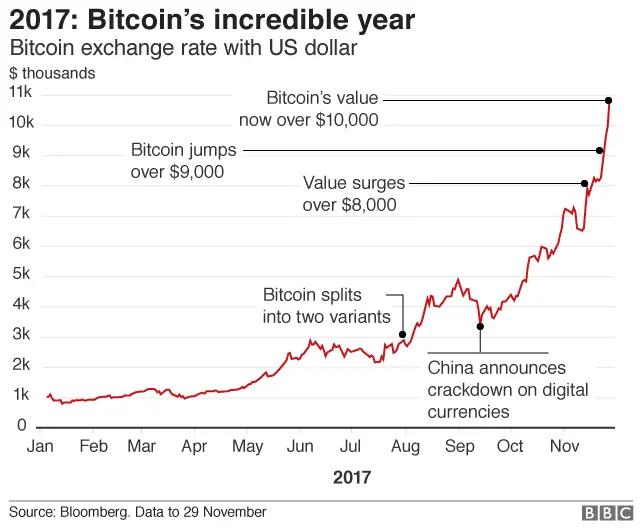
As interest grew, the need for platforms to trade Bitcoin for fiat currency became apparent. Early exchanges like Mt. Gox (established in 2010) allowed individuals to buy and sell Bitcoin with ease, leading to the first significant price spikes. By February 2011, Bitcoin reached parity with the US dollar—$1 per BTC. For early investors, this was the first sign that Bitcoin could function not just as money, but as a high-growth investment vehicle.
The Shift Toward “Digital Gold”
As the network grew more secure, the narrative shifted from Bitcoin being a “medium of exchange” (like a daily currency) to a “store of value” (like gold). This transition was driven by Bitcoin’s hard-coded scarcity. With a total supply cap of 21 million coins, Bitcoin began to be viewed by macro investors as a hedge against the inflation of fiat currencies. The “halving” events—which occur every four years and reduce the rate at which new Bitcoin is created—further reinforced this deflationary economic model.
Bitcoin as a Strategic Investment Tool
In the decade following its start, Bitcoin moved from the fringes of the internet into the core of modern investment portfolios. Professional investors and financial advisors now view Bitcoin through the lens of risk management and portfolio diversification.
Portfolio Diversification and Risk-Adjusted Returns
One of the primary reasons Bitcoin has gained traction in the world of personal finance is its historically low correlation with traditional assets like stocks and bonds. While it is highly volatile, adding a small percentage of Bitcoin to a diversified portfolio has historically improved the Sharpe ratio (a measure of risk-adjusted return). Because it operates on a decentralized protocol independent of any nation-state’s GDP or interest rate hikes, it offers a unique form of systemic insurance.
Understanding the 21 Million Supply Cap
From a business finance perspective, Bitcoin’s most compelling feature is its predictable monetary policy. Unlike the US Dollar or the Euro, which can be printed in unlimited quantities by central banks, Bitcoin’s supply is immutable. This “hard money” status makes it attractive for long-term wealth preservation. Investors use Bitcoin to protect their purchasing power against the “silent tax” of inflation, which erodes the value of cash savings over time.
The Role of Volatility in Wealth Creation
While the mainstream media often focuses on Bitcoin’s price crashes, seasoned investors view the volatility as the “price of admission” for outsized gains. Since its start in 2009, Bitcoin has been the best-performing asset class of the decade. However, utilizing Bitcoin as a financial tool requires a “low time preference”—the ability to hold through 50% drawdowns in anticipation of the long-term upward trajectory driven by increasing global adoption.
The Institutional Era: ETFs and Financial Infrastructure
The most recent chapter in Bitcoin’s history, which truly began around 2020, is the era of institutional adoption. This period marks the final bridge between the “start” of an experimental digital currency and its integration into the global financial plumbing.
The Entry of Corporate Treasuries
In 2020, companies like MicroStrategy and Square (now Block) began replacing the cash on their balance sheets with Bitcoin. This was a landmark moment for business finance. Michael Saylor, CEO of MicroStrategy, argued that holding cash was a “melting ice cube” and that Bitcoin represented a superior reserve asset. This move paved the way for other corporations, including Tesla, to diversify their corporate treasuries into digital assets.
Spot ETFs: The Gateway for Mass Capital
Perhaps the most significant financial milestone since the Genesis Block was the SEC’s approval of Spot Bitcoin Exchange-Traded Funds (ETFs) in early 2024. Before this, investing in Bitcoin required navigating exchanges and managing private keys—a hurdle for many traditional investors. The launch of ETFs by giants like BlackRock and Fidelity allowed trillions of dollars in brokerage accounts, 401(k)s, and pension funds to flow into Bitcoin with the click of a button. This effectively “institutionalized” the asset, providing it with a level of legitimacy and liquidity that was unimaginable in 2009.
Regulated Trading and Custody Solutions
As the infrastructure has matured, the “Money” side of Bitcoin has become highly regulated. Today, investors have access to institutional-grade custody solutions, regulated futures markets (CME), and sophisticated lending platforms. These tools allow for advanced financial strategies, such as using Bitcoin as collateral for loans or generating yield through various market-neutral strategies.

Conclusion: The Perpetual Start of a New Financial Epoch
When we ask “when did Bitcoin start,” we are looking at the birth of a new monetary system that operates outside the traditional banking hierarchy. What began on a quiet mailing list in 2008 has evolved into a global reserve asset that challenges our fundamental understanding of money.
For the modern investor, Bitcoin represents more than just a technological curiosity; it is a financial tool designed for an era of high debt and currency devaluation. Whether viewed as “digital gold,” a portfolio diversifier, or a revolutionary payment rail, Bitcoin’s journey from a zero-value experiment to a cornerstone of modern finance is a testament to the power of decentralized incentives. As institutional adoption continues to accelerate and the infrastructure becomes more robust, the “start” of Bitcoin may very well be remembered as the moment the world regained control over its financial destiny.
aViewFromTheCave is a participant in the Amazon Services LLC Associates Program, an affiliate advertising program designed to provide a means for sites to earn advertising fees by advertising and linking to Amazon.com. Amazon, the Amazon logo, AmazonSupply, and the AmazonSupply logo are trademarks of Amazon.com, Inc. or its affiliates. As an Amazon Associate we earn affiliate commissions from qualifying purchases.