
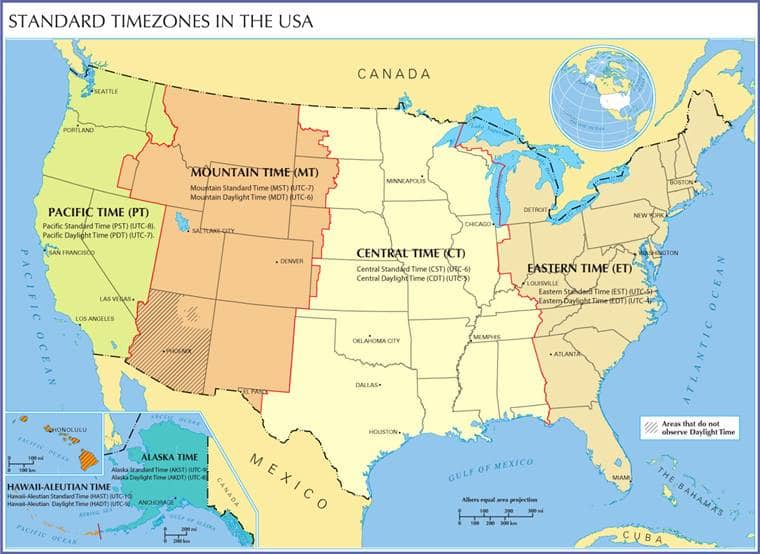
The seemingly straightforward question, “What time is Arizona on?”, belies a fascinating complexity that has profound implications in our hyper-connected, tech-driven world. For decades, Arizona has stood apart from most of the United States by largely opting out of Daylight Saving Time (DST). This singular decision means that for half the year, Arizona operates on Mountain Standard Time (MST), aligning with Pacific Daylight Time (PDT), while for the other half, it aligns with Mountain Standard Time (MST), differing from Mountain Daylight Time (MDT). This unique temporal rhythm creates a continuous challenge and opportunity for technology to bridge understanding, facilitate communication, and ensure seamless operations across diverse geographical and temporal landscapes.

In an era defined by global collaboration, remote workforces, and instantaneous digital transactions, understanding and managing time zones is no longer a niche concern but a fundamental aspect of digital fluency. From scheduling international video conferences to synchronizing distributed databases or launching global marketing campaigns, the accuracy of time and its intelligent application are paramount. This article delves into how technology helps us comprehend Arizona’s distinctive time signature and, more broadly, how it empowers us to navigate the intricate web of global time zones, ensuring efficiency, accuracy, and harmony in our digital lives.
The Unique Clockwork of Arizona: A Digital Challenge
Arizona’s decision to maintain Mountain Standard Time (MST) year-round, eschewing the biannual shift for Daylight Saving Time (DST) that most of the U.S. observes, makes it a fascinating case study for time zone management. This choice, rooted in historical and climatic factors—the desire to avoid adding an extra hour of daylight during scorching summer evenings—presents unique challenges and considerations for individuals and organizations reliant on digital scheduling and global coordination.
Understanding Arizona’s Time Zone Anomaly (MST Year-Round)
From early March to early November, when most of the United States observes Daylight Saving Time, Arizona’s clocks remain unchanged. This means that Arizona is on the same time as California, which observes Pacific Daylight Time (PDT). However, during the non-DST period (roughly November to March), Arizona reverts to being on MST, aligning with states like Colorado, Utah, and New Mexico, which are also on MST. This constant shift in relative time creates a mental hurdle for anyone trying to connect with Arizona, whether for business, personal communication, or event planning. The Navajo Nation within Arizona does observe DST, adding another layer of complexity to an already intricate time landscape. This exception within an exception highlights the critical need for precise, technologically aided time management.
Historical Context and its Modern Tech Implications
Arizona’s time zone status isn’t just a quirky geographical fact; it’s a legacy that impacts modern tech operations. Businesses with offices or clients in Arizona, remote teams with members based there, or even digital services delivering content to Arizona residents must account for this. Without proper tools and awareness, missed meetings, delayed project deadlines, and misaligned data synchronization can easily occur. Imagine a software development team with members in New York, London, and Phoenix. A critical daily stand-up meeting needs careful scheduling, and if the Phoenix member’s unique time zone behavior isn’t precisely managed by the team’s digital calendar or communication platforms, disruptions are inevitable. For e-commerce, content delivery networks, and online gaming, understanding local time is crucial for optimizing user experience and resource allocation.
Technology as Your Time Zone Navigator
In an increasingly globalized digital landscape, manual time zone calculations are error-prone and inefficient. This is where technology steps in, transforming the complex art of time zone management into a seamless, automated process. From simple apps to sophisticated AI-driven solutions, our digital tools are designed to keep us punctual and coordinated across the planet.
Essential Apps and Digital Tools for Time Management
The market is brimming with applications and digital services specifically designed to demystify time zones.
- World Clock Apps: Nearly every operating system (Windows, macOS, iOS, Android) includes a native world clock feature, allowing users to add multiple cities and instantly see the current time in each. Third-party apps like “Every Time Zone” or “Time Zone Converter” provide even more sophisticated interfaces, often displaying a timeline view that clearly indicates overlap hours, making meeting scheduling intuitive.
- Calendar Integrations: Modern calendar applications like Google Calendar, Microsoft Outlook Calendar, and Apple Calendar are indispensable. They automatically detect your current time zone and allow you to set event times in various time zones, performing the conversion for attendees. When inviting participants from different regions, the event time is displayed correctly in their local time, significantly reducing scheduling errors. For instance, an event created in New York for 3 PM EST will automatically show as 1 PM MST for an Arizona attendee during DST, and as 1 PM MST during standard time, requiring the user to understand the relative shift in the other time zone for each period.
- Time Zone Converter Websites and APIs: Websites like TimeAndDate.com offer robust conversion tools. For developers, Time Zone APIs (e.g., Google Time Zone API, World Time API) are critical, allowing applications to programmatically determine time zones for specific locations, handle DST rules, and convert timestamps accurately. This is vital for booking systems, data logging, and any application that deals with location-specific scheduling.
AI and Predictive Scheduling: Beyond Manual Adjustments
The frontier of time zone management involves artificial intelligence and machine learning. These technologies are moving beyond simple conversion to predictive scheduling and intelligent assistance.
- Intelligent Meeting Schedulers: Tools like Calendly, Doodle, and Microsoft Bookings already incorporate basic time zone awareness. The next generation, powered by AI, can analyze participants’ work hours, typical response times, and even their preferred meeting slots (based on past behavior) to suggest optimal meeting times across multiple time zones, minimizing disruption and maximizing attendance.
- Automated Time Zone Detection and Adjustment: AI can learn user patterns and context to automatically adjust displayed times. For instance, an AI-powered personal assistant could, based on your travel plans or common communication partners, proactively notify you of time shifts or automatically convert times mentioned in emails to your local context.
- Language Models for Time Zone Queries: Large Language Models (LLMs) can now interpret natural language queries like “What time is it in Arizona right now?” or “When should I call someone in Arizona if I want to reach them at 10 AM their time from New York?” and provide accurate, context-aware answers, factoring in DST rules and specific regional exceptions.
The Unseen Tech: Network Time Protocols and Digital Accuracy
Beneath the user-facing applications, a critical technological infrastructure ensures that all our devices and systems are synchronized to the correct time. This unseen tech, primarily driven by Network Time Protocols (NTP), is foundational to the integrity and security of the entire digital ecosystem.
The Critical Role of NTP Servers for Synchronized Systems
NTP servers are the unsung heroes of digital timekeeping. These specialized servers constantly synchronize with highly accurate atomic clocks and distribute this precise time information across networks. Every computer, smartphone, server, and network device relies on NTP to ensure its internal clock is perfectly aligned.
- Data Integrity: In databases, accurate timestamps are crucial for recording transactions, logging events, and maintaining data consistency. Without synchronization, records from different servers could appear out of order or contradict each other.
- Security: Timestamps are vital for cryptographic protocols, digital certificates, and intrusion detection systems. An attacker manipulating system time could bypass security measures or create confusion during forensic analysis.
- Financial Transactions: The financial industry demands extreme precision. High-frequency trading, transaction logging, and regulatory compliance depend on nanosecond-level time synchronization across global markets. An inaccurate clock could lead to significant financial losses or regulatory penalties.
- Distributed Systems: In cloud computing, microservices architectures, and distributed ledgers (like blockchain), maintaining a consistent view of time across multiple nodes is fundamental for proper operation and consensus.
Impact on IoT and Distributed Systems
The proliferation of the Internet of Things (IoT) and increasingly distributed systems further amplifies the need for robust time synchronization.
- IoT Devices: Smart home devices, industrial sensors, and connected vehicles all generate time-stamped data. For this data to be meaningful and actionable (e.g., “when did the temperature sensor spike?”), every device must report accurate time, often accounting for its local time zone.
- Edge Computing: With processing moving closer to data sources at the “edge” of the network, synchronizing time between edge devices and centralized cloud platforms becomes a complex but vital task. This ensures that data collected and processed locally can be seamlessly integrated and analyzed with data from other parts of the system.
- Global Sensor Networks: Consider environmental monitoring or smart city initiatives where sensors are deployed across vast geographical areas. Accurate time synchronization allows for precise correlation of events, identifying patterns, and triggering timely responses, irrespective of the local time zone.
Bridging Global Tech Teams: Strategies for Time Zone Harmony
For tech companies operating globally or with distributed remote teams, time zone differences are an everyday reality. Managing these differences effectively is not just about convenience; it’s about fostering productivity, maintaining team morale, and ensuring project success. Technology provides the frameworks and tools to achieve this harmony.
Asynchronous Communication and Collaborative Platforms
One of the most effective strategies for overcoming time zone disparities is embracing asynchronous communication. Instead of requiring everyone to be online simultaneously for every interaction, teams leverage platforms that allow members to contribute at their own convenience.
- Project Management Tools: Platforms like Jira, Asana, Trello, and Monday.com allow team members to update task statuses, add comments, and review progress independently. These tools provide a persistent record of communication, reducing the need for real-time meetings.
- Team Messaging Apps: Slack, Microsoft Teams, and Discord facilitate both synchronous and asynchronous communication. Team members can post questions or updates, and colleagues in different time zones can respond when they come online. Features like “Do Not Disturb” schedules and clear time zone displays help manage expectations.
- Version Control Systems: For software development, Git and GitHub/GitLab are prime examples of asynchronous collaboration. Developers work independently on code, push changes, and collaborate on merges, with timestamps clearly indicating when contributions were made.
- Shared Document Platforms: Google Workspace, Microsoft 365, and Confluence enable real-time collaborative editing but also support asynchronous contributions, with revision histories clearly showing who changed what and when.
Optimizing Meeting Schedules and Workflows
While asynchronous communication is powerful, some synchronous interaction is inevitable and often beneficial. Technology helps optimize these crucial touchpoints.
- ‘Overlap Hours’ Strategy: Teams identify a window of a few hours where most or all team members are simultaneously online. This “overlap window” is reserved for critical meetings, quick discussions, or collaborative brainstorming sessions. Digital calendars with time zone overlays are essential for identifying these windows efficiently.
- Rotating Meeting Times: For global teams, rotating meeting times across different weekdays can ensure that no single team member consistently has to take calls at inconvenient hours (e.g., late night or very early morning).
- Intelligent Scheduling Assistants: As mentioned, AI-powered scheduling tools can take into account team members’ primary working hours, time zones, and even their typical energy levels throughout the day to suggest optimal meeting times that minimize inconvenience for the majority.
- Automated Notifications and Reminders: Tools integrate with calendars to send automated reminders, ensuring that even with complex time zone shifts (like Arizona’s unique situation), team members are aware of upcoming meetings in their local time.
The Future of Time Zone Management: Innovation on the Horizon
The continuous evolution of technology promises even more sophisticated solutions for managing time zones, further simplifying global interaction and enhancing efficiency.
Emerging Solutions and Standardization Efforts
The complexity of time zones, especially with regional variations and political decisions (like some countries changing DST rules), suggests a need for more robust, internationally standardized solutions.
- Universal Time Zone Data Services: Imagine a single, universally accepted, and continuously updated API or service that provides hyper-accurate time zone data, including all historical and planned DST changes for every region. This would reduce the fragmentation of current time zone databases and improve consistency across applications.
- Dynamic Time Zone Interfaces: Future operating systems and applications could offer even more dynamic time zone interfaces, perhaps using augmented reality to display local times for contacts in different physical locations, or predictive interfaces that anticipate and flag potential time conflicts before they arise.
Personalized Time Management AI Assistants
The ultimate goal is to remove the cognitive burden of time zone management entirely from the user.
- Proactive Scheduling Bots: AI assistants could learn individual and team preferences so intimately that they proactively suggest optimal schedules for meetings, tasks, and communications without explicit user input, taking into account everyone’s time zone and workload.
- Context-Aware Time Interpretation: Imagine an AI that, when you read an email mentioning a time, automatically interprets it in the sender’s context, converts it to your local time, and even highlights potential scheduling conflicts with your calendar, all seamlessly and without prompting.
- Global Collaboration Enablers: For large enterprises, AI could act as a central hub, optimizing workforce distribution, project timelines, and communication flows across continents, not just by converting time, but by understanding the implications of time differences on productivity and well-being.
Conclusion
The question “What time is Arizona on?” serves as a powerful reminder of the intricate challenge of time zone management in our global, tech-centric world. Arizona’s unique year-round adherence to Mountain Standard Time underscores the need for precision and adaptability. Far from being a mere inconvenience, time zone differences represent a critical variable that technology is indispensable in managing.
From the everyday utility of world clock apps and intelligent calendar integrations to the foundational role of Network Time Protocol servers, technology is constantly evolving to ensure our digital interactions are punctual, our data is synchronized, and our global collaborations are harmonious. As we continue to push the boundaries of remote work, international commerce, and distributed systems, the demand for more sophisticated, AI-driven time zone solutions will only grow. Ultimately, technology empowers us not just to know what time it is in Arizona, but to seamlessly integrate that knowledge into a truly global digital experience, fostering efficiency, accuracy, and connectivity across every temporal boundary.
aViewFromTheCave is a participant in the Amazon Services LLC Associates Program, an affiliate advertising program designed to provide a means for sites to earn advertising fees by advertising and linking to Amazon.com. Amazon, the Amazon logo, AmazonSupply, and the AmazonSupply logo are trademarks of Amazon.com, Inc. or its affiliates. As an Amazon Associate we earn affiliate commissions from qualifying purchases.