
In the modern culinary landscape, the kitchen has evolved from a utility room into a high-tech laboratory. While digital air fryers and AI-integrated ovens grab headlines, the most critical piece of technology in any chef’s arsenal remains the stainless steel pan. To the untrained eye, a pan is simply a vessel. However, to those who understand the nuances of material science, stainless steel cookware represents a sophisticated achievement in metallurgical engineering. Selecting the “best” cookware is no longer a matter of aesthetics; it is an analysis of thermal conductivity, bonding techniques, and magnetic responsiveness.

This guide explores the best stainless steel cookware through the lens of technology and product engineering, evaluating how the latest innovations in cladding and surface treatments are redefining professional and home cooking.
The Engineering of Heat: Understanding Cladding Technology
The primary challenge with stainless steel is that it is a poor conductor of heat. If you were to manufacture a pan out of pure stainless steel, it would develop intense hot spots while leaving the edges cold. To solve this, manufacturers use a tech-forward approach known as “cladding” or “bonding.”
The 3-Ply vs. 5-Ply Debate
At the heart of high-performance cookware is the multi-clad construction. This involves sandwiching a highly conductive core—usually aluminum—between layers of durable 18/10 stainless steel. A 3-ply construction is the industry standard, providing a responsive balance between weight and heat distribution.
However, the “tech” has scaled up to 5-ply and even 7-ply constructions. In 5-ply cookware, manufacturers alternate layers of aluminum and stainless steel (and sometimes copper) to increase heat retention and structural integrity. For the tech-focused consumer, 5-ply offers a “thermal battery” effect, holding onto heat more efficiently during the introduction of cold proteins, which prevents temperature drops and ensures a perfect Maillard reaction.
Copper-Core Innovations
Copper is the gold standard of thermal conductivity, boasting a rating far superior to aluminum. Tech-forward brands like All-Clad have pioneered “Copper Core” lines where a thin disc of copper is bonded within the steel layers. This allows for nearly instantaneous thermal response. From a technical standpoint, this is the precision instrument of the kitchen, allowing the user to manipulate temperatures with the same accuracy as a software developer toggling code.
Top Tech-Forward Stainless Steel Cookware Brands
When evaluating the best stainless steel cookware, we must look at the companies that invest heavily in R&D and manufacturing precision. These brands treat cookware as hardware, prioritizing durability and performance metrics.
All-Clad: The Industry Standard for Bonded Metal
Founded by a metallurgist, All-Clad remains the benchmark for technological excellence in cookware. Their patented bonding process ensures that the conductive core extends all the way up the sides of the pan, not just at the base. This “fully clad” technology is what separates professional-grade gadgets from consumer-grade “impact-bonded” alternatives. Their D3 and D5 lines are the results of decades of refining the ratio of steel to aluminum to achieve the perfect thermal profile.
Made In: Disrupting the Supply Chain with Precision Engineering
Made In has taken a “Direct-to-Consumer” tech approach, utilizing heritage manufacturers in France and the USA to produce high-specification cookware. Their focus is on the “tech-specs” of the metal—specifically the thickness of the cladding. By optimizing the gauge of the steel, they have created pans that offer the performance of legacy brands but with updated ergonomics designed for modern kitchen workflows. Their 5-ply construction is often cited by culinary professionals as the best balance of heat agility and durability currently on the market.
Demeyere: Advanced Surface Treatments and Welding
The Belgian brand Demeyere represents the pinnacle of European kitchen tech. They utilize a proprietary surface treatment called Silvinox, an electrochemical process that removes iron and impurities from the steel surface. This results in a pan that stays silvery-white for decades and resists fingerprints and chemical attacks. Furthermore, Demeyere employs “InductoSeal” technology—a complex base featuring seven layers of copper and silver—making their cookware arguably the most advanced for induction cooking technology.
Key Technical Specifications to Consider
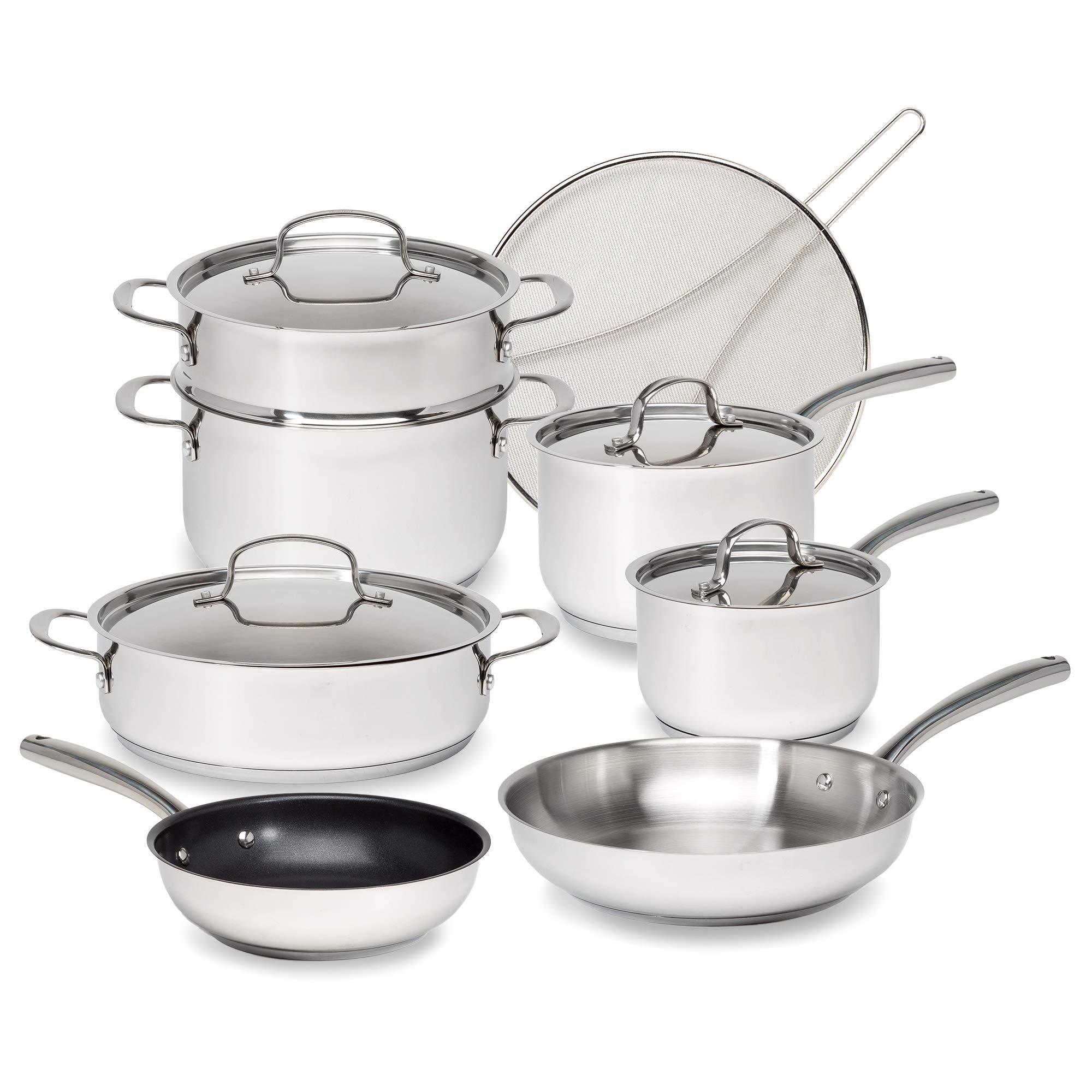
To identify the best cookware, one must look past the marketing and into the technical specifications. Much like choosing a laptop based on RAM and CPU, cookware selection depends on the “specs” of the metal.
Magnetic Conductivity and Induction Compatibility
As the world moves toward electrification, induction cooktops are becoming the standard. Induction works via electromagnetism, requiring a ferromagnetic material in the base of the cookware. The best stainless steel cookware utilizes a specific grade of steel (usually 430 stainless) for the exterior layer to ensure high magnetic permeability. If the “tech” of the pan isn’t optimized for induction, the energy transfer will be inefficient, leading to longer boil times and uneven searing.
Thermal Responsiveness vs. Heat Retention
In the world of kitchen tech, there is a trade-off between responsiveness (how fast the pan changes temperature) and retention (how long it stays hot).
- High Responsiveness: Essential for delicate sauces or sautéing vegetables. This is achieved through thinner, high-conductivity copper cores.
- High Retention: Essential for searing steaks or deep frying. This is achieved through thicker, multi-ply aluminum constructions.
Choosing the “best” pan requires understanding which technical profile fits your specific “use case” or cooking style.
The Future of Kitchen Tech: Smart Cookware Integration
We are currently seeing a convergence between traditional metallurgy and digital technology. The “best” cookware is no longer just a passive tool; it is becoming part of a connected ecosystem.
Sensors and Temperature Control
The next frontier for stainless steel cookware is the integration of precision sensors. Companies like Hestan Cue have developed pans with embedded Bluetooth sensors in the base. These sensors communicate with induction burners to maintain a precise temperature within a single degree of accuracy. This level of control was previously impossible with traditional analog cooking. While some purists argue this removes the “art” of cooking, from a technological standpoint, it ensures a level of consistency and reproducibility that is identical to modern manufacturing standards.
Material Evolution: Nitrogen-Alloyed Steel
Innovations are also happening at the molecular level. Some manufacturers are experimenting with nitrogen-alloyed steel to increase corrosion resistance and hardness without compromising the pan’s ability to conduct heat. These “super-steels” represent the next generation of durability, ensuring that a single investment in cookware can literally last a lifetime, even under the high-stress conditions of a commercial kitchen.
Maintenance and Longevity: The Durability of High-Tech Alloys
A piece of technology is only as good as its lifespan. One of the reasons stainless steel is considered the best material for cookware is its sheer resilience. Unlike non-stick coatings, which are chemicals (PTFE or ceramic) that degrade over time, stainless steel is a “solid-state” tool.
The “tech” behind maintaining these pans involves understanding the “pore” structure of the metal. When heated, the microscopic pores of the stainless steel expand. By applying a small amount of oil at the correct temperature (the “Leidenfrost Effect”), you can create a temporary non-stick surface using physics rather than chemistry. This makes stainless steel the most sustainable and “future-proof” choice for the modern kitchen, as it does not require replacement every few years.
Conclusion: The Verdict on the Best Stainless Steel Cookware
Identifying the “best” stainless steel cookware requires a shift in perspective—moving away from the idea of “pots and pans” and toward the idea of “culinary hardware.”
For those who prioritize raw performance and professional-grade specs, All-Clad’s D5 or Copper Core series remains the gold standard of metallurgical bonding. For those looking for the ultimate in European engineering and induction efficiency, Demeyere’s Atlantis line offers unparalleled technical features like Silvinox and InductoSeal. Finally, for the modern enthusiast who wants high-tech specs with a streamlined, direct-to-consumer model, Made In provides the best value-to-performance ratio.
In the end, the best stainless steel cookware is a marriage of material science and ergonomic design. By investing in multi-clad, high-gauge, and induction-ready hardware, you are not just buying a kitchen tool—you are upgrading your kitchen’s operating system for a lifetime of precision performance.
aViewFromTheCave is a participant in the Amazon Services LLC Associates Program, an affiliate advertising program designed to provide a means for sites to earn advertising fees by advertising and linking to Amazon.com. Amazon, the Amazon logo, AmazonSupply, and the AmazonSupply logo are trademarks of Amazon.com, Inc. or its affiliates. As an Amazon Associate we earn affiliate commissions from qualifying purchases.