
In the rapidly evolving landscape of the digital age, we often focus on the high-level abstractions: artificial intelligence, cloud architectures, and global telecommunications. However, beneath the layers of software and silicon lies a foundational framework that makes all modern technology possible. This framework is the International System of Units, known globally as SI (Système International d’Unités).
To the casual observer, an SI unit might seem like a relic of high school physics—a simple meter or kilogram. But in the tech industry, SI units are the universal language of precision. They are the invisible metrics that allow a processor in Taiwan to communicate with a server in Virginia, or a satellite in orbit to pinpoint a smartphone’s location within centimeters. Understanding what an SI unit is, and how it integrates into the technological ecosystem, is essential for grasping how our digital world maintains its stability and continues its exponential growth.
The Digital Standard: Why SI Units are the Language of Hardware
Every piece of hardware, from the most basic wearable gadget to the world’s fastest supercomputers, is a triumph of measurement. The tech industry relies on the SI system because it provides a set of constants that are invariant across the universe. In 2019, the SI system underwent a historic redefinition, moving away from physical artifacts—like a metal cylinder in a vault—to constants of nature, such as the Planck constant and the speed of light. This shift was a watershed moment for technology, ensuring that measurements remain stable as we move toward the atomic scale.
From Millimeters to Nanometers: The Evolution of Silicon
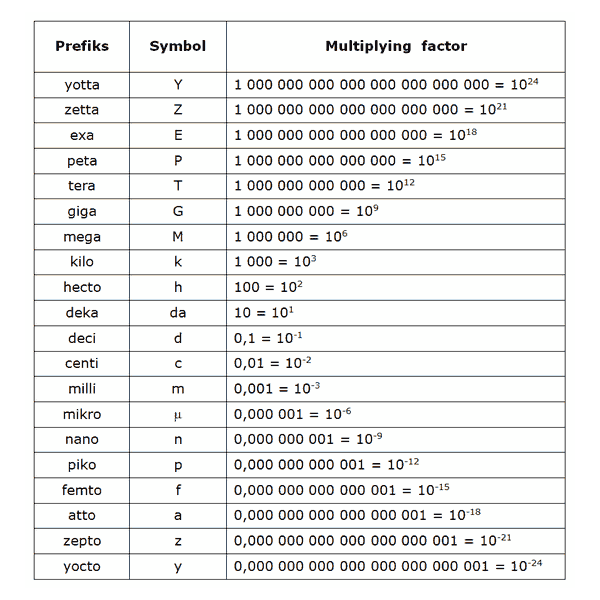
The semiconductor industry is perhaps the most visible beneficiary of SI precision. When we discuss the “3nm process” used by companies like TSMC or Intel, we are referring to the nanometer—one billionth of a meter. This is an SI-derived unit that defines the limit of what is physically possible in transistor density.
Without a globally standardized definition of the meter, the global supply chain for electronics would collapse. A design finalized in California must be interpreted with absolute accuracy by lithography machines manufactured in the Netherlands and executed by fabs in Asia. The precision afforded by SI units allows engineers to manipulate matter at a scale where a deviation of a few picometers could result in a catastrophic failure of the entire chip architecture.
Sensor Fusion and the Accuracy of IoT
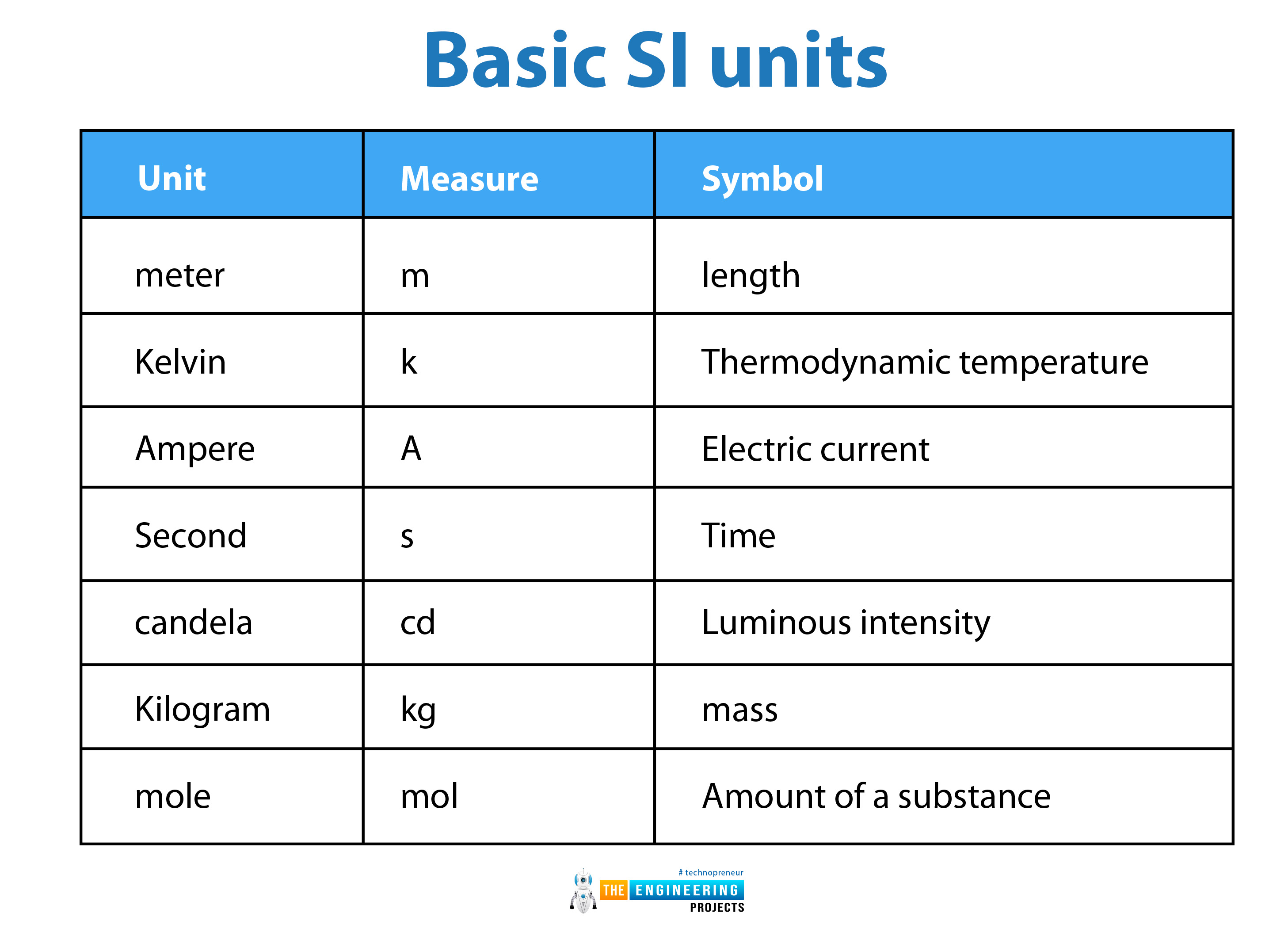
The Internet of Things (IoT) relies on a vast array of sensors measuring temperature (kelvin), mass (kilogram), and light intensity (candela). In industrial tech settings, “sensor fusion” combines these SI-based measurements to provide a digital twin of a physical environment. For an automated factory to function, its robots must understand their position in three-dimensional space with sub-millimeter accuracy. This synchronization is only possible because every sensor, regardless of its manufacturer, adheres to the same SI standards, ensuring interoperability across disparate hardware platforms.
Measuring the Invisible: SI Units in Network Infrastructure and Cloud Computing
While the physical dimensions of hardware are easy to visualize, some of the most critical applications of SI units in technology are invisible. They exist in the timing of data packets and the management of the massive energy loads required to power the cloud.
The Second: Managing Latency in High-Speed Data
In the world of networking and digital security, the SI unit of time—the second—is the most crucial metric. However, for modern tech, a second is an eternity. We measure performance in milliseconds (ms), microseconds (µs), and even nanoseconds (ns).
Modern financial technology (FinTech) and high-frequency trading platforms depend on atomic clocks that define the second based on the vibrations of cesium atoms. These SI-compliant clocks allow for “Precision Time Protocol” (PTP), which ensures that every node in a distributed network is synchronized. Without this SI-driven precision, blockchain ledgers would fall out of sync, and the global GPS network—which relies on relativistic time corrections—would fail within minutes, rendering navigation apps and autonomous vehicles useless.
Amperes and Watts: Powering the Sustainable Data Center
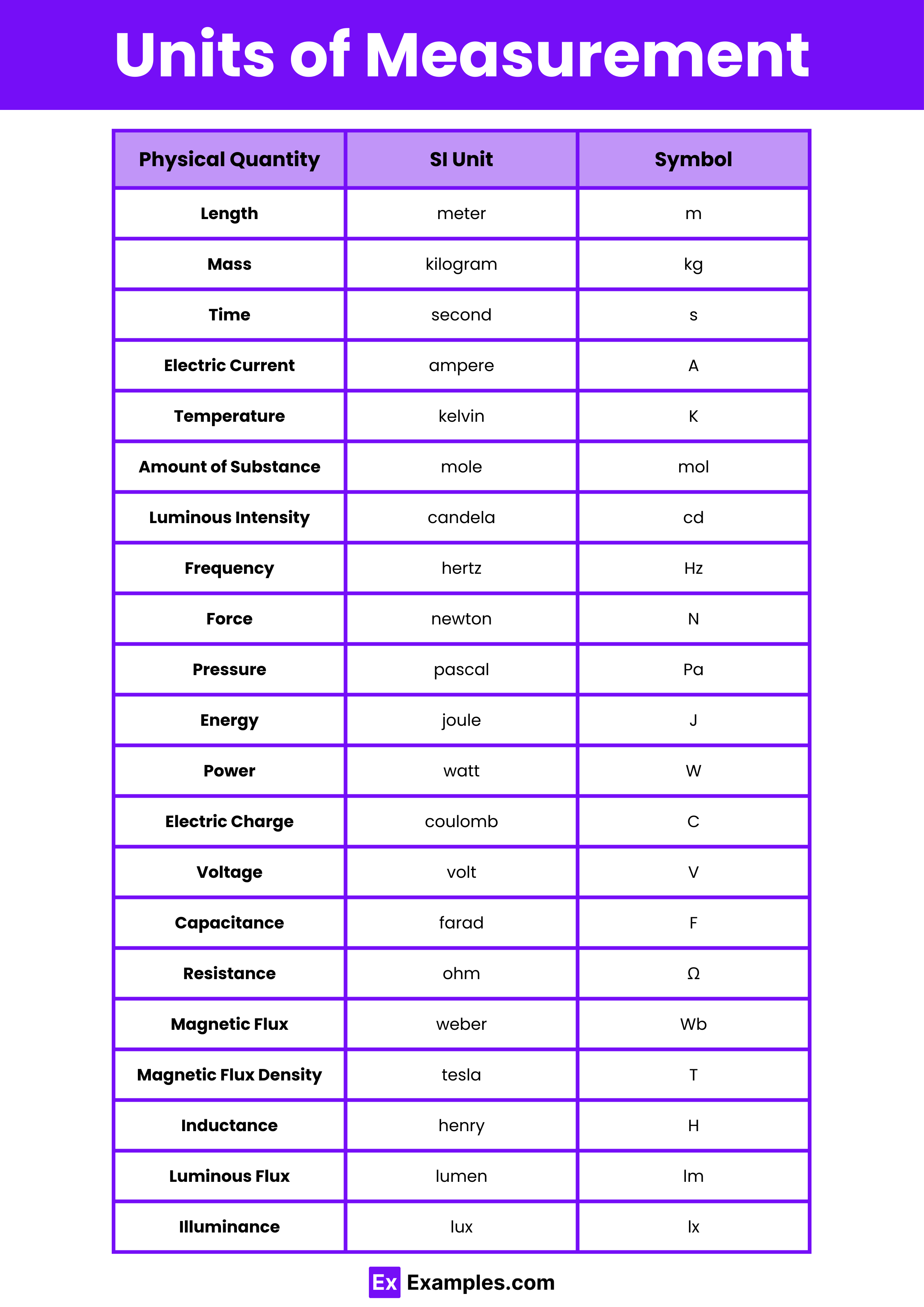
As the tech industry faces increasing pressure to become sustainable, the measurement of electrical units has moved to the forefront of corporate strategy. The ampere (SI unit of current) and the derived unit of the watt (power) are the primary metrics for calculating Power Usage Effectiveness (PUE) in data centers.
Cloud providers like AWS, Google Cloud, and Azure use high-precision SI measurements to optimize the power delivery units (PDUs) that feed their server racks. By monitoring electrical flow at the granular level, AI-driven management tools can redistribute workloads to prevent overheating and reduce carbon footprints. In this context, the SI unit is more than just a measurement; it is a tool for environmental stewardship and operational efficiency in the tech sector.
AI and Quantum Computing: Redefining Measurement for the Next Era
As we transition from classical computing to the eras of Artificial Intelligence (AI) and Quantum Computing, the role of the SI unit is evolving. We are no longer just measuring physical hardware; we are measuring computational potential and the stability of quantum states.
Training Models and Computational Units
While “FLOPS” (Floating-Point Operations Per Second) is the standard metric for AI performance, it is fundamentally rooted in the SI unit of time. As AI models grow to require trillions of parameters, the energy-per-calculation—measured in joules (an SI-derived unit)—becomes the limiting factor.
Tech innovators are currently looking for ways to standardize “AI Efficacy” by linking it to SI units. By measuring the joules required to train a Large Language Model (LLM), the industry can move toward a “green AI” standard. This allows developers to benchmark software efficiency against a physical constant, ensuring that software optimization keeps pace with hardware advancements.
The Role of SI in Quantum Stability
Quantum computing represents the frontier of measurement. To maintain “qubit” stability, quantum processors must operate at temperatures near absolute zero. This is measured in millikelvins. The kelvin is the SI unit of thermodynamic temperature, and in the quantum realm, the difference between 0.015 K and 0.020 K is the difference between a functional calculation and total decoherence.
Furthermore, the redefinition of the SI units to be based on fundamental constants (like the Boltzmann constant) has provided quantum researchers with a more stable framework. When you are measuring the spin of an electron or the polarization of a photon, having a measurement system that is tied to the laws of physics—rather than a physical object—is the only way to ensure the reproducibility of results in a laboratory setting.
Standardizing the Future: Why Technical Interoperability Matters
The ultimate value of SI units in the technology sector is standardization. In an era of “big tech” silos and proprietary ecosystems, the SI system remains the world’s most successful open-source project. It provides a neutral ground where different technologies can meet and interact.
Global Standards for Universal Connectivity
Consider the development of 5G and the upcoming 6G networks. These technologies require the transmission of data over specific radio frequencies, measured in hertz (cycles per second). Because the “second” is a universally agreed-upon SI unit, international regulatory bodies like the ITU (International Telecommunication Union) can allocate spectrum across borders without interference. This global agreement on SI units is what allows your smartphone to work seamlessly whether you are in London, Tokyo, or New York.
Cybersecurity and Precise Timestamping
In digital security, the integrity of data often depends on “when” an event occurred. Cryptographic protocols use timestamps to prevent “replay attacks,” where a malicious actor intercepts a valid data transmission and sends it again later.
These security measures rely on the SI definition of time to create “Time-based One-Time Passwords” (TOTP) and to validate SSL/TLS certificates. If the global definition of a second were to drift, or if different tech providers used different units of measurement, the entire security infrastructure of the internet would become vulnerable. The SI unit provides the “source of truth” that digital security requires to defend against increasingly sophisticated cyber threats.
Conclusion: The Unseen Engine of Innovation
What is an SI unit of measurement? In the context of technology, it is far more than a definition in a textbook. It is the bedrock of the entire tech stack. From the nanometers that define our processors to the seconds that synchronize our networks and the kelvins that stabilize our quantum futures, SI units are the invisible threads that hold the digital world together.
As we look toward the future—one dominated by edge computing, AI, and decentralized systems—the importance of these universal standards will only grow. For tech professionals, engineers, and innovators, the SI system represents the ultimate commitment to precision. It ensures that as our tools become more complex and our data becomes more vast, we still have a solid, unchanging foundation upon which to build the next generation of human advancement. Precision is the silent partner of innovation, and the SI unit is its most vital expression.
aViewFromTheCave is a participant in the Amazon Services LLC Associates Program, an affiliate advertising program designed to provide a means for sites to earn advertising fees by advertising and linking to Amazon.com. Amazon, the Amazon logo, AmazonSupply, and the AmazonSupply logo are trademarks of Amazon.com, Inc. or its affiliates. As an Amazon Associate we earn affiliate commissions from qualifying purchases.