
The quest for the perfect hair color has historically been a journey of trial, error, and occasionally, expensive regret. However, the modern digital landscape has transformed this personal grooming dilemma into a sophisticated computational challenge. When a user searches for “what hair colour suits me upload photo,” they are not just looking for a simple filter; they are engaging with a complex ecosystem of Artificial Intelligence (AI), Augmented Reality (AR), and deep learning algorithms.
The transition from “guessing” to “simulating” represents a massive leap in Beauty Technology (BeautyTech). By leveraging high-resolution image processing and neural networks, software developers have created tools that can analyze a user’s biological features to recommend the most aesthetically pleasing color palettes. This article explores the technical architecture behind virtual try-on tools, the evolution of hair segmentation technology, and the future of hyper-personalized digital styling.

The Evolution of Virtual Try-On Technology
The early days of virtual styling were rudimentary. Users would upload a static photo and manually trace the outline of their hair—a process known as “masking.” The results were often jagged and unrealistic, failing to account for the way light interacts with individual strands. Today, the technology has evolved into a seamless experience driven by real-time processing.
From Static Overlays to Real-Time AR
Modern beauty apps utilize Augmented Reality (AR) to move beyond static photo uploads. Using a smartphone’s front-facing camera, the software tracks the user’s face and hair in 3D space. This requires high frame-rate processing to ensure that the “digital dye” follows the user’s movements without lag. The shift from 2D overlays to 3D spatial mapping has been made possible by the increased GPU power in modern mobile devices, allowing for sophisticated shaders that mimic the reflectivity and opacity of real hair dye.
The Role of Computer Vision in Hair Segmentation
At the heart of any “upload photo” styling tool is a process called semantic segmentation. This is a computer vision task where the AI must identify every pixel that belongs to the “hair” category versus the “skin” or “background” categories. This is significantly more difficult than it sounds. Hair has complex boundaries, transparency, and varying textures. Advanced convolutional neural networks (CNNs) are trained on millions of images to recognize these patterns, ensuring that the digital color doesn’t “bleed” onto the user’s forehead or ears.
Deep Learning and Generative AI in Personal Style
While segmentation tells the computer where to put the color, generative AI determines how that color should look. The phrase “what hair color suits me” implies a need for an intelligent recommendation engine, not just a random color picker.
How Neural Networks Predict Complementary Tones
Modern AI tools use color theory algorithms to analyze the undertones of a user’s skin and the pigment of their iris. By converting the uploaded photo into a multi-dimensional data map, the AI can identify whether a user has “warm,” “cool,” or “neutral” undertones. This involves analyzing the RGB (Red, Green, Blue) and Lab color spaces of the skin pixels. Once the undertone is established, the system uses a recommendation engine—often based on Collaborative Filtering or Content-Based Filtering—to suggest shades that provide the necessary contrast or harmony.
The Challenge of Lighting Invariance
One of the greatest technical hurdles in “upload photo” tech is lighting. A photo taken in a dark bedroom will yield different skin tone data than a photo taken in direct sunlight. Developers utilize “Global Illumination” models and “Auto-White Balance” algorithms to normalize the lighting in an uploaded image. This ensures that the AI’s recommendation is based on the user’s actual biology rather than the limitations of their camera sensor or environment.
Data Privacy and Secure Photo Uploads in BeautyTech
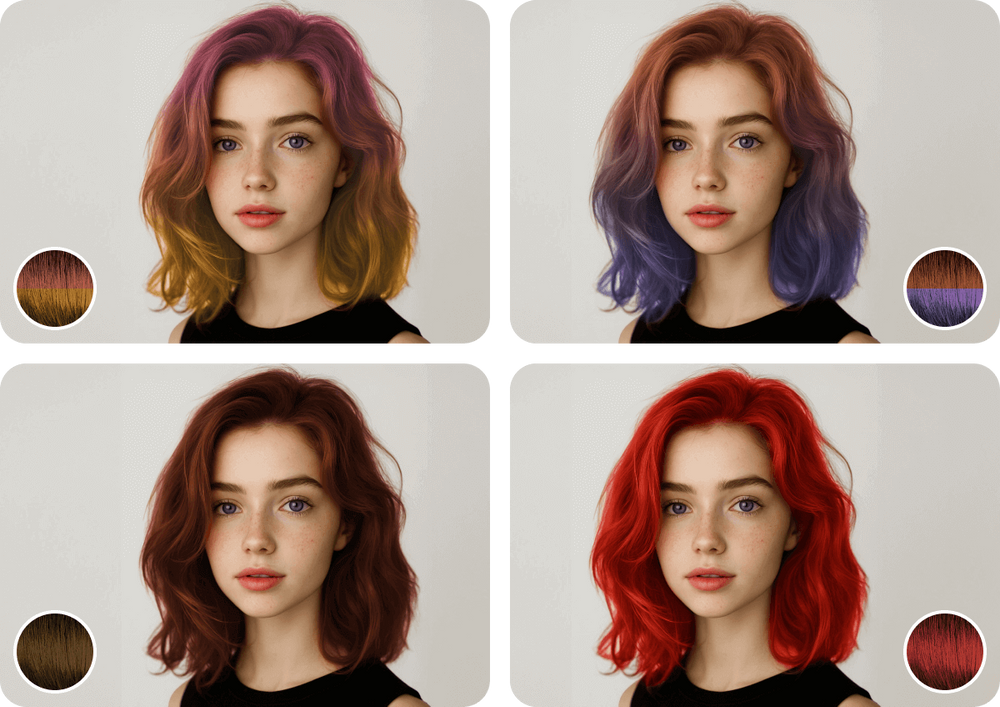
When a user uploads a photo to find their perfect hair color, they are providing highly personal biometric data. As the tech industry moves toward stricter privacy regulations like GDPR and CCPA, the backend handling of these photos has become a critical focus for developers.
On-Device vs. Cloud Processing
To mitigate privacy risks, many leading tech firms are moving toward “On-Device AI.” Instead of uploading the photo to a central server where it could be stored or leaked, the image is processed locally on the user’s smartphone using specialized hardware like Apple’s Neural Engine or Google’s Tensor chips. This ensures that the biometric data never leaves the device. If cloud processing is required for more complex calculations, top-tier apps employ end-to-end encryption and “ephemeral storage,” where the photo is deleted immediately after the session concludes.
Biometric Security and User Trust
The intersection of beauty and digital security is a growing field. As facial recognition becomes a standard for securing financial and personal accounts, “styling” apps must ensure their data collection doesn’t overlap with security-sensitive biometric templates. Professional-grade BeautyTech platforms now include transparency reports and clear data-usage policies to reassure users that their “upload” is being used solely for aesthetic simulation and not for unauthorized tracking or profiling.
Industry Leaders and Software Innovations
The market for virtual hair color simulation is no longer a niche hobby; it is a multi-billion dollar sector of the technology industry. Major software players and beauty conglomerates are investing heavily in proprietary AI models to capture this “digital-first” consumer base.
The L’Oréal-ModiFace Paradigm
One of the most significant moments in BeautyTech was L’Oréal’s acquisition of ModiFace, an AR and AI company specializing in the beauty industry. This signaled a shift from beauty companies being “product companies” to “tech-first companies.” Their proprietary engines use patented algorithms that can simulate the specific chemical results of certain dyes. For example, the software doesn’t just “paint” a color; it calculates how a specific brand of box dye would interact with the user’s current base shade, providing a much higher level of accuracy.
Open-Source vs. Proprietary AI Models
While giants like ModiFace and Perfect Corp dominate the commercial space, the open-source community is also contributing to the “what hair color suits me” ecosystem. Developers are using frameworks like TensorFlow and PyTorch to build community-driven hair segmentation models. These open-source projects allow smaller startups to integrate high-quality virtual try-on features into their apps without the need for massive R&D budgets, democratizing access to high-end styling tech.
The Future of Hyper-Personalization: Beyond the Photo
As we look toward the next decade of digital styling, the simple “upload photo” model is evolving into a comprehensive “Digital Twin” experience. This involves a more holistic view of the user’s digital identity.
Integrating Texture and Lighting Simulation
The next frontier in this technology is the realistic simulation of hair texture and movement. Current tools are excellent at changing the color of straight or wavy hair, but they often struggle with the complex geometries of curly or coily hair. Future iterations of this tech will use “Neural Radiance Fields” (NeRFs) to create a 3D volumetric representation of hair. This will allow users to see how a new hair color looks from every angle and under different simulated light sources, such as office fluorescents versus sunset light.
E-commerce Integration and the Feedback Loop
The ultimate goal of these tech tools is to bridge the gap between digital discovery and physical purchase. Through API integrations, a user can find a hair color they like and instantly see the exact SKU available at their local retailer. Furthermore, these apps are beginning to use “Feedback Loops.” If a user uploads a photo, receives a recommendation, and then later uploads a “success” photo after dyeing their hair, the AI learns from that real-world outcome. This continuous machine learning process means that the more people use the tech, the more accurate it becomes for everyone else.
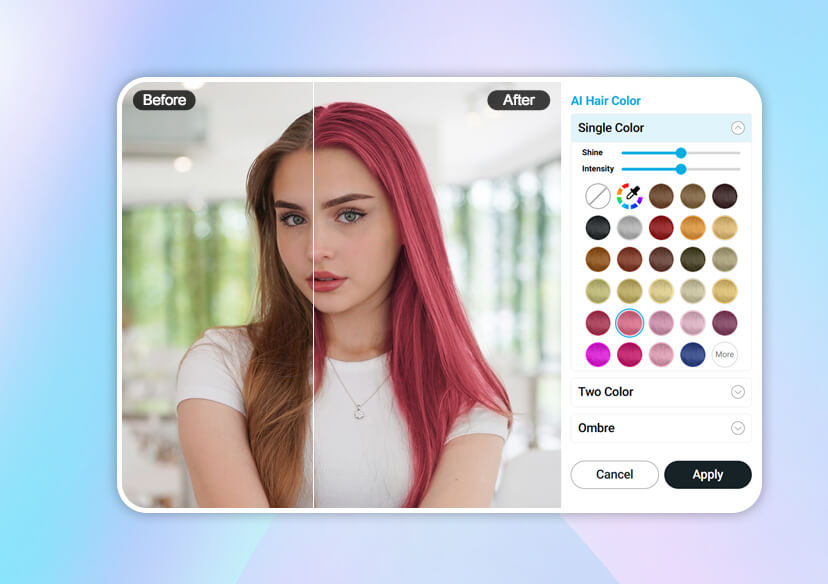
Conclusion
The act of searching for “what hair colour suits me upload photo” is the entry point into a sophisticated world of high-level computing. From the intricate pixel-level segmentation of computer vision to the ethical considerations of biometric data privacy, BeautyTech is a testament to how AI can be applied to the most personal aspects of human life. As algorithms become more adept at understanding the nuances of human biology and light physics, the “virtual mirror” will eventually become indistinguishable from reality, making the “upload photo” button the most powerful tool in any stylist’s—and consumer’s—arsenal.
aViewFromTheCave is a participant in the Amazon Services LLC Associates Program, an affiliate advertising program designed to provide a means for sites to earn advertising fees by advertising and linking to Amazon.com. Amazon, the Amazon logo, AmazonSupply, and the AmazonSupply logo are trademarks of Amazon.com, Inc. or its affiliates. As an Amazon Associate we earn affiliate commissions from qualifying purchases.