
The digital transformation of language has moved far beyond simple word-for-word substitution. When a developer or tech enthusiast asks, “What is ‘because’ in Spanish?” they are rarely looking for a simple dictionary entry. Instead, they are touching upon one of the most significant challenges in Natural Language Processing (NLP) and Artificial Intelligence: context-dependent disambiguation. In the Spanish language, the concept of “because” is a multifaceted logic gate that varies based on syntax, intent, and grammatical structure.
For software engineers building translation APIs, localized UI/UX, or Large Language Models (LLM), understanding the nuance of “because” (primarily porque) is essential for creating authentic, high-quality digital experiences.
The Complexity of ‘Porque’: A Challenge for Natural Language Processing (NLP)
At the heart of modern translation technology lies the challenge of disambiguation. In English, “because” is relatively straightforward. In Spanish, however, the concept is split into four distinct forms, each serving a different logical function. For an AI to accurately translate a prompt, it must understand the underlying structure of the sentence.
Disambiguating the Four Variations
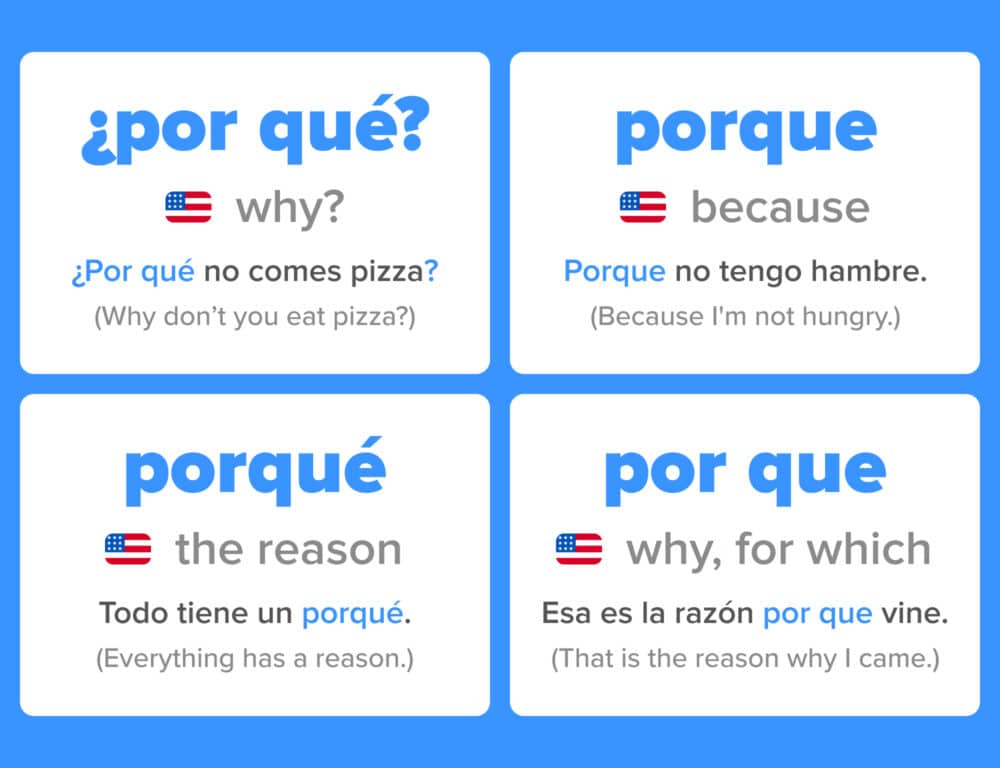
The primary technical hurdle for language software is distinguishing between the four “porques.”
- Porque: Used for responses and cause-and-effect statements (the literal “because”).
- Por qué: Used for questions (the literal “why”).
- Porqué: A noun meaning “the reason” or “the motive.”
- Por que: A more complex relative pronoun combination (often “for which”).
A basic rule-based translation engine might struggle with these distinctions, often defaulting to a single form and resulting in “uncanny valley” translations that feel robotic to native speakers. Advanced tech stacks today rely on neural networks to identify which version to use based on surrounding punctuation and part-of-speech tagging.
Contextual Awareness in Machine Learning Models
Modern LLMs, such as GPT-4 or Claude, handle the “because” problem through contextual embeddings. Rather than looking at “because” as an isolated token, the transformer architecture analyzes the entire paragraph. If the model detects a question mark or an interrogative tone earlier in the data string, it adjusts the weight of the tokens toward por qué.
For developers working with Python libraries like NLTK or SpaCy, this highlights the importance of training datasets that are rich in conversational Spanish. Without high-quality data, an app’s “Reason for Error” message might mistakenly use the interrogative form, confusing the end-user and degrading the brand’s technical authority.
Top Tech Tools for Mastering Spanish Translation
The “tech” behind translation has evolved from static databases to dynamic, real-time processing. If you are integrating translation into your workflow or developing a localized app, certain tools stand out for their ability to handle the linguistic nuances of Spanish conjunctions.
DeepL vs. Google Translate: The Battle of Neural Networks
For years, Google Translate was the industry standard, but DeepL has emerged as a favorite among tech professionals and developers. DeepL uses a proprietary convolutional neural network (CNN) trained on the Linguee database.
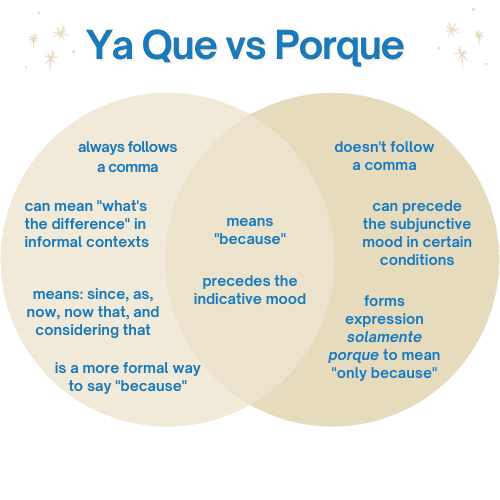
When translating “because,” DeepL often outperforms competitors by recognizing the professional tone of a document. For instance, in a technical manual, DeepL might choose ya que or puesto que (formal alternatives to porque) to better suit the medium. Developers can leverage the DeepL API to ensure their software documentation remains professional and contextually accurate.
AI-Powered Language Learning Apps: Duolingo and Babbel
On the consumer side, apps like Duolingo and Babbel have integrated sophisticated algorithms to teach the “because” distinction. Duolingo uses a spaced-repetition system (SRS) combined with AI to identify if a user consistently confuses porque with por qué.
From a tech perspective, these apps are masterclasses in gamified data science. They collect billions of data points on common user errors, allowing them to refine their teaching modules. For a developer, studying the UI flow of these apps provides insights into how to present complex logical concepts (like four versions of the same word) in a user-friendly, digital environment.
Coding the Logic: How Developers Build Translation Algorithms
Integrating Spanish translation into a software project requires more than just calling an API. It requires an understanding of how language is parsed at a code level.
Tokenization and Part-of-Speech Tagging
The first step in any NLP pipeline is tokenization—breaking a sentence into individual pieces. When a system encounters “because,” the POS (Part-of-Speech) tagger identifies it as a conjunction.
In Spanish, the developer must ensure the tagger is sensitive to accents. The difference between porque and por qué is a single diacritic mark, but in a database, these are entirely different UTF-8 strings. A common bug in early-stage localized software is the “accent-blind” search, where a system fails to recognize porqué as a noun because it was indexed without the accent. Robust tech architecture must support full Unicode character sets to maintain the integrity of Spanish logic.
Integrating Large Language Models (LLMs) for Fluent Output
For those building chatbots or customer support AI, using an LLM API (like OpenAI’s gpt-3.5-turbo or gpt-4) is the most efficient way to handle Spanish conjunctions. Instead of hard-coding rules for “because,” developers can provide “system prompts” that define the persona and region of the Spanish being used.
Example prompt logic:
- System: “You are a technical support assistant in Mexico. Use professional but accessible language.”
- Input: “I am calling because my router is broken.”
- Output: “Le llamo porque mi router está fallando.”
The LLM naturally handles the conjunction based on the surrounding technical context (router, fallando), demonstrating the power of generative AI over traditional dictionary-based software.
The Future of Real-Time Translation Wearables
As we look toward the future of gadgets, the “because in Spanish” query becomes even more relevant in the context of hardware. We are entering an era of “hearables” and AR glasses that offer live translation.
Low-Latency Processing for Live Conversation
Devices like the Timekettle earbuds or the latest Google Pixel Buds attempt to translate “because” in real-time. This requires immense processing power and low latency. The challenge here is that in Spanish, the speaker’s intent (is it a reason or a question?) might not be clear until the end of the sentence.
Engineers are solving this using “incremental translation” algorithms. These models start translating the sentence as it is being spoken but remain ready to “backtrack” and correct the conjunction if the speaker adds a question inflection at the end. This is a fascinating intersection of acoustics, linguistics, and high-speed computation.
The Role of Edge Computing in Language Tech
To make real-time translation viable without a massive data lag, much of the processing is moving to the “edge”—meaning it happens on the device rather than in the cloud. Optimized mobile chips, such as Apple’s Neural Engine or Qualcomm’s Snapdragon AI platforms, allow the device to distinguish between porque and por qué locally.
This shift toward edge computing not only makes the translation of “because” faster but also more secure. Users can have private conversations in Spanish without their voice data being transmitted to a central server, which is a major trend in digital security and privacy-focused tech.

Conclusion: Why Linguistic Precision Matters in Tech
The question “What is because in Spanish?” serves as a gateway to understanding the broader landscape of modern technology. Whether it is the nuance of NLP tokenization, the power of neural translation engines, or the hardware requirements for real-time edge computing, the word porque represents a microcosm of the challenges faced by developers today.
As we move toward a more globalized digital economy, the ability of our software to handle these linguistic subtleties determines the success of international product launches. By moving beyond simple translation and embracing the logical complexity of language, tech professionals can build tools that truly bridge the gap between cultures, one “porque” at a time. Through the lens of AI and software engineering, “because” is not just a word—it is a testament to how far our computational logic has come in mimicking the incredible complexity of the human mind.
aViewFromTheCave is a participant in the Amazon Services LLC Associates Program, an affiliate advertising program designed to provide a means for sites to earn advertising fees by advertising and linking to Amazon.com. Amazon, the Amazon logo, AmazonSupply, and the AmazonSupply logo are trademarks of Amazon.com, Inc. or its affiliates. As an Amazon Associate we earn affiliate commissions from qualifying purchases.