
In the landscape of digital imaging and visual technology, few phenomena have captured the public imagination quite like the stereogram. While many remember the “Magic Eye” craze of the 1990s as a quirky pop-culture fad, the underlying technology represents a sophisticated milestone in the fields of optics, computer science, and human-computer interaction. A stereogram is essentially a two-dimensional image designed to create an optical illusion of a three-dimensional (3D) scene within the human brain. From a technical perspective, it is a masterclass in exploiting the mechanics of biological vision through algorithmic precision.

To understand what a stereogram is in the modern tech era, one must look beyond the hidden shapes and examine the digital architecture that makes such illusions possible. It is a bridge between early 19th-century optical physics and contemporary spatial computing, offering profound insights into how software can manipulate sensory perception.
The Science of Digital Depth: How Stereograms Work
At the core of stereogram technology lies the principle of stereopsis—the process by which the brain combines two slightly different images from each eye to perceive depth. In a natural environment, our eyes are separated by approximately 2.5 inches, meaning each retina captures a unique perspective. The brain’s visual cortex processes these differences, known as binocular disparity, to calculate distance and volume.
The Mechanics of Binocular Parallax
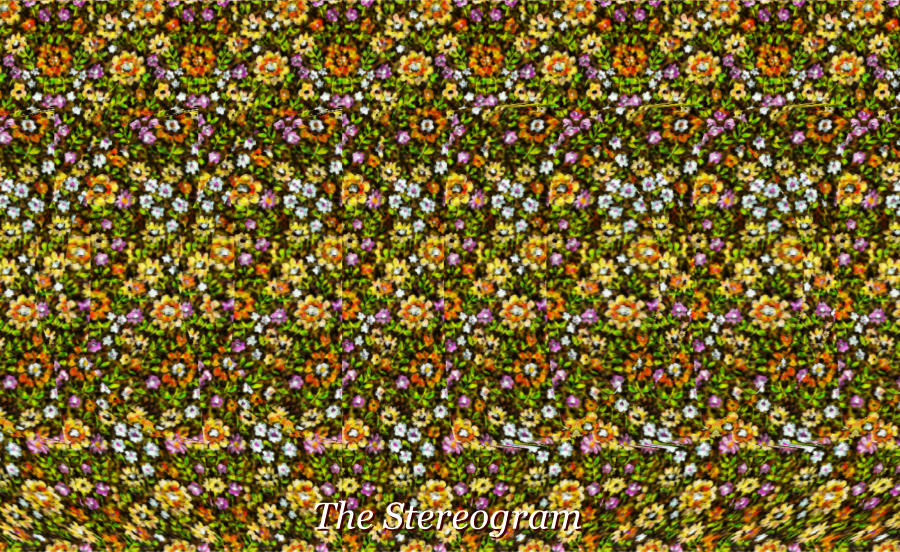
A digital stereogram replicates this biological process by embedding two or more perspectives of a 3D object into a single 2D plane. Unlike traditional 3D media, such as cinema or virtual reality, which often require specialized hardware like polarized glasses or head-mounted displays (HMDs), an autostereogram requires only the user’s eyes and a specific focal technique.
Technically, this is achieved through “divergent viewing” or “wall-eyed” viewing. The viewer must decouple their eye convergence from their eye focus. While the lenses of the eyes focus on the physical surface of the screen or paper, the eyes themselves must aim at a point behind the image. This causes the repeating patterns in the stereogram to overlap in a way that tricks the brain into seeing depth based on the mathematical offsets programmed into the image.
From Wheatstone to Autostereograms: A Brief Evolution
The evolution of this technology began in 1838 with Sir Charles Wheatstone, who invented the first stereoscope. This device used mirrors to present two separate drawings to each eye. However, the modern “Single Image Random Dot Stereogram” (SIRDS) is a purely digital invention. It was popularized by Dr. Bela Julesz in 1959 while he was working at Bell Labs. Julesz used computer-generated random-dot patterns to prove that depth perception occurs in the brain, not the eyes, because his subjects could see 3D shapes in images that had no recognizable 2D outlines. This discovery laid the groundwork for modern computer vision algorithms that allow robots and autonomous vehicles to “see” and navigate 3D environments.
Algorithmic Art: The Software Behind Single Image Random Dot Stereograms (SIRDS)
Generating a modern stereogram is not an artistic endeavor performed by hand; it is a computational process. Developers use specific software algorithms to map 3D coordinates onto a 2D grid of pixels. Whether the final output is a chaotic field of dots or a repetitive textured pattern, the placement of every pixel is dictated by a rigorous depth map.
The Role of Depth Maps in Image Generation
The first step in creating a digital stereogram is the creation of a depth map (or Z-buffer). In computer graphics, a depth map is a grayscale image where the brightness of a pixel corresponds to its distance from the viewer. For example, white might represent the closest point of a 3D object, while black represents the background.
To generate the stereogram, the software takes this depth map and applies it to a “seed pattern.” As the pattern repeats horizontally across the image, the algorithm shifts the pixels slightly based on the grayscale value in the depth map. If the depth map indicates an object should appear “closer,” the algorithm reduces the distance between the repeating patterns for that specific area. This programmed horizontal displacement is the digital equivalent of binocular disparity.
Pixel Patterning and Tiling Logic
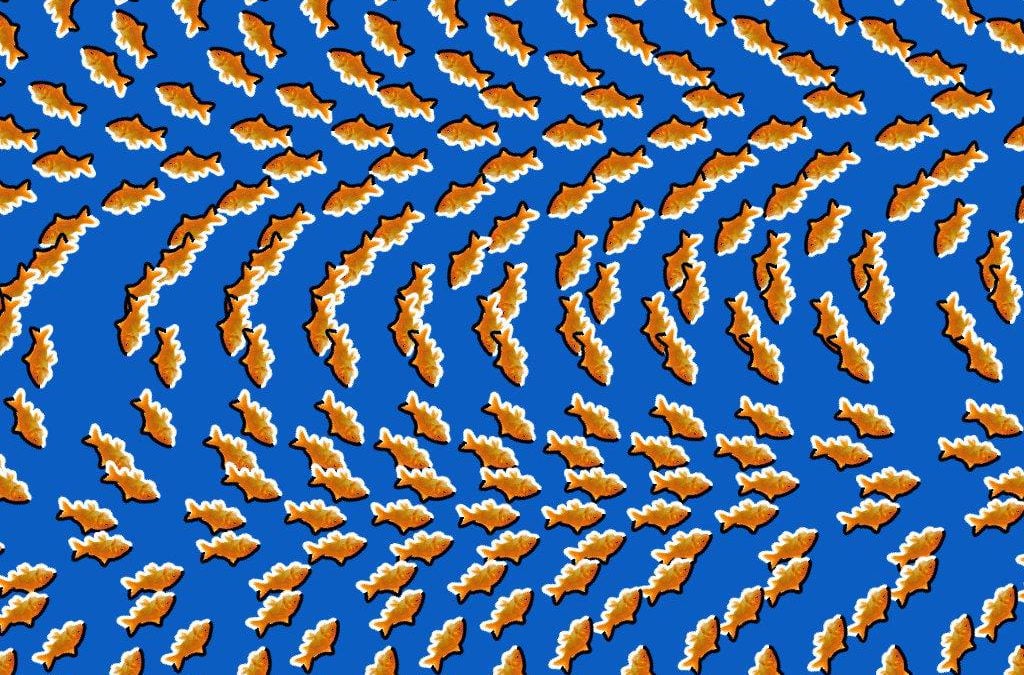
Modern stereogram software utilizes sophisticated tiling logic to ensure the hidden 3D image remains invisible to the naked eye when viewed normally. By using high-frequency textures or randomized noise, the software masks the “seams” of the pixel shifts. Advanced algorithms now allow for “object-mapped” textures, where the 2D surface pattern itself is aesthetically pleasing or related to the hidden 3D content. This level of precision requires significant processing power to ensure that the horizontal shifts do not create “ghosting” or artifacts that would break the illusion or cause eye strain.
Stereograms in the Age of Spatial Computing and VR
While stereograms may seem like a relic of the analog past, their technical principles are more relevant today than ever. The explosion of Virtual Reality (VR), Augmented Reality (AR), and Mixed Reality (MR)—collectively known as spatial computing—is built upon the same foundations of stereopsis and digital depth mapping that make stereograms work.
Bridging the Gap to Head-Mounted Displays
In a VR headset, the software renders two distinct images (one for each eye) at high frame rates. This is essentially a dynamic, real-time stereoscopic system. The lessons learned from stereogram algorithms regarding “vergence-accommodation conflict” (the discomfort caused when the brain receives conflicting signals about where the eyes are focusing versus where they are converging) are critical in the design of modern VR optics.
Engineers at companies like Meta and Apple must solve the same problems that stereogram creators faced: how to present digital information in a way that feels naturally three-dimensional without causing “simulator sickness.” The mathematical models used to calibrate the inter-pupillary distance (IPD) in VR headsets are direct descendants of the calculations used to determine the repeat-period in a SIRDS.
Applications in Medical Imaging and Data Visualization
Beyond entertainment, the logic of the stereogram is applied in specialized tech sectors like medical imaging. Radiologists and surgeons use stereoscopic displays to view 3D reconstructions of MRI and CT scans. By presenting data in a stereoscopic format, medical software allows for a more intuitive understanding of complex anatomical structures, such as the spatial relationship between a tumor and a surrounding vascular network.
Similarly, in data science, “3D data visualization” tools often employ stereoscopic principles to help analysts identify patterns in multidimensional datasets that would be invisible on a standard 2D scatter plot. The ability to “hide” information in a pattern—and then reveal it through a change in perspective—is a concept being explored in niche areas of data security and obfuscation.
The Future of Digital Optics: Beyond the Magic Eye
As we look toward the future, the “stereogram” is evolving into more complex forms of digital light-field technology and holographic displays. We are moving toward a world where the “hidden depth” of a stereogram is no longer a trick for the eyes, but a fundamental property of our digital interfaces.
Neural Networks and 3D Scene Reconstruction
One of the most exciting developments in modern tech is the use of Artificial Intelligence and Neural Radiance Fields (NeRFs) to create 3D scenes from 2D images. While traditional stereograms require a pre-rendered depth map, AI is now capable of inferring depth from a single standard photograph. This allows software to generate stereoscopic content on the fly, effectively turning any 2D image into a potential 3D experience. This intersection of machine learning and stereoscopy is paving the way for more immersive social media content and advanced digital twins in industrial applications.
Security and Watermarking: Hiding Data in Plain Sight
There is also an intriguing intersection between stereography and digital security. Researchers have explored using stereogram-like patterns for digital watermarking and steganography. Because the “hidden” 3D image in an autostereogram is only visible when the viewer (or an optical sensor) looks at it with a specific focal divergence, it can be used to hide sensitive information or authentication codes within public-facing digital assets. This “security through optics” adds a layer of complexity that traditional 2D watermarks cannot match, as the data is encoded in the spatial relationship between pixels rather than the pixels themselves.
In conclusion, a stereogram is far more than a visual puzzle; it is a sophisticated application of optical science and algorithmic engineering. By understanding the tech behind the illusion, we gain a deeper appreciation for the complexity of the human visual system and the ingenious ways software developers continue to exploit it. As technology moves closer to seamless spatial integration, the humble stereogram stands as a foundational milestone in our journey from a flat digital world to one defined by depth, volume, and immersive reality.
aViewFromTheCave is a participant in the Amazon Services LLC Associates Program, an affiliate advertising program designed to provide a means for sites to earn advertising fees by advertising and linking to Amazon.com. Amazon, the Amazon logo, AmazonSupply, and the AmazonSupply logo are trademarks of Amazon.com, Inc. or its affiliates. As an Amazon Associate we earn affiliate commissions from qualifying purchases.