
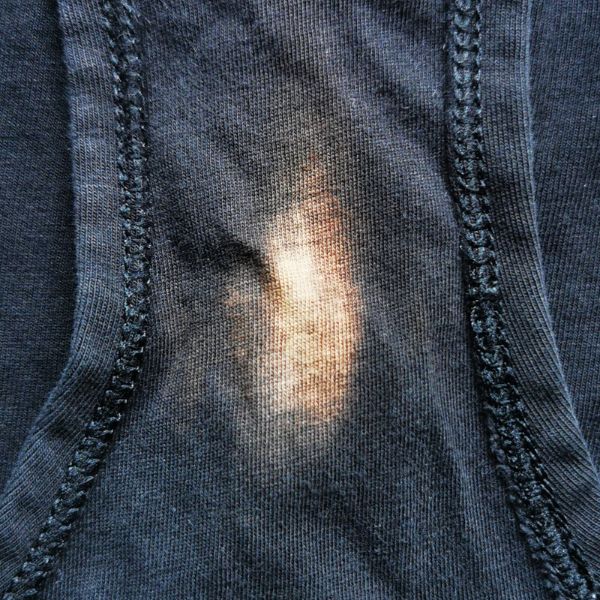
The intersection of forensic science and advanced technology has revolutionized how we perceive the invisible world. What the naked eye identifies as a simple, stiffened, or discolored patch on fabric—often described as a pale, yellowish, or translucent “stain”—is, to a forensic technician, a complex topographical map of protein structures and cellular data. The question of what dried biological material, such as seminal fluid, looks like on clothing has shifted from a matter of visual inspection to a sophisticated process of spectral analysis, digital imaging, and artificial intelligence.

In the modern tech landscape, detecting these traces involves an array of gadgets and software designed to bypass the limitations of human vision. This article explores the technological ecosystem used to identify biological markers, the software-driven analysis of “stains,” and the future of smart-fabric sensors that make the invisible visible.
1. The Physics of Visibility: Forensic Light Sources (FLS) and Hardware
To understand what these residues “look like” through a technological lens, one must first understand the hardware used to illuminate them. Standard white light often fails to reveal subtle biological deposits, especially on patterned or light-colored textiles. This is where Alternate Light Sources (ALS) and Forensic Light Sources (FLS) become essential gadgets in the investigator’s toolkit.
Ultraviolet (UV) and Narrow-Band Wavelengths
Biological fluids naturally fluoresce under specific wavelengths of light due to the presence of molecules like flavins and choline. Tech developers have created high-intensity LED FLS units that emit light in the 300nm to 450nm range. When viewed through specialized orange or yellow barrier filters (goggles or camera lenses), a dried biological deposit on clothing does not look like a “crusty stain”; instead, it appears as a glowing, high-contrast silhouette. The technology isolates the specific emission spectrum of the material, allowing the hardware to suppress the background noise of the fabric weave.
Portable Spectrometers and Field Gadgets
The latest trend in forensic tech is the miniaturization of lab equipment. Handheld Raman spectrometers are now used to identify the chemical signature of dried substances without touching the sample. These devices bounce laser light off the fabric and measure the energy shift of the backscattered light. For a tech-focused professional, the “look” of the residue is converted into a digital graph—a “spectral fingerprint”—that can be cross-referenced with a cloud-based database of known substances in seconds.
2. Digital Imaging and Software-Driven Contrast Enhancement
Once the hardware has illuminated the residue, the next step involves digital capture and algorithmic processing. The “look” of the substance is transformed from a physical property into a data set that can be manipulated for clarity and evidence preservation.
Computational Photography in Forensics
Modern forensic cameras utilize multi-spectral imaging (MSI). Unlike a standard smartphone camera that captures Red, Green, and Blue (RGB), MSI cameras capture dozens of narrow bands across the electromagnetic spectrum, including infrared and ultraviolet. Software then “stacks” these images. To the end-user, the software might highlight the biological residue in a false-color heat map, making the dried material stand out as a bright neon blue or hot pink against a neutralized gray background of the clothing.
Topographical Mapping and 3D Surface Analysis
Dried biological material changes the physical texture of fabric, increasing its rigidity. Advanced software now utilizes “photogrammetry” or “fringe projection profilometry” to create a 3D map of the cloth’s surface. By measuring how light curves over the “dried-up” area, the software creates a topographic model. In this digital environment, the residue looks like a raised plateau or a mountain range on the “plain” of the cotton or polyester fibers. This level of detail allows analysts to determine the direction of the spill and the volume of the material based purely on digital surface data.
3. The Role of AI and Machine Learning in Automated Detection
The most significant tech trend in biological trace analysis is the integration of Artificial Intelligence (AI). Identifying biological stains on complex backgrounds—like a floral print dress or high-visibility workwear—is a challenge for human eyes, even with UV light. Machine learning models are now being trained to solve this problem.
Neural Networks for Pattern Recognition
AI developers are training convolutional neural networks (CNNs) on thousands of images of various fluids on different fabric types. These AI tools can scan high-resolution photos of clothing and instantly “flag” areas that match the visual and spectral profile of dried seminal fluid or other biologicals. For the user, the AI provides a probability score. Instead of asking “what does it look like,” the technician asks, “what does the algorithm identify as a 99% match?”
Reducing Human Bias with Software
One of the primary “bugs” in manual forensic inspection is human fatigue and cognitive bias. AI-driven software provides an objective layer of analysis. Tools like “Crime-lite Cloud” allow for the global sharing of spectral data, ensuring that an image captured in one part of the world can be analyzed by an AI trained on the most diverse data sets available. This digital security and consistency ensure that the “look” of the evidence is interpreted according to rigid mathematical parameters rather than subjective sight.
4. Smart Fabrics and the Future of Real-Time Bio-Detection
As we look toward the future of technology and “Wearables,” the detection of biological residue is moving from the lab into the very fibers of our clothing. The field of “Smart Textiles” is developing fabrics that act as sensors.
Integrated Biosensors and Lab-on-a-Fiber
Tech startups are experimenting with “chromogenic” fibers—threads treated with chemicals that change color when they come into contact with specific enzymes (like Acid Phosphatase, found in high concentrations in semen). In this tech-forward scenario, the residue doesn’t look like a faint stain; it triggers a programmed visual response in the garment, such as a sharp color shift to deep purple or blue, providing immediate, real-time data.
The Internet of Things (IoT) and Forensic Readiness
There is a growing niche in “Digital Security for the Physical Body.” Imagine a future where “smart” uniforms for security personnel or high-risk professionals are linked to an IoT network. If a biological “event” occurs (a spill or an assault), the fabric’s sensors could theoretically timestamp the occurrence and log the chemical data to a secure blockchain. In this context, the “look” of the dried material is irrelevant compared to the digital log it generates.
5. Digital Security and Ethics in Trace Analysis Technology
As the technology to see and analyze biological residue becomes more powerful, the focus shifts toward the security of the data generated. Identifying what a substance looks like on a garment is now a matter of “Bio-Data.”
Encryption of Forensic Imagery
When high-resolution images of biological traces are captured, they contain sensitive DNA-related potential. The tech industry is responding with end-to-end encrypted forensic management systems. These apps ensure that the “digital look” of the evidence is tamper-proof, using hashing algorithms to verify that an image hasn’t been photoshopped or altered between the crime scene and the courtroom.
Privacy in the Age of “Super-Vision”
The democratization of this tech—such as affordable UV attachments for smartphones—raises questions about digital privacy. If anyone can use a gadget to see “invisible” residues on a stranger’s clothing, we enter a new era of surveillance. The tech niche must balance the power of detection with the ethics of use, ensuring that these powerful tools remain in the hands of professionals or are used within clear legal frameworks.

Conclusion: From Visual Cues to Digital Certainty
What does dried-up residue look like on clothes? To a person without the right tools, it is a mere blemish, often invisible or easily mistaken for salt, starch, or detergent. However, through the lens of modern technology, it is a data-rich landscape.
From the hardware of Forensic Light Sources to the sophisticated algorithms of AI-driven pattern recognition, technology has transformed trace detection into a precise science. We no longer rely on the “crusty” appearance of a stain; we rely on spectral signatures, 3D topographic maps, and neural network confirmations. As we move further into the era of smart fabrics and portable spectrometers, the gap between the seen and the unseen will continue to close, turning every thread of fabric into a potential source of digital information.
aViewFromTheCave is a participant in the Amazon Services LLC Associates Program, an affiliate advertising program designed to provide a means for sites to earn advertising fees by advertising and linking to Amazon.com. Amazon, the Amazon logo, AmazonSupply, and the AmazonSupply logo are trademarks of Amazon.com, Inc. or its affiliates. As an Amazon Associate we earn affiliate commissions from qualifying purchases.