
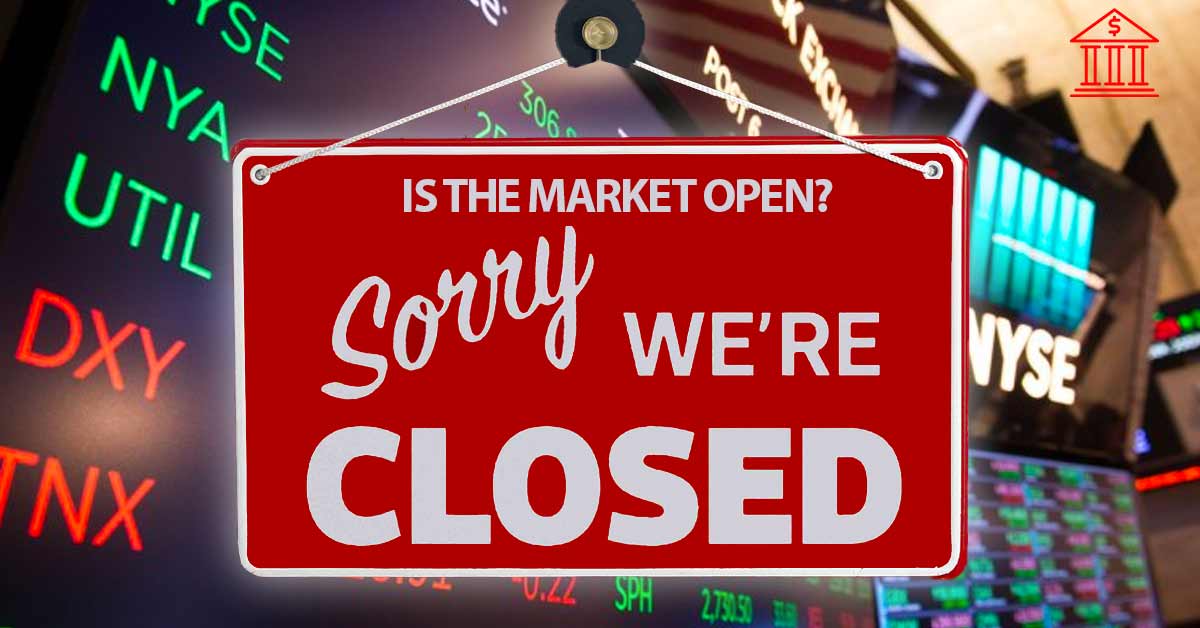
Today, like several other days throughout the year, the financial markets remain silent. The buzzing energy of trading floors, the incessant flicker of stock tickers, and the rapid-fire execution of orders have all temporarily ceased. For many investors, especially those new to the intricacies of global finance, these closures can sometimes be a source of confusion or mild inconvenience. However, far from being arbitrary interruptions, market closures are meticulously planned events, serving critical functions that underpin the very stability and fairness of the financial ecosystem.
Understanding why markets close is not merely an exercise in calendar comprehension; it’s a dive into the operational, social, and economic principles that govern our investment landscape. From nationally observed holidays that offer a pause for collective reflection, to less common but crucial operational halts, each closure plays a role in maintaining the integrity, efficiency, and long-term health of our financial systems. This comprehensive guide will demystify the reasons behind these non-trading days, explore their varied implications, and equip investors with strategies to navigate them effectively.
The Rationale Behind Market Closures
Market closures are not merely days off for brokers and traders; they are integral to the structured operation of global finance. These pauses serve several fundamental purposes, ranging from acknowledging shared cultural values to ensuring the technical resilience of complex trading infrastructures.
Facilitating National Observances
One of the most straightforward reasons for market closures is the observance of national holidays. In the United States, for instance, exchanges like the New York Stock Exchange (NYSE) and NASDAQ follow a holiday calendar that aligns closely with federal holidays such as New Year’s Day, Memorial Day, Independence Day, Thanksgiving, and Christmas. These closures provide an opportunity for market participants, like the general populace, to observe these significant cultural or historical dates, fostering a sense of community and providing a collective respite. While the immediate economic impact is a temporary halt in trading, the long-term societal benefit of recognizing shared heritage and traditions is deemed paramount. Other countries have similar practices, with exchanges closing for national days, religious festivals, or other public holidays specific to their regions.
Ensuring Operational Integrity and Maintenance
Beneath the surface of seamless electronic trading lies an immense, complex technological infrastructure that requires constant upkeep. Market closures provide essential windows for exchanges and clearinghouses to perform critical system maintenance, software updates, security enhancements, and disaster recovery drills without disrupting live trading. Imagine trying to upgrade a skyscraper’s entire electrical system while it’s fully occupied and operational; similarly, major financial systems often require downtime to ensure optimal performance, security, and the capacity to handle future trading volumes. These planned maintenance periods are crucial for preventing future outages, protecting against cyber threats, and ensuring the speed and reliability that investors expect from modern financial markets. Without these scheduled pauses, the risk of system failures and their cascading consequences would be significantly higher, potentially leading to substantial financial losses and erosion of market confidence.
Promoting Fair and Orderly Markets
Sometimes, market closures are designed to maintain fairness and order, particularly during periods of extreme volatility or uncertainty. While full-day closures for these reasons are rare and usually a measure of last resort, they highlight a market regulator’s commitment to preventing irrational exuberance or panic selling from spiraling out of control. For example, circuit breakers are temporary trading halts that are automatically triggered during steep market declines to provide investors a moment to reassess and prevent further rapid freefall. While not full-day closures, they operate on a similar principle: using pauses to restore equilibrium. In extraordinary circumstances, such as post-9/11 in the U.S., markets may be closed for multiple days to allow for the assessment of damage, restoration of infrastructure, and stabilization of sentiment before trading resumes. Such measures underscore the commitment to ensuring that trading occurs under conditions that allow for rational decision-making, rather than being driven by unchecked emotional responses.
Common Reasons for Non-Trading Days
The reasons markets close can generally be categorized into predictable, scheduled events and unforeseen circumstances. Each type has distinct implications for investors and the broader financial community.
Scheduled Public Holidays
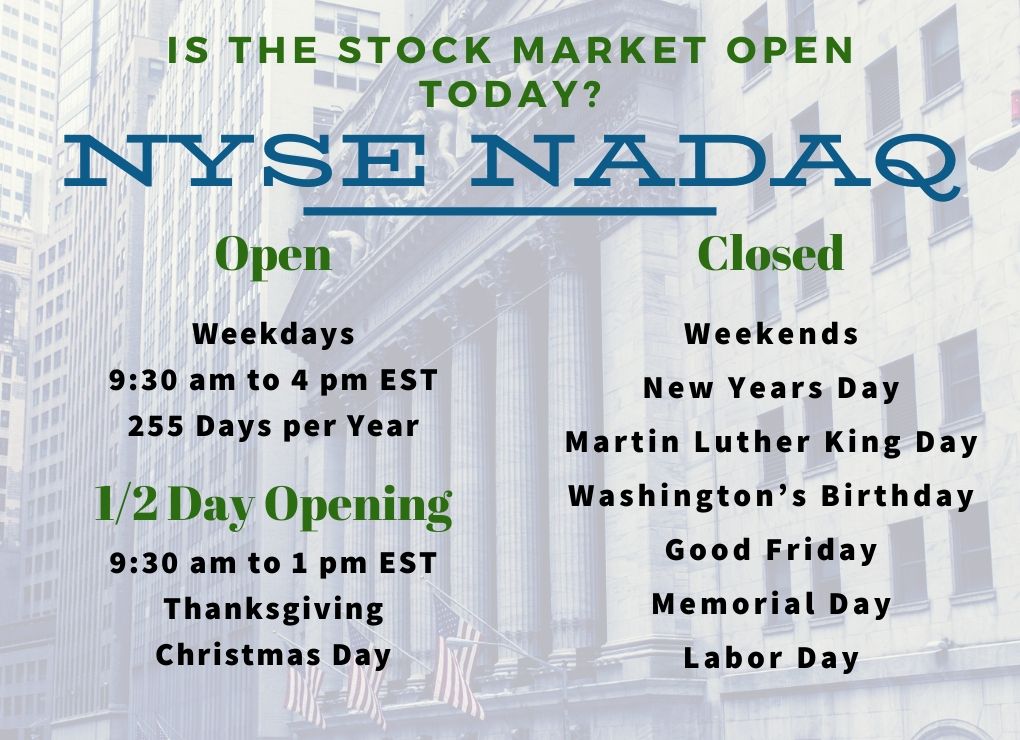
The most frequent reason for market closures is the observance of public holidays. These are typically published well in advance by financial exchanges, providing investors ample time to adjust their strategies. In the United States, for instance, the calendar includes federal holidays such as:
- New Year’s Day: January 1st.
- Martin Luther King, Jr. Day: Third Monday in January.
- Presidents’ Day (Washington’s Birthday): Third Monday in February.
- Good Friday: The Friday before Easter Sunday (though not a federal holiday, it’s observed by U.S. markets).
- Memorial Day: Last Monday in May.
- Juneteenth National Independence Day: June 19th.
- Independence Day: July 4th.
- Labor Day: First Monday in September.
- Thanksgiving Day: Fourth Thursday in November.
- Christmas Day: December 25th.
It’s important to note that if a holiday falls on a weekend, the market might observe it on the preceding Friday or following Monday. For example, if Christmas falls on a Saturday, the market might close on Friday, December 24th. These scheduled breaks are crucial for personal planning and portfolio management, as they represent guaranteed periods of no trading activity.
Unexpected Closures: Force Majeure Events
While less common, markets can also close due to unforeseen and extraordinary circumstances, often referred to as force majeure events. These events are beyond human control and can pose significant threats to the physical or operational integrity of the financial system. Examples include:
- Natural Disasters: Major hurricanes, blizzards, earthquakes, or floods that disrupt power, transportation, or communication infrastructure in financial hubs.
- Major Power Outages: Widespread electricity failures that render trading systems inoperable.
- System Failures/Technical Glitches: Critical malfunctions within exchange systems that prevent fair and orderly trading.
- Geopolitical Crises or Terrorism: Events that create extreme instability or pose immediate threats, such as the market closures after the 9/11 attacks in 2001.
These unscheduled closures are typically announced with short notice, often creating immediate uncertainty and anxiety among investors. Regulators and exchanges prioritize the safety of personnel, the security of assets, and the prevention of chaotic trading conditions during such emergencies.
Half-Day Sessions and Early Closures
In addition to full-day closures, markets sometimes operate on modified schedules, such as half-day sessions or early closures. These typically occur on days preceding or following major holidays, like the day after Thanksgiving (Black Friday) or Christmas Eve. These shortened trading days allow market participants to begin their holiday celebrations earlier while still facilitating some level of trading activity. While they maintain market liquidity for a portion of the day, investors need to be aware of the truncated hours to manage their orders and expectations accordingly. Derivatives markets, bond markets, and commodities exchanges may also have different holiday schedules or early closures compared to equity markets, adding another layer of complexity for diversified investors.
The Financial and Economic Implications of Market Halts
Market closures, whether planned or unexpected, have profound effects that ripple through the financial system, influencing everything from trading mechanics to investor psychology.
Paused Trading and Liquidity Concerns
The most immediate effect of a market closure is the complete cessation of trading for the affected securities. This means investors cannot buy or sell stocks, bonds, or other instruments on the primary exchanges. While this might seem obvious, it creates significant implications for liquidity. For instance, an investor needing to sell shares urgently to meet an unexpected financial obligation might find themselves unable to do so until the market reopens. This lack of immediate liquidity can be a source of stress, especially if significant news emerges during the closure. While some electronic communication networks (ECNs) and alternative trading systems might offer limited after-hours trading for certain securities, the volume and depth of these markets are significantly reduced compared to regular trading hours, making large transactions difficult and potentially impacting prices.
Information Accumulation and Price Gaps

During a market closure, the world doesn’t stop. Economic data continues to be released, corporate announcements are made, geopolitical events unfold, and general news cycles churn on. All this information accumulates, creating pent-up demand or supply pressure that gets released when markets reopen. This often leads to “price gaps” – significant jumps or drops in opening prices compared to the previous closing price. For example, if a major positive earnings announcement is made for a company over a long holiday weekend, its stock might open significantly higher on the next trading day. Conversely, negative news could lead to a sharp decline. These gaps can be volatile and present both opportunities and risks, requiring investors to be prepared for potentially abrupt shifts in portfolio values right at market open.
Impact on Derivatives and International Markets
Market closures in one region can have a domino effect on other financial instruments and international markets. Derivatives like futures and options, which derive their value from underlying assets traded on closed exchanges, can be particularly affected. While futures contracts for commodities or indices might continue to trade on international exchanges or in electronic after-hours sessions, their pricing can become disconnected from the underlying spot market, creating arbitrage opportunities or increased volatility when the primary market reopens. Furthermore, if a major market like New York is closed, it can influence trading sentiment and volumes in open markets in Asia or Europe, as global investors adjust their positions or react to the lack of guidance from a key financial center. This interconnectedness means a closure is rarely an isolated event.
Economic Data Releases and Interpretation
Governments and private institutions regularly release crucial economic data, such as inflation reports, employment figures, and GDP statistics. If these reports coincide with a market closure, their immediate impact on prices won’t be visible until trading resumes. Analysts and economists, however, will still process and interpret this data during the closure, forming expectations that will heavily influence market movements upon reopening. Investors must remain informed about these releases, even when markets are closed, as they provide critical context for anticipating future market directions. Missing such information can leave an investor vulnerable to unexpected price movements when trading recommences.
Strategic Considerations for Investors During Market Closures
For the astute investor, market closures are not merely periods of inactivity but opportunities for strategic review and proactive planning. Understanding what you can and cannot do during these times is crucial for effective portfolio management.
Managing Open Orders and Portfolio Monitoring
Most standard buy or sell orders placed before a market closure will remain open and pending until the market reopens, or they may expire if their terms specify a shorter validity (e.g., “day orders”). It’s vital for investors to review any outstanding orders before a closure to avoid unintended executions or missed opportunities. During the closure, while direct trading is impossible, investors can still monitor their portfolios through online brokerage platforms, checking their holdings and staying abreast of any news that might affect their investments. However, actual portfolio value fluctuations based on market movements will only be updated once trading resumes. It’s also a good time to check your cash balances and ensure you have adequate funds for any planned purchases or to cover potential margin calls once markets reopen.
Utilizing After-Hours and Pre-Market Trading (If Available)
For certain types of securities and through specific brokerage platforms, limited after-hours or pre-market trading might be available even on days when the main exchanges are closed, or during the extended hours around an early closure. These sessions typically involve Electronic Communication Networks (ECNs) and cater primarily to institutional investors, but some retail investors can access them. However, it’s crucial to understand that these environments are characterized by significantly lower liquidity and wider bid-ask spreads, meaning prices can be more volatile and it might be harder to execute trades at desired levels. Using these options requires careful consideration of the risks involved. For most retail investors, it’s generally safer to wait for regular market hours.
Reassessing Investment Strategies and Research
Market closures offer an invaluable window for investors to step back from the daily grind of trading and engage in deeper analysis. This is an excellent time to:
- Review Portfolio Performance: Assess how your investments have performed against your goals.
- Conduct Research: Dive into company financials, industry trends, and macroeconomic indicators without the distraction of live price movements.
- Re-evaluate Investment Thesis: Reconfirm why you own certain assets or consider adjustments based on new information.
- Update Financial Plans: Revisit your overall financial goals, retirement plans, and asset allocation strategy.
Utilizing this downtime for thorough research and strategic recalibration can lead to more informed decisions when markets reopen, potentially improving long-term investment outcomes.
Planning for Cash Flow and Withdrawals
For investors who rely on their investment accounts for cash flow, or those planning to make significant withdrawals, market closures necessitate careful planning. Bank holidays often coincide with market holidays, which can delay fund transfers or withdrawals. If you anticipate needing funds on or around a market closure, ensure you initiate transfers well in advance of the closure, factoring in both market and bank processing times. Similarly, if you are expecting dividends or interest payments, understand that their distribution might be slightly delayed if the payment date falls on a non-trading day. Proactive management of your cash needs prevents last-minute stress and ensures liquidity when required.
Preparing for Future Market Closures: A Proactive Approach
Effective management of market closures is a hallmark of a disciplined investor. By adopting a proactive mindset, you can mitigate potential risks and even leverage these periods to your advantage.
Consulting Official Exchange Calendars
The most fundamental step in preparing for market closures is to regularly consult the official holiday calendars published by the exchanges where you trade. For U.S. equities, this includes the calendars for the NYSE and NASDAQ. These calendars are typically available months in advance and clearly outline full-day closures, half-day sessions, and any known early closures. Your brokerage platform will also usually provide this information. Integrating these dates into your personal financial calendar allows you to anticipate non-trading days and plan your investment activities, cash flows, and research time accordingly. Trusting only official sources prevents misinformation and ensures you have the most accurate schedule.
Diversifying Across Global Markets
One strategy to reduce the impact of individual market closures is through geographical diversification. While U.S. markets might be closed for a federal holiday, markets in Europe, Asia, or other regions could be open and actively trading. By investing in global funds, international stocks, or exchange-traded funds (ETFs) that track non-U.S. indices, investors can maintain exposure to live markets even when their domestic exchange is closed. This doesn’t mean trading these specific assets on U.S. holidays, but rather ensuring that a portion of your portfolio is tied to economies and markets that follow different holiday schedules. This approach can help smooth out portfolio volatility and reduce the “information gap” effect that can occur when a single market is closed.
Staying Informed on Geopolitical and Economic Events
While scheduled closures are predictable, unexpected ones demand constant vigilance. Staying informed about major geopolitical developments, potential natural disaster threats, and significant economic policy changes can help investors anticipate potential unscheduled market disruptions. Subscribing to reliable financial news sources, setting up alerts for breaking news, and following credible economists and analysts can provide early warnings. While you cannot prevent an unexpected closure, being aware of the surrounding circumstances allows you to react more thoughtfully once markets reopen, rather than being caught entirely by surprise. It also helps in understanding the context for any price gaps.
Building an Emergency Financial Buffer
Finally, a core principle of sound personal finance, which directly impacts an investor’s ability to weather market closures, is having an adequate emergency fund. A robust cash reserve, typically 3-6 months’ worth of living expenses, provides a vital safety net. This buffer ensures that you are not forced to sell investments prematurely (or unable to sell them at all due to a market closure) to cover unexpected expenses. When you have sufficient liquid assets outside your investment portfolio, market closures become less stressful, as your ability to meet immediate financial needs is not tied to the open status of the stock market. This fundamental step underpins all other financial planning and strategy.
In conclusion, market closures are more than just days off; they are essential components of a well-regulated and stable financial system. By understanding their various reasons, implications, and how to strategically navigate them, investors can transform these periods of inactivity into opportunities for reflection, research, and proactive financial planning, ultimately contributing to more resilient portfolios and a calmer investment journey.
aViewFromTheCave is a participant in the Amazon Services LLC Associates Program, an affiliate advertising program designed to provide a means for sites to earn advertising fees by advertising and linking to Amazon.com. Amazon, the Amazon logo, AmazonSupply, and the AmazonSupply logo are trademarks of Amazon.com, Inc. or its affiliates. As an Amazon Associate we earn affiliate commissions from qualifying purchases.