
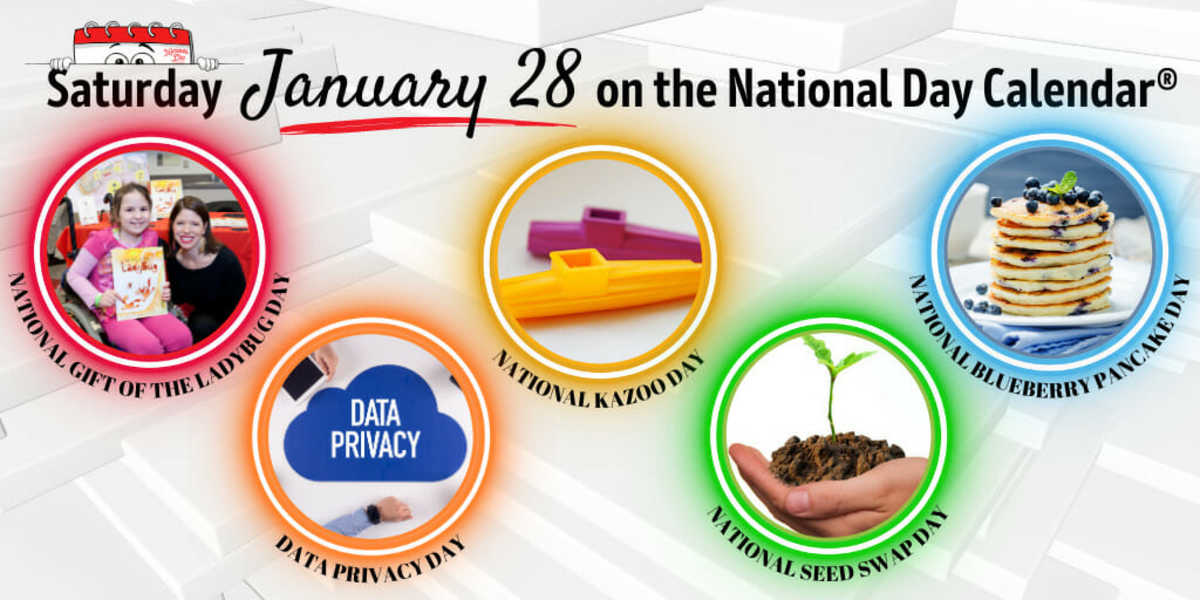
In the fast-paced world of technology, specific dates often serve as milestones for product launches, developer conferences, or fiscal reports. However, one date stands out for its universal significance across the global tech ecosystem: January 28th. Known internationally as Data Privacy Day (or Data Protection Day in Europe), this date marks a critical moment for reflection, education, and the advancement of digital security protocols.
As we navigate an era defined by generative AI, hyper-connectivity, and the commodification of personal information, January 28th serves as more than just a commemorative event. It is a catalyst for tech leaders, software developers, and everyday users to reassess their relationship with data. This article explores the technological weight of January 28th, the evolving landscape of digital security, and the tools required to safeguard our digital identities in an increasingly complex world.
The Evolution of Data Privacy Day: From Awareness to Action
The significance of January 28th is rooted in historical policy. On this day in 1981, the Council of Europe opened “Convention 108” for signature. This was the first legally binding international treaty dealing with privacy and data protection. In the decades since, the tech landscape has transformed from isolated mainframes to a global, cloud-based infrastructure. Consequently, the observance of this day has shifted from simple legal compliance to a fundamental pillar of software engineering and digital ethics.
The Origins of Convention 108
Convention 108 was visionary for its time, establishing principles that remain the bedrock of modern privacy laws like the GDPR (General Data Protection Regulation). It recognized that as technology advanced, the ability to collect and process personal data would outpace individual control. By commemorating this on January 28th, the tech community acknowledges that privacy is not an obstacle to innovation but a prerequisite for user trust.
Why the Digital Landscape Demands an Annual Check-up
In the current tech climate, a year is an eternity. New vulnerabilities are discovered, encryption standards are challenged, and data harvesting techniques become more sophisticated. January 28th acts as an annual “security audit” for the industry. It is a time when major tech firms release transparency reports and when security researchers highlight the emerging threats of the previous year. For tech professionals, it is a reminder that privacy is a dynamic process, not a static feature.
From “Opt-In” to “Privacy by Default”
One of the most significant shifts highlighted every January 28th is the move toward “Privacy by Default.” In the early days of the web, privacy was often an afterthought—a secondary setting buried in a menu. Today, the industry standard has shifted toward building systems where privacy is baked into the architecture. This evolution reflects a growing understanding that user data is a liability as much as an asset.
Navigating the Privacy Paradox in the Age of AI
As we look at the tech world on January 28th, 2024, and beyond, the most pressing topic is undoubtedly Artificial Intelligence. The explosion of Large Language Models (LLMs) and generative AI tools has created a new “Privacy Paradox”: users demand the highly personalized, efficient experiences that AI provides, yet they are increasingly wary of the massive data ingestion required to train these models.
Generative AI and Data Governance
The emergence of AI has complicated the definition of data privacy. When a user interacts with an AI chatbot, that interaction can become part of a training set. On January 28th, tech discussions often center on “Data Governance”—the frameworks that ensure AI development respects proprietary and personal information. Technologies like Federated Learning, where AI models are trained across decentralized devices without exchanging raw data, are becoming essential components of the modern tech stack.
Balancing Innovation with User Sovereignty
The core challenge for software architects today is maintaining user sovereignty. This means providing users with granular control over what data is shared and how it is utilized by machine learning algorithms. January 28th serves as a deadline for many companies to debut new privacy-centric features, such as enhanced “Ask App Not to Track” prompts or on-device processing capabilities that keep sensitive data out of the cloud.
The Rise of Synthetic Data
To mitigate privacy risks, the tech industry is increasingly turning to synthetic data—artificially generated data that mimics the statistical properties of real-world data without containing any identifiable information. This allows developers to train robust AI models while adhering to the highest privacy standards. January 28th is often the day when new breakthroughs in synthetic data generation are showcased as the future of ethical tech.
Essential Tools and Technologies for Modern Data Security
For the tech-savvy individual and the enterprise professional, January 28th is the ideal time to update the “security stack.” As cyber threats evolve from simple phishing to sophisticated AI-driven social engineering, the tools we use must be equally advanced.
Zero-Trust Architecture: The New Industry Standard
The “castle and moat” approach to security—where everything inside a network is trusted—is dead. In its place, the tech world has embraced “Zero-Trust Architecture.” This framework operates on the principle of “never trust, always verify.” Every user and device, whether inside or outside the network, must be authenticated and authorized before being granted access to data. Implementing Zero-Trust is a common goal for IT departments following their January 28th reviews.
Encryption and Privacy-Enhancing Technologies (PETs)
Encryption remains the most potent weapon in the privacy arsenal. However, the conversation is moving beyond simple End-to-End Encryption (E2EE). We are now seeing the rise of Privacy-Enhancing Technologies (PETs) like Homomorphic Encryption, which allows data to be processed while it is still encrypted. This means a cloud provider could perform calculations on your data without ever actually “seeing” the raw information.
Hardware-Level Security and Decentralized Identity
Software alone isn’t enough. On January 28th, hardware security is often spotlighted. This includes the use of hardware security keys (like YubiKeys) for multi-factor authentication and the integration of Secure Enclaves in mobile processors. Furthermore, the tech community is exploring Decentralized Identity (DID), which uses blockchain technology to allow users to prove their identity without relying on a central authority or a “Big Tech” login, effectively putting the user back in charge of their digital footprint.
The Business of Privacy: Regulatory Trends and Compliance
In the tech sector, privacy is no longer just a “nice-to-have” feature; it is a legal and business necessity. January 28th serves as a benchmark for companies to ensure they are aligned with global regulatory trends, which are becoming increasingly stringent.
From GDPR to Global Standards
Since the implementation of GDPR in Europe, several other jurisdictions have followed suit, including the CCPA (California Consumer Privacy Act) and various national laws in Asia and South America. For a tech company, staying compliant means having a deep understanding of data residency, the “right to be forgotten,” and mandatory breach notification protocols. January 28th is often used as a date for legal departments to sync with dev teams to ensure that new code releases don’t violate these evolving standards.
Building “Privacy by Design” into Software Development
“Privacy by Design” (PbD) is a framework that calls for privacy to be taken into account throughout the entire initial design process of a product. Instead of “patching” privacy holes after a launch, developers use January 28th as a reminder to conduct Privacy Impact Assessments (PIAs). This involves identifying and mitigating risks at the architectural level, ensuring that data minimization—only collecting what is strictly necessary—is a core tenet of the software’s logic.
The Cost of Non-Compliance vs. the Value of Trust
The financial implications of data breaches and regulatory fines are staggering. However, the tech industry is beginning to realize that the loss of user trust is even more expensive. Companies that prioritize privacy on January 28th and throughout the year often see higher user retention and brand loyalty. In this context, privacy becomes a competitive advantage in a crowded marketplace.
A Future-Proof Strategy for Individual and Corporate Security
As the sun sets on January 28th, the goal is to carry the lessons learned into the rest of the year. Whether you are a CTO managing a global infrastructure or a developer building a niche app, a proactive stance on privacy is the only way to future-proof your tech.
Proactive Auditing and Digital Hygiene
Digital hygiene is an ongoing commitment. This involves regular audits of third-party permissions, updating software to patch “zero-day” vulnerabilities, and utilizing password managers with high-entropy passphrases. For corporations, this means conducting regular “red team” exercises to simulate cyberattacks and find weaknesses in the privacy shield before malicious actors do.
Cultivating a Privacy-First Culture
The strongest encryption in the world can be undone by a single human error. Therefore, the tech industry uses January 28th to emphasize the “human element.” Cultivating a privacy-first culture means training every employee—from sales to engineering—to recognize the value of data protection. It means encouraging a mindset where “How can we protect this data?” is asked as often as “How can we use this data?”

Looking Toward the Quantum Horizon
Finally, January 28th invites us to look at the “Next Big Thing” in tech: Quantum Computing. While quantum computers promise to solve complex problems, they also pose a theoretical threat to current encryption methods. The tech community is already working on “Post-Quantum Cryptography” (PQC). Acknowledging these future threats on Data Privacy Day ensures that the industry remains one step ahead, protecting the digital world of tomorrow with the innovations of today.
In conclusion, when someone asks, “What day is January 28th?” the answer is much more than a date on a calendar. In the tech world, it is a day of accountability, innovation, and a renewed commitment to the fundamental right of privacy. It is the day we acknowledge that while technology may change, our responsibility to protect the people who use it remains constant.
aViewFromTheCave is a participant in the Amazon Services LLC Associates Program, an affiliate advertising program designed to provide a means for sites to earn advertising fees by advertising and linking to Amazon.com. Amazon, the Amazon logo, AmazonSupply, and the AmazonSupply logo are trademarks of Amazon.com, Inc. or its affiliates. As an Amazon Associate we earn affiliate commissions from qualifying purchases.