
In an era where data is often described as the “new oil,” the security of that data has become the most critical challenge of the digital age. Every time you send an email, purchase a product online, or log into your banking portal, a sophisticated process occurs behind the scenes to ensure your private information does not fall into the wrong hands. At the heart of this process lies a fundamental concept in cryptography: ciphertext.
To the untrained eye, ciphertext looks like a meaningless jumble of random characters, numbers, and symbols. However, it is the primary line of defense protecting the global digital economy. In this article, we will explore the technical nuances of ciphertext, how it is generated, its role in modern software and apps, and why it remains the cornerstone of digital security.

The Mechanics of Cryptography: From Plaintext to Ciphertext
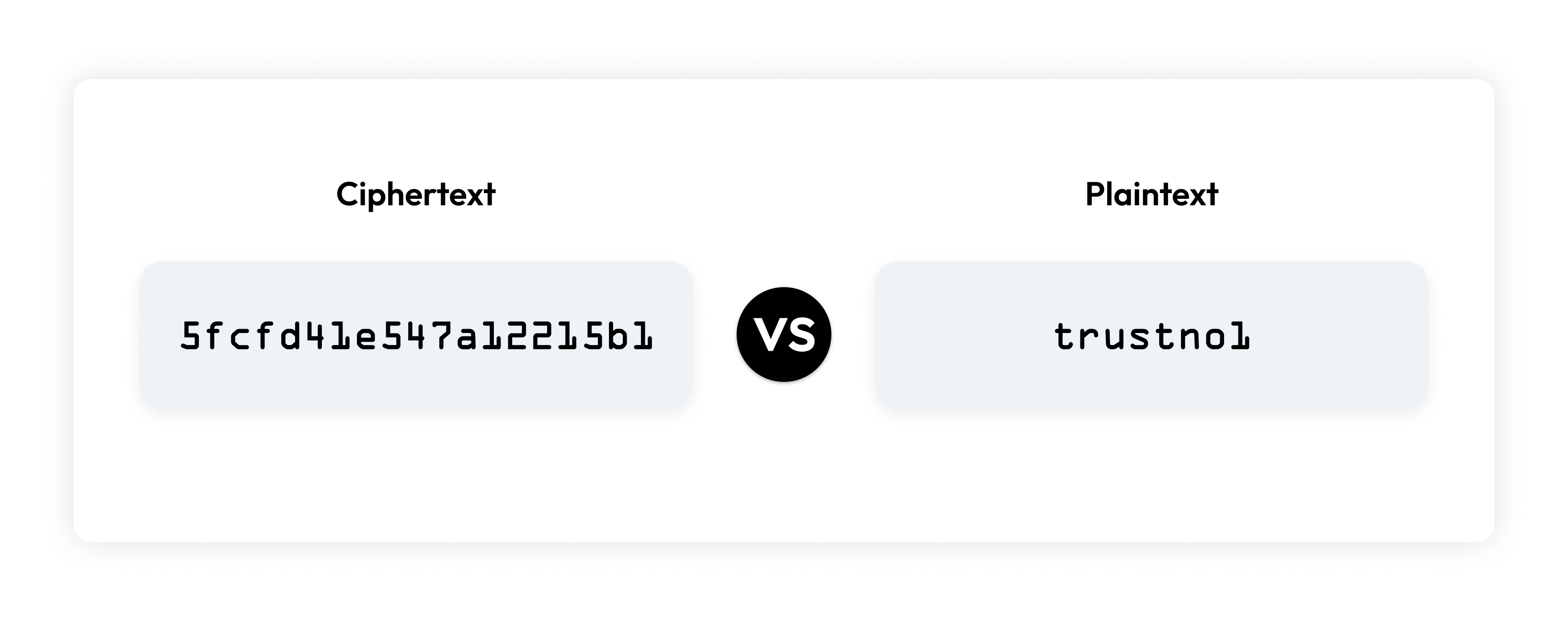
To understand ciphertext, one must first understand its precursor: plaintext. Plaintext is any data that is unencrypted and human-readable, such as a text message saying “Hello” or a credit card number. Ciphertext is the transformed version of that plaintext, rendered unreadable through the application of a cryptographic algorithm and a specific key.
The Role of Encryption Algorithms
An encryption algorithm, often called a “cipher,” is a mathematical formula used to transform the input (plaintext) into the output (ciphertext). In modern technology, these algorithms are incredibly complex. Historically, simple ciphers like the Caesar Cipher—which merely shifted letters of the alphabet—were used. Today, we rely on advanced standards like the Advanced Encryption Standard (AES) and RSA.
These algorithms are designed so that even if an attacker knows exactly which formula was used to scramble the data, they cannot reverse the process without the corresponding “key.” The strength of ciphertext depends largely on the “computational hardness” of the algorithm; it should be mathematically impossible for a standard computer to crack the code within a reasonable timeframe.
The Importance of Cryptographic Keys
If the algorithm is the lock, the key is the physical device that opens it. A key is a string of bits used by the cryptographic algorithm to tailor the encryption process. Even if two people use the same AES algorithm to encrypt the same word, their resulting ciphertext will be completely different if they use different keys.
In the world of digital security, key management is just as important as the algorithm itself. If a key is too short, it can be guessed through a “brute force” attack. If a key is stolen, the ciphertext becomes useless because the thief can simply “decrypt” it back into plaintext. This is why modern software emphasizes high-entropy, long-bit keys (such as 256-bit keys) to ensure the integrity of the ciphertext.
Types of Encryption: Creating Secure Ciphertext
The method by which ciphertext is created generally falls into two technological categories: symmetric and asymmetric encryption. Both serve unique roles in software development and network security.
Symmetric Encryption: Speed and Efficiency
Symmetric encryption is the oldest and most straightforward method. In this system, the same key is used for both encrypting the plaintext and decrypting the ciphertext. Think of it like a shared password between two parties.
The primary advantage of symmetric encryption is speed. Because the mathematical operations are less complex than asymmetric methods, it is ideal for encrypting large volumes of data, such as the entire contents of a hard drive or a massive database. Common examples include AES, which is the gold standard for protecting “data at rest.” However, the challenge lies in “key exchange”—how do you securely share the key with the recipient without someone intercepting it?
Asymmetric Encryption: The Public Key Revolution
Asymmetric encryption, or Public Key Cryptography, solved the key exchange problem. It uses a pair of keys: a public key (which can be shared with anyone) and a private key (which is kept secret).
When someone wants to send you a secure message, they use your public key to turn their plaintext into ciphertext. Once that data is encrypted, only your private key can decrypt it. Even the person who encrypted the message cannot “un-encrypt” it once it has been transformed into ciphertext. This technology is what allows the modern internet to function securely, enabling millions of strangers to conduct private transactions every second without ever having met to exchange a secret key.
Practical Applications: Where Ciphertext Protects Your Digital Life
Ciphertext isn’t just a theoretical concept; it is an active component of almost every app and gadget you use. It functions as a silent guardian, ensuring that even if data is intercepted, it remains useless to the interceptor.
HTTPS and Secure Web Browsing
Whenever you see a padlock icon in your browser’s address bar, you are interacting with ciphertext. Hypertext Transfer Protocol Secure (HTTPS) uses Transport Layer Security (TLS) to encrypt the data flowing between your browser and the web server. When you enter your password on a website, it is converted into ciphertext before it travels across the internet. If a hacker intercepts the data packets at a public Wi-Fi hotspot, they will see only the garbled ciphertext, keeping your credentials safe.
End-to-End Encryption (E2EE) in Messaging
Mobile apps like Signal, WhatsApp, and iMessage have brought ciphertext into the mainstream through End-to-End Encryption. In an E2EE environment, the plaintext is converted to ciphertext on the sender’s device and is only decrypted on the recipient’s device.
The service provider (the company running the app) never has access to the keys. This means that even if a government or a rogue employee requests access to your messages from the company’s servers, the company can only provide ciphertext—a meaningless string of data that they themselves cannot read. This has become a vital tool for privacy advocates and professionals handling sensitive information.
Protecting Data at Rest and Cloud Storage
Ciphertext is equally important for stored data, known as “data at rest.” Modern operating systems like Windows (BitLocker) and macOS (FileVault) offer full-disk encryption. This ensures that if your laptop is stolen, the thief cannot access your files because the hard drive’s contents are stored as ciphertext. Similarly, reputable cloud storage providers encrypt your files before storing them in their data centers, ensuring that a data breach at the server level doesn’t result in the exposure of your private documents.
The Future of Ciphertext: Quantum Threats and Trends
As technology evolves, so do the threats against it. The field of digital security is currently facing a “cryptographic arms race” as computing power increases and new paradigms emerge.
The Threat of Quantum Computing
The most significant future threat to current ciphertext standards is quantum computing. Traditional computers use bits (0s and 1s), but quantum computers use qubits, which can exist in multiple states simultaneously. This allows them to perform certain types of mathematics—specifically the kind used to break asymmetric encryption like RSA—at speeds that are millions of times faster than today’s supercomputers.
If a powerful enough quantum computer is built, today’s ciphertext could be decrypted in seconds. To counter this, tech researchers and government agencies are currently developing “Post-Quantum Cryptography” (PQC). These are new types of algorithms designed to produce ciphertext that is resistant to quantum attacks, ensuring that our digital foundations remain secure for decades to come.
The Rise of Homomorphic Encryption
An exciting trend in software and AI is “Homomorphic Encryption.” Traditionally, if a computer needs to process or analyze data, that data must first be decrypted back into plaintext. This creates a window of vulnerability. Homomorphic encryption allows computations to be performed directly on the ciphertext without ever decrypting it.
For example, a medical research AI could analyze encrypted patient records to find trends in a disease without ever “seeing” the patients’ actual names or private details. The result of the calculation is returned as ciphertext, which only the authorized user can decrypt. This represents the next frontier in data privacy and secure cloud computing.

Conclusion: The Invisible Shield
Ciphertext is the invisible shield of the digital world. While we rarely think about it, its presence is what allows us to trust the software, apps, and gadgets that define modern life. By transforming our most sensitive plaintext into unreadable, mathematically secure ciphertext, cryptography ensures that our privacy remains intact in an increasingly connected landscape.
As we move toward a future of AI, quantum computing, and hyper-connectivity, the methods we use to create ciphertext will continue to evolve. However, the core principle will remain the same: in the battle for digital security, the best way to protect a secret is to turn it into a puzzle that no one can solve. Understanding what ciphertext is—and the technology that powers it—is the first step in becoming a more informed and secure participant in the digital age.
aViewFromTheCave is a participant in the Amazon Services LLC Associates Program, an affiliate advertising program designed to provide a means for sites to earn advertising fees by advertising and linking to Amazon.com. Amazon, the Amazon logo, AmazonSupply, and the AmazonSupply logo are trademarks of Amazon.com, Inc. or its affiliates. As an Amazon Associate we earn affiliate commissions from qualifying purchases.