
In the rapidly evolving landscape of software engineering, data science, and artificial intelligence, certain mathematical concepts serve as the silent engines driving innovation. Among these, the determinant of a matrix stands as one of the most critical tools in a developer’s or data scientist’s arsenal. While often introduced in introductory linear algebra courses, the “determinant matrix”—or more accurately, the determinant calculated from a square matrix—is far more than an academic exercise. It is a fundamental property that dictates how software handles 3D spaces, how AI models interpret high-dimensional data, and how secure systems protect sensitive information.

Understanding the determinant is essential for anyone looking to master the technical architecture of modern digital tools. This article explores the technical nuances of the determinant, its geometric significance in software, and its indispensable role across various technology sectors.
Understanding the Fundamentals: What is a Determinant in the Context of Computing?
To understand the determinant, one must first view a matrix not just as a grid of numbers, but as a linear transformation. In the tech world, matrices are used to represent movements, rotations, and scaling within a digital environment. The determinant is a scalar value (a single number) that can be calculated from any square matrix, and it provides a “summary” of the transformation that the matrix represents.
Defining the Determinant: The Scalar Value of a Linear Transformation
Mathematically, the determinant of a matrix (denoted as $|A|$ or $text{det}(A)$) characterizes the change in volume or area that occurs when a linear transformation is applied. From a software perspective, if you have a matrix representing a 3D model’s movement, the determinant tells the engine how much that model is being stretched or squashed. If the determinant is 1, the transformation preserves volume. If it is greater than 1, the object expands; if less than 1 (but greater than 0), it shrinks.
The Logic of Square Matrices and Invertibility
In computation, we specifically focus on square matrices ($n times n$) because they represent transformations from a space back into a space of the same dimension. A crucial technical takeaway for any developer is the concept of the “singular matrix.” If the determinant of a matrix is exactly zero, the matrix is singular, meaning it cannot be inverted.
In software terms, a zero determinant indicates that the transformation has collapsed the data into a lower dimension—for example, squashing a 3D object into a flat 2D plane. This makes it impossible to “undo” the action, leading to errors in algorithms that require matrix inversion, such as those used in camera pathing or physics simulations.
Geometric Interpretation: Scaling Factors in Digital Environments
The geometric intuition behind the determinant is vital for computer graphics. When a software program applies a transformation matrix to a set of coordinates, the determinant tells us the factor by which areas (in 2D) or volumes (in 3D) are multiplied. If the determinant is negative, it indicates a “flip” or a reflection in the coordinate system, a critical piece of information for rendering engines that need to know which way a surface “face” is pointing (the surface normal).
Applications in Computer Graphics and Game Development
Perhaps the most visible application of the determinant matrix is in the field of computer graphics and the development of AAA video games. Modern GPUs (Graphics Processing Units) are specifically designed to perform millions of matrix calculations per second, and determinants play a key role in ensuring these visuals are rendered accurately.
3D Rendering and Coordinate Transformations
Every time a player moves their character in a game, the engine must translate, rotate, and scale thousands of polygons. These actions are represented by 4×4 matrices. The determinant is used behind the scenes to ensure that these transformations do not distort the models in unintended ways. For instance, in “skinning”—the process of attaching a 3D mesh to a digital skeleton—determinants help verify that the mesh doesn’t collapse on itself during complex animations.
Determining Invertibility for Camera Projections
In 3D software, the “Camera” is essentially a mathematical point defined by a View-Projection matrix. To transform a 3D world onto your flat 2D screen, the computer performs a series of matrix multiplications. However, developers often need to perform “ray-casting” (determining where a mouse click in 2D hits an object in 3D). This requires inverting the projection matrix. Before attempting this computationally expensive operation, the software checks the determinant. If the determinant is zero or near-zero (due to floating-point errors), the system knows the matrix is non-invertible, preventing the application from crashing.
Collision Detection and Physics Engines
Physics engines, such as Havok or PhysX, rely on determinants to solve systems of linear equations that represent physical constraints. When two objects collide, the engine calculates the impulse and reaction forces. The determinant helps in determining whether the set of equations describing the contact point has a unique solution. Furthermore, determinants are used to calculate the “Moment of Inertia” for complex shapes, allowing software to realistically simulate how an object spins when struck.
The Determinant’s Impact on Machine Learning and Artificial Intelligence
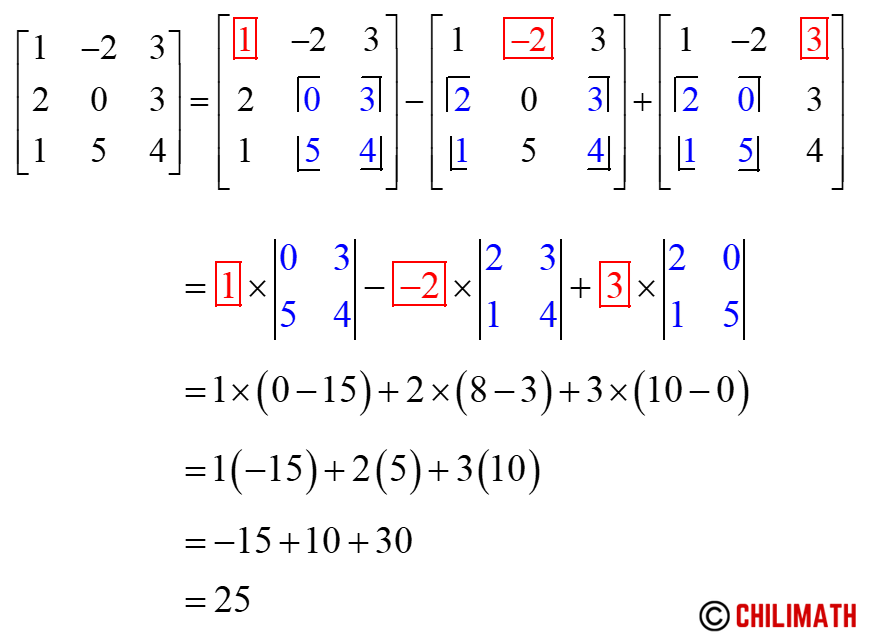
In the realm of Data Science and AI, the determinant matrix is a core component of the “Linear Algebra” foundation upon which neural networks are built. As we move into an era of Big Data, the ability to interpret the properties of large matrices is what allows AI to find patterns in noise.
Linear Algebra as the Foundation of Neural Networks
Neural networks operate by passing input data through layers of weights, which are represented as matrices. During the training phase (backpropagation), the software optimizes these weights. While the determinant isn’t calculated for every layer (as many are not square), it is vital in understanding the “Jacobian” and “Hessian” matrices. These matrices of partial derivatives use determinants to determine the curvature of the loss function, helping optimization algorithms like Stochastic Gradient Descent find the most efficient path to accuracy.
Principal Component Analysis (PCA) and Dimensionality Reduction
One of the biggest challenges in tech is “The Curse of Dimensionality”—having too many variables for a computer to process efficiently. PCA is a technique used to compress data while keeping the most important information. This process involves finding the eigenvalues of a covariance matrix. The product of these eigenvalues is equal to the determinant of the matrix. By analyzing the determinant, data scientists can understand the total variance within a dataset and determine how much information is lost when the data is compressed.
Optimizing Algorithms through Matrix Decomposition
Complex AI tasks often require “Matrix Decomposition” (like LU or QR decomposition). These methods break a large, complex matrix into simpler parts to speed up computation. The determinant of the original matrix is easily found by multiplying the determinants of its decomposed parts. This allows AI software to check for “numerical stability”—ensuring that the data hasn’t become so skewed during processing that the results become unreliable.
Digital Security and Cryptographic Implementations
While we often think of determinants in terms of visuals or data patterns, they also play a foundational role in digital security. Cryptography relies heavily on modular arithmetic and matrix transformations to obfuscate data.
Matrix-Based Encryption: The Hill Cipher
One of the classic examples of matrices in security is the Hill Cipher. In this method, a block of text is converted into a series of numbers (a vector) and multiplied by a key matrix. To decrypt the message, the recipient must multiply the ciphertext by the inverse of that key matrix. For a key matrix to be valid, its determinant must be non-zero and must share no common factors with the alphabet size (coprime). Without a solid understanding of the determinant, creating a functional and secure matrix-based encryption system would be impossible.
Data Integrity and Error Detection
In high-speed data transmission, matrices are used in “Error Correcting Codes.” When data is sent over a noisy channel (like a satellite link or a weak Wi-Fi signal), it can become corrupted. Determinant-based calculations allow the receiving software to detect if the incoming data matrix has been altered, ensuring that the file you download is bit-for-bit identical to the one sent.
Future Trends: Quantum Computing and High-Dimensional Matrices
As we look toward the future of technology, the role of the determinant matrix is expanding into the quantum realm. Quantum computing utilizes “Unitary Matrices” to represent quantum gates.
Quantum Gates and Unitary Transformations
In quantum computing, every operation is a transformation of a state vector. These transformations must be reversible, which means the matrices representing them must have a determinant with an absolute value of 1. As tech giants like Google and IBM race to achieve quantum supremacy, the mathematical verification of these determinants is essential for maintaining “coherence” in quantum bits (qubits).
Handling Computational Complexity
One of the current hurdles in tech is the “Big O” complexity of calculating determinants for massive datasets. For an $n times n$ matrix, a naive calculation is computationally expensive. Modern software research focuses on “Fast Determinant Algorithms” that utilize parallel processing and distributed computing. As we move toward processing petabytes of data in real-time, the efficiency of these determinant calculations will define the next generation of high-performance computing.

Conclusion
The determinant matrix is far more than a relic of high school mathematics; it is a vital metric that defines the boundaries of what is possible in the digital world. From ensuring that a 3D character moves realistically in a video game to enabling the complex data compression that powers modern AI, the determinant provides the “sanity check” for linear transformations.
For tech professionals—whether they are developers, security analysts, or data scientists—mastering the implications of the determinant is key to building stable, efficient, and innovative software. As we push the limits of technology into quantum computing and hyper-intelligent AI, this fundamental scalar value will remain at the heart of the computational revolution, quietly ensuring that our digital transformations remain accurate, invertible, and secure.
aViewFromTheCave is a participant in the Amazon Services LLC Associates Program, an affiliate advertising program designed to provide a means for sites to earn advertising fees by advertising and linking to Amazon.com. Amazon, the Amazon logo, AmazonSupply, and the AmazonSupply logo are trademarks of Amazon.com, Inc. or its affiliates. As an Amazon Associate we earn affiliate commissions from qualifying purchases.