
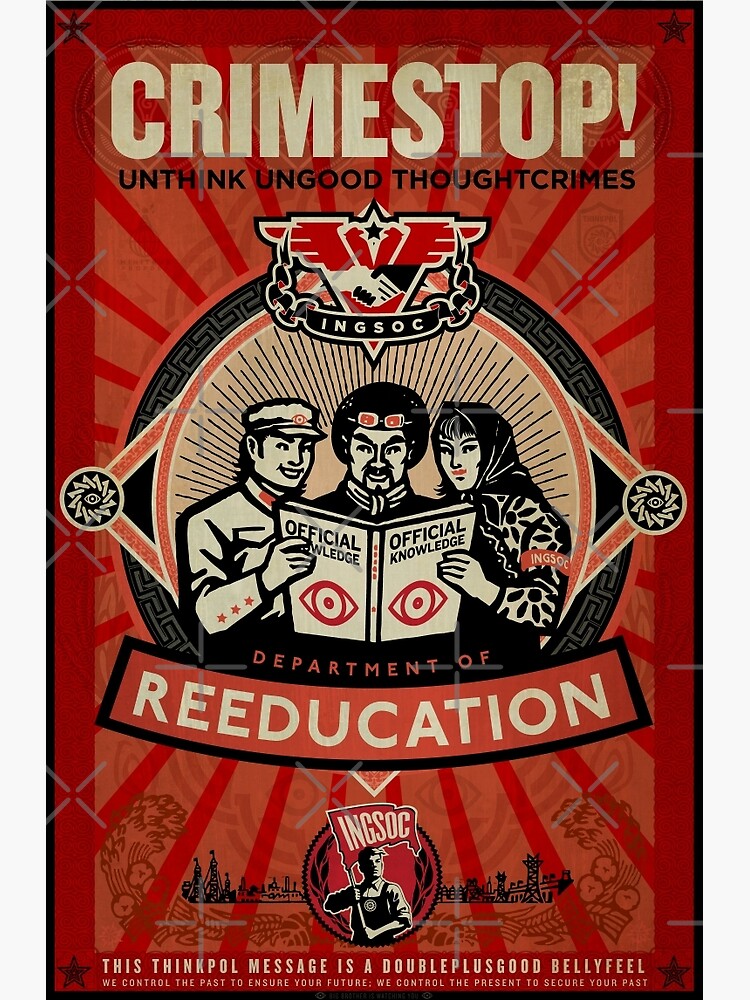
In the annals of literature, George Orwell’s 1984 stands as a haunting premonition of a world governed by “Ingsoc”—a newspeak shorthand for English Socialism. While the term originated in a mid-20th-century dystopian novel, its architectural principles have become increasingly relevant in the 21st-century technological landscape. Today, Ingsoc is no longer just a fictional political ideology; it serves as a conceptual framework for understanding the intersection of mass surveillance, artificial intelligence, and digital data control.
As we navigate an era defined by ubiquitous connectivity, the core tenets of Ingsoc—totalitarian oversight, the erosion of privacy, and the manipulation of information—are being facilitated by the very tools we use to work, socialize, and explore. This article examines the technological manifestations of Ingsoc in the modern world and how today’s software and hardware ecosystems echo the warnings of Orwell.

The Architecture of Digital Surveillance: From Telescreens to Smart Devices
In Orwell’s vision, the primary tool of the state was the “telescreen,” a device that simultaneously broadcasted propaganda and monitored the movements of citizens. In the modern tech niche, we see the evolution of this concept through the Internet of Things (IoT) and the proliferation of integrated sensors.
The Ubiquity of the Modern Telescreen
Today, we do not have a single screen mounted on a wall; we carry high-powered monitoring devices in our pockets. Smartphones, equipped with high-resolution cameras, sensitive microphones, and GPS trackers, perform the functions of a telescreen with far greater efficiency. Unlike the forced installation of telescreens in 1984, modern consumers willingly integrate these devices into their lives, creating a voluntary surveillance network that feeds massive amounts of telemetry data back to centralized servers.
Smart Homes and Ambient Intelligence
The “Inner Party” of the digital age consists of cloud-based AI systems that power smart homes. Devices like smart speakers and connected thermostats are designed to be “always-on,” listening for wake words. From a technical perspective, this requires continuous audio buffering. While tech companies emphasize security and user experience, the structural reality is an environment where domestic privacy is subordinated to data collection—a fundamental pillar of Ingsoc.
Newspeak and the Algorithmic Narrowing of Language
Ingsoc’s most potent weapon was Newspeak, a language designed to diminish the range of thought by eliminating words. In the realm of software and AI, we are seeing a digital version of this through algorithmic filtering and the automation of expression.
Predictive Text and the Standardizing of Thought
Large Language Models (LLMs) and predictive text algorithms are the modern engines of Newspeak. By suggesting the “most likely” next word or auto-completing sentences, these tools subtly nudge human expression toward a mean. When software dictates the structure of our communication, it reduces the complexity of individual thought, favoring efficiency over nuance. Over time, this technological “shorthand” limits the linguistic diversity required for critical dissent.
Content Moderation and Shadowbanning
Digital platforms utilize sophisticated AI filters to police discourse. While often framed as a tool for safety, the technical infrastructure of “shadowbanning” or algorithmic demotion mirrors the Ingsoc practice of making individuals “unpersons.” When an algorithm removes a user’s digital footprint or suppresses their visibility without notice, it exercises a form of technical erasure that Orwell identified as the ultimate tool of social control.
Doublethink in the Age of Big Data and Social Engineering
“Doublethink” is the act of holding two contradictory beliefs simultaneously. In the tech sector, this manifests in the cognitive dissonance users experience regarding data privacy. We value our secrets, yet we feed our most intimate details into the “Big Data” machine.

The Illusion of Free Choice in UX Design
User Interface (UI) and User Experience (UX) design often employ “dark patterns”—manipulative design choices that trick users into sharing more data than intended. This creates a technical environment where the user believes they are in control, while the underlying code is optimized for extraction. This duality is the essence of digital Doublethink: the platform is “free” and “user-centric,” yet the user is the product being harvested.
Data Synthesis and the End of Objective Truth
Ingsoc famously claimed that “2 + 2 = 5” if the Party decreed it. In our world, “Deepfakes” and generative AI pose a similar threat to objective reality. The technical ability to synthesize voice, video, and text makes it increasingly difficult for individuals to verify the truth. When reality can be programmatically altered, the central authority—or the entity controlling the algorithm—gains the power to redefine truth for the masses.
Thoughtcrime and the Rise of Predictive Analytics
In the novel, Thoughtcrime was the act of thinking something contrary to the state. In modern technology, we are approaching a “pre-crime” era driven by predictive analytics and behavioral modeling.
Behavioral Biometrics and Emotional AI
Modern software is no longer content with tracking what we do; it aims to track how we feel. Emotional AI uses computer vision to analyze facial micro-expressions and gait analysis to predict intent. By processing these biometric data points, tech firms can create profiles that predict a user’s future actions. From a security standpoint, this is marketed as a preventative measure, but from a civil liberties perspective, it is the technical realization of monitoring Thoughtcrime.
Social Credit Systems and Digital Compliance
The integration of financial tech (FinTech) with social monitoring has birthed the social credit system. These platforms use AI to aggregate a user’s digital behavior—purchases, social media posts, and even the “quality” of their connections—into a single score. Low scores can result in restricted access to high-speed internet, travel, or banking services. This is the ultimate expression of Ingsoc: a tech-enforced hierarchy where compliance is the only way to maintain digital functionality.
Reclaiming the Digital Self: Counter-Ingsoc Technologies
While the parallels between 1984 and modern tech are stark, the same industry provides the tools for resistance. For every surveillance mechanism, there is a cryptographic counter-measure designed to protect individual autonomy.
Decentralization and the Move Away from Big Tech
The centralization of data is what allowed the “Inner Party” to maintain control. Today, the rise of decentralized technologies, such as blockchain and peer-to-peer (P2P) networks, offers an alternative. By distributing data across a global network rather than a single corporate server, users can circumvent the centralized choke points that Ingsoc-style systems rely on.
Encryption as the Final Frontier of Privacy
End-to-end encryption (E2EE) is the modern citizen’s most effective defense against Ingsoc. When data is encrypted at the source, it becomes unreadable to intermediaries, including service providers and government agencies. The ongoing “Crypto Wars” between tech companies and regulators highlight the tension between state control and technical privacy. Maintaining robust encryption standards is essential for preventing the total transparency that Orwell feared.
Conclusion: Navigating the Ingsoc Paradigm
Understanding “What is Ingsoc 1984” is no longer a literary exercise; it is a prerequisite for digital literacy in the 21st century. The technologies of the modern era—AI, IoT, and Big Data—possess a dual nature. They offer unprecedented convenience and connection, but they also provide the structural components for a level of oversight that even Big Brother could not have imagined.
As developers, engineers, and users, we must remain vigilant about the “Ingsoc-ification” of our digital tools. By prioritizing privacy-focused software, advocating for transparent algorithms, and supporting decentralized infrastructures, we can ensure that the year 1984 remains a cautionary tale of the past rather than a technical blueprint for our future. The battle for the digital self is fought in the code we write, the apps we download, and the data we choose to withhold.
aViewFromTheCave is a participant in the Amazon Services LLC Associates Program, an affiliate advertising program designed to provide a means for sites to earn advertising fees by advertising and linking to Amazon.com. Amazon, the Amazon logo, AmazonSupply, and the AmazonSupply logo are trademarks of Amazon.com, Inc. or its affiliates. As an Amazon Associate we earn affiliate commissions from qualifying purchases.