
In the vast and often complex world of finance, few benchmarks command as much attention and respect as the S&P 500. Heard on news broadcasts, discussed in investment forums, and frequently referenced by financial advisors, the S&P 500 is more than just a list of companies; it’s a powerful indicator of the U.S. economy’s health and a cornerstone for many investment portfolios. But what exactly does it mean to talk about an “S&P 500 share,” and how can an everyday investor gain exposure to this influential index?
This article will demystify the S&P 500, explaining its composition, significance, and, most importantly, the practical ways investors can incorporate it into their financial strategy. We’ll delve into the mechanisms that allow you to invest in a diversified slice of America’s largest companies, highlighting the benefits and considerations of such an approach. Whether you’re a seasoned investor or just starting your financial journey, understanding the S&P 500 is fundamental to navigating the stock market effectively and building a robust, diversified investment portfolio.

Deconstructing the S&P 500 Index
Before we discuss how to invest, it’s crucial to understand what the S&P 500 truly represents. It’s not a single stock you can buy, but rather an index – a statistical measure of change in an economy or a stock market.
The Index Itself: A Market Barometer
The S&P 500, or Standard & Poor’s 500, is a stock market index that tracks the stock performance of 500 of the largest companies listed on stock exchanges in the United States. Unlike simpler indices that might just average prices, the S&P 500 is a capitalization-weighted index. This means that companies with larger market values (share price multiplied by the number of shares outstanding) have a greater impact on the index’s movement than smaller companies. For instance, if Apple (a massive company by market cap) experiences a significant price swing, it will affect the S&P 500 more profoundly than a similarly sized percentage swing in a smaller constituent company.
Considered one of the best gauges of large-cap U.S. equities and a proxy for the broader U.S. economy, the S&P 500 is maintained by S&P Dow Jones Indices. Its performance is often cited as the benchmark against which professional money managers measure their own returns. When you hear that “the market is up” or “the market is down,” more often than not, people are referring to the S&P 500’s performance. Its diverse representation across numerous sectors provides a comprehensive snapshot of American corporate prosperity and sentiment.
Who are the 500 Companies?
The selection of the 500 companies is not arbitrary. S&P Dow Jones Indices employs a committee that applies specific criteria for inclusion, ensuring the index remains relevant and representative. These criteria typically include:
- U.S. Based: The company must be headquartered in the United States.
- Large Market Capitalization: While the “500” refers to the number of companies, they must also meet certain size thresholds to be considered large-cap.
- Liquidity: The company’s stock must be actively traded to ensure that changes in its price accurately reflect market sentiment and are not easily manipulated.
- Profitability: Companies generally must have positive reported earnings in their most recent quarter and positive cumulative earnings over the prior four quarters.
- Sector Representation: The committee also considers balance across various sectors to ensure the index isn’t overly concentrated in one industry, though market forces can still lead to natural concentrations over time (e.g., the significant weighting of technology companies in recent years).
The list of 500 companies is not static. Companies are added and removed periodically due to mergers, acquisitions, bankruptcies, or if they no longer meet the inclusion criteria. This dynamic nature keeps the index fresh and ensures it continues to reflect the current landscape of leading U.S. corporations, making it a living, breathing representation of the American economic engine.
Why the S&P 500 Matters to Investors
For individual and institutional investors alike, the S&P 500 holds immense significance. Firstly, it serves as a critical benchmark for investment portfolio performance. If an investment fund claims to outperform the market, its returns are almost always compared against the S&P 500. Secondly, its broad diversification means it’s often seen as a reliable indicator of economic health. A rising S&P 500 typically signals investor confidence and economic growth, while a falling index can suggest uncertainty or recessionary fears.
Furthermore, investing in the S&P 500 inherently offers a degree of diversification. Instead of picking individual stocks, which carry company-specific risks, an S&P 500 investment grants exposure to 500 different businesses across numerous industries. This helps mitigate the risk that a poor performance by one or a few companies will severely impact your overall portfolio. It’s a way to participate in the collective success of America’s corporate giants without the exhaustive research required to select individual winners.
Investing in the S&P 500: Beyond Individual Shares
Now that we understand what the S&P 500 is, the next crucial step is to address the practicalities of investing. You cannot buy “an S&P 500 share” in the same way you buy a share of Apple or Microsoft. Instead, you invest in the index through specific financial instruments designed to mirror its performance.
The Concept of an “S&P 500 Share” Refined
When people refer to an “S&P 500 share,” they are typically thinking of an investment vehicle that tracks the S&P 500 index. These vehicles aim to replicate the index’s performance, meaning that if the S&P 500 goes up by 1%, the value of your investment in that vehicle should also go up by approximately 1% (before fees). This is known as passive investing or index investing, a strategy that has gained immense popularity for its simplicity, diversification, and often lower costs compared to actively managed funds.
The core idea is to own a tiny proportional slice of all 500 companies in the index, weighted in the same way the index itself is weighted. This would be incredibly cumbersome, if not impossible, for an individual investor to do on their own. This is where financial products like Exchange-Traded Funds (ETFs) and index mutual funds come into play.
Exchange-Traded Funds (ETFs) Tracking the S&P 500
ETFs are perhaps the most popular way for modern investors to gain exposure to the S&P 500. An ETF is a type of investment fund that holds assets such as stocks, bonds, or commodities, and trades on stock exchanges just like regular stocks. S&P 500 ETFs hold the shares of the 500 companies in the same proportions as the index itself.
Key characteristics and advantages of S&P 500 ETFs include:
- Intraday Trading: You can buy and sell ETF shares throughout the trading day at market prices, offering flexibility similar to individual stocks.
- Low Expense Ratios: Because they are passively managed (they simply track the index rather than trying to beat it), S&P 500 ETFs typically have very low management fees (expense ratios) compared to actively managed mutual funds. This can significantly impact long-term returns.
- Diversification: With a single purchase, you gain immediate diversification across 500 large U.S. companies and numerous sectors.
- Accessibility: Many ETFs can be bought with no commission through most brokerage accounts, and you can buy as little as one share.
- Tax Efficiency: ETFs often have a structure that makes them more tax-efficient than traditional mutual funds for taxable accounts.
Popular examples of S&P 500 ETFs include SPDR S&P 500 ETF Trust (SPY), iShares Core S&P 500 (IVV), and Vanguard S&P 500 ETF (VOO). These are highly liquid and widely available, making them an excellent choice for many investors.
Mutual Funds Based on the S&P 500 Index
Another common vehicle for investing in the S&P 500 is through an index mutual fund. Unlike actively managed mutual funds, which have portfolio managers attempting to “pick winners” and outperform the market, S&P 500 index mutual funds are designed to simply track the performance of the S&P 500.
Key aspects of S&P 500 index mutual funds:
- End-of-Day Pricing: Mutual fund shares are typically bought and sold at their Net Asset Value (NAV) calculated at the end of the trading day. This means you can’t trade them throughout the day like ETFs.
- Automatic Reinvestment: Many mutual funds offer automatic reinvestment of dividends and capital gains, which can be a convenient feature for long-term investors.
- Diversification: Like ETFs, they offer instant diversification across the S&P 500 companies.
- Low Expense Ratios: While generally slightly higher than comparable ETFs, S&P 500 index mutual funds still boast significantly lower expense ratios than actively managed funds.
- Minimum Investments: Some mutual funds may have higher initial minimum investment requirements than ETFs, though many prominent fund providers offer index funds with low or no minimums.
Well-known providers like Vanguard, Fidelity, and Charles Schwab offer excellent S&P 500 index mutual funds (e.g., Vanguard 500 Index Fund Admiral Shares (VFIAX)). These are often favored by investors who prefer to set it and forget it, especially within retirement accounts like 401(k)s or IRAs, where daily trading flexibility is less of a concern.
Advantages and Considerations of S&P 500 Investing
Investing in the S&P 500 offers a compelling proposition for a broad range of investors due to its inherent benefits. However, like any investment, it also comes with certain considerations and potential drawbacks that prudent investors should be aware of.
Key Benefits for Your Portfolio
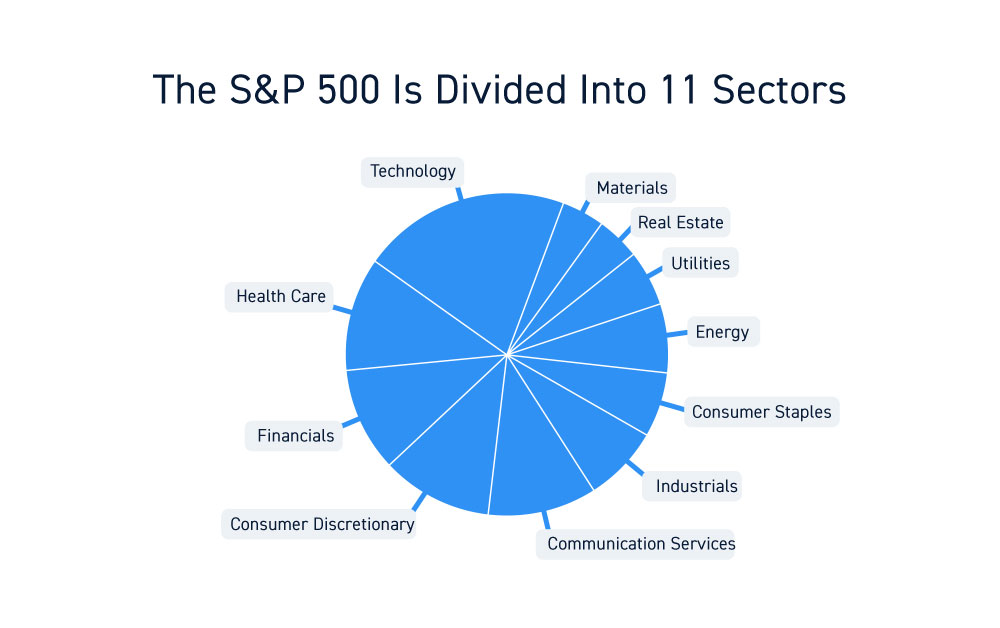
- Instant Diversification: This is arguably the most significant advantage. By investing in an S&P 500 tracking product, you immediately gain exposure to 500 of the largest U.S. companies across a multitude of sectors, including technology, healthcare, finance, consumer discretionary, industrials, and more. This broad exposure significantly reduces the risk associated with investing in individual stocks. If one company falters, its impact on your overall portfolio is minimized.
- Lower Risk (Relative): While no investment is risk-free, the diversified nature of the S&P 500 helps smooth out volatility compared to holding a handful of individual stocks. It essentially pools your money across a broad swath of the market, making your portfolio less susceptible to company-specific shocks.
- Historical Performance: Over the long term, the S&P 500 has demonstrated a strong historical track record of growth. While past performance is not indicative of future results, the index has historically averaged returns of around 10-12% annually, making it a powerful wealth-building tool for patient investors. It allows investors to participate in the long-term growth of the U.S. economy.
- Simplicity and Low Cost: S&P 500 index funds and ETFs are remarkably simple to understand and manage. Their passive nature means very low expense ratios, which can translate into significant savings over decades of investing. This “set it and forget it” approach appeals to many who don’t have the time or inclination for active stock picking.
- Accessibility: Most brokerage platforms offer S&P 500 ETFs and index funds, making them readily accessible to nearly anyone with an investment account. You can start investing with relatively small amounts, especially with fractional share purchases available at many brokers.
Important Considerations and Potential Drawbacks
- Market Risk: Despite its diversification, an S&P 500 investment is still subject to overall market risk. If the entire U.S. stock market experiences a downturn (e.g., due to economic recession, global events, or significant policy changes), your S&P 500 investment will decline in value. There is no guarantee against losses, especially over shorter time horizons.
- Lack of Outperformance: The goal of an S&P 500 index fund or ETF is to match the market’s performance, not to beat it. While this avoids the risk of underperforming the market, it also means you won’t outperform it. For investors seeking alpha (returns above the market average), this passive strategy might feel limiting, although consistently beating the S&P 500 is notoriously difficult for most active managers.
- U.S. Focus (Lack of International Diversification): The S&P 500 is exclusively comprised of U.S. companies. While many of these companies have significant international operations and revenues, investing solely in the S&P 500 means you lack direct exposure to non-U.S. markets. For true global diversification, investors may wish to complement their S&P 500 holdings with international stock funds.
- Concentration Risk (within sectors): While diversified across 500 companies, the S&P 500 can, at times, become heavily weighted towards certain sectors or a few dominant companies due to market capitalization weighting. For instance, in recent years, technology and growth stocks have commanded a very large portion of the index’s value. This can mean that if those specific sectors face headwinds, the index as a whole can be significantly impacted.
Practical Steps to Invest in the S&P 500
Investing in the S&P 500 is straightforward, making it an accessible option for beginners and experienced investors alike. The process typically involves a few key steps.
Opening a Brokerage Account
The first step to investing in any publicly traded security, including S&P 500 ETFs or mutual funds, is to open a brokerage account. You have several options:
- Taxable Brokerage Account: A standard investment account where capital gains and dividends are typically taxed annually.
- Retirement Accounts:
- IRA (Individual Retirement Account): Offers tax-deferred growth (traditional IRA) or tax-free withdrawals in retirement (Roth IRA).
- 401(k) or 403(b): Employer-sponsored retirement plans that often offer S&P 500 index funds as investment options.
- Custodial Accounts (e.g., UGMA/UTMA): For investing on behalf of a minor.
When choosing a brokerage, consider factors like commission fees (many now offer commission-free trading for ETFs and stocks), minimum deposit requirements, available investment products, research tools, and customer service. Major online brokers like Fidelity, Vanguard, Charles Schwab, E*TRADE, and Merrill Edge are popular choices.
Selecting Your Investment Vehicle
Once your account is set up and funded, you’ll need to decide whether to invest via an S&P 500 ETF or an S&P 500 index mutual fund.
- For ETFs: You’ll typically search for the ETF’s ticker symbol (e.g., SPY, IVV, VOO) within your brokerage’s trading platform. You can then place an order to buy shares, similar to buying any individual stock. Consider factors like expense ratio and assets under management.
- For Index Mutual Funds: Search for the mutual fund by name (e.g., Vanguard 500 Index Fund) or ticker. Note that mutual funds often have different share classes (e.g., investor shares vs. admiral shares) with varying minimums and expense ratios. Your brokerage might also have its own proprietary S&P 500 index fund.
Many investors find success by implementing a strategy called dollar-cost averaging. This involves investing a fixed amount of money at regular intervals (e.g., $100 every month), regardless of market fluctuations. This strategy helps mitigate the risk of buying at a market peak and allows you to buy more shares when prices are low and fewer when prices are high, averaging out your purchase price over time.
Monitoring and Rebalancing (if applicable)
For most long-term investors using an S&P 500 index fund or ETF, a “set it and forget it” approach often works best. The inherent diversification and passive management mean less active monitoring is required compared to a portfolio of individual stocks. However, it’s still good practice to periodically review your investments, perhaps once a year, to ensure they align with your overall financial goals and risk tolerance.
If your S&P 500 investment is part of a broader portfolio that includes bonds or international stocks, you might need to rebalance occasionally. Rebalancing involves adjusting your asset allocation back to your target percentages if market movements have caused them to drift. For example, if your S&P 500 portion has grown significantly, you might sell a small amount to invest in underperforming assets to maintain your desired diversification. For those solely invested in an S&P 500 index fund, rebalancing within that specific investment isn’t necessary, as the fund itself handles maintaining the index’s composition.

Conclusion
The “S&P 500 share” is not a singular equity, but rather a gateway to investing in the collective performance of 500 of America’s most influential companies. Through low-cost Exchange-Traded Funds and index mutual funds, investors can effortlessly gain broad diversification, mitigate individual stock risk, and participate in the long-term growth trajectory of the U.S. economy.
While market fluctuations are an inherent part of investing, the S&P 500 has proven itself over decades as a resilient and powerful wealth-building tool. Its simplicity, accessibility, and strong historical returns make it an indispensable component for many well-rounded investment portfolios. By understanding the S&P 500 and the mechanisms available to invest in it, you equip yourself with a fundamental piece of financial wisdom, enabling you to take a professional, insightful, and disciplined approach to achieving your financial aspirations. For those seeking a foundational, diversified, and cost-effective way to engage with the stock market, an S&P 500-tracking investment is often an excellent starting point.
aViewFromTheCave is a participant in the Amazon Services LLC Associates Program, an affiliate advertising program designed to provide a means for sites to earn advertising fees by advertising and linking to Amazon.com. Amazon, the Amazon logo, AmazonSupply, and the AmazonSupply logo are trademarks of Amazon.com, Inc. or its affiliates. As an Amazon Associate we earn affiliate commissions from qualifying purchases.