
Gigahertz (GHz) is a term we encounter frequently in the world of technology. It’s a unit of measurement that, while often spoken, its true significance can be a little nebulous for many. Understanding GHz is fundamental to grasping the capabilities and limitations of many of the devices we rely on daily, from our smartphones and laptops to the vast networks that power the internet. It’s not just a technical jargon; it’s a core metric that dictates the speed and performance of processors, wireless communications, and countless other electronic components. In essence, Gigahertz is a key indicator of how many cycles an electronic component can perform in one second, and these cycles are the fundamental operations that drive all digital technology.
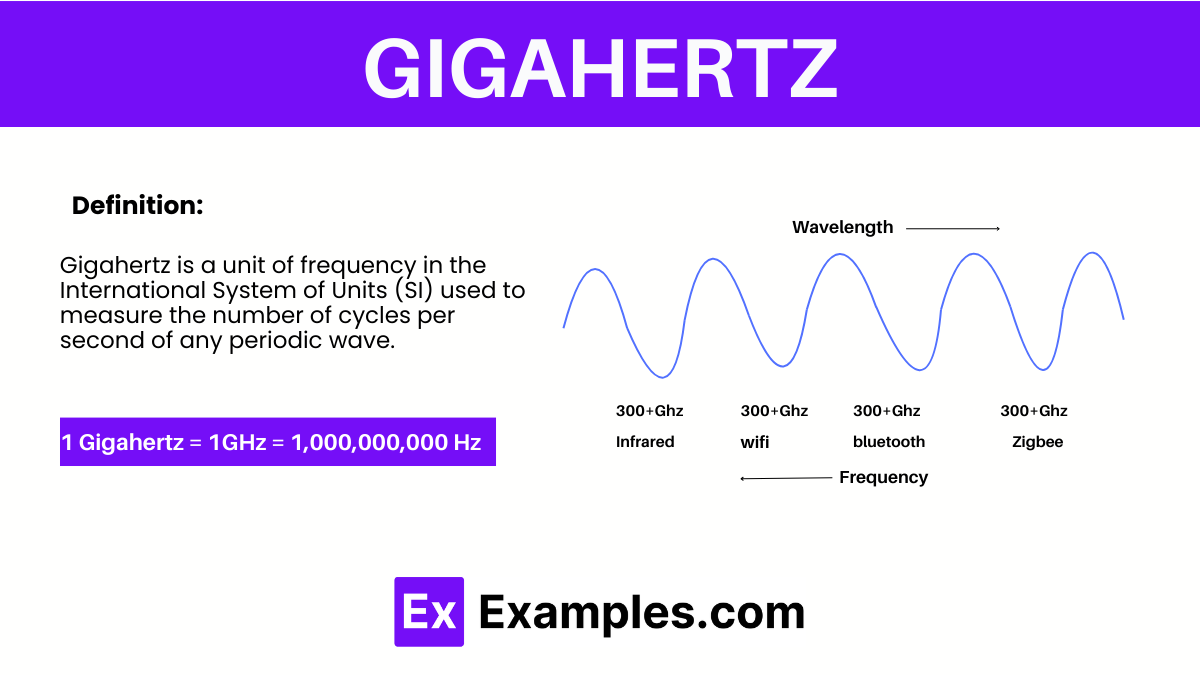
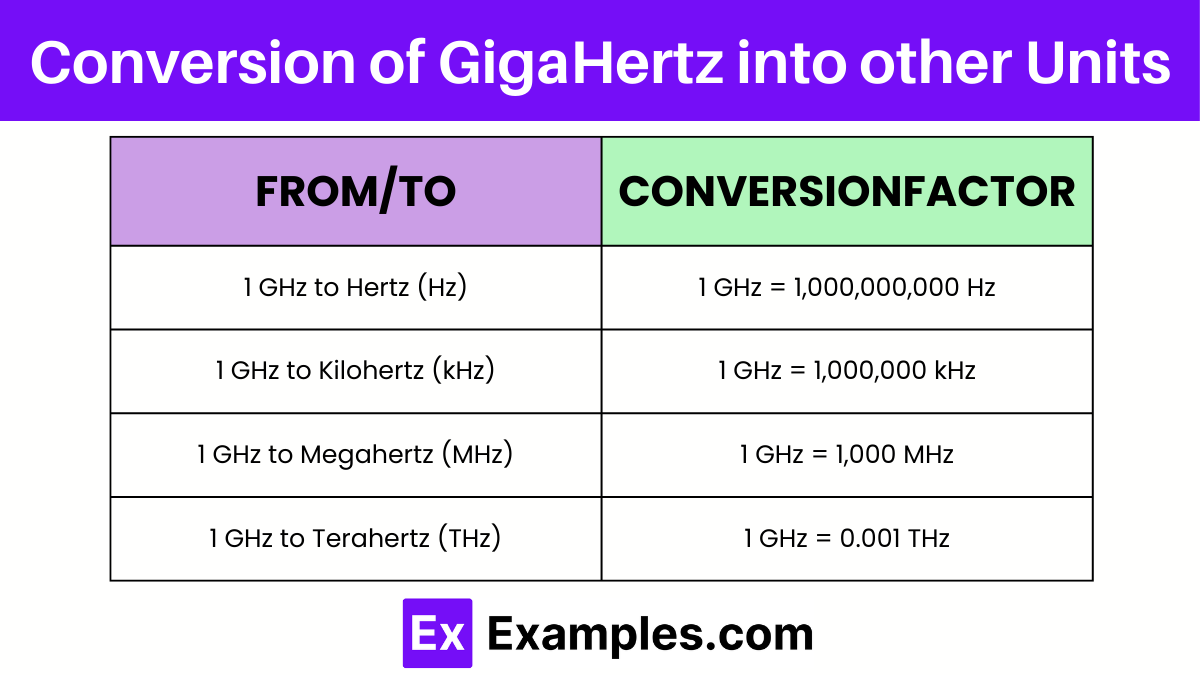
The “hertz” in gigahertz is named after Heinrich Hertz, a German physicist who demonstrated the existence of electromagnetic waves. One hertz (Hz) represents one cycle per second. Therefore, a megahertz (MHz) is one million cycles per second, and a gigahertz (GHz) is one billion cycles per second. This exponential leap in scale is crucial. When we talk about a processor running at 3 GHz, we’re referring to its clock speed, a fundamental aspect of its performance. Similarly, Wi-Fi signals and cellular data transmission speeds are also measured in Gigahertz, indicating the frequency at which these wireless communications operate.
The Role of GHz in Processor Performance
The processor, often called the “brain” of a computer or smartphone, is where the concept of GHz is most commonly discussed in everyday tech conversations. The clock speed of a processor, measured in GHz, directly relates to how many instructions it can execute per second. This seemingly simple metric has profound implications for the overall speed and responsiveness of a device.
Understanding Clock Speed and Instructions Per Cycle (IPC)
The clock speed of a CPU, measured in Gigahertz (GHz), tells us how many times the processor’s internal clock “ticks” in a second. Each tick represents an opportunity for the processor to perform an operation. So, a 3 GHz processor ticks three billion times per second. This high frequency allows for rapid execution of tasks. However, it’s important to note that clock speed isn’t the sole determinant of a processor’s performance. The number of instructions a processor can execute with each clock tick, known as Instructions Per Cycle (IPC), also plays a critical role. A processor with a higher IPC can achieve better performance even at a lower clock speed compared to a processor with a lower IPC at a higher clock speed. This is why comparing processors solely on their GHz rating can be misleading. Architectural improvements, cache sizes, and the number of cores also significantly contribute to a CPU’s overall speed.
The Impact of GHz on User Experience
For the end-user, a higher GHz in a processor generally translates to a snappier and more responsive experience. Applications load faster, multitasking becomes smoother, and demanding tasks like video editing, gaming, or running complex simulations are handled with greater ease. When you’re switching between apps on your phone or opening a large document on your laptop, the processor’s ability to quickly process these requests is a direct manifestation of its clock speed. A higher GHz allows the processor to complete these operations in less time, leading to a seamless user interaction. Conversely, a device with a lower GHz processor might feel sluggish, with noticeable delays when performing common tasks. This is particularly evident in graphically intensive games or when running multiple demanding programs simultaneously.
GHz in Wireless Communication: The Foundation of Connectivity
Beyond the internal workings of our devices, Gigahertz is a fundamental concept in wireless communication. The frequencies at which our Wi-Fi, Bluetooth, and cellular networks operate are measured in GHz, dictating the capacity and speed of our wireless connections.
Wi-Fi Frequencies: 2.4 GHz vs. 5 GHz
Wi-Fi technology, which allows us to connect to the internet wirelessly, operates on specific frequency bands, most commonly 2.4 GHz and 5 GHz. The 2.4 GHz band is older, has a longer range, and is better at penetrating solid objects like walls. However, it is also more prone to interference from other devices operating on the same frequency, such as microwaves and Bluetooth devices, and typically offers lower speeds. The 5 GHz band, on the other hand, offers significantly faster speeds and experiences less interference due to a wider range of available channels. However, its range is shorter, and it struggles more with obstructions. Modern dual-band routers broadcast on both frequencies, allowing devices to connect to the band that best suits their needs and proximity to the router, optimizing both speed and reliability. Understanding these differences is key to troubleshooting Wi-Fi issues and ensuring optimal network performance.
Cellular Network Generations and GHz Bands
Cellular networks, which power our mobile communications, also utilize various GHz bands. Different generations of cellular technology, from 4G LTE to 5G, employ different frequency ranges to achieve their respective capabilities. 5G, in particular, leverages a broad spectrum of frequencies, including sub-6 GHz bands (frequencies below 6 GHz) and millimeter-wave (mmWave) bands (much higher frequencies, typically above 24 GHz). The sub-6 GHz bands offer a good balance of speed and coverage, similar to how 5 GHz Wi-Fi provides improved performance over 2.4 GHz. These bands are crucial for widespread 5G deployment. The mmWave bands, while offering incredibly high speeds, have a very limited range and are easily blocked by obstacles, making them more suitable for densely populated urban areas and specific applications like fixed wireless access or high-capacity hotspots. The strategic allocation and use of these GHz bands are critical for delivering the promised advancements in mobile connectivity, enabling faster downloads, lower latency, and more reliable communication.
The Future of GHz: Pushing the Boundaries of Performance
As technology continues its relentless march forward, the demand for faster processing speeds and more robust wireless communication grows. This necessitates advancements in how we utilize and push the boundaries of Gigahertz.
Moore’s Law and Processor Frequency Scaling
Moore’s Law, an observation that the number of transistors on a microchip doubles approximately every two years, has historically been a driving force behind increased processor performance. While the raw clock speed (GHz) of CPUs has seen diminishing returns in recent years due to power consumption and heat generation limitations, innovation continues. Instead of simply increasing GHz, manufacturers are focusing on architectural improvements, multi-core processors, and specialized co-processors (like AI accelerators) that work in tandem. This allows for parallel processing and more efficient task distribution, effectively increasing the overall computational throughput even if the individual core’s GHz isn’t dramatically higher. The future of processor performance is less about raw GHz and more about intelligent design and how multiple processing units work together.

The Spectrum Crunch and Advanced Wireless Technologies
The increasing demand for wireless connectivity, driven by the proliferation of smart devices and data-intensive applications, puts immense pressure on the radio frequency spectrum. The GHz bands are a finite resource, and as more devices and services vie for bandwidth, the “spectrum crunch” becomes a significant challenge. This has led to the development of advanced wireless technologies aimed at maximizing the efficiency of existing spectrum. Techniques like Massive MIMO (Multiple-Input Multiple-Output), which uses a large number of antennas to send and receive data simultaneously, and beamforming, which directs wireless signals to specific devices, are crucial. These technologies allow for more data to be transmitted within the same GHz bands, effectively increasing capacity and performance without necessarily requiring access to new, higher frequencies. The ongoing research and development in wireless communication are focused on smarter utilization of the GHz spectrum to meet the ever-growing global demand for seamless connectivity.
aViewFromTheCave is a participant in the Amazon Services LLC Associates Program, an affiliate advertising program designed to provide a means for sites to earn advertising fees by advertising and linking to Amazon.com. Amazon, the Amazon logo, AmazonSupply, and the AmazonSupply logo are trademarks of Amazon.com, Inc. or its affiliates. As an Amazon Associate we earn affiliate commissions from qualifying purchases.