
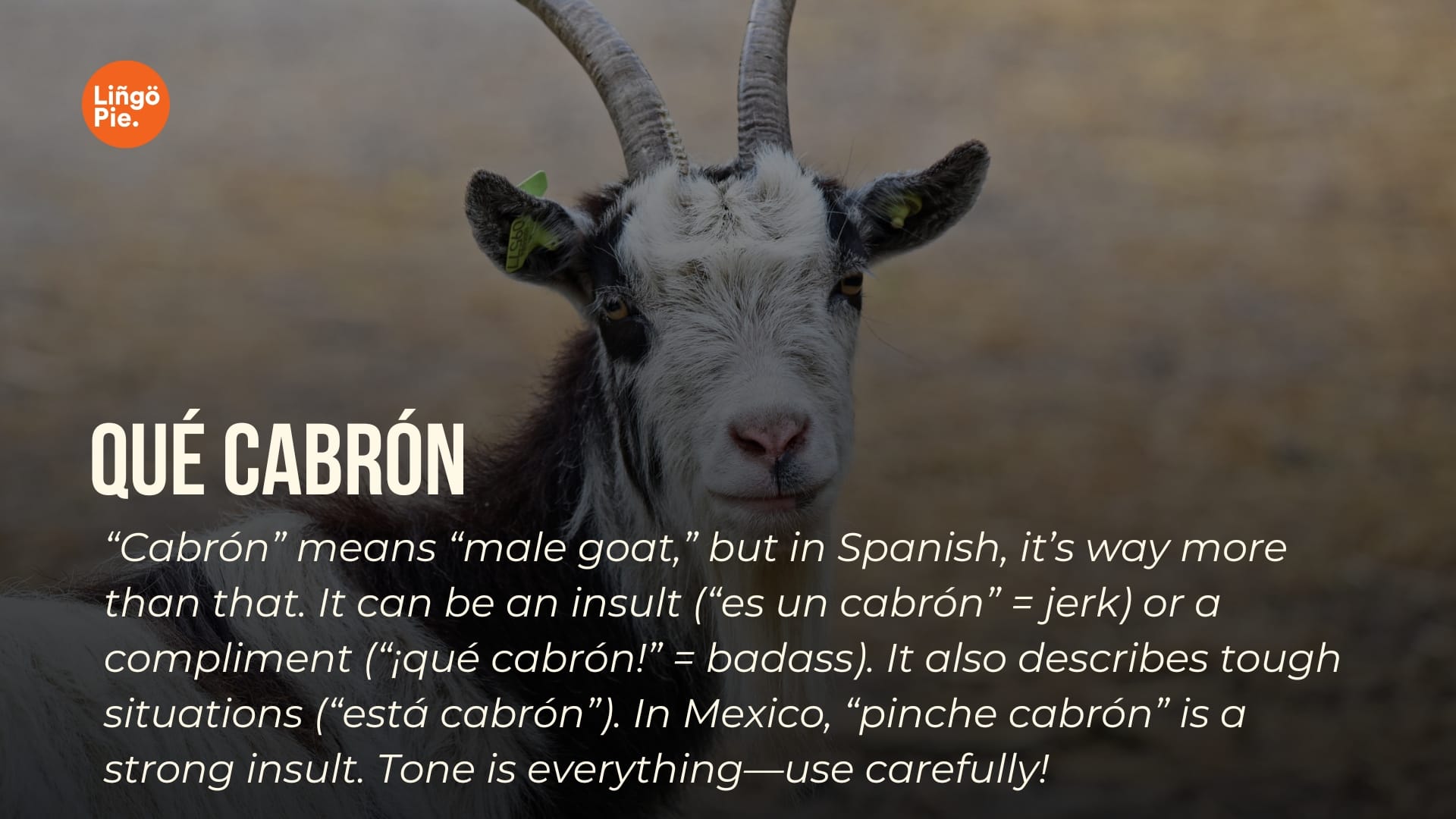
The Spanish language, rich with idiom and regional variation, presents a fascinating landscape for anyone engaging in international business or cross-cultural communication. Among its more potent and versatile terms is “cabrón.” While often translated literally as a derogatory term for a male goat, its actual usage in Spanish-speaking countries is far more complex, encompassing a spectrum of meanings that can range from intensely offensive to surprisingly affectionate, depending on context, intonation, and regional dialect. For businesses operating in global markets, a nuanced understanding of such linguistic subtleties is not merely beneficial; it is crucial for effective branding, marketing, and client relations.

The Etymology and Traditional Denotation of “Cabrón”
Delving into the origins of “cabrón” reveals its roots in the Latin word “capro,” meaning goat. Historically, and in its most direct translation, “cabrón” refers to a male goat, often in the context of its breeding capabilities. This literal meaning, however, is rarely the primary driver of its modern usage.
From Bovine to Human Denigration
The semantic shift from animal to human application likely stemmed from the association of the male goat with virility and, by extension, with cuckoldry. In many cultures, being accused of having a wife who is unfaithful has been a severe insult. Thus, “cabrón” emerged as a potent epithet, primarily directed at men, signifying weakness, humiliation, or betrayal by a partner. This traditional denotation carries significant weight and is the foundation for its most offensive interpretations.
Regional Variations in Literal Interpretation
While the core etymological link to “goat” is consistent, some regional dialects or specific cultural contexts might retain a more direct, albeit still informal, reference to the animal. However, in the vast majority of everyday conversations, especially outside of agricultural settings, the literal meaning serves as a historical backdrop rather than an active communicative component. Understanding this foundational meaning is vital for appreciating how the term evolved into its more figurative and socially charged applications.
The Multifaceted Figurative Meanings of “Cabrón”
The true power and complexity of “cabrón” lie in its extensive figurative applications. These can dramatically shift the perception of the word from a harsh insult to a term of grudging respect or even camaraderie. Mastering these nuances is paramount for anyone aiming to build a strong brand presence or foster genuine connections within Spanish-speaking markets.
“Cabrón” as a Severe Insult: The Offensive Spectrum
When used with hostile intent, “cabrón” can be one of the most offensive words in the Spanish lexicon. Its derogatory force is comparable to the harshest profanities in English, such as “motherfucker” or “bastard,” and even surpasses them in certain contexts due to its deeply ingrained cultural connotations of shame and humiliation.
Intent and Tone in Offensive Usage
The intention behind using “cabrón” as an insult is to deeply offend, demean, and provoke. The tone is typically aggressive, often accompanied by confrontational body language. In business settings, using the word in this manner would be catastrophic, instantly damaging brand reputation, alienating potential clients or partners, and likely leading to severe reputational fallout. It is the absolute antithesis of professional branding and respectful business communication.
Connotations of Betrayal and Humiliation
At its most hurtful, “cabrón” implies that a person is a victim of profound betrayal or humiliation, often in a way that questions their masculinity or integrity. This can stem from romantic infidelity (as a cuckold), but it can also extend to broader social or professional betrayals. For instance, someone perceived as having been outsmarted or exploited in a business deal might be labeled a “cabrón” by those who feel they were on the losing end.
“Cabrón” as an Expression of Admiration and Respect
Perhaps counterintuitively, “cabrón” can also be used in a positive or admiring way, particularly among friends or in certain informal professional circles. This usage often signifies a person who is exceptionally skilled, resourceful, daring, or successful, especially when facing significant challenges.
The “Tough Guy” or “Mastermind” Connotation
In this positive context, “cabrón” implies a certain grit and cunning. It can describe someone who is incredibly adept at navigating complex situations, a person who is “the boss,” or someone who has pulled off something remarkable. Think of a competitor who outmaneuvered all others, a negotiator who secured an unbelievable deal, or an individual who overcame immense odds. This is the “badass” or “mastermind” interpretation, where the individual is so impressive that they command a certain (often begrudging) admiration.
Contextual Cues for Positive Interpretation
The key to discerning this positive usage lies entirely in the context and the relationship between the speakers. If the word is delivered with a smile, a nod, or a sense of shared experience, it is almost certainly positive. It is often uttered in moments of surprise or recognition of someone’s exceptional prowess. For instance, after a challenging negotiation where one party brilliantly secured a favorable outcome, an observer might exclaim, “¡Ese tipo es un cabrón!” (That guy is a cabrón!) – implying impressive skill.
“Cabrón” in Informal and Colloquial Settings
Beyond the extremes of insult and admiration, “cabrón” finds its way into a wide range of colloquial expressions. These uses often add emphasis or express a variety of informal sentiments, further demonstrating the word’s fluidity and reliance on context.
Emphasizing Difficulty or Intensity
“Cabrón” can be used to describe something that is extremely difficult, intense, or challenging. A difficult exam might be called “un examen cabrón,” or a tough situation, “una situación cabrona.” This usage is less about a person and more about the nature of the experience itself.

Expressing Frustration or Exasperation
In some instances, “cabrón” can be used as a mild exclamation of frustration or exasperation, akin to saying “damn it” or “what the hell.” This is often a release valve for annoyance rather than a direct personal attack.
Regional and Generational Divergences
It is critical to acknowledge that the prevalence and acceptance of these various meanings can differ significantly across Spanish-speaking countries and even within different age groups or social circles within a single country. What might be acceptable slang among friends in Mexico City could be deeply offensive in Buenos Aires or among older generations in Madrid. For businesses, this highlights the necessity of localized market research and culturally sensitive communication strategies.
Strategic Implications for Global Brands and Businesses
The profound linguistic and cultural implications of “cabrón” underscore a broader truth for any business operating on an international scale: linguistic competence is inextricably linked to brand integrity and market success. Misunderstandings of this magnitude can have tangible, negative impacts on sales, partnerships, and overall brand perception.
Brand Identity and Linguistic Vigilance
A brand’s identity is meticulously crafted through its messaging, visual representation, and customer interactions. Introducing a term like “cabrón” unintentionally or inappropriately into marketing materials, social media, or customer service can severely damage this carefully constructed identity.
Avoiding Accidental Offense in Marketing Campaigns
Consider a marketing campaign that aims for a bold, edgy feel. If the creators are not fluent in the nuances of Spanish, they might inadvertently use “cabrón” in a way that is perceived as vulgar or aggressive by a significant portion of their target audience. This can lead to backlash, boycotts, and a public relations crisis. Instead of being seen as edgy, the brand will be seen as ignorant and offensive.
Building Trust Through Cultural Sensitivity
Conversely, demonstrating an understanding of linguistic subtleties can be a powerful tool for building trust and rapport. For instance, a company that creates localized content acknowledging the various ways “cabrón” is used, or even subtly incorporates it in a positive, contextually appropriate manner (perhaps in internal company jokes or employee recognition in specific regions), can signal a deep respect for the culture. This can foster loyalty and a sense of being understood.
Navigating Client Relationships and Negotiations
In business negotiations and client interactions, the stakes are exceptionally high. A single misspoken word can derail weeks or months of work.
The Dangers of Direct Translation and Literal Interpretations
When dealing with Spanish-speaking clients or partners, relying on direct, literal translations of English terms into Spanish, or vice-versa, is a recipe for disaster. The literal meaning of “cabrón” as “male goat” is, in most business contexts, irrelevant and certainly not an expression of respect. Attempting to use it in a business negotiation, even with the intention of sounding “tough,” would likely be met with confusion, disgust, or outright hostility.
Cultivating Linguistic Expertise in Business Teams
To mitigate these risks, businesses must invest in linguistic expertise. This can involve hiring native Spanish speakers in key communication roles, providing advanced language and cultural training for existing staff, and utilizing professional translation and localization services that go beyond mere word-for-word conversion to capture idiomatic expressions and cultural context. This is particularly critical for any business aiming for robust online income streams from Spanish-speaking markets, where nuanced digital marketing and customer engagement are key.
Leveraging Linguistic Nuance for Competitive Advantage
While the risks of misusing terms like “cabrón” are significant, understanding and appropriately leveraging linguistic nuance can provide a distinct competitive advantage.
Engaging with Localized Content and Digital Marketing
For businesses focusing on online income, the ability to create culturally resonant digital marketing content is paramount. This includes website copy, social media posts, and advertising. Understanding how terms like “cabrón” are used by different demographics in different regions allows for more authentic and impactful communication. For example, a campaign targeting young, urban audiences in Mexico might employ a certain colloquialism that would be inappropriate for a broader, more formal audience in Spain. This targeted approach can significantly boost engagement and conversion rates.
Fostering Strong Interpersonal Connections
Ultimately, business is about human connection. Demonstrating an effort to understand and speak the language authentically, including its more complex and informal aspects, can foster deeper interpersonal connections. When Spanish-speaking professionals feel that their language and culture are respected and understood, they are more likely to develop trust and long-term relationships with businesses. This can translate into more lucrative online income opportunities and enduring business partnerships.
Conclusion: Embracing Linguistic Complexity for Global Success
The word “cabrón” serves as a potent microcosm of the linguistic and cultural challenges and opportunities inherent in global business. Its journey from a literal term for an animal to a word capable of expressing extreme offense, grudging admiration, or casual frustration highlights the dynamic and context-dependent nature of language. For brands and businesses seeking to thrive in Spanish-speaking markets, a superficial understanding is insufficient. A deep, nuanced appreciation for such linguistic complexities is not merely a communication skill; it is a strategic imperative that underpins effective branding, robust client relationships, and sustainable financial growth. By embracing this complexity, businesses can transform potential pitfalls into powerful avenues for connection and success.
aViewFromTheCave is a participant in the Amazon Services LLC Associates Program, an affiliate advertising program designed to provide a means for sites to earn advertising fees by advertising and linking to Amazon.com. Amazon, the Amazon logo, AmazonSupply, and the AmazonSupply logo are trademarks of Amazon.com, Inc. or its affiliates. As an Amazon Associate we earn affiliate commissions from qualifying purchases.