
In the rapidly evolving landscape of entertainment technology, the traditional movie-going experience has undergone a massive digital transformation. Among the most prominent innovations in the Premium Large Format (PLF) sector is Cinemark XD. Standing for “Extreme Digital,” XD is not merely a brand name but a sophisticated integration of proprietary hardware, advanced projection optics, and high-fidelity auditory engineering. For cinephiles and tech enthusiasts alike, understanding what happens behind the projection booth is essential to appreciating how XD has redefined the standards of modern cinema.
The Engineering of Immersion: What Defines Cinemark XD Technology?
At its core, Cinemark XD is an end-to-end technology suite designed to maximize sensory immersion. Unlike standard theater auditoriums that rely on off-the-shelf components, XD environments are engineered from the ground up to support high-bandwidth digital content. The goal is to eliminate the “screen door effect” and provide a seamless visual field that occupies the viewer’s entire peripheral vision.

The Screen: Beyond Standard Dimensions
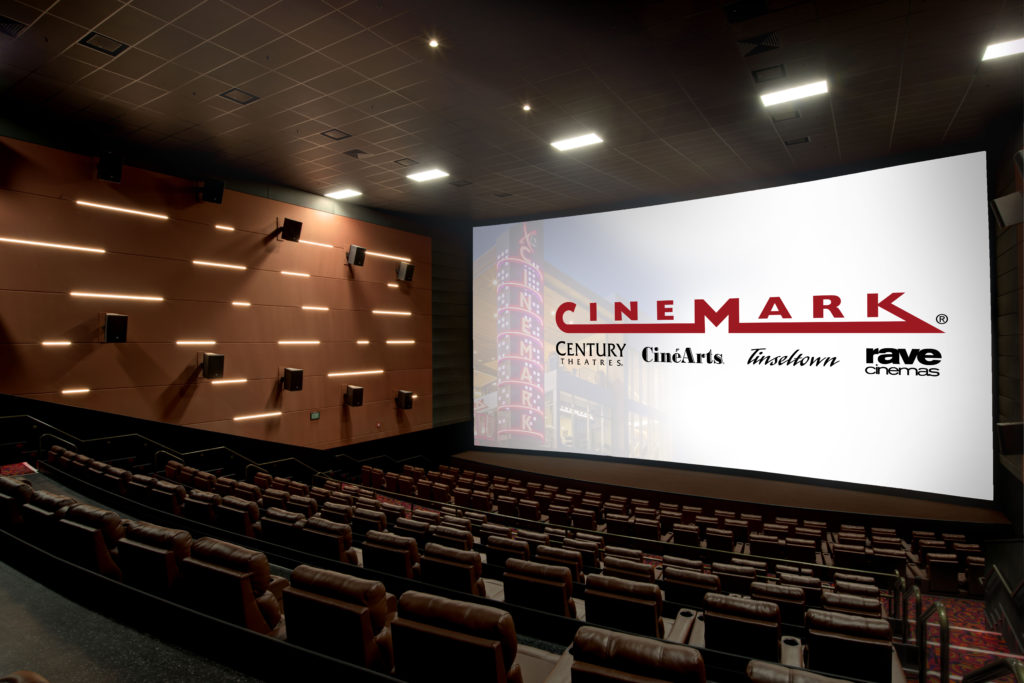
The most visible technological component of an XD theater is the screen itself. These screens are typically wall-to-wall and ceiling-to-floor, often exceeding 70 feet in width. However, the tech lies in the material science of the surface. XD screens utilize a high-gain silver coating or specialized white matte surfaces designed to reflect light with maximum efficiency. This is critical for 3D content, where polarized glasses often dim the perceived brightness. By using high-reflectivity materials, XD ensures that the peak luminance remains high, maintaining a vivid image even in the darkest scenes.
Projection Technology: 4K Clarity and High Frame Rates
The “Extreme Digital” moniker is earned through the use of state-of-the-art 4K digital projection systems. While many standard theaters still utilize 2K projectors, XD installations leverage dual-projector setups or high-lumen single-unit laser projectors. These units are capable of producing a spectrum of 35 trillion colors.
From a technical standpoint, the integration of High Frame Rate (HFR) capabilities is a game-changer. Standard film runs at 24 frames per second (fps), but XD projectors can handle 48, 60, or even higher frame rates. This reduces motion blur during high-action sequences, providing a level of “hyper-realism” that is particularly effective in CGI-heavy blockbusters. The precision of the pixel alignment in these dual-projection systems is managed by automated calibration software, ensuring that the overlay of images is perfect to the sub-pixel level.
The Auditory Landscape: Custom JBL and Auro 11.1 Systems
While visual fidelity often gets the spotlight, the technological backbone of the XD experience is its massive audio array. Cinema sound has moved far beyond simple “left-right-center” channels. In an XD environment, the audio is treated as a spatial data field.
Multi-Dimensional Sound Architecture
Cinemark XD utilizes a custom-configured surround sound system, often incorporating technologies like Auro 11.1 or Dolby Atmos. This involves a “layered” approach to sound. In a typical 11.1 setup, speakers are positioned at the ear level (the “Surround” layer) and at a height level. This allows sound engineers to move audio objects not just around the audience, but above them.
The tech behind this involves sophisticated Digital Signal Processors (DSPs) that manage the crossover frequencies for dozens of individual speakers. This ensures that a high-frequency sound, like a bird chirping, is pinpointed to a specific overhead speaker, while the low-frequency rumble of an engine is distributed through the massive subwoofers located behind the screen and throughout the auditorium.
Power and Precision: The Hardware Behind the Noise
The sheer power of an XD sound system is staggering, often exceeding 50,000 watts of amplification. To manage this power without distortion, XD theaters employ high-end JBL professional-grade drivers and amplifiers. These systems are tuned specifically for the acoustics of the individual room using “pink noise” calibration and acoustic modeling software. This compensates for the “slap-back” echo or dead zones that plague smaller, less technologically advanced theaters. The result is a frequency response that covers the full range of human hearing, from the deepest 20Hz sub-bass to the crispest 20kHz treble.
Comparing Cinema Technologies: XD vs. IMAX and Standard Digital

To truly understand the “Tech” of XD, it is helpful to contrast it with other industry standards like IMAX. While both aim for immersion, their technical philosophies differ significantly.
Screen Geometry and Aspect Ratios
IMAX is famous for its unique aspect ratio (often 1.43:1 or 1.90:1), which requires films to be shot with specific IMAX-certified cameras to fill the entire vertical space. Cinemark XD, conversely, is designed as a “format-agnostic” technology. It uses a 1.85:1 or 2.39:1 aspect ratio, which aligns more closely with the native resolution of the vast majority of digital cinema packages (DCPs).
Technically, this means XD can project any movie with “Extreme Digital” enhancements without the need for the filmmaker to use proprietary cameras. The XD system uses internal scaling algorithms to ensure that the source material is optimized for the massive screen size, preventing the pixelation that can occur when blowing up standard 2K content.
Versatility and Content Compatibility
One of the technological advantages of the XD platform is its versatility. Because it uses industry-standard Barco or Christie digital projectors modified to Cinemark’s “XD” specifications, it can handle a wider variety of digital inputs. This includes live-streamed events, gaming tournaments, and alternative content that might not be formatted for the specialized hardware of an IMAX theater. The XD server architecture is designed for high-speed data throughput, allowing for the seamless playback of massive, uncompressed digital files that would crash a standard theater’s playback system.
The Future of Premium Large Format (PLF) Tech
As we look toward the next decade of cinema, the XD platform is positioned to integrate even more advanced technological features. The transition from lamp-based projection to RGB Laser projection is the current frontier.
Laser Projection Advancements
The shift to 6P (6-Primary) Laser projection represents a massive leap in color science. Traditional Xenon bulbs lose brightness over time and have a limited color gamut. Laser projectors, which are being rolled out across XD locations, offer a much wider color gamut (approaching the Rec. 2020 standard) and maintain consistent brightness for tens of thousands of hours.
From a technical perspective, laser light is coherent, meaning it doesn’t scatter like light from a bulb. This results in much higher contrast ratios—the difference between the darkest blacks and the brightest whites. In an XD laser theater, “black” actually looks black because the laser can essentially turn off the light output for those specific pixels, a feat impossible for traditional projection tech.
Enhancing the User Experience through Smart Seat Integration
Technology in the XD theater isn’t limited to the screen and speakers; it extends to the seats themselves. The integration of “D-BOX” haptic feedback technology is often paired with XD. These seats are synchronized with the movie’s frame-by-frame movement data. Using a series of actuators and vibration motors, the seat provides localized haptic feedback that corresponds to the action on screen.
This requires a dedicated data stream that runs parallel to the video and audio tracks. The tech must be perfectly synced; even a few milliseconds of latency between a visual explosion and the haptic “thump” of the seat would ruin the immersion. The XD infrastructure is built to handle this multi-stream data synchronization, ensuring a cohesive sensory experience.
Conclusion: The Role of XD in the Modern Tech Stack of Entertainment
Cinemark XD is a testament to how far cinema technology has come since the dawn of the digital age. It is a complex ecosystem where high-gain screen materials, 4K dual-projection optics, and object-based audio architectures converge to create an “Extreme Digital” environment.
By prioritizing brightness, color accuracy, and auditory precision, XD offers a specialized tech stack that caters to the demands of modern, high-bitrate filmmaking. For the viewer, it means seeing a film exactly as the director and the digital imaging technicians intended—with every pixel, frequency, and frame rendered with absolute fidelity. As laser projection and haptic technologies continue to mature, the XD platform will likely remain at the cutting edge of the theatrical experience, proving that in the world of entertainment, hardware and engineering are just as important as the story on the screen.
aViewFromTheCave is a participant in the Amazon Services LLC Associates Program, an affiliate advertising program designed to provide a means for sites to earn advertising fees by advertising and linking to Amazon.com. Amazon, the Amazon logo, AmazonSupply, and the AmazonSupply logo are trademarks of Amazon.com, Inc. or its affiliates. As an Amazon Associate we earn affiliate commissions from qualifying purchases.