
The Twelve Tables, a foundational piece of Roman law, represent a pivotal moment in the development of legal systems. Promulgated around 450 BCE, their significance extends far beyond their ancient origins. While the concept of law itself can be seen as a tool for managing financial transactions and establishing property rights – thus linking directly to the realm of Money – the core idea underpinning the Twelve Tables was not solely economic. It was, at its heart, about the establishment of a transparent, publicly accessible, and codified legal framework designed to curb arbitrary power and ensure a degree of fairness for all citizens. This, in turn, had profound implications for economic stability, contractual certainty, and the very structure of Roman commerce.
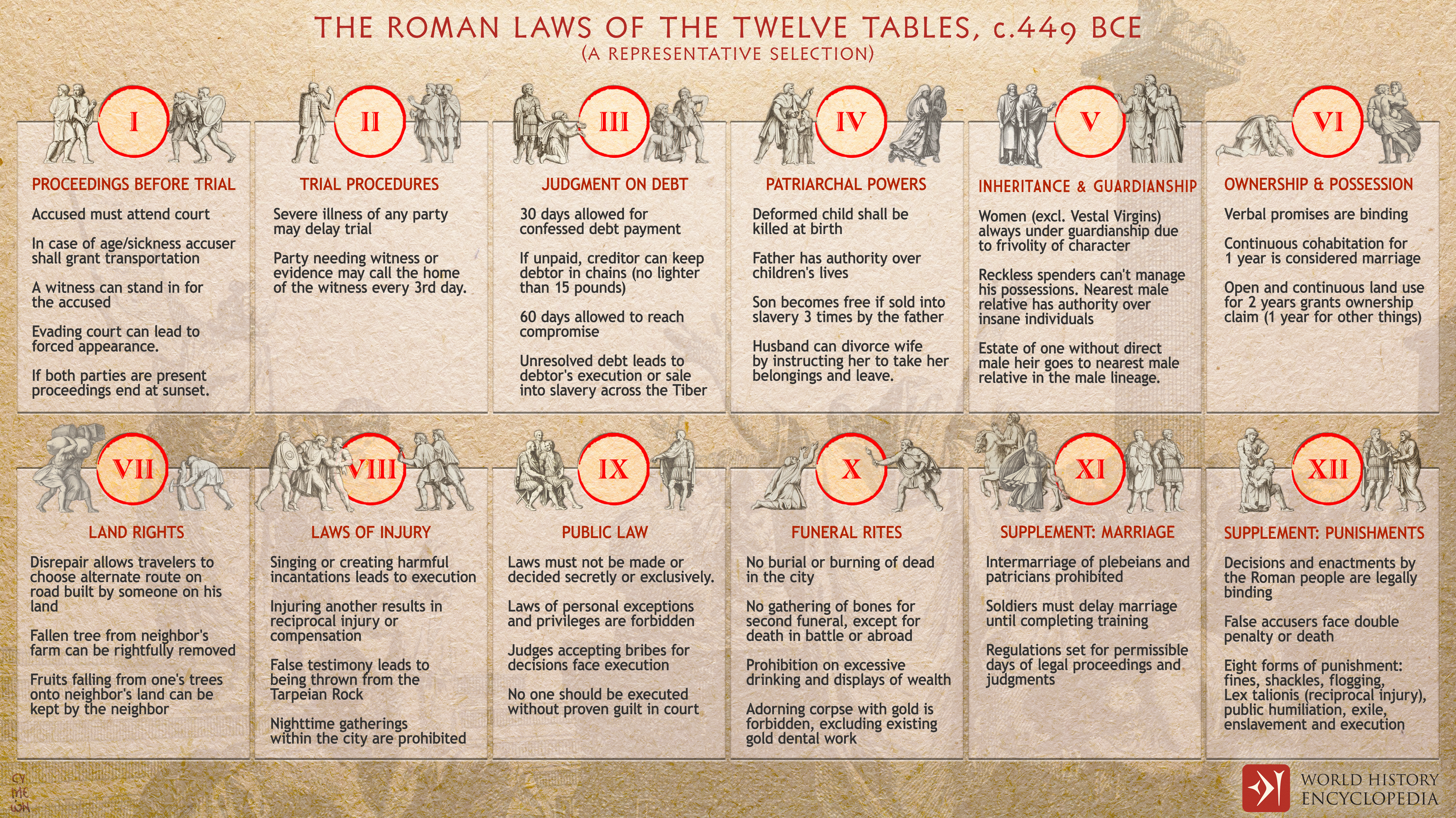
The Twelve Tables emerged from a period of intense social and political tension between the patricians (the aristocratic class) and the plebeians (the common citizens). The plebeians, despite their growing numbers and economic contributions, were subject to laws that were largely unwritten and interpreted by patrician magistrates. This lack of transparency allowed for potential abuses and created a system where the plebeians felt disadvantaged and vulnerable. The demand for written laws was a direct response to this inequality, a call for a system that would govern everyone, including the powerful, with the same principles. Therefore, understanding the main idea of the Twelve Tables requires us to look at its role in establishing legal certainty, promoting social order, and ultimately, providing a stable foundation for economic activity.
The Genesis of Codification: A Fight for Transparency and Equality
The creation of the Twelve Tables was not a spontaneous event but a hard-won victory born out of deep societal divides. The primary driving force behind their promulgation was the plebeian struggle for legal recognition and protection against the arbitrary power of the patrician elite.
The Plebeian Grievance: Unwritten Laws and Patrician Discretion
Prior to the Twelve Tables, Roman law was largely unwritten and based on tradition and custom. This “ius civile,” while understood by the patrician class who held positions as magistrates and priests, was inaccessible to the common plebeians. This created a significant power imbalance. Plebeian litigants often found themselves at the mercy of magistrates whose interpretations of the law could be influenced by social standing, personal bias, or simply a lack of clear precedent.
This lack of codified law led to several problems:
- Unpredictability: Without a clear body of written laws, individuals could not be certain of their rights and obligations. This uncertainty was particularly detrimental to business and trade, as it made contractual agreements precarious. How could one confidently invest or engage in commerce when the legal framework was ambiguous and subject to interpretation?
- Arbitrary Enforcement: Patrician magistrates could wield their interpretative power to their own advantage or to the detriment of plebeians. This fueled resentment and a sense of injustice, as the law, instead of being a shield, could become a weapon against the less powerful.
- Economic Disadvantage: The inability to understand and rely upon the law hampered economic development for the plebeian class. They were less likely to engage in complex financial dealings or long-term investments if the legal recourse for disputes was unclear or unfairly administered.
The Demand for Written Law: A Call for Certainty in Commerce and Life
The plebeians, recognizing that unwritten law was a tool of oppression, began a sustained campaign for the codification of Roman law. Their primary objective was to make the law public and accessible to all citizens. This was not merely an abstract legal or philosophical pursuit; it had direct and significant implications for their economic well-being.
The creation of the Twelve Tables was a direct response to this demand. It aimed to:
- Establish a Common Legal Standard: By writing down the laws, the plebeians sought to create a universal legal code that applied to all Roman citizens, regardless of their social status. This promised a more equitable system where everyone would be judged by the same yardstick.
- Increase Legal Predictability: A codified law meant that individuals could consult the written statutes to understand their rights and responsibilities. This predictability was crucial for fostering economic confidence. Businesses could make decisions with greater assurance, knowing the legal framework governing their transactions.
- Limit Judicial Discretion: While interpretation of the law would always be necessary, codification served to constrain the arbitrary discretion of magistrates. The written text provided a benchmark, making it harder to deviate from established legal principles.
In essence, the plebeian struggle for written law was a fight for economic security. The ability to conduct business, enter into contracts, and own property with legal certainty was paramount. The Twelve Tables, by providing this foundation, indirectly but powerfully supported the growth of Roman commerce and finance.
The Economic Implications: Securing Contracts and Property Rights
While the Twelve Tables were not a treatise on economics, their legal provisions had profound and lasting implications for the financial and commercial life of ancient Rome. By establishing clear rules regarding debt, property, and contractual obligations, they provided the essential bedrock for a functioning economy.
Regulating Debt and Insolvency: A Framework for Financial Transactions

One of the most significant areas addressed by the Twelve Tables directly concerned financial matters, particularly debt. In an agrarian society, debt was a common and often unavoidable reality. The Twelve Tables sought to regulate this sphere, providing a framework for both creditors and debtors.
- Debt Enforcement and Repayment: The Tables outlined procedures for the enforcement of debts. If a debtor defaulted, a creditor had legal recourse. While some interpretations suggest harsh penalties, the core idea was to provide a mechanism for resolving financial obligations. This offered a degree of security for lenders, encouraging the extension of credit, which is vital for economic activity.
- Protection Against Usury (Limited): While not explicitly abolishing usury, the Twelve Tables did introduce some limitations on the interest rates that could be charged. This aimed to prevent the exploitation of debtors and to ensure that lending practices remained within a certain ethical and economic boundary. This protection, however rudimentary, contributed to a more stable financial environment.
- Insolvency Procedures: The Twelve Tables provided for the possibility of debt bondage or sale into servitude in cases of extreme default. While seemingly draconian by modern standards, this represented an attempt to provide a structured, albeit severe, method for resolving intractable debt situations, preventing complete economic chaos for creditors.
Defining Property and Ownership: The Foundation of Investment
Clear definitions of property rights and ownership are fundamental to any economy. The Twelve Tables contributed significantly to this by addressing issues of possession, inheritance, and land use.
- Land Ownership and Boundaries: The Tables contained provisions concerning the boundaries of fields and the rights associated with land ownership. This was crucial in an agrarian society where land was the primary form of wealth. Clear demarcations prevented disputes and facilitated the transfer and inheritance of land, supporting agricultural investment and economic stability.
- Inheritance and Succession: The legal framework for inheritance, as laid out in the Twelve Tables, provided a predictable means for the transfer of assets. This ensured that wealth could pass through generations, allowing for long-term planning and investment by families. Without clear inheritance laws, wealth could become fragmented or tied up in disputes, hindering economic progress.
- Contracts and Agreements: The Twelve Tables established certain principles that would govern contractual agreements. While not as sophisticated as modern contract law, they provided a basis for formalizing agreements, particularly in areas like sale, lease, and loan. This laid the groundwork for more complex commercial relationships to develop, as parties could rely on a recognized legal framework for their transactions.
By providing these legal underpinnings, the Twelve Tables created a more predictable and secure environment for economic dealings. This certainty was a powerful engine for commerce, enabling investment, trade, and the accumulation of wealth within Roman society.
The Broader Impact: Establishing Precedent and Civic Order
Beyond its direct legal and economic provisions, the Twelve Tables established a crucial precedent for Roman governance and legal development. Its emphasis on accessibility, civic responsibility, and the rule of law had a lasting impact on the formation of a stable society, which in turn fostered economic growth and prosperity.
The Principle of “Ignorantia Juris Non Excusat”
A fundamental principle of law, often attributed in its early form to the Twelve Tables, is that “ignorance of the law is no excuse” (ignorantia juris non excusat). This principle underscored the importance of a publicly accessible legal code.
- Citizen Responsibility: By making the laws accessible, the Twelve Tables shifted the onus from the state to the citizen to be aware of their legal obligations. This encouraged a more informed and engaged citizenry, capable of understanding their rights and responsibilities, including those pertaining to financial matters.
- Fairness in Application: This principle also meant that no one could claim ignorance of the law as a defense, thereby ensuring a more consistent and equitable application of legal statutes. This contributed to a sense of fairness that is essential for social cohesion and economic trust.
Laying the Groundwork for Future Legal Development
The Twelve Tables were not the final word in Roman law, but they served as the essential foundation upon which centuries of legal development were built.
- A Tangible Legal System: For the first time, Roman citizens had a tangible, written legal system to refer to. This provided a stable starting point for jurists and lawmakers to expand upon, adapt, and refine Roman law over time.
- Evolution of Commerce: As Roman society grew and its economic activities became more complex, the principles established in the Twelve Tables were elaborated upon. Concepts of contract, property, and debt were further defined and refined by subsequent legal enactments and judicial decisions, all tracing their lineage back to this seminal codification. This continuous evolution allowed Roman law to remain relevant and supportive of a dynamic economy.

Fostering Civic Order and Economic Stability
The introduction of a clear and accessible legal framework fostered a greater sense of civic order. When citizens understand the rules and believe they are being applied fairly, social stability increases. This stability is intrinsically linked to economic prosperity.
- Reduced Social Unrest: The reduction of arbitrary power and the increased transparency of the law helped to quell the social unrest that had characterized the earlier period. A more orderly society is more conducive to trade, investment, and economic activity.
- Foundation for a Marketplace: The certainty and predictability offered by the Twelve Tables provided a rudimentary but essential foundation for a marketplace. Individuals and businesses could engage in transactions with a greater degree of confidence, knowing that their agreements would be legally recognized and their property protected.
In conclusion, the main idea of the Twelve Tables was to establish a transparent, accessible, and codified legal system that would curb arbitrary power and ensure a degree of fairness for all Roman citizens. While its immediate impact was the redressal of plebeian grievances, its deeper and more enduring significance lay in its role as the bedrock of Roman law. This legal foundation, by securing property rights, regulating financial obligations, and fostering civic order, created an environment of predictability and stability that was indispensable for the growth and flourishing of the Roman economy. The Twelve Tables, therefore, can be seen as a crucial, albeit indirect, enabler of economic progress in the ancient world, demonstrating that a just and transparent legal system is a vital component of any thriving financial landscape.
aViewFromTheCave is a participant in the Amazon Services LLC Associates Program, an affiliate advertising program designed to provide a means for sites to earn advertising fees by advertising and linking to Amazon.com. Amazon, the Amazon logo, AmazonSupply, and the AmazonSupply logo are trademarks of Amazon.com, Inc. or its affiliates. As an Amazon Associate we earn affiliate commissions from qualifying purchases.